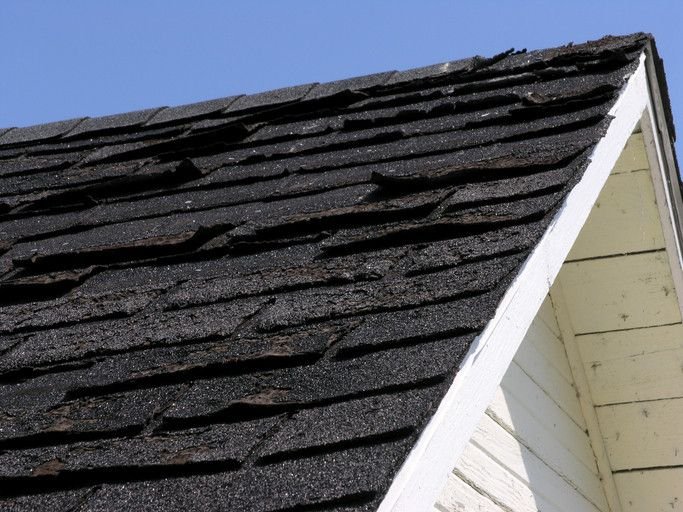
Recognizing the signs you need roof replacement — rather than repair — comes down to one question: is the damage widespread enough that patching costs more per year than starting over? If more than 30% of the roof surface shows visible deterioration, if the roof is past 20 years old and leaking in multiple places, or if the decking underneath is softening from moisture, replacement is no longer optional. It is overdue, says CMS Property Management team.
Every roof sends signals before it fails. The trick is knowing which signals mean “fix this weekend” and which ones mean “start getting quotes before the next storm.” The signs below are the second category.
The Roof Is Past Its Expiration Date
An asphalt shingle roof that is 20 years old or older needs replacement regardless of how it looks from the ground. The visible surface may appear intact — no missing shingles, no obvious sagging — but the components you cannot see are on the same clock. The sealant strips between shingle courses lose adhesion. The underlayment becomes brittle. The fasteners back out of the decking by fractions of a millimeter per year until they no longer hold.
Three-tab asphalt shingles last 15 to 20 years. Architectural shingles last 25 to 30. If your roof is in the final quarter of its expected lifespan and you are starting to see any of the signs listed below, the calendar has already made the decision. Repairing an end-of-life roof is like replacing a worn brake pad on a car with 300,000 miles. The fix is real. The problem it solves is not the one you actually have. Sound familiar? Most homeowners who patch an aging roof have already answered the replacement question — they just have not written the check yet.
Metal roofs age differently — 40 to 70 years for steel, 50 to 100 for copper, but the flashings, fasteners, and sealants around penetrations have much shorter service lives. A 45-year-old metal roof might be structurally sound while the chimney flashing has been leaking for three winters. Age alone does not condemn a metal roof. Age plus failing components does.
Shingles Are Curling, Cracking, or Missing Across Multiple Areas
A few missing shingles after a storm is a repair. Curling or cracked shingles spread across multiple slopes is a replacement signal. Curling happens when the asphalt in the shingle dries out over time and the mat contracts. The edges lift away from the roof deck and catch wind. Once curling affects more than a handful of shingles scattered across the roof, the entire surface is in the same stage of material breakdown. Replacing individual curled shingles is a game of whack-a-mole. Every storm brings down a few more.
Cracked shingles tell a similar story with a different cause. Thermal cycling, the roof heating to 150 degrees in summer sun and cooling to 40 degrees on a clear winter night, expands and contracts the shingle mat thousands of times over the roof’s life. Eventually the material fatigue produces cracks along the grain of the mat. A roof with widespread cracking is not damaged. It is exhausted.
Missing shingles that keep reappearing after repairs point to an underlying problem: the fasteners are no longer holding in the decking, or the shingles themselves are too brittle to accept new nails without splitting. If you have patched the same slope twice in three years, stop patching.
Granule Loss Has Reached the Bald-Spot Stage
Asphalt shingles shed ceramic granules throughout their life. A small accumulation in the gutters is normal, especially on a roof less than five years old. When the granule loss progresses to bald spots, patches where the black asphalt substrate is visible through the granule surface, the shingles have lost their UV protection layer. The exposed asphalt bakes in direct sunlight, becomes brittle, and cracks within one to two summers.
Check the gutters for more than just granules. If you find pieces of the shingle mat itself, thin, black, fibrous fragments that are clearly not just loose granules, the shingles are disintegrating. Granule loss is a warning. Mat fragmentation is a verdict.
The National Roofing Contractors Association (NRCA) considers widespread granule loss, affecting more than 30% of the roof surface, a primary indicator that replacement is warranted. The granules are not cosmetic. They are the roof’s sunscreen. Without them, the clock accelerates dramatically.
The Roofline Is Sagging or Uneven
A roof ridge that dips in the middle, a slope that looks wavy when viewed from the street, or an eave line that is no longer straight, these are structural signs. The decking underneath has absorbed enough moisture to lose its rigidity, or a rafter or truss has been compromised by rot or insect damage.
Sagging does not self-correct. It worsens with every rainstorm because water pools in the low spot instead of draining off. The pooled water adds weight, which increases the sag, which pools more water. It is a feedback loop with one exit: replacement of the affected decking and, in severe cases, the structural members underneath.
If the sag is visible from the ground, the damage underneath is probably worse than it looks. Get an assessment from a structural engineer or a licensed roofing contractor before anyone walks on that section of the roof. A sagging roof can collapse under the weight of a person.
Water Damage Is Appearing in Multiple Rooms
A single water stain on one ceiling is a leak. Water stains in multiple rooms, especially on different floors or opposite sides of the house, are a roof failure. Water entering through the roof travels along rafters, sheathing, and framing members before it drips onto the ceiling below. The stain you see is rarely directly under the hole it came through.
When water stains appear in rooms that do not share a wall, the roof has multiple entry points. That means the underlayment, the waterproof barrier between the shingles and the decking, has failed across a wide area. Shingles alone are not completely waterproof. They are the first line of defense, not the only one. When the underlayment goes, the roof leaks at every shingle gap, nail hole, and flashing joint simultaneously.
Check the attic with a flashlight. Water stains on the underside of the roof deck, darkened areas around nails where moisture has wicked into the wood, or white mineral deposits where water evaporated and left dissolved solids behind, any of these in more than two separate attic zones confirms what the ceiling stains are already telling you.
Moss, Mold, and Algae Are Not Just Cosmetic
Dark streaks on asphalt shingles are usually algae, Gloeocapsa magma, a cyanobacterium that feeds on the limestone filler in shingle granules. Algae does not damage the roof structure, but its presence across the entire roof surface indicates consistently high moisture retention. A roof that stays wet grows algae. A roof that drains properly does not.
Moss is a different problem. Moss holds water against the shingle surface, and in freeze-thaw climates, that trapped water expands and contracts daily during winter, prying shingles apart at the sealant strips. Moss on a few shaded shingles near the gutter line can be cleaned. Moss growing across the entire north slope, thick enough to lift shingle edges, has been doing structural damage for years. The shingles underneath are almost certainly compromised.
Mold inside the attic, not on the roof surface but on the underside of the decking or on insulation, signals persistent moisture from either a roof leak or inadequate ventilation. Either way, the conditions inside the attic are actively degrading the roof structure from below while the shingles are aging from above.
Daylight Visible Through the Roof Boards
Go into the attic on a sunny day and turn off the lights. If you can see daylight through the roof deck, not just pinholes around nail pops, but gaps or cracks that let in visible shafts of light, the decking is compromised. Water can enter through any gap large enough to pass light. This test takes thirty seconds and requires no tools.
The distinction that matters: pinholes around individual nails are repairable. Gaps wide enough to fit a pencil tip, cracks running along the grain of the plywood, or soft spots that feel spongy when pressed with a screwdriver handle, these indicate decking failure. Decking failure means replacement. Not repair of the decking. Replacement of the roof.
Energy Bills Are Rising for No Obvious Reason
A failing roof compromises the attic’s insulation by letting moisture saturate the insulation material. Wet insulation loses most of its R-value. A roof leak that drips onto attic insulation for months can reduce its thermal resistance by 30% to 50% without leaving a visible trace on the ceiling below. The first sign is not a water stain. It is a heating bill that is $80 higher than last January for no apparent reason.
Poor attic ventilation, often a contributing factor to premature roof failure, compounds the insulation problem by trapping heat in summer and moisture in winter. If your energy bills have been creeping up year over year and the roof is past 15 years old, add “check the attic insulation for moisture damage” to your inspection list. It costs nothing and might explain a bill that has been quietly climbing for three winters.
Frequently Asked Questions
How do I know if I need roof replacement or just repair?
You need replacement if more than 30% of the roof shows visible deterioration, the roof is older than 20 years and leaking in multiple places, the decking is soft or rotted, or the roofline is sagging. You need repair if the damage is isolated to a single area, the roof is under 12 years old, and the decking underneath is sound.
How long does a roof replacement take?
A standard asphalt shingle replacement on a typical single-family home takes one to three days with a professional crew of four to six workers. Metal, tile, or slate replacements take three to seven days. Weather delays, decking replacement, and structural repairs can extend the timeline. Most contractors build a one-day weather buffer into their schedule.
What happens if I ignore the signs I need a new roof?
Ignoring replacement signs leads to progressive water damage inside the home, stained ceilings, rotted drywall, mold in the attic insulation, plus the accumulated cost of repeated repairs. Homeowners who delay replacement by two to three years typically spend more on repairs plus interior damage remediation than the replacement would have cost originally.
Does homeowners insurance cover roof replacement?
Insurance covers replacement when damage is sudden and accidental, storm, hail, fire, falling tree. It does not cover replacement due to age, gradual wear, or deferred maintenance. If the roof is 25 years old and the shingles are curling at the edges, the replacement cost is yours. If a tree fell through it last night, call your adjuster.
Can I replace only part of my roof?
Yes, if the damaged section is structurally independent, a single slope, dormer, or porch overhang. Replacing one slope of a continuous roof surface creates a seam between old and new that is difficult to waterproof and will leak at the transition. Full replacement is almost always the right call for a continuous main roof showing widespread signs.
What does a roof replacement cost?
An asphalt shingle replacement costs $8,500 to $18,000 for a typical 2,000-square-foot home in 2026. Architectural shingles run $9,000 to $15,000. Metal replacement costs $16,000 to $45,000 depending on the material. Tile and slate range from $14,000 to $60,000.
When the Signs Stop Whispering
A roof that needs replacement does not announce itself with a dramatic failure. It accumulates small signals over years: a shingle in the gutter, a stain that darkens after rain, an attic that smells musty in August, an energy bill that climbs for no obvious reason. Each one is ignorable on its own. Together, they are a countdown.
The roof over your head does not care whether you have budgeted for it. The signs are there. The question is whether you will act on them before the ceiling tells you what you already know.