An air conditioner that smells musty when it runs is an air conditioner with mold or mildew growing somewhere in the system. The AC produces condensation as a byproduct of cooling the air. That condensation creates a dark, damp environment on the evaporator coil and in the drain pan. Mold spores, which are present in every home, find the damp coil, land on it, and begin growing. The musty smell is the volatile organic compounds produced by the mold colony. The smell is strongest when the AC first starts because the mold has been growing undisturbed since the last cycle. The smell diminishes as the system runs and the airflow flushes the odors out of the ducts. The next time the AC cycles on, the smell returns. The mold is the problem. The moisture that supports the mold is the root cause.
The fix is not a can of air freshener sprayed into the return grille. It is cleaning the mold from the coil, the drain pan, and the ducts, and eliminating the moisture that allows the mold to grow. The moisture is a normal part of AC operation. The mold is not. A properly functioning AC drains condensation away before mold can establish. When the drainage fails, the coil stays wet between cycles, and mold grows. The musty smell is a drainage problem presenting as an odor problem.
EPA WaterSense advises that fixing leaks and maintaining proper drainage prevents water damage and the mold growth that follows. The same principle applies to your air conditioner. The water it produces must go somewhere. When it goes to the drain, the system stays clean. When it pools in the pan or on the coil, mold grows.
Cause #1: Mold on the Evaporator Coil
The evaporator coil is the most common location for mold growth in an AC system. The coil is cold when the AC is running, and condensation forms on its surface. When the AC cycles off, the coil warms up and the condensation sits in a warm, dark environment, the perfect conditions for mold. Over time, a layer of biological growth, mold, mildew, and bacteria, accumulates on the coil. The musty smell is the odor of that growth being blown into the house every time the AC runs.
Cleaning the evaporator coil requires accessing the coil. The coil is inside the air handler or furnace cabinet, downstream of the air filter. Turn off power to the unit at the disconnect switch or breaker. Remove the access panel. Inspect the coil with a flashlight. If the coil is coated with a dark, fuzzy, or slimy substance, it needs cleaning. A homeowner can clean an accessible coil with a commercial coil cleaner, a pump sprayer, and a soft brush. Spray the cleaner onto the coil according to the product instructions. The cleaner foams and lifts the mold and debris off the coil fins. Rinse with water if the product requires rinsing. Some coil cleaners are self-rinsing, meaning the condensation from normal operation will rinse the coil. The drain line must be clear before cleaning the coil, because the rinse water and the dislodged debris will flow into the drain pan and must drain freely.
If the coil is heavily contaminated or is in a location that is difficult to access, have a technician clean it. Professional coil cleaning costs $100 to $200 and is part of annual AC maintenance. An annual maintenance visit that includes coil cleaning prevents the musty smell from developing in the first place.
Cause #2: Stagnant Water in the Drain Pan
The drain pan under the evaporator coil collects condensation and channels it to the drain line. If the drain line is partially clogged, water drains slowly. A pool of stagnant water sits in the pan between cycles. That pool grows mold and bacteria. The musty smell is the odor of stagnant drain pan water being vaporized by the warm air flowing over it. The water in the pan should drain completely after each cycle. If water stands in the pan for more than a few hours after the AC shuts off, the drain line needs to be cleared.
Clear the drain line with a wet-dry vacuum, as described in the AC leaking water guide. Pour white vinegar or bleach into the drain line quarterly to prevent algae and mold growth. Clean the drain pan itself. The pan is accessible after removing the coil access panel. Wipe out any standing water with a sponge or a wet-dry vacuum. Spray the pan with a mixture of water and bleach, one part bleach to ten parts water. Let it sit for 10 minutes. Wipe the pan dry. The bleach kills the mold and bacteria in the pan. The vinegar in the drain line prevents regrowth.
Cause #3: Dirty Air Filter
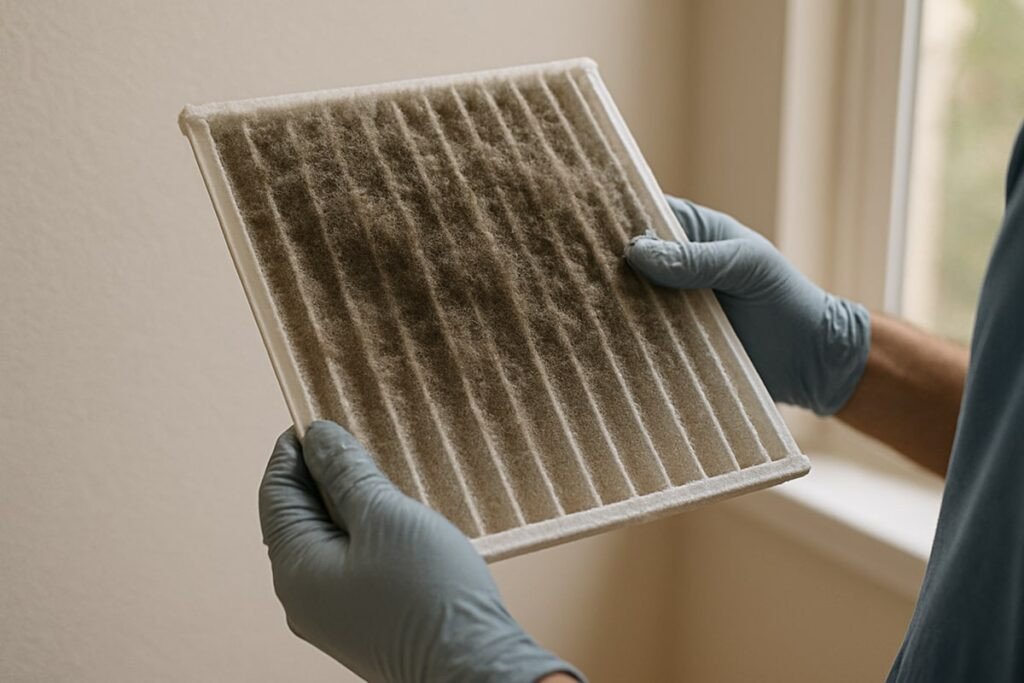
A dirty air filter is not itself the source of the musty smell, but it contributes to the conditions that allow mold to grow. A clogged filter reduces airflow across the coil. The reduced airflow causes the coil to run colder and produce more condensation. The coil stays wet longer between cycles. The filter also traps dust and organic matter that mold feeds on. When the filter becomes damp from the humid air passing through it, the trapped organic matter begins to mold. The filter itself becomes a source of the musty smell.
Replace the filter. A filter that is visibly dirty, grey with dust and debris, should be replaced immediately. A filter that has been in place for more than three months should be replaced regardless of appearance. During humid weather, the filter can absorb enough moisture to support mold growth before it looks visibly dirty. Replace the filter every one to two months during the cooling season in humid climates.
Cause #4: Mold in the Ductwork
If cleaning the coil, clearing the drain, and replacing the filter does not eliminate the musty smell, the mold may be in the ductwork. Mold in ducts grows where condensation forms on the inside of the ducts. This happens when cold air from the AC passes through ducts in an unconditioned space, like an attic or a crawlspace, and the warm, humid air outside the duct causes condensation on the inside. The condensation supports mold growth on the duct lining or on dust that has accumulated in the ducts.
Inspect the ducts that are accessible, in the attic, basement, or crawlspace. Look for signs of moisture: water stains on the duct exterior, damp insulation, or visible mold around the supply registers. Shine a flashlight into the ducts through a register opening. If the inside of the duct is coated with a dark, dusty, or fuzzy substance, the ducts may need professional cleaning. Duct cleaning costs $300 to $500 for an average house. The cleaning is only effective if the source of the moisture is eliminated. Insulate ducts in unconditioned spaces to prevent condensation. Seal duct joints to prevent humid air from entering the ducts. A duct that is clean but continues to condense moisture will be moldy again within a season.
Other Odors and When They Mean Something Different
A musty, earthy smell is mold. A smell like dirty socks, sometimes called Dirty Sock Syndrome, is a specific type of bacterial growth on the coil that produces a particularly unpleasant odor. The cause and the fix are the same as for mold: clean the coil. Dirty Sock Syndrome is more common with heat pumps because the coil alternates between heating and cooling, creating conditions that favor a particular type of bacteria.
A smell like rotten eggs or sulfur is not mold. It is natural gas. If you smell gas, turn off the furnace or the gas supply immediately, do not operate any electrical switches, leave the house, and call the gas company. A smell like burning or electrical overheating is not mold. It is an electrical component failing. Turn off the system and call a technician. A smell like a dead animal is a dead animal. Mice, rats, and birds can die in ductwork. The smell is localized to one room or one register. The fix is locating and removing the carcass. This is a job for a pest control company or a duct cleaning company. The odor will not go away on its own. It will intensify until the carcass is removed.
Frequently Asked Questions
What is Dirty Sock Syndrome and how do I fix it?
Dirty Sock Syndrome is a bacterial growth on the evaporator coil that produces a smell like sweaty socks. It is more common with heat pumps because the coil cycles between warm and cold. The fix is the same as for mold: clean the coil with a commercial coil cleaner. Some manufacturers offer a coil coating that resists bacterial growth. The coating is applied by a technician after the coil is cleaned.
Will a UV light in the ductwork eliminate the musty smell?
A UV light installed in the air handler, shining on the evaporator coil, can prevent mold and bacteria from growing on the coil surface. The UV light kills the organisms that cause the musty smell. It does not clean an already-contaminated coil. The coil must be cleaned before the UV light is installed. A UV light costs $200 to $500 installed and the bulb must be replaced annually. It is a prevention tool, not a cleaning tool.
Why does the smell only happen when the AC first starts?
The mold on the coil releases its odors continuously, but the odors accumulate in the air handler when the system is off. When the blower starts, the accumulated odors are pushed through the ducts all at once. The smell is most intense for the first few minutes and then fades as the odors are diluted by the airflow. The smell returns the next time the system cycles on. The pattern of smell at startup that fades during operation is characteristic of coil mold.
The Bottom Line
A musty smell from the AC is mold growing on the evaporator coil, in the drain pan, on the filter, or in the ductwork. Clean the coil. Clear the drain. Replace the filter. If the smell persists, inspect the ducts for moisture and mold. The mold is the symptom. The moisture that supports the mold is the cause. Eliminate the moisture by ensuring the drain line flows freely, the drain pan empties completely, and the ducts are insulated against condensation. A clean, dry AC system does not smell musty. A wet one does.