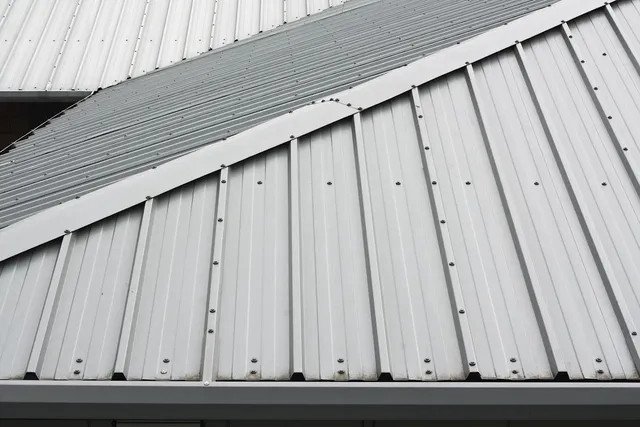
This guide covers the five clearest signs you need metal roofing — from your roof’s age and your climate to wildfire risk and solar panel plans. The strongest sign you need metal roofing is that your current asphalt shingle roof is approaching the end of its life and you do not want to replace it again in your lifetime, notes RPM Queen City experts. A metal roof costs $16,000 to $50,000 installed and lasts 40 to 70 years — roughly two to three times the lifespan of even the best architectural asphalt shingles. If you plan to stay in the house for more than 15 years, metal roofing costs less per year than asphalt and eliminates the disruption, the expense, and the landfill waste of a second or third roof replacement.
Metal roofing is not for every house, every climate, or every budget. The upfront cost is $8,000 to $20,000 higher than architectural asphalt. The installer pool is smaller — not every roofing contractor installs metal, and the ones who do charge higher labor rates. The material is worth the premium when the conditions are right. Here are the signs that the conditions are right for your house.
Sign 1: Your Asphalt Roof Is Due for Replacement
If your asphalt shingle roof is 18 to 22 years old and showing signs of wear — curling shingles, granule loss, recurrent leaks — you are facing a replacement decision. Replacing asphalt with asphalt costs $9,000 to $15,000 and buys 25 to 30 years of service. Replacing asphalt with metal costs $16,000 to $30,000 and buys 40 to 60 years. The metal roof costs roughly twice as much upfront and lasts roughly twice as long. The per-year cost is comparable — $300 to $600 for architectural asphalt, $267 to $750 for steel standing-seam. The difference is whether you want to replace the roof once or twice over the time you own the house.
If you are 55 years old and planning to stay in the house indefinitely, metal roofing is a one-time purchase. You will never replace the roof again. If you are 35 and planning to move in 10 years, the metal roof premium will not be recovered at resale unless metal roofing is common in your neighborhood and buyers expect it. The age at which you replace the roof, combined with how long you plan to stay, determines whether metal is a financial decision or an emotional one.
Sign 2: You Live in a Climate That Punishes Asphalt
Metal roofing outperforms asphalt in specific climates where asphalt degrades faster than its rated lifespan. In hot, sunny climates, the Southwest, Texas, Florida, asphalt shingles absorb solar radiation, which accelerates granule loss and shortens the roof’s life by 3 to 5 years compared to cooler climates. A metal roof reflects solar radiation, reducing the attic temperature by 30 to 50 degrees and cutting cooling costs by 10% to 25%. In a hot climate, metal roofing is not just a longer-lasting material. It is a cooling strategy that pays for itself in reduced energy bills over the life of the roof.
In cold, snowy climates, the Northeast, the Mountain West, the Upper Midwest, metal roofing sheds snow faster than asphalt. Snow slides off the slick metal surface rather than accumulating and forming ice dams at the eaves. Ice dams are the leading cause of winter roof leaks in cold climates. A metal roof does not prevent ice dams entirely, poor attic insulation and ventilation are the root cause, but it reduces the snow load that feeds them. Snow guards must be installed on metal roofs in snow country to prevent sudden snow slides from damaging gutters, landscaping, and anything underneath the eaves.
In coastal climates within a mile of salt water, aluminum metal roofing is the only roofing material that will not corrode from salt spray. Galvanized steel rusts within a decade of constant salt exposure. Asphalt shingles hold up reasonably well in coastal environments but are vulnerable to wind uplift from hurricane-force winds. Metal roofing, properly installed with concealed clips on a standing-seam profile, has the highest wind resistance rating of any roofing material, typically 140 to 160 mph, sufficient for hurricane zones.
The U.S. Department of Energy identifies reflective metal roofing as one of the most effective strategies for reducing cooling loads in hot climates. The combination of solar reflectance and thermal emittance, the ability to shed absorbed heat, makes metal roofing a contributing factor to overall home energy efficiency. The energy savings are real. They are also specific to the climate. A metal roof in Minneapolis saves less energy than a metal roof in Phoenix. The material is the same. The climate is the variable.
Sign 3: You Live in a Wildfire Zone
Metal roofing is Class A fire-rated, the highest rating available for resistance to external fire exposure. In wildfire-prone areas, California, Colorado, the Pacific Northwest, parts of Texas and the Southwest, building codes increasingly require Class A roofing materials, and many insurers offer premium discounts for homes with Class A roofs. Asphalt shingles can achieve Class A fire ratings, but metal roofing achieves it inherently, the material itself will not ignite from airborne embers. In a wildfire zone, metal roofing is not an upgrade. It is a fire-safety measure that also happens to be a roof.
Sign 4: You Are Installing Solar Panels
If you are planning to install solar panels on your roof, replace the roof with metal before the panels go on. A metal roof lasts 40 to 60 years. Solar panels last 25 to 30 years. Installing solar panels on an asphalt roof that will need replacement in 10 to 15 years means paying to remove and reinstall the panels when the roof is replaced, a cost of $3,000 to $8,000 for the panel removal and reinstallation, plus the cost of the roof replacement. A metal roof under the solar panels eliminates that future expense. The roof will outlast the panels. The panels will be removed once, at the end of their life, and the roof underneath will still have 15 to 35 years of service remaining.
Standing-seam metal roofing is also the best roof type for solar panel mounting because the panels can be clamped to the standing seams without penetrating the roof surface. Asphalt shingle roofs require brackets that are fastened through the shingles and into the decking, creating penetrations that must be flashed and sealed. The standing-seam clamp is a non-penetrating connection. No holes. No flashing. No leak risk at the mounting points.
Sign 5: You Want to Roof This House Once
Metal roofing is the material for homeowners who want to write one check and never think about the roof again. A standing-seam metal roof installed correctly at age 50 will still be performing at age 90. The homeowner will not be there to see it, but the roof will be there. The fasteners are concealed. The panels are coated with a Kynar 500 or Hylar 5000 finish rated for 30 years before any visible fading. The underlayment underneath the metal will need replacement before the metal itself does, the synthetic underlayment lasts 30 to 50 years, and the metal panels must be removed and reinstalled to replace it. That is a mid-life service, not a replacement. The metal goes back on. The roof continues.
Metal roofing is not for every house. It costs more. It requires a specialized installer. It can dent under large hail. It is noisier in rain than asphalt, rain on a metal roof produces a distinct sound that some homeowners find pleasant and others find irritating, though the difference is subtle with a solid deck and attic insulation underneath. The noise is noticeable in a room with a vaulted ceiling and no attic space. It is imperceptible in a room with an attic and insulation above it.
Frequently Asked Questions
How do I know if metal roofing is right for my house?
Metal roofing is right for you if: you plan to stay in the home for more than 15 years, you live in a hot climate where cooling-cost savings matter, you live in a wildfire zone, you are installing solar panels, or you want to roof the house once and never replace it again. Metal roofing is not right for you if you plan to sell within 10 years or if the upfront premium, $8,000 to $20,000 over architectural asphalt, exceeds your budget.
Does a metal roof increase home value?
A metal roof recovers 60% to 70% of its cost at resale. In neighborhoods where metal roofing is common, the recovery is higher. In neighborhoods where every house has asphalt, a metal roof may not command a premium. Buyers who value longevity and low maintenance will pay for a metal roof. Buyers who are comparing square footage and bedroom count will not.
Is a metal roof noisy when it rains?
Metal roofing over a solid deck with underlayment and attic insulation is not significantly noisier than asphalt. The reputation for noise comes from metal installed over open purlins on barns and agricultural buildings with no decking. A residential metal roof over plywood decking with insulation above the ceiling is comparable in sound to any other roofing material.
Can metal roofing be installed over existing asphalt shingles?
Yes, in most jurisdictions, metal roofing can be installed over a single layer of existing asphalt shingles. This saves $3,000 to $5,000 in tear-off and disposal costs. The underlayment must be installed over the shingles, and the decking condition cannot be verified. Metal-over-shingles is acceptable if the existing roof is sound and the decking is known to be in good condition. It is a gamble if the decking condition is unknown.
Does hail damage metal roofs?
Large hail, golf ball-sized or larger, can dent metal roofing panels. The dents are cosmetic: they do not cause leaks, they do not reduce the roof’s lifespan, and they do not require repair. Insurance policies typically cover cosmetic hail damage to metal roofs, though the deductible may exceed the cost of replacing the dented panels. A metal roof that survives a hailstorm with cosmetic dents is still a functional roof. An asphalt roof that survives the same storm may need replacement.
How long does a metal roof last?
Steel and aluminum standing-seam metal roofs last 40 to 60 years. Copper roofs last 70 to 100 years. Zinc roofs last 60 to 90 years. The panel itself will outlast its fasteners, its underlayment, and its owner. The roof system, panels, fasteners, underlayment, flashing, lasts as long as its shortest-lived component, which is typically the underlayment at 30 to 50 years.
The Signs Add Up to One Decision
If your asphalt roof is due for replacement and you plan to stay in the house for more than 15 years, metal roofing is the right choice. The per-year cost is comparable to architectural asphalt. The energy savings in a hot climate tip the math in metal’s favor. The fire resistance in a wildfire zone makes metal the safe choice. The solar panel compatibility makes metal the practical choice if panels are in your future.
If you are moving in 10 years or less, architectural asphalt is the right choice. The metal roof premium will not be recovered at resale. The next buyer may not value the longevity. The money you save on the roof today is money you can spend on the house you will live in tomorrow. Metal roofing is a long-term decision for a long-term house. If the house is not your long-term house, the roof does not need to be a long-term roof. The math is honest. The decision follows from the math. Ever driven through a neighborhood after a hailstorm and noticed which roofs are being replaced and which are not? The asphalt roofs have tarps on them. The metal roofs have dents. The dents are cosmetic. The tarps are not. That is the difference in a single image. The math is behind it. The image is what you remember.