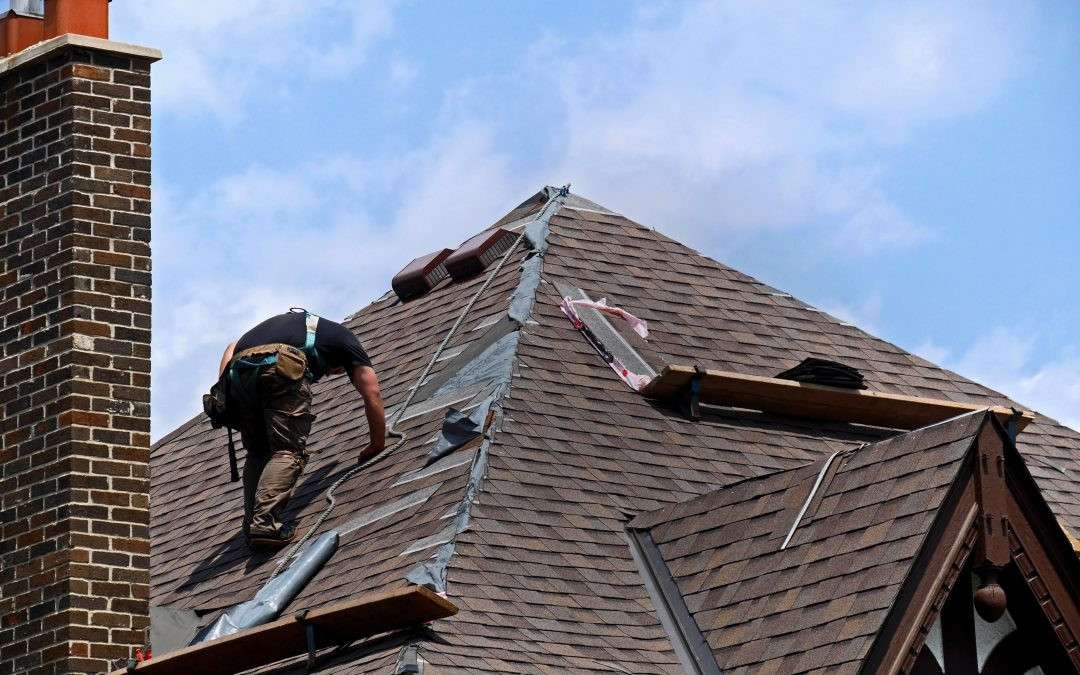
This roof replacement options guide helps you decide by comparing materials, costs, and climate factors side by side. Choosing between roof replacement options comes down to four variables: how long you plan to stay in the house, what your local climate demands, what your budget can absorb upfront versus over time, and whether your roof structure can support the weight of heavier materials. Get those four answers right and the material choice almost makes itself, says Impact Realty Property Management team.
Most homeowners fixate on the upfront cost and ignore the per-year math. A $12,000 asphalt roof that lasts 25 years costs $480 per year. A $28,000 metal roof that lasts 50 years costs $560 per year. The metal roof is more than twice as expensive to install and nearly identical per year. That trade-off — upfront pain versus long-term value — is the central decision in every roof replacement.
The Four Main Material Categories
Every roof replacement option falls into one of four material families. Each has a distinct cost range, lifespan, weight, and set of trade-offs. Start here before you think about colors, brands, or contractors.
Asphalt Shingles — the Default, and Usually the Right Answer
Asphalt shingles cover roughly 80% of American homes for a reason. They cost $7,000 to $15,000 installed on a typical 2,000-square-foot roof and last 20 to 30 years depending on the grade. Three-tab shingles sit at the low end of both cost and lifespan. Architectural shingles cost about 20% more and last about 30% longer. The upgrade from three-tab to architectural is the single best value decision in roofing — roughly $3,000 extra for ten additional years of service and better wind resistance.
Asphalt is the right choice for most homeowners because it balances cost, availability, and installer familiarity. Every roofing crew in the country can install asphalt shingles correctly. The same cannot be said for metal, tile, or slate. A material is only as good as the installer who puts it on your roof, and asphalt has the deepest installer pool by a wide margin.
Metal Roofing — Higher Cost, Much Longer Life
Steel standing-seam metal roofing costs $16,000 to $30,000 for a typical home and lasts 40 to 60 years. The per-year cost is competitive with asphalt, but the upfront premium, $8,000 to $15,000 more, means metal only makes financial sense if you plan to stay in the house for at least 15 years. Sell before then and you will not recoup the premium.
Metal’s advantages go beyond lifespan. It reflects solar heat better than asphalt, which can reduce cooling costs by 10% to 25% in hot climates. It is Class A fire-rated, impervious to rot and insects, and light enough that most homes do not need structural reinforcement. The disadvantages are real: metal is noisier in rain, can dent under large hail, and requires a contractor who specializes in metal installation, a smaller pool that commands higher labor rates.
Aluminum panels cost slightly more than steel but do not rust, making them the preferred metal option for coastal homes within a mile of salt water. Copper and zinc are premium metals at $30,000 to $60,000 installed, lasting 70 to 100 years. They are architectural statements, not practical decisions, and should be evaluated accordingly.
Tile and Slate, Centuries of Service, at a Price
Clay tile, concrete tile, and natural slate are the heaviest, most expensive, and longest-lasting roof replacement options. Clay tile costs $20,000 to $40,000 and lasts 50 to 100 years. Concrete tile costs $14,000 to $30,000 with a similar lifespan. Natural slate costs $30,000 to $60,000 and can last 75 to 200 years depending on the quarry and installation quality.
The weight is the limiting factor. Tile and slate weigh 600 to 1,500 pounds per square, compared to 200 to 400 pounds for asphalt. If the existing roof structure was not engineered for that load, and most standard residential framing is not, structural reinforcement adds $3,000 to $8,000 before the first tile is installed. Get a structural evaluation before you price tile or slate. The answer determines whether these options are realistic or aspirational.
Tile and slate make the most sense on homes where the architectural style demands them, Spanish Colonial, Mediterranean, historic preservation districts, and on forever homes where the owner wants to roof the house once and never think about it again. They do not make sense as a cost-saving measure masquerading as a premium choice. The math does not work that way.
Full Replacement vs. Partial Replacement, When Less Is More
A full roof replacement is the default. A partial replacement, replacing only one slope, one dormer, or one section, is an option when the damage is concentrated in a structurally independent area and the rest of the roof is in good condition with at least ten years of expected life remaining.
Partial replacement saves money upfront but introduces two complications. First, matching new shingles to old is extremely difficult after the first few years of sun exposure. The replacement section will be visibly darker, and the color discrepancy will persist for years. Second, a partial replacement creates a seam between new and old roofing where water can enter if the flashing detail is not done perfectly. Most contractors will do partial replacement. Most will also warn you, in writing, that they cannot guarantee the seam between old and new will remain watertight beyond the warranty period.
The National Roofing Contractors Association (NRCA) recommends full replacement over partial replacement whenever the existing roof is past the midpoint of its expected lifespan, even if only one section shows visible damage. The logic is straightforward: the section that looks fine today will fail within a few years of the section that already failed, and you will pay for mobilization, permits, and disposal twice instead of once.
Cost Comparison, Upfront vs. Per Year
The decision between replacement options often hinges on a single number that most quotes do not include: cost per year of expected service. Here is how the math breaks down for a typical 2,000-square-foot home in 2026.
| Option | Upfront Cost | Lifespan | Cost/Year | Best For |
| Asphalt 3-Tab | $7,000 – $9,000 | 15–20 yrs | $350 – $600 | Budget-conscious, selling within 10 years |
| Architectural Asphalt | $9,000 – $15,000 | 25–30 yrs | $300 – $600 | Best value for most homeowners |
| Steel Standing-Seam | $16,000 – $30,000 | 40–60 yrs | $267 – $750 | Forever home, hot climates |
| Aluminum | $18,000 – $32,000 | 40–60 yrs | $300 – $800 | Coastal homes (salt-resistant) |
| Concrete Tile | $14,000 – $30,000 | 50+ yrs | $280 – $600 | Mediterranean/Spanish style homes |
| Clay Tile | $20,000 – $40,000 | 50–100 yrs | $200 – $800 | Historic, high-end architectural |
| Natural Slate | $30,000 – $60,000 | 75–200 yrs | $150 – $800 | Forever home, premium aesthetic |
| Synthetic Composite | $12,000 – $22,000 | 30–50 yrs | $240 – $733 | Want slate look without slate weight |
Notice that architectural asphalt and steel standing-seam have nearly identical per-year costs. The difference is purely cash flow: can you afford the metal upfront premium of $7,000 to $15,000 in exchange for not replacing the roof again in your lifetime? If the answer is yes and you plan to stay put, metal makes mathematical sense. If the answer is no, architectural asphalt gets you 90% of the way there at 60% of the upfront cost.
Climate and Location, the Tiebreaker
Where you live should influence what you choose more than most homeowners realize. The same roof that performs beautifully in Phoenix can fail prematurely in Minneapolis, and vice versa.
Hot, sunny climates (Southwest, Texas, Florida): light-colored metal or tile reflects solar radiation and reduces cooling loads. Asphalt shingles absorb heat, which accelerates granule loss and shortens lifespan by three to five years compared to cooler climates. If you live where summer temperatures routinely exceed 95 degrees, the heat-reflective properties of metal or light-colored tile are not a nice-to-have. They are a longevity multiplier.
Cold, snowy climates (Midwest, Northeast, Mountain West): asphalt shingles with a steep pitch shed snow effectively and provide good ice-dam resistance when paired with ice-and-water shield at the eaves. Metal roofs shed snow even faster, the slick surface releases snow in sheets, but the sudden snow slides can damage gutters and landscaping below. Snow guards are a required add-on for metal in snow country.
Coastal, salt-spray climates: aluminum or copper are the only metal options that resist salt corrosion. Galvanized steel rusts within a decade of constant salt exposure. Tile and slate perform well in coastal environments but are heavy enough to be a concern in hurricane zones where wind uplift codes demand enhanced fastening systems.
Hail-prone regions (Great Plains, Colorado, Texas Panhandle): Class 4 impact-rated asphalt shingles, available from most major manufacturers, are the most cost-effective hail defense. Metal roofs survive hail without leaking but can dent visibly, which matters if you care about appearance from the street. Tile and slate can crack under large hail and are expensive to repair.
A Decision Framework in Four Questions
Answering four questions in sequence — ownership horizon, climate demands, structural capacity, and budget type — will point you to the right roof replacement option in about five minutes. Start at the top and stop when the answer is clear.
1. How long will you own this house? Less than 10 years → architectural asphalt. More than 20 years → metal or tile become viable. The breakeven point for metal over asphalt is roughly 15 years of ownership.
2. What does your climate demand? Hot climate → light-colored metal or tile saves cooling costs. Snow country → steep pitch with ice-and-water shield, asphalt or metal both work. Coastal → aluminum or tile. Hail belt → Class 4 impact-rated asphalt.
3. Can your roof structure support the weight? If the answer is no and structural reinforcement exceeds your budget, asphalt is the default. This question eliminates tile and slate for most standard-framed homes.
4. What is your upfront budget versus your per-year budget? If you have $20,000 in cash or financing capacity, metal is on the table. If you have $10,000, architectural asphalt is your best option. If you have $7,000, three-tab asphalt gets the job done. None of these are bad choices. They are different choices for different financial realities. Wish someone had told you that before you spent three weekends Googling shingle colors?
Frequently Asked Questions
What is the best roof replacement option for most homeowners?
Architectural asphalt shingles are the best option for most homeowners. They cost $9,000 to $15,000 for a typical home, last 25 to 30 years, and offer the best balance of upfront cost, lifespan, wind resistance, and installer availability. The upgrade from three-tab to architectural costs about $3,000 and is almost always worth it.
Is a metal roof worth the extra cost over asphalt?
Yes, if you plan to stay in the house for more than 15 years. The per-year cost of steel standing-seam metal is comparable to architectural asphalt, $267 to $750 per year versus $300 to $600, but the upfront premium of $7,000 to $15,000 only makes sense if you will own the house long enough to realize the lifespan advantage. Metal also reduces cooling costs by 10% to 25% in hot climates.
Can I replace my roof with a different material than what I have now?
Yes, as long as the roof structure can support the new material’s weight and the local building code allows it. Switching from asphalt to metal requires no structural changes in most homes. Switching from asphalt to tile or slate almost always requires a structural evaluation and often requires reinforcement.
What is the cheapest roof replacement option?
Three-tab asphalt shingles are the cheapest option at $7,000 to $9,000 for a typical home. They last 15 to 20 years. Architectural asphalt shingles cost $2,000 to $6,000 more but last 25 to 30 years, making them cheaper per year despite the higher upfront cost.
How do I choose between asphalt and metal roofing?
Choose asphalt if you plan to sell within 15 years or have a limited upfront budget. Choose metal if you plan to stay long-term, live in a hot climate where cooling-cost savings matter, or want to roof the house once and never replace it again. The per-year costs are similar. The difference is cash flow and ownership horizon.
Does the roof material affect home resale value?
Yes. A new architectural asphalt roof recovers 60% to 70% of its cost at resale. Metal and tile roofs can recover 70% to 85% in markets where those materials are common and expected. In a neighborhood where every house has asphalt, a metal roof may not command a premium. Match the neighborhood standard unless you plan to stay indefinitely.
The Option That Makes the Most Sense Right Now
Architectural asphalt shingles are the right choice for most people most of the time. They are not the flashiest option. They are not the longest-lasting. They are the option that balances cost, lifespan, installer availability, and resale value better than anything else on the market.
If you have the budget and the time horizon, metal earns its premium. If you have the structure and the architectural context, tile and slate are beautiful forever-roofs. But for the homeowner standing in the driveway looking up at a roof that needs to be replaced by winter, architectural asphalt is rarely the wrong answer. It is just not the only one.