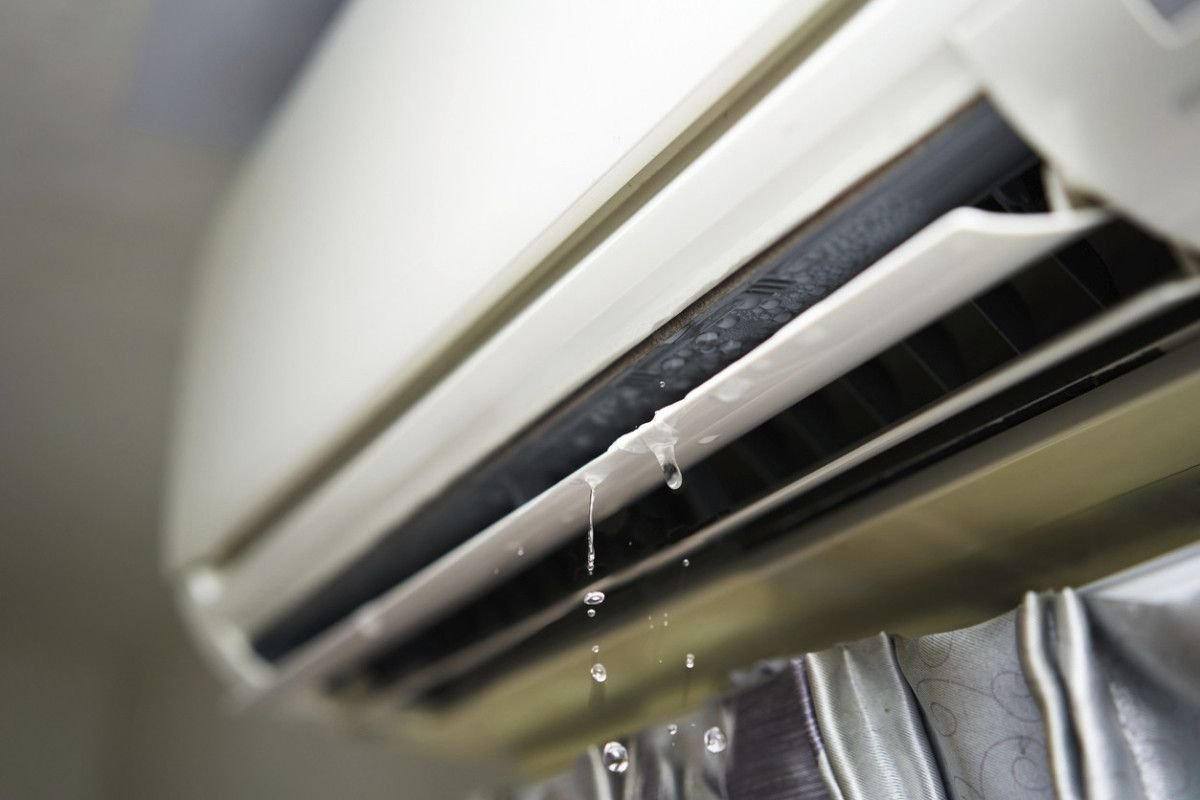
An air conditioner that is leaking water inside the house is a problem that ranges from a five-minute fix you can do yourself to a repair that requires a technician and several hundred dollars. The water is condensation. The AC produces it as a byproduct of cooling the air. Under normal conditions, the water drips off the evaporator coil, collects in a drain pan, and flows out of the house through a condensate drain line. When something interrupts that flow, the water ends up on the floor, in the ceiling below the attic unit, or running down the wall from a window unit. The cause is almost always one of four things: a clogged drain line, a dirty air filter, a low refrigerant charge, or a failed condensate pump. Diagnosing the problem means checking each of these in order of likelihood. Fixing it means clearing the clog, replacing the filter, calling a technician, or replacing the pump.
The water leaking from an air conditioner is not a sign that the AC is about to fail catastrophically. It is a sign that the drainage system has failed. The AC itself is probably fine. The water it produces is not finding its way to the drain. The fix is almost always in the drain line, the filter, or the pump. The refrigerant level is the least likely cause and the most expensive to fix. Start with the drain line. It is the culprit more than half the time.
EPA WaterSense advises that detecting and fixing water leaks promptly can save thousands of gallons of water and prevent damage to your home. An air conditioner leak may not waste water in the same way a plumbing leak does, but the water damage to floors, ceilings, and walls from an unchecked AC leak can be just as expensive as any plumbing failure.
Cause #1: Clogged Condensate Drain Line
The condensate drain line is a PVC pipe, typically three-quarters of an inch in diameter, that runs from the air handler or furnace to a floor drain, a utility sink, or the outside of the house. Over time, the inside of the pipe accumulates a sludge of algae, mold, and dust that washes off the evaporator coil. The sludge eventually clogs the pipe completely. Water backs up into the drain pan, overflows, and leaks onto the floor or through the ceiling. This is the most common cause of an AC leak by a wide margin.
The fix depends on the location of the clog. If the clog is near the end of the drain line, you can often clear it by removing the end cap if there is one, or by inserting a wet-dry vacuum hose over the end of the pipe and sucking the clog out. The vacuum pulls the sludge backward out of the pipe. Run the vacuum for a minute or two. You will hear the clog release when it breaks free and the vacuum sound changes. Pour a cup of water into the drain pan or the cleanout tee to confirm the line is flowing freely.
If the clog is deeper in the pipe or the vacuum does not clear it, locate the cleanout tee. The cleanout is a vertical section of pipe with a removable cap, located near the air handler. Remove the cap. If water gushes out, the clog is downstream of the cleanout. If the cleanout is dry, the clog is between the drain pan and the cleanout. Pour water into the cleanout. If it drains, the line downstream is clear. If it backs up, the clog is downstream. Use a plumber’s snake or a length of stiff wire to break up the clog. Flush the line with water afterward.
Prevent future clogs by pouring a cup of white vinegar or bleach into the drain line every three months during cooling season. The vinegar or bleach kills the algae and mold before it can accumulate into a clog. Mark it on the calendar. A $2 bottle of vinegar poured quarterly prevents the most common AC problem entirely.
Routine care for your entire cooling system can support long-term operational efficiency and significantly limit unexpected system strain during peak seasonal use. When troubleshooting home systems or seeking proactive upkeep, consulting a professional air conditioning contractor can help ensure minor operational changes are managed before they lead to water accumulation or component damage.
Consistently maintaining the drainage network also prevents localized moisture accumulation that could cause minor structural problems over time. When property owners require expert assistance to diagnose persistent blockages or manage more technical system care, they can view our service details to coordinate with local professionals. Prompt resolution of these early concerns limits overall wear on your heating and cooling equipment.
Cause #2: Dirty Air Filter Causing Coil Freeze
A dirty air filter restricts airflow across the evaporator coil. The reduced airflow causes the coil temperature to drop below freezing. The condensation on the coil freezes into a block of ice. When the AC cycles off, the ice melts rapidly. The meltwater overwhelms the drain pan and leaks onto the floor. The puddle appears after the AC has been running for a while and then shuts off. The water is cold. If you see ice on the indoor unit or on the refrigerant lines, the coil is frozen.
The fix is to turn the AC off and let the ice melt. This takes several hours. Turn the fan to “On” at the thermostat to blow warm air across the coil and speed up the melting. Place towels around the unit to catch the meltwater. Once the ice is gone, replace the dirty air filter. A severely clogged filter should be replaced immediately. A moderately dirty filter that has not been changed in three months or more is likely the cause. Replace it. Turn the AC back on and check that the coil is not freezing again. If the coil freezes again with a clean filter, the problem is not the filter. Move to cause number three.
Cause #3: Low Refrigerant Causing Coil Freeze
A low refrigerant charge produces the same symptoms as a dirty filter: reduced pressure in the evaporator coil, coil temperature below freezing, ice formation, and meltwater overflow. The difference is that replacing the filter does not fix it. The refrigerant is low because there is a leak in the system. Adding refrigerant without fixing the leak is a temporary solution that costs money and does not solve the underlying problem.
Diagnosing low refrigerant requires a technician with pressure gauges. The refrigerant pressures are specific to the system, the outdoor temperature, and the indoor temperature. A homeowner cannot diagnose low refrigerant without the tools. If the drain line is clear, the filter is clean, and the coil is still freezing, call a technician. The repair involves locating the leak, repairing it, evacuating the system, and recharging it with the correct amount of refrigerant.
Unresolved low refrigerant levels will cause the internal cooling coils to repeatedly freeze and thaw, accelerating home moisture problems. If your unit is struggling with structural leaks or constant ice blockages, scheduling emergency ac repair in Winchester can help restore proper system balance. Quick technical interventions limit secondary water damage to walls and maximize your system’s overall seasonal performance.
The cost is $300 to $1,500 depending on the location of the leak and the type of refrigerant. Systems that use R-22 refrigerant, which was phased out of production in 2020, are more expensive to recharge because the remaining supply of R-22 is limited and expensive.
Cause #4: Failed Condensate Pump or Cracked Drain Pan
If the air handler is located in a basement or an attic where gravity drainage is not possible, a condensate pump lifts the water up to a drain line. The pump sits in a small reservoir next to or under the air handler. When the water level in the reservoir rises, a float switch activates the pump, which pumps the water out through a small vinyl tube. If the pump fails, the reservoir overflows.
Test the pump by pouring water into the reservoir. The pump should activate and pump the water out. If the pump does not activate, check that it is plugged in and that the outlet has power. If the pump has power but does not run, the float switch is stuck or the pump motor has failed. Clean the float switch. If the pump still does not run, replace it. A new condensate pump costs $50 to $100 and can be replaced by a homeowner in under an hour. Disconnect the old pump, connect the new pump to the drain line and the vinyl discharge tube, plug it in, and test it.
The drain pan is the metal or plastic pan under the evaporator coil. Over time, a metal pan can rust through. A plastic pan can crack. A cracked or rusted drain pan leaks water directly onto the floor or through the ceiling. The pan cannot be repaired. It must be replaced. Replacing the drain pan requires removing the evaporator coil, which is a job for a technician. The pan itself costs $50 to $150. The labor to access it costs $300 to $800. A cracked drain pan in an older unit may be the point where replacement of the entire air handler or the entire AC system makes more economic sense than repairing the pan.
Window and Portable AC Leaks
Window air conditioners and portable units produce condensation the same way central systems do. The difference is how they manage it. A window AC is designed to be installed with a slight tilt toward the outside so that condensation drains out the back of the unit. If the unit is level or tilted toward the inside, water pools in the bottom and leaks into the room. Check the tilt with a level. The unit should slope about a quarter inch toward the outside. Adjust the mounting bracket or add shims under the front edge of the unit.
A portable AC collects condensation in an internal reservoir. Some units evaporate the water back into the exhaust air. Some require manual draining. If a portable AC is leaking, the reservoir is full and the drain plug needs to be opened to empty it. Some units have a continuous drain option that connects a garden hose to the drain port and runs it to a floor drain.
Frequently Asked Questions
How much water should an air conditioner produce?
A central air conditioner produces five to twenty gallons of condensation per day depending on the humidity level, the size of the system, and how long it runs. In a humid climate, the AC acts as a dehumidifier and produces more water. The water should flow out the drain line continuously while the AC is running. A steady drip or trickle from the end of the drain line is normal. A dry drain line on a humid day indicates a clog.
Should I turn off the AC if it is leaking?
Yes, turn it off until the cause is identified and fixed. Water leaking from an AC can damage floors, ceilings, and walls. The water may also be leaking onto electrical components inside the air handler. Turn the AC off at the thermostat. If the water is leaking through a ceiling, place a bucket under the leak and turn the AC off. The repair can usually wait until morning unless the leak is severe. A severe leak warrants an emergency service call.
When water pooling begins to threaten surrounding walls or electronics, acting immediately prevents further home deterioration. Securing prompt support from a trained technician ensures the underlying issue is resolved before structural damage occurs. Homeowners facing sudden cooling system failures can request emergency ac repair in Harvey to restore proper drainage and protect their property from extensive indoor flooding.
Why does my AC only leak at certain times of the year?
An AC that leaks only during the hottest, most humid weather is usually struggling with an undersized or partially clogged drain line. The high humidity produces more condensation than the drain line can handle when it is partially restricted. A drain line that works fine in moderate weather overflows during a heat wave. The fix is the same: clear the drain line, or upgrade to a larger diameter line if the clogging is recurrent despite regular vinegar flushes.
The Bottom Line
An air conditioner leaking water inside the house is caused by a clogged drain line, a dirty air filter, a low refrigerant charge, or a failed condensate pump, in that order of likelihood. Check the drain line first. Clear the clog with a wet-dry vacuum or a wire snake. Replace the filter if it is dirty. If the coil is freezing and the filter is clean, call a technician for a refrigerant diagnosis. Test the condensate pump by pouring water into the reservoir. A window unit leaking into the room is probably not tilted correctly. The fix for most AC leaks takes less than an hour and costs less than $20. The exception is a refrigerant leak, which requires a technician and can cost several hundred dollars or more.