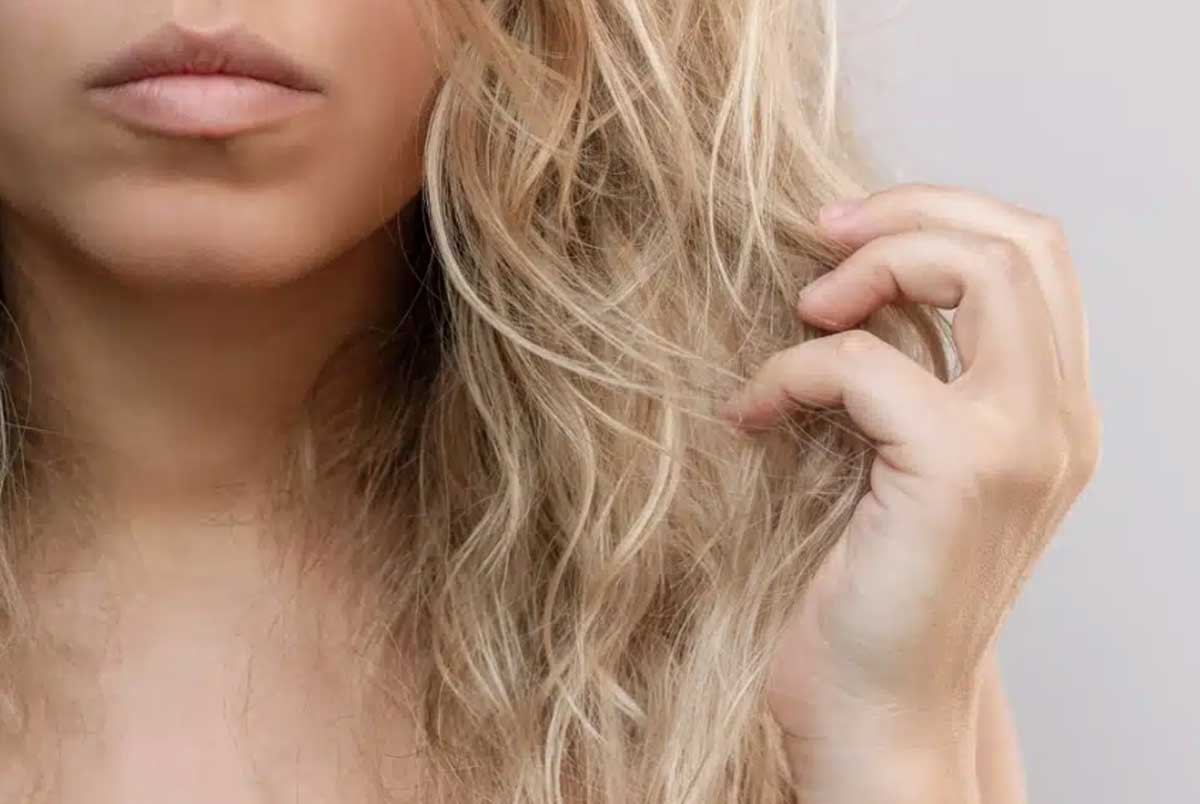
When bleach has gone too far, hair usually gives itself away in the shower: it stretches, tangles, feels rough, and leaves short snapped pieces on your hands instead of clean full-length shed hairs.
The practical answer to how to repair damaged hair from bleach is not to hunt for one miracle mask. It is to stop the damage cycle, add back slip and strength, trim what is already splitting, and treat new growth more gently than the hair you already lightened.
That is because bleach is hard on the fiber itself. Cleveland Clinic notes that bleaching and lightening products strip away the protective coating of the hair fibers, leaving the shaft thinner and weaker.
This is general hair-care education, not a diagnosis. If you have scalp burning, blistering, patchy hair loss, or breakage that is happening in clumps, skip home-repair mode and get professional help.
What Bleach Damage Can and Cannot Be Repaired
If your hair looks passable when dry but turns sticky, stretchy, or wildly tangled once it gets wet, you are no longer dealing with ordinary dryness. Dryness, roughness, tangling, and weak flexibility often improve with gentler handling and conditioning. Split ends, snapped lengths, and sections that stretch and do not bounce back usually need trimming.
Think of repair as damage control, not time travel. Masks, leave-ins, and bond-focused treatments can make the hair more comfortable, shinier, and harder to snap. They cannot weld a frayed end back into a healthy strand.
| What you notice | What it usually means | First move |
|---|---|---|
| Dry, rough, straw-like feel | Lost lubrication and raised cuticle | Use conditioner every wash, add a mask once or twice a week, cut back on heat |
| Hair stretches when wet and feels mushy | Severely weakened fiber | Handle gently, reduce manipulation, use one strengthening treatment at a time, consider a trim |
| White dots, mid-length snapping, short broken pieces | Breakage along the shaft | Stop bleach and hot tools for now, use leave-in slip, trim the worst areas |
| Split or see-through ends | Old damage that keeps traveling upward | Book a trim instead of trying to coat the ends forever |
| Red, itchy, scaling, or blistered scalp | Irritation or reaction, not just dry hair | Stop self-treating and get professional advice |
The American Academy of Dermatology Association explains that damaged hair is fragile and tends to break, and ongoing damage can eventually lead to thinning or bald spots. The frustrating part is that hair can feel softer after one good mask and still be structurally weak enough to snap at the next rough brush-through.
What to Stop Doing Right Now
The damage usually keeps snowballing on regular mornings, not just on the day you bleached it. The fastest way to improve bleached hair is to remove the habits that keep reopening the damage. Pause fresh bleach, reduce hot tools, detangle only with slip, and protect the hair from friction, sun, and pool chemicals while it is still fragile.
- Stop stacking another chemical service on top of fresh damage. Bleach, relaxers, perms, and aggressive toning sessions are a bad pile-up when the fiber is already weak.
- Put the flat iron and curling wand on a short leash. If you must use heat, use a protectant and the lowest setting that actually works.
- Quit rough towel drying. Blot or wrap the hair instead of rubbing it back and forth.
- Do not dry-brush fragile knots. Detangle with conditioner or leave-in on damp hair and a wide-tooth comb.
- Do not leave pool water or heavy buildup sitting on the hair for days. Rinse, then shampoo and condition promptly.
The AAD advises using conditioner after every shampoo, letting hair air-dry when possible, using the lowest heat setting when you need tools, and stretching color touch-ups to every 8 to 10 weeks or longer when possible. Its coloring guidance also warns that lightening more than three shades usually needs stronger peroxide, which means more damage risk, and that dyed or bleached hair is more vulnerable to sun damage.
Recovery often starts with subtraction. Over-processed hair rarely wants a bigger routine. It wants fewer insults per week. The pressure point is timing, because hair that feels almost normal on one wash day can still snap the next time you style it like nothing happened.
The Routine That Helps More Than It Hurts
On a good wash day, the real test comes ten minutes later, when you start combing and the hair either glides or fights back. The safest routine is simple and repetitive: cleanse gently, condition every wash, add a bond-focused or strengthening treatment on schedule, protect the hair from heat and friction, and use leave-in products to cut down breakage between washes.
Think in jobs, not hype. Shampoo cleans the scalp. Conditioner restores slip. Bond builders are for weak, over-lightened strands. Deep masks help dry hair feel less like straw. Leave-in products and heat protectants lower friction during the part of the week when most breakage actually happens.
| Step | How often | What it helps | Common mistake |
|---|---|---|---|
| Gentle shampoo | About 2 to 3 times a week, or as needed for oil and buildup | Keeps the scalp clean without rough treatment on fragile lengths | Scrubbing the lengths aggressively |
| Rinse-out conditioner | Every wash | Slip, less tangling, easier detangling | Skipping it because the hair felt fine once |
| Bond or strengthening treatment | Roughly weekly, following the product directions | Weak, over-lightened hair that snaps easily | Layering several strong treatments in one wash day |
| Deep conditioning mask | 1 to 2 times a week | Dryness, rough texture, reduced flexibility | Expecting softness to mean the strand is fully recovered |
| Leave-in conditioner and heat protectant | Every wash day and before heat | Less snapping during combing and styling | Using hot tools on bare hair |
If hair feels stretchy and weak when wet, be careful about piling on every strong treatment you own in the same week. One structured strengthening product plus consistent conditioner is usually easier to read and easier to stick with. If the hair feels stiff, rough, and dull instead, moisture and leave-in slip often matter more that week.
A good wash day can make hair look almost normal. Normal-looking hair is not always strong hair, and that is where a lot of people get tricked into overstyling it again too soon. The tradeoff is patience: quick cosmetic softness is easy to buy, while real stability is slower and much less glamorous.
A Realistic 4-Week Recovery Plan
The first month gets won in boring bathroom routines, not in dramatic before-and-after promises. The first month should focus on fewer breakage events, not instant perfection. In week one, stabilize the routine. In weeks two and three, repeat what works without improvising. By week four, decide whether the ends are actually improving or just being temporarily coated.
- Week 1: stop bleach, stop unnecessary heat, trim obvious split ends if you can, and commit to conditioner plus leave-in every wash.
- Week 2: add one strengthening or bond-focused treatment if the hair still feels weak or overly elastic.
- Week 3: reassess the ends. If they keep knotting, thinning out, or snapping mid-length, a proper trim will help more than another product order.
- Week 4: decide what stays. Keep the few steps that clearly reduce breakage and drop the rest.
If money is tight, buy in this order: conditioner, leave-in detangler, heat protectant if you use hot tools, then one repair treatment. Budget hair care is rarely glamorous, but ends that do not keep snapping off are more useful than a shelf full of expensive promises.
The most realistic goal in the first month is that the hair stops getting worse. Once breakage slows down, shine and softness become easier to improve. Trying to force dramatic results in ten days is how people end up cooking the same damaged sections twice.
When to Trim and When to Get Professional Help
Trim when the last inch or two is splitting, thinning out, knotting constantly, or snapping every time you touch it, because those ends usually keep shredding upward. Get professional help sooner if you have scalp pain, gummy patches, crown breakage, rapid thinning, or irritation that looks bigger than ordinary dryness.
- Book a stylist if the ends look see-through, the shape has collapsed, or the hair catches on itself all day.
- See a dermatologist if you notice scalp redness, itching, scaling, flaking, blistering, or patchy hair loss after coloring.
- Do not guess your way through severe breakage near the roots. That can be chemical damage, traction, or another scalp issue, and the treatment is not the same.
Cleveland Clinic advises watching for scalp redness, irritation, itching, scaling, flaking, or blisters after dye use, and recommends medical follow-up if symptoms are severe or last more than two days. The AAD also recommends seeing a dermatologist if gentler care does not improve the situation or if you are worried about thinning hair or hair loss. A small trim often saves more length than six weeks of denial.
FAQ
The questions below usually show up after the first panic, especially when how to repair damaged hair from bleach turns from a product search into a reality check.
Can you really repair damaged hair from bleach without cutting it?
You can improve softness, reduce breakage, and make over-processed hair easier to manage without cutting everything off, but split ends and snapped sections do not truly reattach. If the last inches are thin and frayed, trimming part of the damage is usually the honest fix.
How long does bleached hair take to feel better?
Mild dryness can improve within a few washes, but badly over-processed ends often take several weeks to look calmer and much longer to be replaced by healthier new growth. The timeline depends on how much breakage you stop, not just what product you buy.
Should you wash bleached hair less often?
Most bleach-damaged hair does better with fewer, gentler washes, but the right schedule still depends on scalp oil, sweat, and buildup. Letting the scalp stay dirty for too long is not repair, and over-washing dry lengths is not repair either.
Are bond builders better than deep conditioners?
Bond builders and deep conditioners do different jobs. Bond-focused products aim at weakened strands, while conditioners and masks add softness, slip, and easier detangling. Many routines need both, just not all at once and not in absurd amounts.
When should you stop trying to fix it at home?
Stop home troubleshooting if the hair is stretching and snapping in handfuls, the scalp is irritated, or you are seeing obvious thinning and loss rather than a few broken pieces. At that point, guessing can cost you more hair than the appointment.
The Real Goal
How to repair damaged hair from bleach becomes clearer once you separate comfort from recovery. Comfort comes from conditioner, leave-in products, and fewer rough wash days. Recovery comes from fewer chemical hits, less heat, better protection, and trims that stop the damage from climbing higher.
You are not trying to make fried ends pretend they are untouched hair again. You are trying to stop the rest of your hair from paying for one bad lightening session.
Healthy-looking hair usually comes back one boring choice at a time: less heat, more slip, longer gaps between bleach appointments, and no loyalty to ends that are already done.