You’ve probably seen two very different numbers this week. A flyer in your mailbox says $99 for a whole-house cleaning. A local HVAC company quoted you $750 over the phone. Both can’t be right, and the gap isn’t a coincidence, observes KRS Lynchburg experts. It’s the single most important thing you need to understand before you spend a dollar on this service.
Here’s the short version: a legitimate, full-system air duct cleaning costs between $400 and $800 for most homes, with larger homes or complex systems running $1,000 or more [1][2]. The $99 offers are almost never what they appear to be. By the time you finish reading this guide, you’ll know exactly what you should pay, what you’re actually getting, and, most importantly, whether you need this service at all.
Why You See $389 on One Site and $1,000 on Another
Every major home services platform (Angi, HomeAdvisor, NerdWallet) reports an average air duct cleaning cost around $389 [3]. Meanwhile, the National Air Duct Cleaners Association (NADCA), the industry’s professional body, says a proper cleaning costs $450 to $1,000 [4]. This isn’t a data error. These two numbers are measuring two completely different services.
The $389 average is pulled from thousands of jobs that include “vent-only” cleanings. A technician shows up, removes your register covers, vacuums the first few feet of each duct, and leaves. The whole job takes under an hour. It’s cheap because it barely does anything.
The NADCA standard is a full-system cleaning. Technicians bring a truck-mounted negative air machine, cut access holes into your main trunk lines, and use pneumatic agitation tools to clean every inch of ductwork, including the blower motor, evaporator coils, and drain pan. This takes three to eight hours and requires specialized equipment that costs tens of thousands of dollars to own and operate. That’s why it costs more.
When you get a quote, the single most important question to ask is: “Does this include the air handler and blower motor, or just the vents?” If the answer is “just the vents,” you’re being quoted for the cheaper, less effective service. If the price seems too low for a full-system job, it almost certainly is.
What You’ll Actually Pay: A Realistic Breakdown
Most companies use one of three pricing structures. Understanding which one your quote is based on helps you compare apples to apples when you call multiple companies.
Pricing by Square Footage
This is the most transparent model. Expect to pay between $0.15 and $0.40 per square foot of your home’s total area [2]. A 1,500 square foot home would run $225 to $600 under this model. The wide range reflects differences in duct complexity, accessibility, and how contaminated the system is.
| Home Size | Estimated Cost Range | What Drives the Higher End |
|---|---|---|
| Under 1,200 sq. ft. | $250 – $480 | Flex ducts, crawl space access, older home |
| 1,500 – 2,000 sq. ft. | $400 – $800 | Two-story layout, multiple return vents |
| 2,500 – 3,000 sq. ft. | $600 – $1,200 | Dual HVAC systems, attic ductwork |
| 3,500+ sq. ft. | $900 – $1,800+ | Multiple systems, heavy contamination |
Pricing by Number of Vents
Some companies charge per vent: roughly $25 to $50 per supply vent and $40 to $75 per return vent [3]. Before you accept this model, count your vents first. A 2,000 square foot home typically has 15 to 25 supply vents and 4 to 8 return vents. Run the math before you agree to anything . This model can add up faster than you expect.
Flat Rate Plus Per-Vent Fee
A base trip fee (typically $100 to $175) covers the cost of bringing the truck and equipment to your home, plus a smaller per-vent fee ($15 to $25 per vent) for the actual cleaning. This model is common among larger franchise operations and is usually the most predictable for homeowners.
The 7 Factors That Will Change Your Specific Quote
1. Your Duct Material: The Factor Most Homeowners Don’t Know About
If your home has rigid sheet metal ducts, you’re in the easiest and cheapest category. Technicians can use aggressive rotary brushes without worrying about damage, and the smooth metal surface releases debris efficiently. Most homes built before the 1990s have rigid metal ducts.
If your home has flexible non-metallic ducts (flex ducts), the corrugated silver tubing common in homes built after 1990, the job gets more expensive. Flex ducts have ridged interior surfaces that trap debris in every fold, and they tear easily if a technician uses the wrong tools. Cleaning them properly requires gentler, more time-consuming methods. If you’re not sure what type you have, look in your attic or basement where the ducts connect to the main trunk line. Rigid metal looks like a rectangular or round metal box. Flex duct looks like a silver accordion tube.
2. Accessibility: Where Your Ducts Run Matters More Than You Think
Labor runs $90 to $125 per hour [3], and the time it takes to complete the job varies enormously based on where your ductwork is located. An unfinished basement with exposed ductwork is a technician’s dream — they can move quickly and access everything easily. A home where the main trunk lines run through a low crawl space, or where return ducts are buried inside finished walls, can add one to three hours of labor to the job. If your home has any of these features, ask the company specifically how they handle it and whether there are additional charges.
3. Mold: When a Cleaning Becomes a Remediation
If a technician discovers mold inside your ductwork, the job changes entirely. Standard duct cleaning does not include mold remediation — that’s a separate, specialized service. Mold remediation in HVAC systems requires EPA-registered biocides, full containment protocols, and technicians with hazmat training. The cost ranges from $1,200 to $3,700 for moderate infestations, and can exceed $10,000 for severe cases involving the entire air handler [5].
Before you panic: not every dark spot inside a duct is mold. Dust and debris can look alarming. If a technician tells you there’s mold, ask them to show you photos and request an independent lab test before agreeing to remediation. Some companies use mold as an upsell tactic.
4. Rodents and Pests: A Two-Step Problem
Mouse droppings, nesting materials, and insect colonies inside ductwork are a genuine health hazard. But cleaning the ducts is only step two. Step one is eradicating the infestation, which requires a licensed pest control company. Once the pests are gone, the duct cleaning team can safely remove the contaminated materials and sanitize the system. Budget an additional $200 to $1,200 for the combined pest control and duct cleaning work [3].
5. Multiple HVAC Systems: Expect to Pay Double
A two-story home with separate upstairs and downstairs HVAC systems means two blower motors, two sets of evaporator coils, two main trunk lines, which means essentially two complete jobs. If you have a dual-system home, your quote should reflect that. If a company quotes you the same price as a single-system home, ask them specifically how they plan to handle both air handlers.
6. Home Age and Asbestos Risk
If your home was built before 1980, the insulation wrapping around your ductwork or the tape sealing the joints may contain asbestos. Reputable companies will flag this during their initial inspection and halt work until the material is tested. Asbestos abatement, if required, costs $5 to $20 per square foot of affected material [3]. This isn’t a scare tactic — it’s a genuine safety requirement. If a company ignores this risk in an older home, that’s a red flag about their professionalism.
7. Add-On Services Worth Considering
When a crew is already at your home with their equipment, bundling related services can save you money on future service calls. Dryer vent cleaning ($100 to $170) is worth adding if it hasn’t been done recently — clogged dryer vents are a leading cause of house fires [3]. Evaporator coil cleaning ($75 to $200) improves HVAC efficiency. Keeping your heating and cooling equipment clean can help optimize indoor comfort and keep seasonal utility expenses manageable.
Maintaining Your Heating System for Long-Term Efficiency
While air duct cleaning focuses on the distribution network, the health of your furnace or heat pump is equally vital for a comfortable home. Over time, mechanical components can accumulate debris that slows down performance and leads to uneven temperatures. Scheduling regular professional tune-ups ensures that every part of your setup is operating as intended, which helps avoid the stress of a mid-winter breakdown. Maintaining a high-functioning home environment requires consistent attention to all mechanical systems, especially those that regulate air quality and temperature. When these units are serviced regularly, they can operate more efficiently and provide a more stable indoor climate regardless of the weather outside. For residents looking to support their equipment’s longevity, finding professional HVAC maintenance services in Sedalia MO can provide the necessary technical support to identify small issues before they require expensive fixes. These routine checks contribute to a more predictable home maintenance budget and ensure your cooling and heating units continue to perform reliably for years to age.
For those interested in technical details or seasonal maintenance schedules, you can continue reading about the specific requirements for modern heating units. Taking a proactive approach to equipment care not only supports a more consistent indoor climate but also helps extend the overall lifespan of your investment.
Maintaining Your System for Consistent Performance
Beyond the basic filters and coils, ensuring every mechanical component is calibrated contributes to a more reliable home environment. When your heating and cooling equipment remains in peak condition, it can manage temperature fluctuations effectively, preventing the system from cycling too frequently. Homeowners who prioritize these inspections often find it is much easier to maintain comfort throughout the year. For those who want to understand more about professional upkeep and local service options for their air conditioning units, finding a specialist can provide peace of mind. Keeping these internal mechanisms clean and well-adjusted is a simple way to support long-term durability and efficiency.
Over time, dust accumulation on these interior mechanisms forces the system to run longer to maintain consistent temperatures. Homeowners looking to avoid premature equipment wear and support daily energy efficiency should integrate comprehensive component inspections into their routine household checklist. For additional guidance on identifying performance drops or finding local maintenance support for your air conditioning setup, click here to access comprehensive cooling resources. Furnace blower cleaning ($60 to $150) is especially valuable if you’ve noticed reduced airflow. Ask for a bundled quote that includes these services before the technicians arrive.
The $99 Scam: How It Works and Why It Targets You Specifically
The “blow-and-go” scam is the most common fraud in the home services industry. Understanding exactly how it works is your best protection against it.
The scam starts with a low-price advertisement, usually $49 to $99 for “whole-house duct cleaning.” When the technician arrives, they conduct an “inspection” and deliver bad news: your ducts are in terrible condition, there might be mold, the $99 service won’t be enough. They present a new quote, often three to ten times the original price, for a “full cleaning” that they claim is urgently necessary.
Here’s what actually happened in February 2026, as one homeowner described on Reddit:
“I just had an air duct cleaning company come out because it was advertised as a $99 clean and they’ve never been cleaned. Lady got here, did an inspection, said the $99 is the cost for a routine cleaning and won’t do anything, my two units needed a full return sweep ($399 each) with one needing a supply clean too ($499), so $1,300. The bait and switch business practice alone made me turn them down — still had to pay the $99 because the inspection was included in the basic cleaning cost.”
— u/IalleI, r/HomeImprovement, February 2026
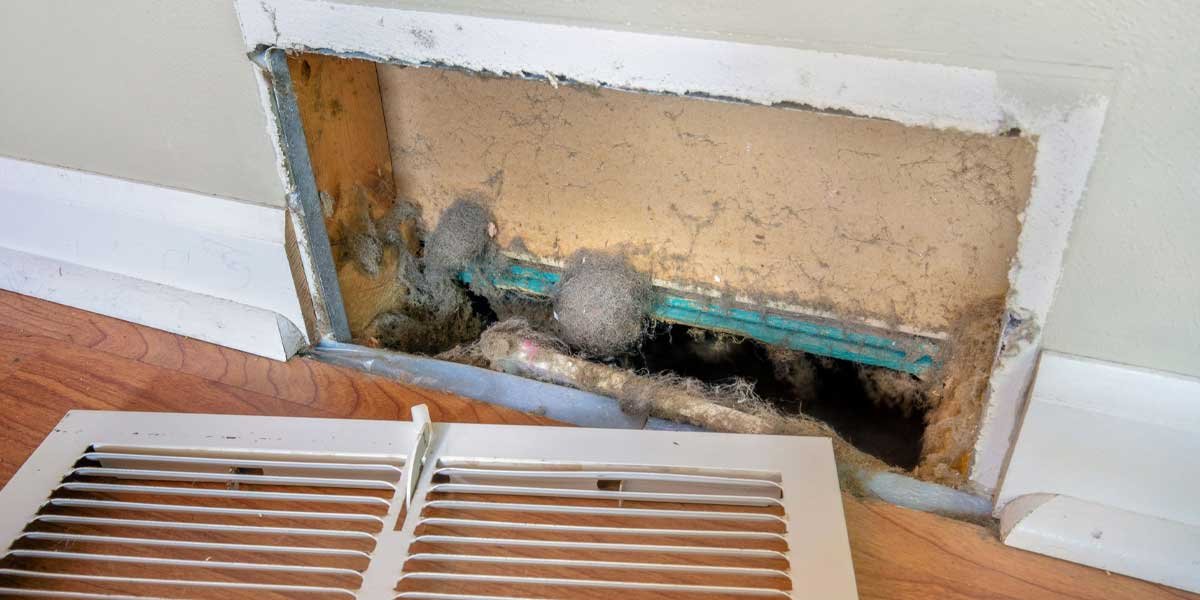
This homeowner recognized the scam and walked away, but still lost $99. Others aren’t as lucky. Scammers are trained to exploit specific vulnerabilities: they know that homeowners with asthma, young children, or elderly family members are more likely to make fear-based decisions. They know that showing someone a photo of dusty ductwork (which is completely normal) can trigger an immediate emotional response. They know that once they’re inside your home with their equipment, the social pressure to proceed is enormous.
“I’m writing this at 2:00 in the morning because I am sick to my stomach. I can’t sleep. We had some guys come in with that clean your HVAC for $99 thing. Well 99 turned into 400, which then recommended a cleaning of the mold, and installing a UV light. Maybe it’s because I have asthma, maybe it’s because my son was home with me and I couldn’t focus but I ended up going through with it and paid them $2,000 for the work. I feel like alarm bells were going off in my head the entire time but I still somehow went through with it. To top it off they left their trash in my crawl space.”
— u/Most_Bag494, r/homeowners
The defense is simple but requires preparation. Before anyone arrives at your home, know your number: a full-system cleaning for your home size should cost between $X and $Y (use the table above). If the quote comes in significantly higher, say: “I need to get a second opinion before I agree to anything beyond the original quoted price.” Then call another company. A legitimate problem with your ducts will still be there tomorrow.
The clearest red flags to watch for:
- Any advertised price under $150 for a whole-house cleaning. Legitimate equipment and labor cost more than this. A company quoting $99 is either planning to upsell you, or they’re using a shop-vac and calling it a cleaning.
- An unmarked van instead of a branded truck. Real duct cleaning companies use large, truck-mounted vacuum systems. If the technician arrives in a regular van with portable equipment, the job will be superficial at best.
- Urgency and fear language. “You need this done today” or “this is a serious health hazard” are pressure tactics, not professional assessments.
- No written quote before work begins. Always get the full scope and price in writing before anyone touches your HVAC system.
What a Legitimate Cleaning Actually Looks Like, and How to Verify It Was Done
If you’re paying $500 or more, you deserve to know exactly what should happen. Here is the complete process for a NADCA-standard cleaning, step by step.
The crew arrives with a large, truck-mounted negative air machine, which is a vacuum system powerful enough to create negative pressure throughout your entire duct network. They start by cutting small access holes (roughly 6 inches square) into the main supply and return trunk lines near your furnace or air handler. These holes are where the vacuum hose attaches. If a company doesn’t cut access holes, they are not doing a real cleaning.
With the vacuum running, technicians work through every supply and return vent in your home. They insert pneumatic whips or rotary brushes deep into each duct — tools that spin and flex to dislodge debris from the duct walls. The negative pressure from the truck vacuum immediately pulls that loosened debris backward through the duct system and out to the truck. This is why a proper cleaning requires the truck to be running the entire time.
Finally, the crew disassembles the air handler components: the blower motor housing is cleaned, the evaporator coils are brushed and vacuumed, and the drain pan is cleared of any standing water or buildup. Once everything is done, they seal the access holes they cut with metal plates and HVAC-grade tape.
After the crew leaves, use this three-step verification checklist before you pay the final invoice:
- Check for access hole patches near your furnace. Go to your air handler or furnace. You should see two new metal patches: one on the supply side and one on the return side, sealed with foil tape. If there are no patches, the crew did not use a truck-mounted vacuum, and the job was not done to NADCA standards.
- Ask to see before-and-after photos. Reputable companies use inspection cameras to document the condition of the ducts before and after cleaning. If they can’t show you photos, ask why. A company that did the work properly has nothing to hide.
- Run the system immediately and stand at a vent. Turn your HVAC on and hold your hand near a supply vent. You should feel strong, clean airflow. If you see a puff of dust or debris blow out, the cleaning was incomplete: the technicians dislodged material but failed to vacuum it out. This is the scenario the NIH study identified where post-cleaning air quality was actually worse than before [5].
Is Air Duct Cleaning Actually Worth It? An Honest Answer
Most articles about air duct cleaning are written by companies that sell air duct cleaning. So let’s be direct: for the majority of homeowners, routine air duct cleaning is not worth the money.
The EPA’s position is unambiguous: duct cleaning has not been shown to prevent health problems or significantly improve indoor air quality in a typical home [6]. The reason is straightforward. Dust and debris inside your ducts are largely inert — they sit on the duct walls and don’t circulate into your living space unless something disturbs them. Your HVAC filter catches the particles that do move. If you change your filter regularly, your ducts are doing their job.
Here’s the finding that no one in the industry wants to talk about: the National Institutes of Health reviewed the research on duct cleaning and found that in some cases, post-cleaning contaminant levels were actually higher than pre-cleaning levels [5]. This isn’t a fluke. It happens when a technician uses inadequate equipment — like a portable shop-vac instead of a truck-mounted system — that dislodges settled debris but doesn’t have the suction power to remove it. The result is that dust that was safely stuck to duct walls gets knocked loose and blown into your home the next time the system runs.
This is why the $99 “cleaning” isn’t just a waste of money. It can actively make your air quality worse.
“Be wary of people offering it for less than a few hundred dollars. Some people will show up with a shop vac and just clean the registers. A true duct cleaning should take a couple of hours to really get all the built-up stuff in there. Usually a square hole is cut at the furnace supply to attach a big vacuum too. My go-to recommendation is every 5 to 10 years.”
— u/FrostyTurtle, HVAC contractor, r/homeowners
Use This Decision Framework Before You Book
Rather than a generic list of “when it might be worth it,” here is a practical decision framework based on your specific situation:
You should definitely clean your ducts if: You can see mold growing inside the ducts or smell a persistent musty odor when the system runs. You have confirmed evidence of rodents or insects in the ductwork. You just completed a major renovation and the HVAC system was running during construction — drywall dust is extremely fine and coats every surface inside the ducts. You moved into a previously owned home and the previous owners had multiple pets, smoked indoors, or you have no record of the ducts ever being cleaned.
You should probably clean your ducts if: A household member with asthma or severe allergies has noticed their symptoms worsen specifically when the HVAC is running (and you’ve already ruled out other causes like dirty filters or carpet). The home is more than 10 years old and has never had the ducts cleaned. You can see visible debris blowing out of the vents when the system starts.
You can skip it for now if: Your home is relatively new (under 10 years old) with no history of water damage, pests, or major renovation. You change your HVAC filter every one to three months and no one in the household has unusual respiratory symptoms. Your last professional cleaning was within the past five years.
“My house was built in ’74. I bought it in 2019, and as soon as we started moving in, my wife’s allergies hit the roof. We had a local company come in and do the full work up, and the guy called me out to the truck to see all the pet hair, human hair, dust, rust, and debris his guys were pulling out. It was disgusting. I’m a big advocate of duct cleaning, but in my opinion, it’s a once-per-decade or so thing to do.”
— u/xscott71x (119 upvotes), r/homeowners
5 Questions to Ask Before You Hire Anyone
Once you’ve decided to move forward, these five questions will help you quickly separate legitimate companies from scammers. Ask them on the phone before anyone comes to your home.
- “Are you NADCA certified?” NADCA certification requires technicians to pass examinations and adhere to the ACR (Assessment, Cleaning, and Restoration) standard. It’s not a guarantee of quality, but it’s a meaningful baseline. You can verify a company’s certification at nadca.com. If they’re not certified, ask why — some excellent local companies haven’t pursued certification, but most serious operators have.
- “Will you clean the air handler and blower motor, or just the vents?” This is the question that separates a real cleaning from a surface job. The answer should be yes to both. If they hesitate or say those are “add-ons,” you’re talking to a company that does vent-only cleanings.
- “Do you use a truck-mounted vacuum system?” The answer must be yes. Portable units simply don’t generate enough negative pressure to do the job properly. If they say they use a “high-powered portable unit,” that’s a polite way of saying shop-vac.
- “Is your quote a flat rate, or are there additional fees I should expect?” Get the answer in writing. The only legitimate reason for additional charges after the job starts is the discovery of mold or asbestos — genuine hazardous material situations that require different protocols. Everything else should be in the original quote.
- “Can you show me before-and-after photos from a recent job in a similar-sized home?” A company that does quality work is proud of it. If they don’t have photos or seem reluctant to share them, that tells you something.
How to Save Money Without Compromising Quality
If the quotes you’re getting are higher than your budget, here are legitimate ways to reduce the cost without cutting corners on the cleaning itself.
Book during the off-season. HVAC companies are busiest in spring and fall when homeowners are preparing for summer cooling and winter heating. Scheduling your cleaning in January or August, when demand is lower — often results in discounts of 10 to 20 percent. Some companies will negotiate directly if you mention you’re comparing quotes.
Bundle services. If you also need your dryer vent cleaned, your furnace inspected, or your AC coils serviced, ask for a bundled quote. Companies are usually willing to discount add-on services when they’re already at your home with their equipment.
Get three quotes. Prices for the same job can vary by 30 to 40 percent between companies in the same market. Call at least three NADCA-certified companies, describe your home size and duct type, and compare the quotes. The lowest quote isn’t always the best choice — but if two quotes are clustered together and one is dramatically lower, the outlier deserves scrutiny.
Frequently Asked Questions
How long does air duct cleaning take?
A legitimate, full-system cleaning takes three to eight hours for a standard single-family home. If a company tells you they can clean your whole house in under an hour, they are not doing a full cleaning. Larger homes or homes with multiple HVAC systems can take a full day.
Can I clean my air ducts myself?
You can clean the visible portions of your vents and registers with a vacuum and a brush, and you should do this every time you change your filter. But the main trunk lines, the air handler, and the blower motor require truck-mounted vacuum equipment to clean properly. DIY cleaning of the duct interiors is not effective and carries the risk of dislodging debris without removing it, which is the exact scenario that can make air quality worse.
Does air duct cleaning help with allergies?
It depends on what’s causing your symptoms. If your ducts contain pet dander, mold spores, or rodent debris that is actively circulating into your living space, a proper cleaning can help. If your symptoms are caused by outdoor allergens, carpet fibers, or dust mites in your bedding, duct cleaning will have little effect. The most reliable first step is replacing your HVAC filter with a MERV-11 or higher rated filter and seeing if symptoms improve before spending money on duct cleaning.
Does homeowners insurance cover air duct cleaning?
Standard homeowners insurance does not cover routine air duct cleaning. However, if the contamination was caused by a covered event, such as a burst pipe that caused water damage and subsequent mold growth in your ductwork — your policy may cover the remediation costs. Check with your insurer before assuming you’re covered.
How often should air ducts be cleaned?
The NADCA recommends cleaning every three to five years as a general guideline, but this is a conservative estimate designed for the worst-case scenario. Most HVAC professionals suggest that homes without pets, recent renovations, or known contamination issues can go seven to ten years between cleanings. The best indicator is not a calendar — it’s the actual condition of your system. If you’re not sure, ask an HVAC technician to inspect the ducts during your annual maintenance visit.
The Bottom Line
Air duct cleaning is one of those home services where the gap between a good job and a bad job is enormous, and the price alone won’t tell you which one you’re getting. A $99 cleaning can leave your air quality worse than before. A $600 cleaning from a certified company with a truck-mounted vacuum can genuinely improve your home’s air quality and give you peace of mind for the next decade.
The most important thing you can take away from this guide is the ability to say no. When a technician arrives at your home and tries to turn a $99 visit into a $1,300 emergency, you now know that the $99 offer was never real. You know what a legitimate cleaning costs, what it involves, and how to verify it was done correctly. That knowledge is worth more than any service call.
If your home has mold, pests, or years of accumulated post-renovation dust, get it cleaned by a NADCA-certified company with a truck-mounted system, at a price that reflects the real scope of the work. If your home is well-maintained with regular filter changes and no known contamination, the best thing you can do for your air quality is keep doing exactly that.
References
[1] Sunset Air. “Air Duct Cleaning Cost Complete Guide 2025.” https://residential.sunsetair.com/blog/air-duct-cleaning-cost-complete-guide-2025/
[2] HomeAdvisor. “How Much Does Air Duct Cleaning Cost?” https://www.homeadvisor.com/cost/cleaning-services/clean-ducts-and-vents/
[3] Angi. “How Much Does Air Duct Cleaning Cost? [2026 Data]” https://www.angi.com/articles/how-much-does-air-duct-cleaning-cost.htm
[4] BKV Energy. “Is Air Duct Cleaning a Scam?” https://bkvenergy.com/blog/air-duct-cleaning/
[5] NerdWallet. “Air Duct Cleaning Cost: Is It Worth It?” https://www.nerdwallet.com/home-ownership/home-improvement/learn/air-duct-cleaning-cost
[6] Environmental Protection Agency (EPA). “Should You Have the Air Ducts in Your Home Cleaned?” https://www.epa.gov/indoor-air-quality-iaq/should-you-have-air-ducts-your-home-cleaned