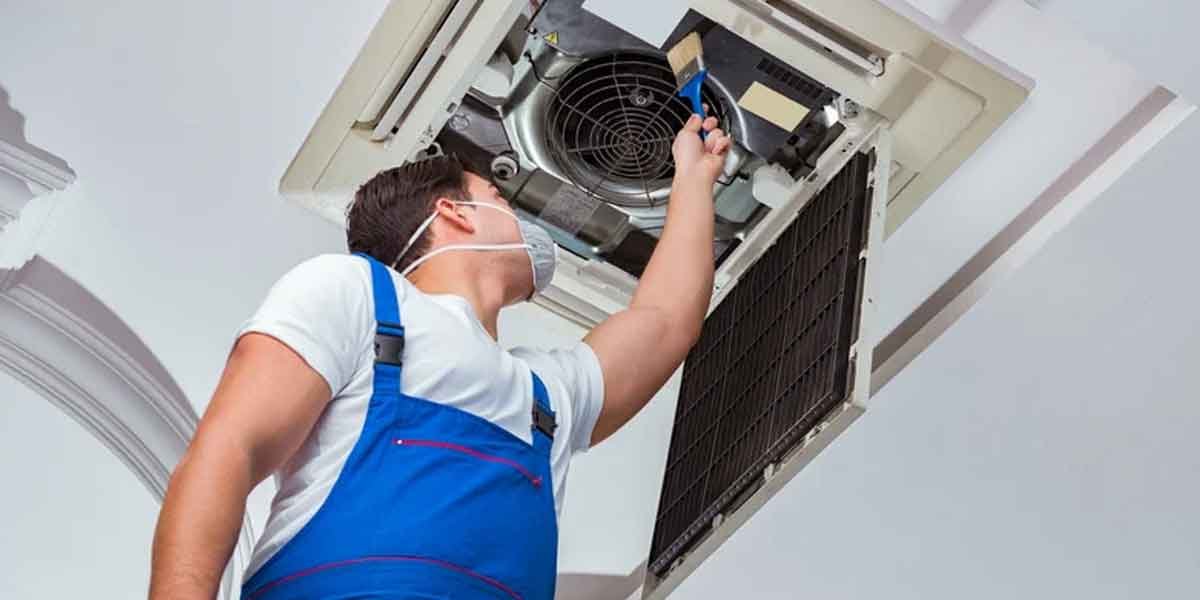
The answer to how long does ac repair take is usually between one and four hours once the technician has diagnosed the problem. Simple fixes like a thermostat or capacitor replacement run 30 to 60 minutes, mid-size jobs like a fan motor run two to three hours, and refrigerant leak repairs run two to four hours. Repairs that need ordered parts, or that turn out bigger than the first symptom, can stretch to a second visit or a few days.
This timeline applies to a home central air conditioner in the United States, and it holds in similar form for heat pumps and ducted systems. It does not cover car AC repair, which has a separate parts-and-labor market, nor routine maintenance visits. For a precise definition of what counts as a repair and what falls outside it, the ac repair description guide is the companion piece. If you are planning a repair day around a technician visit, the table below is the planning tool.
The clock is set by two things: the diagnosis and the parts. A stocked part gets fixed in the same visit. An ordered part turns the job into two visits and a few days.
How Long Does AC Repair Take: The Short Answer
A typical AC repair visit runs one to four hours, with most of that time going to diagnosis and testing, and the fastest fixes taking under an hour. The repair itself is often quick; finding the failure and verifying the fix are what take the time.
Diagnosis usually finishes within 30 minutes on a standard unit, which is when the technician can name the problem and quote the repair. From there, a stocked replacement part installs in minutes to an hour, and the final performance test confirms the system before the visit ends. Repairs that exceed four hours are the exceptions, and they usually involve ordered parts, an extra found failure, or a component like a compressor that needs careful access.
The range is deliberately wide because the same symptom spans very different jobs. A humming unit with a failed capacitor is a 15 to 20 minute fix. A humming unit with a failing compressor is a four to eight hour job with a different budget. The symptom never sets the clock; the diagnosis does.
AC Repair Time by Type
Repair time by component falls into a predictable pattern: thermostat and electrical parts in under an hour, fan and refrigerant work in two to four hours, and compressor or pump work in four to eight hours. The table below is the realistic planning range for each common repair, assuming the part is on the truck.
| Repair type | Typical time | Same-day? | Needs ordered parts? |
|---|---|---|---|
| Thermostat replacement | 30-60 minutes | Yes, in almost every case | Usually no; common models are stocked |
| Capacitor or power-part replacement | 15 minutes to 2 hours | Yes | Usually no |
| Clogged drain line or simple electrical fix | 1-2 hours | Yes | No |
| Fan motor replacement | 2-3 hours | Yes if the motor is stocked | Sometimes; specialty motors are ordered |
| Refrigerant leak repair and recharge | 2-4 hours | Usually, if the leak is found and sealed | Sometimes, for coils |
| Cooling pump or compressor replacement | 4-8 hours | Rarely | Yes; 1-3 days delivery is common |
| Complete system overhaul | 8+ hours, often a second day | No | Yes |
Two notes make the table more useful. First, every job includes the performance test at the end, so the times above include verification, not just the swap. Second, refrigerant work is a fixed constraint: only EPA-certified technicians may handle refrigerant, so a leak repair is never a same-day DIY shortcut, and current rules under EPA Section 608 require fixing the leak instead of topping off the charge. The ac repair materials and options page goes deeper on the parts themselves if you are comparing what a quote names.
What Shortens or Extends the Clock
Five variables move the repair time in either direction: parts availability, unit access, system age, the discovery of extra failures, and the weather. Parts and access are the two a homeowner can influence.
| Makes the repair faster | Makes the repair slower |
|---|---|
| Common part stocked on the truck | Specialty part ordered with 24-48 hour delivery |
| Unit easy to reach with clear access | Unit in a tight attic or crawlspace |
| Symptoms written down and a service history on hand | Vague report that sends the tech hunting |
| Newer system with available parts | Older system with hard-to-find components |
| One clear failure found in diagnosis | Extra worn parts discovered mid-repair |
| Mild weather for condenser work | Extreme heat or rain slowing the outside unit work |
The homeowner side of the speed-up column is real. Clearing a couple of feet around the indoor and outdoor units, confirming the electrical panel is accessible, and writing down when the problem started can save 15 to 30 minutes of a visit. Most of the slow-down column is out of your hands, but knowing it exists stops a one-hour estimate from feeling like a broken promise.
Milestones: What the Visit Looks Like
A repair visit has five checkpoints: arrival, diagnosis, estimate and approval, the repair, and the performance test. Watching for these milestones tells you whether the visit is on track or drifting.
Arrival begins with the technician confirming the reported problem and locating the system. Diagnosis follows, usually wrapping within 30 minutes on a standard unit, and it ends with the technician naming the failure and quoting a price. The approval checkpoint is the one to watch: nothing should be installed until you approve the scope, and a growing scope without your sign-off is a reason to stop and ask.
The repair itself is the shortest phase for stocked parts. The performance test closes the visit: temperature split, airflow, and safety controls are checked so the system is confirmed working before the technician leaves. If a repair runs past its estimate, the milestone that slipped is usually the diagnosis or the parts, and that is exactly what to ask about.
When a Same-Day Fix Is Not Enough
A same-day repair depends on one thing: the part being on the truck. Common parts are stocked and get fixed in one visit. Specialty parts carry a 24 to 48 hour delivery, and larger components like compressors or evaporator coils commonly take one to three days to arrive.
Emergency response is a separate clock. In peak summer weeks, even an emergency call can mean a 4 to 24 hour wait for a technician to arrive, and the actual repair then follows the same timeline as a scheduled visit. Some companies offer a temporary fix in the first visit to restore partial cooling, then schedule the full repair for the parts delivery.
That split is worth asking for. A temporary repair that restores airflow while a coil is on order beats a week of a hot house, and it turns an open-ended wait into a scheduled second visit with a named date.
Maintenance, Lifespan, and the Repair-versus-Replace Rule
Two numbers decide most repair-versus-replace conversations: the $5,000 rule and the 15-year guide. Multiply the system’s age by the repair cost, and if that figure passes $5,000, replacement is usually the smarter investment. A unit past 15 years with a repair over about $1,000 points the same direction.
Regular maintenance changes both sides of the clock. Systems checked twice a year tend to see fewer emergency breakdowns and faster repairs when one is needed, and the ENERGY STAR heating and cooling maintenance checklist is the practical starting point for a homeowner who wants to keep a repair from happening in the first place. A maintained system also has a longer working life than a neglected one, which pushes the repair-versus-replace decision toward repair for more years.
If the decision lands on replacement, the air conditioning installation process explained guide covers what a new install involves, the air conditioning installation materials and options page compares equipment, and the how to prepare for air conditioning installation guide handles the homeowner side of the job.
How Long Does AC Repair Take FAQ
What is the $5,000 rule for AC?
The $5,000 rule says to multiply your system’s age in years by the estimated repair cost, and if that figure exceeds $5,000, replacement is usually the better investment. It is a guideline, not a law, and it weighs the same cost against a system that may keep failing.
What is the 3 minute rule for air conditioners?
The 3 minute rule says to wait about three minutes after turning an air conditioner off before turning it back on. The pause lets the refrigerant pressures balance and protects the compressor from short-cycling damage.
How long does an AC compressor repair take?
A compressor replacement takes four to eight hours of labor and usually needs a part delivery of one to three days, so it is rarely a same-day repair. It is one of the longest common AC repairs, which is why the $5,000 rule matters before approving it.
Why is AC repair so expensive?
AC repair costs reflect certified labor, the price of components, and the fact that refrigerant work is restricted to EPA-certified technicians. A capacitor is cheap, but a compressor or evaporator coil is a major component, and the spread in repair prices mostly tracks the part.
Home improvement projects run on the same discipline: know the scope before the quote. More guides live under the Home Improvement guides hub.
Ask for the diagnosis, keep the parts decision visible, and plan the day around the table above. Most repairs finish in a single afternoon; the exceptions announce themselves with ordered parts, and those are the ones worth a second opinion.