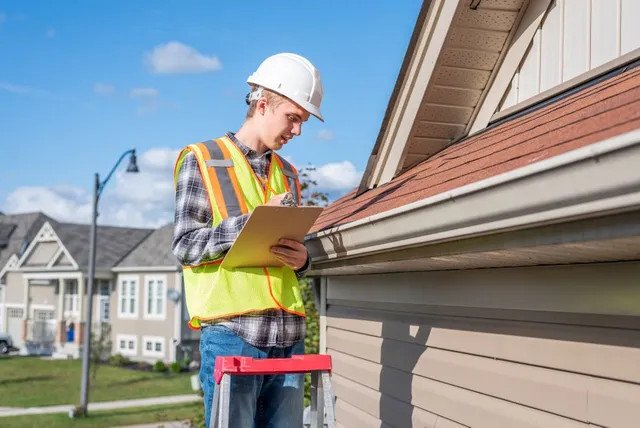
The decision between scheduling a roof inspection and moving directly to replacement planning comes down to one question: is there a reasonable chance the inspection will find that the roof can be maintained rather than replaced? If the roof is less than 12 years old and has no visible damage, the inspection will almost certainly recommend maintenance, says WSR Management. The inspection costs $150 to $400 and confirms what you already suspect: the roof is fine. Spend the money on the inspection. Save the replacement budget for another decade.
If the roof is more than 20 years old, has visible curling shingles, granule loss in the gutters, and a history of leaks, the inspection will almost certainly recommend replacement. The inspection costs $300 to $500 and confirms what you already know: the roof is at the end of its life. Skip the inspection. Put the $400 toward the replacement. The inspection is a formality when the roof’s condition is visibly at the replacement stage. The formality costs $400. The replacement costs $12,000. The $400 spent on the formality is $400 not spent on the replacement.
Between those two clear cases lies the gray zone — the roof that is 12 to 20 years old, showing some wear but no active leaks, and the homeowner is unsure whether the roof has years of life remaining or needs replacement soon. The inspection is the decision tool in the gray zone. The inspection costs $300 to $500. The information it provides — the percentage of the roof surface that is damaged, the condition of the decking, the remaining life of the flashing and sealant, the presence of granule loss and curling — determines whether the roof should be maintained, repaired, or replaced. The inspection pays for itself by preventing either an unnecessary replacement or a delayed replacement that leads to interior water damage. Here is how to decide which category your roof falls into.
When to Inspect vs. When to Replace
The decision between inspection and replacement depends on the roof’s age, visible condition, and leak history. Here is the decision matrix for seven common roof scenarios.
| Roof Condition | Action | Cost | Rationale |
| Under 10 years, no visible damage, no leaks | Skip both — roof is fine | $0 | No inspection needed; routine gutter cleaning only |
| Under 10 years, minor visible damage, no leaks | Inspection + repair as needed | $300 – $1,000 | Isolated damage is repairable; roof has long life remaining |
| 10–18 years, no visible damage, no leaks | Inspection to establish baseline | $150 – $400 | Baseline needed for future comparison; likely maintainable |
| 10–18 years, some visible wear, no active leaks | Inspection — the gray zone | $250 – $500 | Inspection determines whether maintenance or replacement is needed |
| 10–18 years, active leaks, visible damage | Inspection with repair/replace recommendation | $250 – $500 | Inspection determines whether repairs are sufficient or replacement is needed |
| 18+ years, visible curling, granule loss, history of leaks | Skip inspection, plan replacement | $0 for inspection; $9,000–$15,000 for replacement | Inspection will confirm the obvious; put the inspection fee toward replacement |
| Any age, storm damage (hail, wind, falling tree) | Inspection + insurance claim | $150 – $400 (may be reimbursed) | Inspection documents damage for insurance; claim may cover replacement |
When to Skip the Inspection and Go Straight to Replacement
Skip the inspection and start planning for replacement when the roof is visibly at the end of its life and a professional inspection will only confirm what you can see from the ground. A roof with widespread curling shingles, the edges are lifting across multiple slopes. A roof with granule loss so severe that the asphalt substrate is visible as dark patches. A roof with multiple leaks in the past three years, each one repaired, and each repair followed by a new leak in a different location. A roof that is 20 years old or older, regardless of its appearance, the sealants, the fasteners, and the underlayment are aging on the same clock as the shingles. The shingles may look acceptable. The components underneath are at the same age. The roof is a system. The system ages together. The visible part is the shingle. The invisible parts are the sealant, the fasteners, and the underlayment. The invisible parts are failing. The inspection will confirm that the invisible parts are failing. The inspection will cost $400. The confirmation will cost the same $400. Skip the confirmation. Put the $400 toward the replacement. The replacement will cost $9,000 to $15,000. The $400 is a small fraction of the replacement. The $400 is a large fraction of the inspection. The inspection adds nothing you do not already know. The roof is old. The roof needs replacement. The $400 is better spent on the new roof than on the report that recommends it.
The National Roofing Contractors Association (NRCA) recommends a professional roof inspection at least every two years for roofs older than 10 years, and annually for roofs older than 15 years. The inspection is a maintenance tool, not a replacement trigger. The replacement trigger is the inspection’s findings, combined with the roof’s age and leak history. The inspection tells you what condition the roof is in. The age tells you what condition the roof should be in. When the two diverge, the roof is in worse condition than its age would predict, the replacement decision is approaching. The inspection quantifies the divergence. The age qualifies the divergence. The two together make the decision.
When the Inspection Pays for Itself
The inspection pays for itself when it finds a $500 repair that prevents a $5,000 leak. The inspection costs $300. The repair costs $500. The total is $800. The leak would have cost $5,000 in roof repair and interior damage. The inspection saved $4,200. This scenario applies to roofs in the 10- to 18-year range with no active leaks. The inspection finds the lifted shingle, the cracked vent boot, the failing sealant bead, problems that are invisible from the ground and have not yet caused a leak. The inspection catches them before they become leaks. The inspection is the prevention. The leak is the consequence of not inspecting.
The inspection also pays for itself when it prevents an unnecessary replacement. A homeowner who sees curling shingles and granule loss may assume the roof needs replacement. The inspection may reveal that the curling is limited to one slope, the granule loss is within normal limits for the roof’s age, and the decking and underlayment are in good condition. The roof has 5 to 8 years of life remaining. The replacement that the homeowner was planning at $12,000 is deferred for 5 to 8 years. The inspection cost $300. The deferred replacement saved $12,000 in present value. The inspection returned 40 times its cost. This scenario is less common than the repair scenario, but it happens. The inspection is the only way to know which scenario applies to your roof. The inspection is the information. The information is the decision. The decision is worth the $300 regardless of which way it goes.
Frequently Asked Questions
Do I need a roof inspection, or should I just replace the roof?
Get an inspection if the roof is 10 to 18 years old, has some visible wear but no active leaks, and you need data to decide between maintenance and replacement. Skip the inspection and plan replacement if the roof is 20-plus years old with visible curling, granule loss, and a history of leaks, the inspection will only confirm what you can already see.
How much does a roof inspection cost?
A roof inspection costs $150 to $500. A basic visual inspection costs $150 to $300. A comprehensive inspection including attic evaluation costs $250 to $500. A drone inspection for inaccessible roofs costs $200 to $500. The cost depends on the roof size, complexity, and inspection method.
Can I inspect my own roof instead of hiring a professional?
You can inspect from the ground with binoculars and check the attic with a flashlight. You cannot safely walk the roof surface or identify subtle damage like lifting shingles and failing sealant. A DIY inspection is better than nothing. A professional inspection is better than a DIY inspection. The professional costs $300. The missed damage costs $5,000 in leak repair if it is not caught. The professional is cheaper than the missed damage.
Will a roof inspection tell me if I need replacement or just repairs?
Yes. A comprehensive inspection includes an estimate of the roof’s remaining service life, a damage assessment by percentage of surface area, and a prioritized list of recommended actions. The inspection report tells you whether the roof can be maintained, needs specific repairs, or should be replaced. The inspection is the data. The data drives the decision.
Should I get multiple roof inspections before deciding on replacement?
Get one comprehensive inspection from an independent inspector, not a roofing contractor who has a financial interest in selling a replacement. If the inspection recommends replacement and the roof is over 18 years old with visible damage, a second opinion is unlikely to change the recommendation. If the roof is younger and the inspection recommends replacement, a second opinion is worth the cost to confirm.
Does homeowners insurance cover a roof inspection or replacement?
Insurance does not cover routine roof inspections. It covers replacement when the damage is sudden and accidental, storm, hail, fire, falling tree. If the roof is simply old, the inspection and the replacement are out-of-pocket expenses. Some contractors waive the inspection fee if you hire them for the replacement, which creates a conflict of interest in the inspection findings.
The Inspection That Makes the Decision
If the roof is under 12 years old and has no active leaks, get an inspection every two years. The inspection costs $300 and catches problems before they become leaks. If the roof is 12 to 20 years old, get an inspection now. The inspection will tell you whether the roof can be maintained with repairs or needs to be replaced. The inspection costs $400 and determines whether you spend $2,000 on repairs over the next 5 years or $12,000 on a replacement. The inspection is the data. The data is the decision.
If the roof is over 20 years old with visible curling, granule loss, and a history of leaks, skip the inspection. Start planning for replacement. The inspection will confirm what you already know. The $400 is better spent on the new roof than on the report. The roof is communicating clearly: it needs replacement. The visible signs, the curling shingles, the granules in the gutter, the stains on the ceiling, are the inspection. The roof has already been inspected by time and weather. The time and weather do not charge $400. Their report is visible from the ground. Their recommendation is replacement. Listen to the report. The report is free. The roof has been delivering it for years. Ever stood at the curb with a roofing contractor, watching him point at the curling shingles and the bare spots where the granules used to be, and thought “I already knew the roof needed replacement — why did I wait for a contractor to tell me”? You did not need the contractor. You needed the courage to act on what you could already see. The roof was telling you for years. The granules in the gutter were the first report. The curling shingles were the second. The water stain on the ceiling was the third. The reports were free. The courage to act on them cost nothing. The delay between the reports and the action cost the interior water damage that could have been prevented. The delay is the only expense. The reports are free. The action is overdue. The action is now.