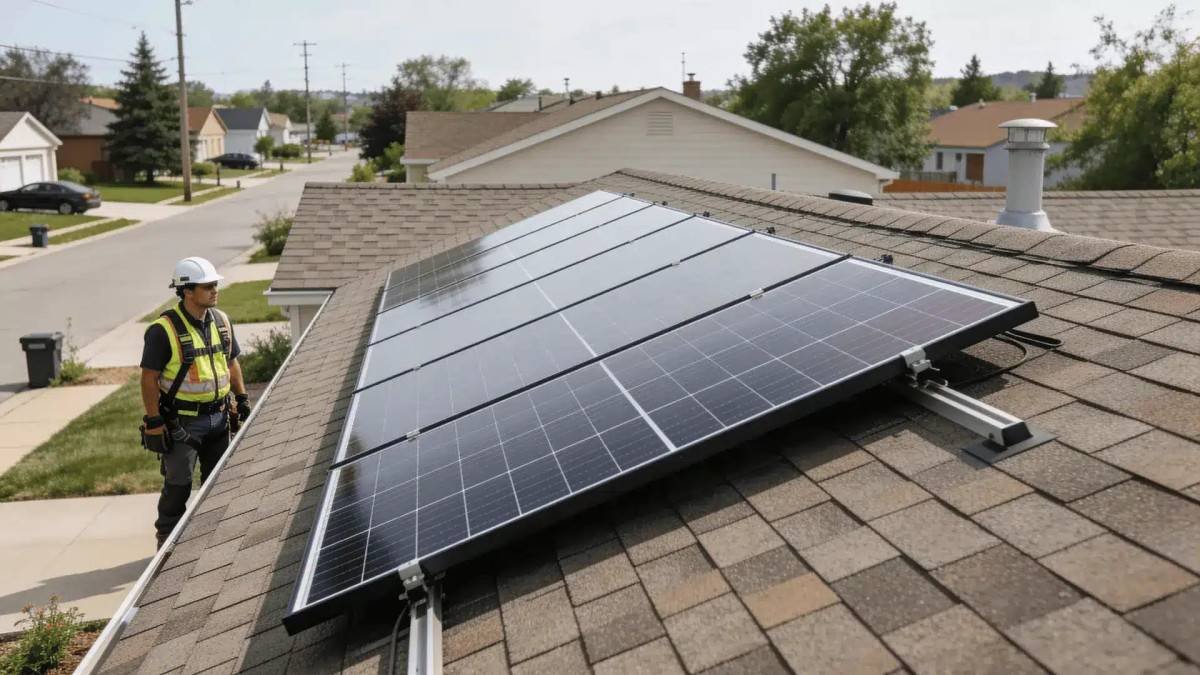
Installing solar panels on a residential roof is a project that combines carpentry, electrical work, and navigating the permitting process, highlights property management Woodstock GA. The physical installation takes two to three days for a crew of three. The permitting and utility interconnection take two to four months. The panels themselves are the quickest part. The paperwork is the longest. Most homeowners hire a professional solar installer because the labor savings from a DIY installation, typically $4,000 to $8,000, are offset by the risk of a roof leak from an improperly flashed mounting bracket, an electrical fault from an incorrectly wired inverter, or a failed inspection that requires rework.
For a homeowner with electrical experience, roof work experience, and the willingness to navigate the permit process, a DIY solar installation is the largest DIY electrical project you will ever attempt and one of the few that must pass a building inspection and a utility interconnection review. Here is the sequence, the permitting requirements, and the decision points that determine whether you can install the system yourself or should hire a professional.
Permits, Interconnection, and Paperwork: The First Step
Solar panel installation requires a building permit and an electrical permit from the local building department. The permit application includes the system design, electrical diagrams, structural calculations confirming the roof can support the panels, and equipment specifications for the panels, inverter, and racking system. The permit office reviews the plans for code compliance and issues the permit. The installation must match the approved plans exactly. A change in panel layout or inverter model after the permit is issued requires a plan revision and a new review.
The utility interconnection application is separate from the building permit. The utility reviews the system design to confirm it meets the utility’s interconnection standards. After the installation passes the building inspection, the utility installs a net meter if one is not already present and issues permission to operate, which is the document that allows you to turn the system on. Operating the system before receiving permission to operate is a violation of the interconnection agreement and can result in the utility disconnecting your service.
The EPA’s energy programs provide resources on clean energy adoption and the environmental impact of residential solar. The federal solar investment tax credit, which covers 30 percent of the system cost, is administered through the IRS. The credit applies to the panels, inverter, racking, labor, permitting, and sales tax.
Site Assessment and System Sizing
A solar site assessment determines whether the roof is suitable for solar. The roof must face south, southeast, or southwest to receive adequate sunlight in the northern hemisphere. East- and west-facing roofs receive 15 to 20 percent less annual sunlight. North-facing roofs receive 40 to 50 percent less and are generally not suitable. The roof must be free of shade from trees, chimneys, adjacent buildings, and other obstructions during the peak solar hours of 9 a.m. to 3 p.m. A solar pathfinder or a shading analysis tool measures the shading at the proposed panel location across all seasons. A satellite-based estimate is not a substitute for an on-site shading analysis, particularly on a roof that is partially shaded.
The system size is determined by the annual electricity usage, measured in kilowatt-hours on your utility bill, divided by the annual production ratio for your location. The production ratio is the number of kilowatt-hours produced per year per kilowatt of installed solar capacity. A location with 4.5 peak sun hours per day has a production ratio of approximately 1,200 to 1,400. A home that uses 12,000 kilowatt-hours per year in that location needs a system of approximately 9 to 10 kilowatts. An installer provides this calculation. A DIY installer must perform it using the National Renewable Energy Laboratory’s PVWatts calculator, which is a free online tool that estimates solar production based on location, system size, orientation, and shading.
Roof Mounting: Racking, Flashing, and Attachments
The mounting system attaches the solar panels to the roof. The system consists of mounting feet that are lag-bolted into the roof rafters, aluminum rails that are bolted to the mounting feet, and clamps that hold the panels to the rails. The mounting feet are the most critical component because they penetrate the roof. Each penetration must be sealed with flashing that directs water over the penetration and onto the shingle below it. A mounting foot without flashing, or with flashing installed incorrectly, creates a roof leak that may not be discovered until water damage is visible on the ceiling below, months or years later.
The roof rafters must be located. The mounting feet must be centered on the rafters, not on the sheathing between rafters. A stud finder is not reliable for roof rafters because the asphalt shingles and the roof sheathing interfere with the signal. The rafter locations are found by measuring from the exterior wall or from inside the attic by drilling a reference hole. Each lag bolt must be driven into the center of the rafter to a depth of at least 2-1/2 inches. A bolt that misses the rafter or penetrates only an inch is a structural failure and a roof leak.
The racking system must be electrically grounded. The aluminum rails and the panel frames are bonded together with grounding lugs and a continuous ground wire that connects to the house grounding system at the main electrical panel. A racking system that uses integrated grounding, where the mounting clamps pierce the anodized coating on the rails and panels to create electrical continuity between all components, eliminates the need for a separate ground wire at each panel. The grounding method is specified by the racking manufacturer and must be followed exactly.
Electrical: Inverter, Disconnects, and Panel Connection
The inverter converts the DC electricity generated by the panels into AC electricity used by the home. A string inverter is a single unit mounted on an exterior wall near the main electrical panel. Multiple strings of panels are wired in series and connected to the inverter. A microinverter system has a small inverter mounted under each panel. Each panel operates independently. Microinverters are used on roofs with partial shading because a shaded panel in a string inverter system reduces the output of the entire string. A shaded panel in a microinverter system reduces the output of only that panel.
The inverter output is connected to the main electrical panel through a dedicated circuit breaker. The breaker size is determined by the inverter output current multiplied by 1.25, per the National Electrical Code. A 30-amp inverter output requires a 40-amp breaker. The connection is made through a production meter, which measures the solar system output, and a disconnect switch, which allows the system to be shut down for maintenance or in an emergency. The disconnect switch must be accessible to utility personnel and labeled as the solar system disconnect.
The electrical work is the part of a solar installation that requires a licensed electrician in most jurisdictions. The connection to the main panel must be performed by or reviewed by an electrician. A homeowner who installs the racking and the panels and hires an electrician for the inverter and the panel connection saves on labor while ensuring the electrical work is code-compliant and insurable.
Installing the Panels
The panels are lifted onto the roof and clamped to the rails. A standard residential solar panel is approximately 40 inches by 66 inches and weighs 40 to 50 pounds. The panels are lifted one at a time, positioned on the rails, and secured with mid-clamps between adjacent panels and end-clamps at the ends of each row. The clamps are tightened to the torque specified by the racking manufacturer, typically 10 to 15 foot-pounds. Overtightening deforms the rail. Undertightening allows the panel to shift in the wind.
The panels are wired together in series to form strings. The positive connector of one panel plugs into the negative connector of the next. The connectors are keyed and cannot be reversed. The string voltage is the sum of the individual panel voltages. A string of 10 panels with a 40-volt open-circuit voltage produces 400 volts DC. The voltage is lethal. The array must be disconnected at the inverter or at a rooftop disconnect before any wiring work is performed. The panels generate voltage whenever light strikes them. Covering the panels with an opaque tarp eliminates the voltage for maintenance, which is safer than relying on a disconnect alone.
Inspection and Permission to Operate
After the installation is complete, the building inspector verifies that the racking, the wiring, the grounding, and the panel connection comply with the approved permit plans. A failed inspection requires correction and a reinspection, which adds one to two weeks. Common inspection failures include missing placards and labels that identify the solar system components and the disconnect locations, conduit routing that differs from the permit plan, and inadequate grounding of the racking system.
After the inspection passes, the utility reviews the final installation and installs the net meter if required. The utility issues permission to operate. The system is turned on. The inverter begins converting DC to AC. The panels begin producing power. The utility bill begins to drop.
Frequently Asked Questions
Can I install solar panels myself?
Yes, in most jurisdictions, but the electrical connection to the main panel typically requires a licensed electrician. The racking installation, panel mounting, and DC wiring between panels are within the capabilities of a homeowner with roof work and electrical experience. The permitting process requires detailed system design drawings that most homeowners hire an engineer or a solar design service to produce. The cost of engineering, permitting, and an electrician for the final connection is $2,000 to $4,000. The labor savings from DIY racking and panel installation are $4,000 to $8,000. The net savings are $2,000 to $4,000 after accounting for the professional services that are still required.
Is a ground-mount system easier to install than a roof-mount system?
Yes, for the structural work. A ground-mount system does not require working on a roof, locating rafters, or flashing penetrations. The racking is mounted on posts set in concrete footings or driven into the ground. The panels are at ground level and can be installed without lifting them onto a roof. The trade-off is that a ground-mount system requires land area that is unshaded, and the footings and the trenching for the underground wiring from the array to the inverter add cost and labor. A ground-mount system is the better choice for a DIY installation because the safety risk of working on a roof is eliminated and the structural complexity of roof penetrations is avoided.
How old can my roof be and still support solar panels?
The roof should have at least 10 years of remaining life when the panels are installed. Removing and reinstalling panels for a roof replacement costs $3,000 to $6,000. The panels must be removed, stored, and reinstalled by a solar contractor. The roof replacement itself is a separate cost. A roof with less than 10 years of life should be replaced before the solar installation. The cost of the new roof is not a solar cost, but the timing of the two projects should be coordinated so the panels are installed on a new roof rather than removed from an old roof and reinstalled a few years later.