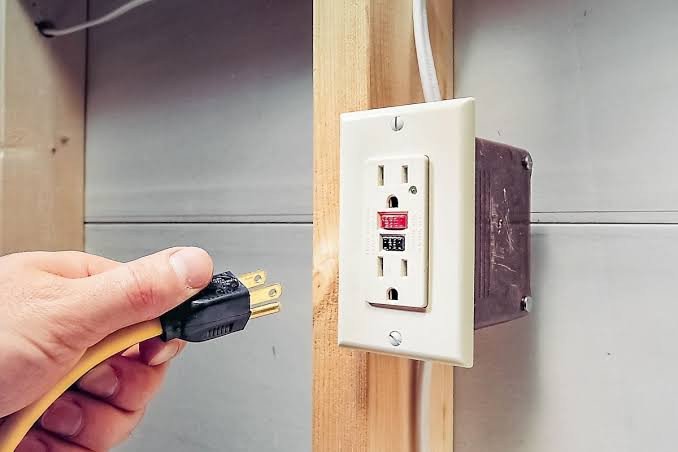
GFCI outlets are required by the National Electrical Code (NEC) in any location where electricity and water are within 6 feet of each other. This includes bathrooms, kitchens, laundry rooms, garages, crawl spaces, unfinished basements, outdoor outlets, and any outlet within 6 feet of a sink, bathtub, or shower, adds The Vineyard property management. The requirement applies to all 125-volt, 15- and 20-amp receptacles in these locations.
A GFCI — ground-fault circuit interrupter — monitors the current flowing through the hot and neutral wires. If as little as 5 milliamps of current leaks to ground — through a person, through water, through a damaged cord — the GFCI trips and shuts off power within 1/40 of a second. That is fast enough to prevent electrocution. A standard circuit breaker protects the wiring from overheating. A GFCI protects the person using the outlet. The two devices serve completely different purposes, and GFCI protection is not optional in the locations listed below.
GFCI-Required Locations Under the NEC
The NEC requires GFCI protection in nine specific locations, each added to the code in a different year as the data on electrocution risks accumulated. Here is the complete list with the year each requirement took effect.
| Location | NEC Section | Year Required | What Qualifies |
| Bathrooms | 210.8(A)(1) | 1975 | All 125V, 15A and 20A receptacles |
| Garages and accessory buildings | 210.8(A)(2) | 1978 | All 125V, 15A and 20A receptacles |
| Outdoors | 210.8(A)(3) | 1973 | All 125V, 15A and 20A receptacles accessible from grade |
| Crawl spaces | 210.8(A)(4) | 1990 | All 125V, 15A and 20A receptacles at or below grade |
| Unfinished basements | 210.8(A)(5) | 1990 | All 125V, 15A and 20A receptacles (finished basements exempt unless near water) |
| Kitchens — countertop receptacles | 210.8(A)(6) | 1987 | All 125V, 15A and 20A receptacles serving countertop surfaces |
| Sinks, within 6 feet | 210.8(A)(7) | 1993 | Any 125V, 15A and 20A receptacle within 6 ft of a sink (bar, laundry, utility) |
| Laundry areas | 210.8(A)(10) | 2005 | All 125V, 15A and 20A receptacles in laundry rooms |
| Bathtubs and showers, within 6 feet | 210.8(A)(9) | 2017 | Any receptacle within 6 ft of a bathtub or shower stall |
GFCI Requirements Room by Room
The GFCI requirement applies differently in each room, with specific rules for what qualifies — and what does not — in bathrooms, kitchens, laundry rooms, garages, and outdoor spaces.
Bathrooms
Every 125-volt, 15- and 20-amp receptacle in a bathroom must be GFCI-protected. This has been required since 1975. A bathroom is defined as an area with a sink and one or more of the following: a toilet, a tub, or a shower. A powder room with only a sink and a toilet qualifies. The GFCI requirement applies regardless of the distance from the sink, the entire room is considered a wet location. One GFCI outlet can protect multiple standard outlets downstream if they are wired to the load side of the GFCI. This is the most common configuration: a single GFCI receptacle near the sink that protects all other bathroom receptacles on the same circuit.
Kitchens
All 125-volt, 15- and 20-amp receptacles that serve countertop surfaces must be GFCI-protected. This has been required since 1987. The requirement applies to any receptacle installed above a countertop or within 6 feet of a sink. A receptacle behind the refrigerator, inside a pantry, or dedicated to a built-in microwave does not serve the countertop and is not required to be GFCI-protected, though it is not prohibited. Dishwashers have a separate GFCI requirement. Garbage disposals do not, though many electricians install GFCI protection on the disposal circuit as a safety measure.
Laundry Rooms
All 125-volt, 15- and 20-amp receptacles in laundry areas must be GFCI-protected. This requirement was added in the 2005 NEC. The washing machine receptacle is not exempt, it must be GFCI-protected like every other receptacle in the room. The electric dryer receptacle, typically a 240-volt, 30-amp outlet, is not subject to the 125-volt GFCI requirement, though the 2020 NEC expanded GFCI requirements to include 250-volt receptacles in certain locations.
Garages and Outdoors
All receptacles in garages, accessory buildings, and outdoor locations must be GFCI-protected. Outdoor receptacles also require a weather-resistant cover, an in-use cover that remains weatherproof while a cord is plugged in, not just a flap that protects the outlet when nothing is connected. The in-use cover requirement has been in the NEC since 2008. An outdoor outlet without an in-use cover is a code violation even if the outlet itself is GFCI-protected.
The U.S. Consumer Product Safety Commission (CPSC) estimates that GFCIs have reduced electrocutions from consumer products by roughly 70% since the requirements were phased in. The cost of a GFCI outlet, $15 to $30 for the device, $120 to $250 installed, is less than the deductible on most health insurance plans. The device that trips when you drop a hair dryer in the sink is not a code-compliance burden. It is the cheapest life insurance you can buy for a bathroom.
GFCI vs. AFCI, They Are Not the Same Thing
GFCI and AFCI protection are frequently confused. They protect against different dangers and are required in different locations. A GFCI detects current leaking to ground and protects people from electric shock. An AFCI detects arc faults, sparks between loose or damaged wires, and protects the house from electrical fires. GFCI is required in wet locations. AFCI is required in living areas and bedrooms.
Some locations require both. Kitchens and laundry rooms, for example, may require both GFCI protection, because they are near water, and AFCI protection, because they are living areas. A dual-function AFCI/GFCI breaker provides both types of protection in a single device and costs $50 to $80 for the breaker plus $250 to $450 installed. The dual-function breaker is the simplest way to satisfy both requirements on a single circuit.
GFCI Requirements for Older Homes
The GFCI requirements in the NEC apply to new construction and to renovations that involve electrical work. An existing home with non-GFCI outlets in the bathroom or kitchen is not automatically in violation, the outlets are grandfathered under the code that was in effect when the home was built or last renovated. The grandfather clause means you are not required to upgrade every outlet in the house the day a new code cycle takes effect.
The grandfather clause does not mean the outlets are safe. A non-GFCI outlet next to a bathroom sink is just as dangerous today as it was in 1975. The code does not require you to upgrade. Physics does not care what the code requires. The shock hazard is identical regardless of when the outlet was installed. Upgrading non-GFCI outlets in wet locations costs $120 to $250 per outlet, $500 to $1,500 for a typical home. The cost is small. The protection is immediate.
Frequently Asked Questions
Where are GFCI outlets required by code?
GFCI outlets are required in bathrooms, kitchens (countertop receptacles), laundry rooms, garages, crawl spaces, unfinished basements, outdoor locations, and any receptacle within 6 feet of a sink, bathtub, or shower. The requirement applies to all 125-volt, 15- and 20-amp receptacles in these locations.
Can one GFCI outlet protect multiple outlets?
Yes. A single GFCI receptacle wired at the beginning of a circuit can protect all standard receptacles downstream when they are connected to the load side of the GFCI. This is the standard configuration for bathrooms: one GFCI outlet near the sink protects all other bathroom outlets on the same circuit. The GFCI must be labeled “GFCI Protected” on the downstream outlets.
Do I need GFCI outlets if I have GFCI breakers in the panel?
No. A GFCI breaker in the electrical panel provides the same ground-fault protection as a GFCI outlet for every receptacle on that circuit. GFCI breakers are preferred for hardwired appliances, dishwashers, water heaters, pumps, that do not plug into a receptacle. GFCI outlets are more common because they are cheaper and easier to reset, no trip to the basement to reset a tripped breaker.
Do outdoor outlets need GFCI protection?
Yes. All 125-volt, 15- and 20-amp outdoor receptacles must be GFCI-protected and must have a weather-resistant in-use cover that remains weatherproof while a cord is plugged in. The GFCI requirement has been in place since 1973. The in-use cover requirement has been in place since 2008.
What happens if my home has no GFCI outlets in required locations?
Existing non-GFCI outlets are grandfathered under the code that was in effect when the home was built. You are not required to upgrade them. However, they pose an electrocution risk that is identical to the risk that prompted the code requirement. Upgrading costs $120 to $250 per outlet. A home inspector will flag missing GFCI protection during a pre-purchase inspection, and many buyers will request the upgrade as a condition of sale.
How do I test a GFCI outlet to make sure it works?
Press the TEST button on the GFCI outlet. The RESET button should pop out and power to the outlet should cut off, confirm with a lamp or a voltage tester. Press RESET to restore power. Test every GFCI outlet monthly. A GFCI that does not trip when the TEST button is pressed has failed and must be replaced. The TEST button verifies the internal circuitry. A GFCI that passes the test but fails during an actual ground fault is rare but possible. The TEST button is a reliable indicator of functionality.
Where GFCI Protection Belongs
Anywhere water and electricity are within arm’s reach of each other, a GFCI belongs in the circuit. Bathrooms. Kitchens. Laundry rooms. Garages. Outdoors. Crawl spaces. Unfinished basements. Within 6 feet of any sink, bathtub, or shower. The code says so. Physics agrees.
If your home was built before these requirements and the outlets have never been upgraded, the code does not force you to change them. The nearest hospital emergency room also does not force you to install GFCIs. It just treats the consequences when you do not. The $15 GFCI outlet costs less than the ambulance ride. Install them. Test them monthly. The button is there for a reason. Press it. Ever tested a GFCI for the first time in years and watched the RESET button refuse to stay in? That outlet has been dead for a while. You just did not know because nothing bad happened in the meantime. The button does not lie. The outlet does.