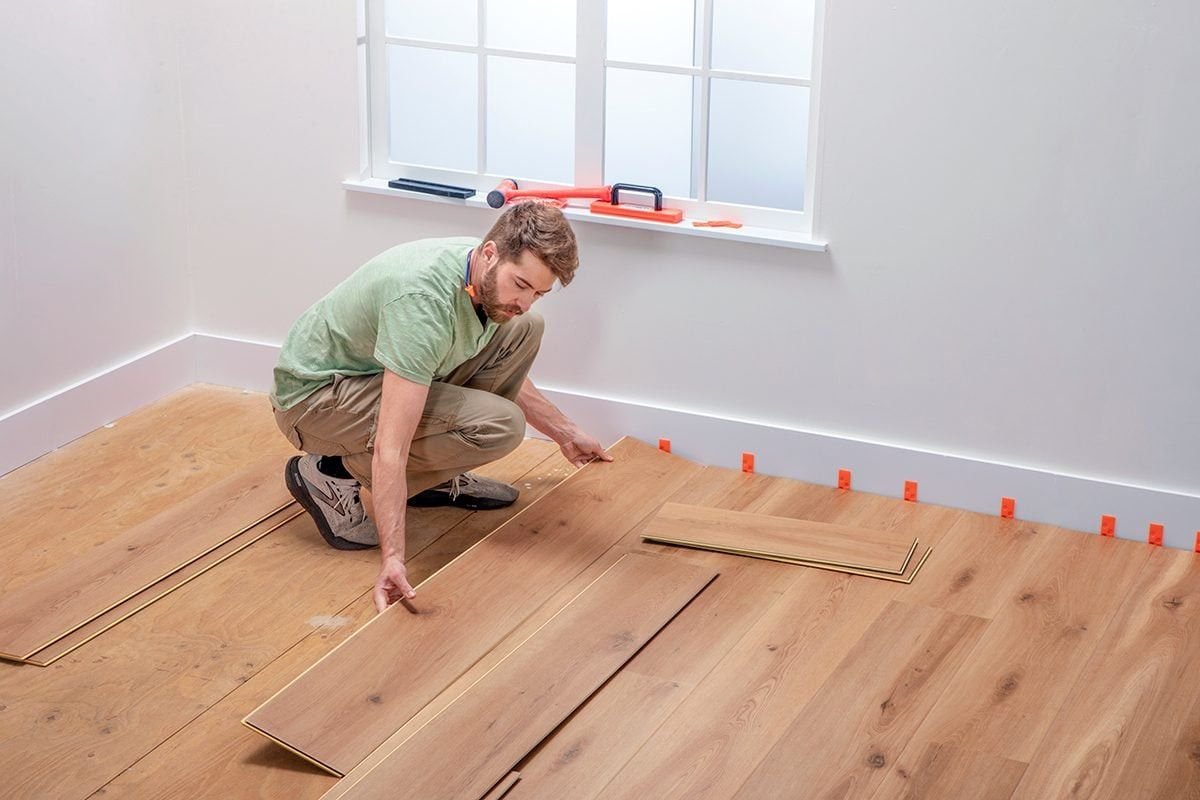
The concrete slab in your basement is cold, hard, and ugly, points out Arlington property management. You bought twelve boxes of vinyl plank flooring because the box said it installs over concrete. That is technically true. What the box does not say is that concrete is never as flat as it looks, always has more moisture than you think, and will ruin a vinyl floor in under a year if you skip the prep work.
Vinyl plank flooring, both luxury vinyl plank (LVP) and standard vinyl plank, is the best flooring choice for concrete slabs. It is fully waterproof. It does not need an underlayment on concrete if it has an attached pad. It clicks together without glue. But the concrete underneath must be flat, dry, and clean. Two of those three conditions are almost never true when you start. This guide covers the concrete prep sequence that determines whether the floor lasts, then the installation that clicks together in an afternoon.
Moisture Test: The Step the Box Skips
Concrete is porous. Water vapor rises through the slab from the ground below. Most vinyl plank flooring tolerates this vapor transmission without issue. But if the concrete is actively damp, the vapor gets trapped under the vinyl, condenses, and creates a breeding ground for mold between the concrete and the planks. You will not see it. You will smell it.
According to wikiHow’s vinyl plank on concrete guide, co-authored by construction professional Mitchell Newman with 20 years of experience in construction and interior design, proper concrete preparation is the hardest and most important part of the job. The installation itself is straightforward once the slab is ready.
Tape a 2-foot square of clear plastic sheeting to the concrete on all four sides with duct tape. Leave it for 24 hours. If condensation appears under the plastic, the slab is transmitting enough moisture to cause problems. You need a vapor barrier underlayment before installing vinyl planks. If the concrete is dry under the plastic, and the slab is above grade or in a dry climate, most vinyl plank with an attached underlayment pad can go directly on the concrete.
If water pools on the concrete after heavy rain or the slab feels damp to the touch even in dry weather, stop. The moisture problem is not something an underlayment can solve. It requires exterior drainage fixes or a professional moisture mitigation system. Vinyl over a wet slab will fail.
Flatness: The 10-Foot Test
Vinyl plank requires a flatter subfloor than laminate or hardwood. The industry standard is no more than 3/16 inch of variation over a 10-foot span. That is roughly the thickness of three stacked credit cards. Most concrete slabs fail this test, especially in older homes.
Lay a 6-foot or 10-foot straightedge across the floor in multiple directions. Mark every low spot deeper than 3/16 inch and every high spot taller than that. This takes 10 minutes and is the most productive time you will spend on the entire project. Skips this, and the vinyl joints will flex over the dips. Flexing joints separate. Separated joints are a trip hazard and a dust trap.
Fixing High Spots
High spots get ground down with a concrete grinder or a belt sander with 40-grit paper. Rent a walk-behind concrete grinder from a tool rental shop for large areas. For small high spots, an angle grinder with a diamond cup wheel works. Wear a respirator. Concrete dust is silica, and silica in your lungs is permanent. Seal off the room with plastic sheeting and run a box fan blowing out a window.
Fixing Low Spots
Low spots get filled with self-leveling compound. Prime the concrete first with the leveling compound manufacturer’s recommended primer. Mix the compound to the consistency of pancake batter, pour it into the low area, and let gravity do the work. A gauge rake or squeegee helps spread it. The compound sets in 2 to 4 hours and cures fully overnight. Do not rush the cure. Vinyl installed over uncured leveling compound will trap moisture from the curing reaction and buckle.
Crack Repair: More Than Just Filling
Concrete cracks are expansion joints the slab made for itself. If you fill a crack with rigid patching compound and the slab moves, the patch cracks again. The vinyl over it then develops a visible ridge along the crack line.
For hairline cracks, open them slightly with a chisel and fill with a flexible concrete crack filler. For cracks wider than 1/8 inch, use a polyurethane-based sealant that moves with the slab. For cracks where one side of the slab is higher than the other, more than 1/16 inch of vertical displacement, the slab has a structural problem that floating a vinyl floor over will not hide. Stop and consult a foundation specialist before installing any flooring.
The Vapor Barrier Decision
Vinyl plank with an attached cork or foam underlayment pad can usually go directly on dry concrete without an additional vapor barrier. The plank itself is waterproof. But if your moisture test showed any condensation, or if the concrete is below grade, install a 6-mil polyethylene vapor barrier between the concrete and the flooring. Overlap seams by 6 inches and tape them with moisture-resistant tape. Run the barrier up the walls an inch, trim it after the floor is installed, and the baseboard will hide the edge.
Some vinyl plank manufacturers void the warranty if an additional vapor barrier is used over concrete because the barrier can trap moisture between itself and the plank backing. Read your flooring’s installation instructions. The manufacturer’s warranty terms override general best practice. When in doubt, call the manufacturer’s technical support line. The phone number is on the box.
Acclimation: Let the Planks Adjust
Stack the unopened boxes of vinyl plank flat in the room where they will be installed. Leave them for 48 hours. The room should be at its normal living temperature, between 65°F and 85°F. Vinyl expands and contracts more than laminate with temperature changes. Installing cold planks straight from a garage in winter means they will expand after installation and buckle at the seams.
Layout and the First Row
Measure the room width and divide by the plank width. If the last row will be less than one-third of a full plank width, cut the first row narrower to make the first and last rows roughly equal. A 1-inch sliver of flooring against the far wall looks like a mistake even when it is mathematically correct.
Vinyl plank needs a 1/4-inch expansion gap around the entire perimeter. Use spacers. The gap is smaller than the 3/8-inch required for laminate because vinyl expands less, but it is not optional. Without it, the floor will buckle at the walls on a hot humid day.
Cut the tongue off the first row of planks along the wall with a utility knife. Score the plank face-up along a straightedge, then snap it along the score line. Vinyl cuts cleaner than laminate and does not produce dust. A sharp utility knife is the only cutting tool most vinyl plank requires. For complex cuts around door casings, tin snips work better than a saw because they do not chip the wear layer.
Click-Lock Installation: Angle, Lower, Tap
The installation mechanics are the same as laminate but the material is more forgiving. Angle each new plank into the previous row at roughly 20 to 30 degrees. Lower it flat. It clicks. Tap the end joints with a tapping block and rubber mallet to close any gaps. Vinyl planks are thinner and more flexible than laminate, so they click together with less force.
Stagger the end joints by at least 6 inches from row to row. The 6-inch minimum is smaller than laminate’s 12-inch requirement because vinyl joints lock tighter and the material flexes rather than fractures under stress. Still, avoid aligning joints within two rows of each other. The visual effect of aligned joints, called stair-stepping, looks wrong on any plank floor regardless of material.
Mix planks from multiple boxes as you work. Vinyl plank printing uses a limited set of pattern masters, and boxes from the same production run tend to contain sequential patterns. If you install one box at a time, the floor develops visible pattern bands. Open three boxes and pull randomly.
The Last Row and Finishing
The final row almost always requires ripping planks lengthwise to fit. Measure the gap between the last installed row and the wall at multiple points. The gap will vary because walls are never perfectly straight. Transfer the widest measurement to the plank, score it with a utility knife, and snap. Install the cut plank with a pull bar against the wall. The pull bar hooks the edge and lets you hammer the plank tight without damaging it or the drywall.
Remove all spacers. Install or reinstall baseboards, nailing them into the wall studs, not into the floor. If you removed the baseboards before installation, they now cover the expansion gap. If you left them in place, install quarter-round molding to cover the gap. Nail the quarter-round into the baseboard, never into the floor.
Cost Breakdown: DIY vs. Pro
| Item | DIY (200 sq ft) | Pro (installed) |
| Vinyl plank flooring | $400-1,200 | $400-1,200 |
| Vapor barrier + tape | $20-40 | Included |
| Self-leveling compound (if needed) | $30-60 | Included |
| Crack filler + primer | $15-30 | Included |
| Concrete grinder rental (if needed) | $50-80/day | N/A |
| Labor | $0 | $400-800 ($2-4/sq ft) |
| Total | $465-1,410 | $800-2,000 |
The DIY savings are real but the concrete prep is the wildcard. A slab that is already flat and dry saves you a day of grinding and leveling. A slab that needs extensive prep closes the gap between DIY and pro costs. If the concrete prep takes you a full weekend before you install a single plank, the pro’s $2 to $4 per square foot for labor starts to look like a bargain.
Frequently Asked Questions
Do I need underlayment for vinyl plank on concrete?
Most vinyl plank flooring with an attached underlayment pad does not require a separate underlayment over dry, above-grade concrete. If the concrete is below grade or showed condensation during a moisture test, a 6-mil polyethylene vapor barrier is required between the concrete and the planks. Always check the manufacturer’s installation instructions, as some products specifically prohibit additional underlayment and will void the warranty if one is used.
Should I use glue-down or click-lock vinyl plank on concrete?
Click-lock floating vinyl plank is the standard choice for DIY installation over concrete. It requires less concrete preparation because the floating floor can bridge minor imperfections. Glue-down vinyl plank requires a nearly perfectly flat surface because every contour of the concrete telegraphs through the vinyl. Glue-down is more common in commercial settings and high-traffic areas where a fully bonded floor resists lateral movement. For residential use, click-lock is the right starting point.
Can I install vinyl plank over old carpet adhesive or paint on the concrete?
Old carpet adhesive must be removed. It is not a suitable substrate. Use a commercial adhesive remover and a floor scraper. Do not sand old adhesive; it may contain asbestos if the carpet was installed before the 1980s. Paint on concrete is also a problem because it can act as a bond breaker between the leveling compound and the slab. If the concrete is painted, either remove the paint with a grinder or use a leveling compound rated for use over painted surfaces. The leveling compound manufacturer’s data sheet will specify.
Should I use vinyl plank or laminate on a concrete basement floor?
Vinyl plank. Laminate has an HDF core that absorbs water and swells. Basements are prone to moisture, and even a small amount of water from a leaking pipe or a heavy rain through a window well will ruin a laminate floor. Vinyl plank is fully waterproof. The planks themselves do not absorb water. If the basement floods, you can pull up the vinyl planks, dry the concrete, and reinstall the same planks. That is not possible with laminate.
The Floor That Lasts
Vinyl plank on concrete is the right combination of material and substrate. The concrete provides a stable base that will not deflect. The vinyl provides a waterproof surface that will not swell. The only thing that goes wrong is the concrete prep. Spend the time on the moisture test, the straightedge, and the leveling compound. The installation after that is the easy part.
Save at least two full planks from the installation. Store them flat under a bed or in a closet. Vinyl plank colors and patterns are discontinued regularly. The spare planks mean a damaged plank five years from now is a 10-minute repair instead of a floor replacement.