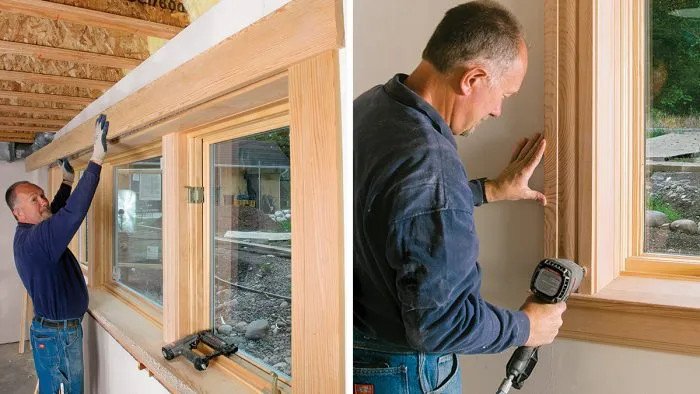
The window opening in the basement wall is a rough rectangle cut into the concrete foundation. The edges are not square. The surface is not smooth. The depth varies by half an inch from one side to the other. You need to build a wooden frame inside this opening that is square, level, and firmly attached to the concrete so that drywall and trim can be installed around the window. This is a window buck, and attaching wood to concrete inside a confined opening requires specific fasteners, specific adhesives, and a tolerance for the fact that concrete is never as precise as the lumber you are putting into it, reports property management Mesa team.
Framing a basement window in concrete is a sub-project of the larger wall framing job. It takes about an hour per window. According to wikiHow’s comprehensive basement finishing guide, which has been viewed over 500,000 times, the framing phase is one of the most accessible DIY steps in a basement renovation.
The materials cost $30 to $50 per window. The work is not complicated, but the concrete is unforgiving. A misplaced fastener cannot be moved without leaving a hole. A measurement that is off by half an inch means cutting a new piece of lumber. This guide covers building and installing a window buck directly into a concrete foundation opening.
What a Window Buck Does
A window buck is a rectangular wooden frame built inside the concrete window opening. It serves as the transition between the rough concrete and the finished interior. The buck provides a flat, square surface for attaching drywall that wraps into the window well. It provides a mounting surface for the window stool and casing trim. It creates a thermal break between the cold concrete and the interior finish, reducing condensation on the window frame. Without a buck, drywall must be attached directly to the concrete, which is unreliable because concrete screws do not hold drywall securely and the rough concrete surface prevents a clean finished edge.
Materials for the Window Buck
- 1x lumber: 1×6, 1×8, or 1×10 boards, depending on the depth of the concrete wall. The board width must be wide enough to span from the exterior window frame to the interior face of the finished wall, plus at least 1/2 inch of overhang into the room. Dry-fit a scrap piece to confirm the width before buying the lumber.
- Construction adhesive: polyurethane-based adhesive in a caulk tube, compatible with both concrete and wood. This provides the primary bond between the buck and the concrete.
- Tapcon concrete screws: 3/16-inch diameter, 2-3/4 to 3-1/4 inch length. Two per side, plus two for the top and two for the bottom. Tapcons require a hammer drill and a 5/32-inch masonry bit.
- Wood shims: for squaring and leveling the buck inside the uneven concrete opening.
- Low-expansion window foam: for sealing the gap between the buck and the concrete after the buck is secured.
Step 1: Measure the Concrete Opening
Measure the width and height of the concrete opening at multiple points. Measure the width at the top, middle, and bottom. Measure the height at the left, center, and right. The smallest width and the smallest height are the dimensions for the outside of the buck. The buck must fit inside the opening. If you build it to the largest measurement, it will not fit.
Measure the depth of the concrete wall at all four corners. The depth determines how wide the buck boards need to be. If the depth varies, which it will, use the deepest measurement and plane or sand the buck flush with the interior wall surface after installation.
Step 2: Build the Buck Frame
Cut four pieces of 1x lumber: top, bottom, and two sides. The top and bottom pieces span the full width of the opening. The side pieces fit between the top and bottom. Assemble the frame on a flat surface using 2-inch wood screws, two per corner, driven through the top and bottom pieces into the ends of the side pieces. Predrill the screw holes to prevent splitting the ends of the side pieces.
Check that the frame is square by measuring the diagonals. If the two diagonal measurements are equal, the frame is square. If they differ, rack the frame by hand until they match, then add a temporary diagonal brace to hold it square during installation. Remove the brace after the buck is secured in the concrete.
Step 3: Install the Buck in the Concrete Opening
Dry-fit the buck in the opening. It should slide in with minimal force. If it binds, identify the tight spot and plane or sand the buck edge until it fits. A buck that is forced into the opening will bow inward, and the drywall will not sit flat.
Apply a continuous bead of polyurethane construction adhesive to the back edges of the buck where it contacts the concrete. The adhesive fills the small gaps between the wood and the rough concrete, creating a continuous bond that the mechanical fasteners alone cannot provide.
Slide the buck into the opening. Position it so the interior face projects past the concrete by the depth of your wall framing plus the drywall thickness. For standard 2×4 framing with 1/2-inch drywall, the buck should project roughly 4-1/2 inches beyond the interior face of the concrete.
Shim the buck into position. Insert shims between the buck and the concrete at the top, bottom, and sides until the buck is level and square in the opening. Check level on all four sides. Check the diagonals again. Adjust the shims until the buck is perfectly square. A buck that is not square will produce window trim with mismatched corner angles, and the error is visible every time you look at the window.
Drill pilot holes through the buck sides into the concrete at the shim locations. Use a hammer drill with a 5/32-inch masonry bit. Drill through the wood and at least 1 inch into the concrete. Drive Tapcon screws through the buck into the concrete. The screws pass through the shims, locking both the buck and the shims in place. Two screws per side, one screw in the top, one in the bottom.
Step 4: Foam the Gap
Fill the gap between the buck and the concrete with low-expansion window and door spray foam. Standard spray foam expands with enough force to bow the buck inward and push it out of square. Low-expansion foam is formulated specifically for window and door installations and exerts minimal pressure as it cures. Apply a thin bead along the gap. The foam will expand to fill the space. Let it cure for the time specified on the can, typically 1 to 2 hours. Trim the excess foam flush with the buck using a utility knife.
Frequently Asked Questions
Should I use Tapcons or a powder-actuated tool for attaching the buck?
Tapcons are the better choice for a window buck. They are removable. If the buck is out of position, you can back the screw out, adjust, and re-drive. A powder-actuated fastener, such as a Ramset, is permanent once fired. The first shot is the only shot. For a window buck that requires shimming and alignment, the adjustability of Tapcons is worth the extra time spent drilling pilot holes. A powder-actuated tool is faster for bottom plates on long straight walls where precision is less critical.
Do I need pressure-treated lumber for the window buck?
Pressure-treated lumber is not required for a window buck because the buck does not contact the ground. The buck is attached to the vertical concrete wall and is not exposed to standing water or ground moisture the way a bottom plate is. Standard kiln-dried 1x lumber is acceptable. If the window has a history of condensation or the concrete around the window is frequently damp, use pressure-treated lumber as an extra precaution. The cost difference is $5 per window.
The Square Opening in the Unsquared Concrete
The concrete window opening was never meant to be square. It was formed by a wooden block placed in the formwork before the concrete was poured. The block shifted slightly during the pour. The edges are rough aggregate. The depth varies. The window buck imposes squareness and flatness on an opening that has neither. The shims correct the concrete’s irregularities. The adhesive bonds across the gaps. The foam seals the perimeter. The result is a flat, square frame that looks like it was part of the original construction. The concrete is invisible behind it, which is the point.