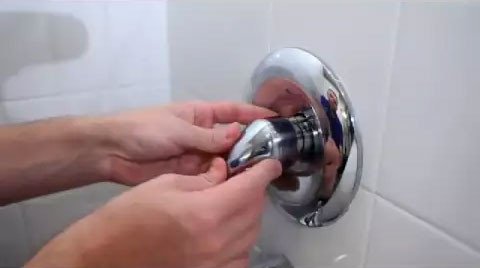
A single-handle bathtub faucet that drips from the spout has a worn cartridge, a tired ball assembly, or a cracked ceramic disc. The fix costs $10 to $50 in parts and takes 45 minutes once the water is off. The brand of your faucet determines which part you need. Delta, Moen, Kohler, American Standard, and Pfister all use different cartridges, and none are interchangeable. The packaging at the hardware store is not organized to help you. Bring the old part with you, shares East Bay Management Union City.
Single-handle faucets use one of three internal mechanisms. Identifying which one you have is the first step. The repair is straightforward once you know the type. Here is how to open the faucet, identify the valve type, and replace the failing part.
First: Identify Your Faucet Brand and Valve Type
Look for the brand name on the trim plate, the handle, or the spout. Delta, Moen, and American Standard stamp their names on visible surfaces. Kohler and Pfister sometimes hide the name on the back of the trim plate or on the underside of the spout. If the brand is visible, skip to the section for that valve type. If the brand is not visible, the handle design and the internal mechanism you find when you open the faucet will tell you what you have.
The faucet brand matters because each brand uses a proprietary cartridge. A Moen cartridge does not fit a Delta valve body, and vice versa. The universal cartridges sold at hardware stores are not universal. They fit the brand printed on the package and nothing else. Do not buy a cartridge until you know the brand.
Cartridge Type: Moen, Modern Delta, and Most Modern Faucets
A cartridge faucet contains a plastic or brass cartridge that slides in and out of the valve body. The cartridge has internal seals that control water flow and temperature. When the seals wear out, water drips from the spout. The entire cartridge is replaced, not individual seals. Moen single-handle tub faucets use a 1225 or 1222 cartridge. Modern Delta single-handle faucets use an RP46074 or similar cartridge. Kohler uses a ceramic cartridge specific to the model.
Shut off the water. Remove the handle. On Moen faucets, the handle is held by a set screw on the underside or under a decorative cap on the front. On Delta faucets, the set screw is on the underside near the base. Remove the handle. Remove the trim plate by removing the two screws through the plate into the valve body, or by pulling it off if it uses friction clips. The cartridge is now visible in the center of the valve body.
Moen cartridges are held in by a brass retaining clip. Slide the clip up and out with needle-nose pliers. Grip the cartridge stem with pliers and pull it straight out. If the cartridge is stuck, use a Moen cartridge puller, which costs $15 to $20 and threads onto the stem to pull the cartridge free. Do not twist or rock the cartridge, which can break the plastic and leave pieces inside the valve body.
Delta cartridges are held in by a threaded retaining nut. Unscrew the nut. Pull the cartridge straight out. Delta cartridges are removed with the same technique. A stuck Delta cartridge may require a Delta cartridge removal tool, which works on the same principle as the Moen tool.
After removing the cartridge, look inside the valve body. Delta cartridges have two small rubber seats with metal springs behind them in the back of the valve body. Replace these springs and seals using a Delta RP4993 kit. Moen cartridges do not have separate springs and seats. The seals are built into the cartridge.
Coat the O-rings on the new cartridge with plumber’s silicone grease. Slide the cartridge into the valve body in the same orientation as the old one. For Moen, the cartridge has a notch that aligns with a tab in the valve body. The notch must engage the tab. Reinstall the retaining clip. Turn the water back on and test before reinstalling the trim plate.
Ball Type: Older Delta Faucets
Older Delta single-handle faucets, manufactured before the mid-2000s, use a rotating ball mechanism instead of a cartridge. The handle moves a slotted metal or plastic ball against two spring-loaded rubber seals. When the seals wear out, water leaks from the spout or around the handle base.
Shut off the water. Remove the handle, typically held by a set screw on the underside. Unscrew the domed cap on top of the faucet body. Under the cap is a plastic adjustment ring with notches around its edge. Lift it off. Under the ring is a white or gray plastic cam shaped like a washer with a tab. Lift it out. Under the cam is the ball itself, lifted out by its stem.
Inside the valve body are two rubber seats with springs behind them. Remove them with needle-nose pliers. The springs push the seats against the ball to create the water seal. Replace the springs and seats from a Delta repair kit, part number RP3614 for most models. The kit also includes a new ball and cam. Replace the ball if it is scratched or pitted. Replace the cam if it is cracked or grooved.
Install the new springs and seats. The wide end of each spring faces outward toward the ball. Install the new ball with the alignment pin fitting into the notch in the valve body. Place the new cam on top with its tab in the same notch. Place the adjustment ring over the cam. Thread the cap back on. Adjust the ring by turning it with the tool included in the kit or with needle-nose pliers. A loose ring leaks. An overtightened ring makes the handle stiff. Find the point where the handle moves freely and no water leaks.
Ceramic Disc Type: Kohler and High-End Faucets
Ceramic disc faucets use two polished ceramic discs that slide against each other to control water flow and temperature. They rarely leak because ceramic is extremely hard and wear-resistant. When they do leak, the cartridge must be replaced. Ceramic disc cartridges are expensive, typically $40 to $100, because the manufacturing precision required for two ceramic surfaces to seal against each other is high.
Shut off the water. Remove the handle. The handle is often held by a set screw. Remove the trim plate. The ceramic disc cartridge is held by screws or a retaining ring. Remove the screws or ring and lift the cartridge out. Take the cartridge to a plumbing supply store to match the replacement. Ceramic disc cartridges are brand and model specific. You cannot guess. You must match the old part exactly.
Install the new cartridge in the same orientation. Tighten the screws evenly. Do not overtighten. Ceramic cannot flex to conform to an uneven mounting surface. Overtightening cracks the disc or the plastic housing.
Frequently Asked Questions
I cannot find the brand name anywhere on my faucet. What do I do?
Remove the cartridge or the ball assembly and take it to a plumbing supply store, not a big-box hardware store. The staff at a plumbing supply store identify parts by sight from experience. A big-box store employee may not recognize an unbranded part. Take clear photos of the faucet, the trim plate, and the handle before disassembly. The handle shape can identify the brand to an experienced eye. Moen handles are distinct from Delta handles, which are distinct from American Standard handles. Post a photo on a plumbing forum if the supply store cannot identify it.
What is the difference between a Moen 1225 and 1222 cartridge?
The 1225 is the older brass cartridge. The 1222 is the newer plastic cartridge with a different stem design. They are not interchangeable. If your faucet has the original 1225 cartridge, you can replace it with another 1225. You cannot replace a 1225 with a 1222 without changing the valve body. Moen sells a 1222 replacement cartridge that includes an adapter for older valves, but the adapter must be specified for your valve model. Bring the old cartridge to the store. Match it exactly.
The faucet leaks from the spout and from the handle. Is it the same problem?
Probably. A worn cartridge or ball assembly can leak from both places simultaneously. The seals that control water flow also seal against the stem O-rings. Replacing the cartridge or the ball and seals fixes both leaks at once. If the leak from the handle continues after replacing the cartridge, the O-ring on the cartridge is pinched or the cartridge is not fully seated. Remove the cartridge, check the O-rings, and reinstall.