Most people want a home that looks put together but still functions for hosting guests, working remotely, and casual lounging.
Bridging the gap between aspirational aesthetics and practical realities does not require a massive budget.
By focusing on clean silhouettes, layered neutrals, and adaptable layouts, you can create an environment that feels effortlessly livable.
The simplest updates involve choosing modular seating anchoring with a bold dining table, balancing raw materials with tactile warmth, and defining zones using lighting.
1. Choose a Sofa That Moves With You
Treating a seating arrangement as a fixed decision often locks you into one rigid configuration. A few months later, owners realize the setup fails for hosting parties and shows every pet mark.
The smarter approach to a living room refresh is adopting a flexible mindset. Think in individual units that connect for movie nights and break apart for hosting.
When seeking adaptable seating, practical features like removable covers and hidden storage become absolute necessities.
Many homeowners find that transitioning to a modular option greatly simplifies small space design.
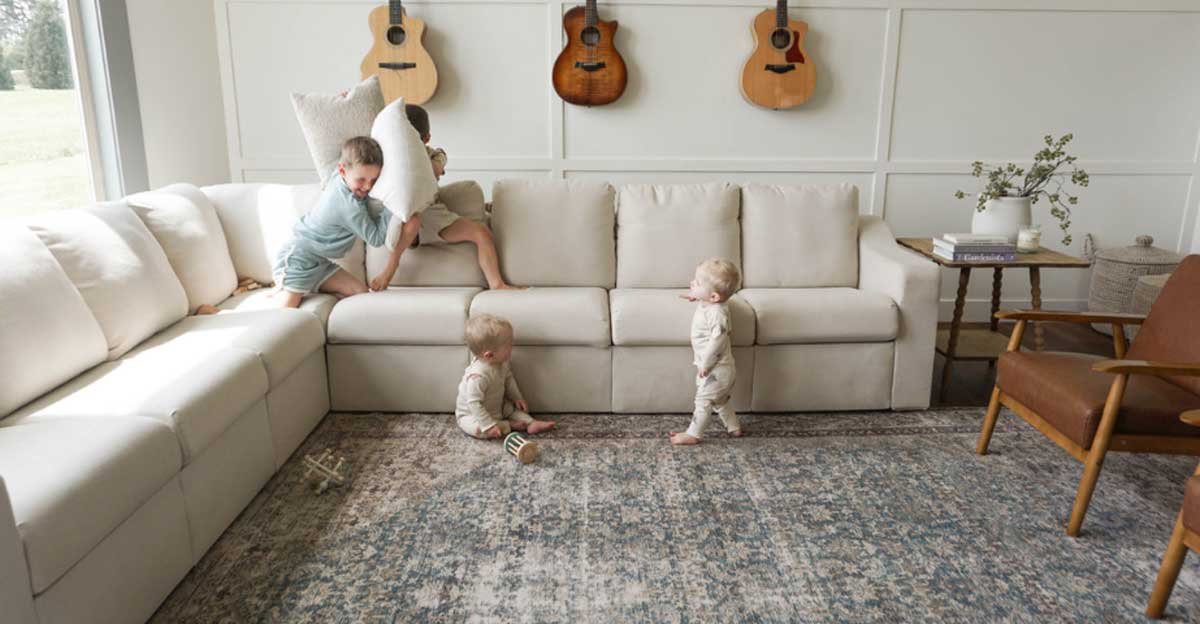
You can easily achieve this flexibility by choosing Home Reserve’s cozy couch. This adaptable system grows or shrinks as the room dictates without forcing awkward compromises.
This clean styling nods to celebrity living room cues by layering cozy neutrals over low-profile silhouettes.
The vital superpower of modular furniture is surviving real-life messes while looking effortlessly curated. You achieve a high-end look without sacrificing the durability needed for daily routines.
2. Anchor the Room With a Bold Dining Statement
In an open concept layout, the dining zone is where most people mistakenly play it safe. To ground an airy room, you need an architectural anchor that establishes a clear center of gravity.
Strong structural elements define the essence of industrial-style dining in modern homes. You can capture this exact aesthetic by anchoring the room with Knox Deco’s sturdy industrial dining tables.
Authentic material presence transforms a dining area from an afterthought into a deliberate design statement.
Reclaimed hardwood and solid steel do the visual anchoring work that a painted feature wall once accomplished.
A solid dining piece provides the visual weight to balance softer upholstered seating nearby. It prevents a room from feeling accidentally assembled and ensures the space looks styled.
Completing your update with one high-contrast structural piece elevates all surrounding decor immediately.
It ensures every other element in the room feels confidently chosen rather than casually collected. This upgrade brings a curated, sophisticated atmosphere right into your daily routine.
| Quote: To ground an airy room, you need an anchor, a dining table with real material presence that acts like architecture in a wall-free space. |
3. Balance Industrial Bones With Tactile Warmth
Incorporating strong structural elements means you must consciously introduce material contrast.
Hard finishes like linear steel table legs require inviting counterparts to avoid a cold atmosphere.
Contrast is the underlying engine of a space that feels highly polished and comfortably lived-in. Tonal balance serves as the ultimate goal when attempting to harmonize different materials.
To achieve this balance, focus on concrete textural pairings that appeal to both the eye and the body.
Position soft leather dining chairs against dark metal table legs for immediate visual interest. Draping a chunky knit throw over a modern sofa achieves a similar softening effect.
Furthermore, introducing a high-pile vintage rug visually shrinks the perceived scale of a sprawling floor plan.
Beyond textiles, environmental factors play a massive role in how warm a space feels. Maximizing window exposure brings out the rich textures of your interior materials while brightening the room.
Interior environments become substantially healthier when prioritizing natural light. This essential environmental factor improves physical well-being and highlights interior textures beautifully.
4. Define Zones With Intention
In a wall-free space, your decor must do the architectural heavy lifting to separate activities clearly.
While area rugs establish visual borders on the floor, lighting locks in the sense of purposeful zones overhead.
Dropping a sculptural pendant low over the dining table carves out an eating zone with quiet drama.
This technique is consistently utilized in designer interiors to create structure without physical barriers.
A warm floor lamp positioned beside the sofa creates a cocooning effect that defines the lounging area beautifully.
Localized lighting choices ensure the room transitions smoothly from daytime productivity to evening relaxation.
A well-placed mirror bounces ambient light and increases the perceived volume of the room effortlessly. This mirror trick remains an efficient strategy for enhancing residential interiors.
When each element works in concert, your space stops feeling like a random collection of furniture.
Adaptable seating, an architectural dining anchor, layered textures, and deliberate lighting all harmonize seamlessly together.
The environment finally feels designed, cohesive, and fully prepared for whatever your week demands.
| Key Insight: Using ‘islands of light,’ a warm floor lamp for lounging and a low pendant for dining defines zones without walls, while a large mirror amplifies light and perceived space. |
Your Next Steps
Before committing to new pieces, run through these quick guidelines to ensure your space remains highly functional.
Planning prevents costly mistakes and guarantees your home supports your daily routine. Armed with these strategies, you are fully equipped to build a resilient space.
- Measure Everything Twice: Map the actual footprint of any new piece on the floor before committing. Online proportions often read differently in person.
- Protect Traffic Flow: Leave at least 36 inches of clear walking space around all furniture groupings. This helps you test how the layout practically moves.
- Select for Maintenance: Prioritize wipeable performance fabrics and durable finishes, ensuring beautiful furniture is never too precious to use daily.
- Mix Materials Confidently: Pairing the structured weight of an industrial piece with softer textures creates an authentic, curated look.
Implementing these four updates will completely transform how your home looks and functions.
Balancing form and function creates a sanctuary perfect for hosting work and living. Curating adaptable pieces ensures your interior evolves gracefully over the years.