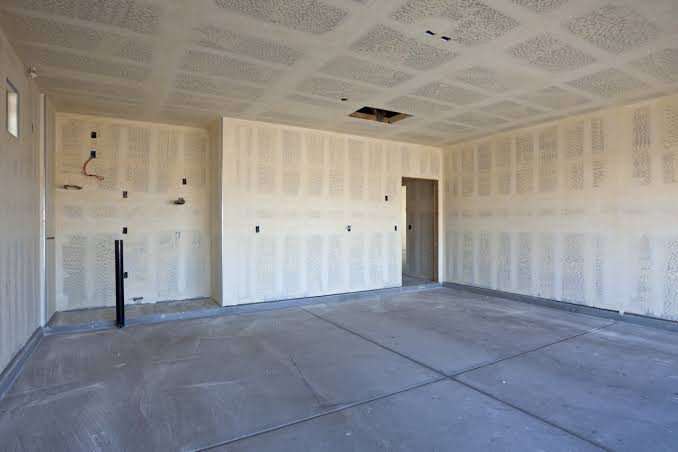
A two-car garage has roughly 800 to 1,000 square feet of wall area and 400 square feet of ceiling area, explains Gridley Property Management. The walls are open studs, bare framing that has been exposed since the house was built. Drywalling the garage turns it from a utilitarian shell into a finished room that is brighter, cleaner, and easier to heat. The cost depends on the size of the garage, whether the ceiling is included, the drywall thickness, the finish level, and who does the work. A basic hang-only job costs roughly half as much as a fully taped, textured, and painted finish. The difference between the two is whether the garage looks like a construction site with drywall or a finished room.
Upgrading the walls is a major step in transforming the space, but the functionality of the entry points matters just as much. Homeowners completing these renovations often find it is the ideal time to ensure the overhead system operates safely. Relying on garage door repair in Richmond helps maintain smooth track alignment and balanced spring tension, protecting your structural investments and keeping the area secure.
According to wikiHow’s wall finishing guide, co-authored by home improvement specialist Ryaan Tuttle with over 17 years of experience, proper drywall installation transforms a framed space into a finished room. The same principles apply to a garage: the framing must be flat and stable, and the drywall must be hung with the correct screw spacing to prevent sagging and cracking. This guide provides real costs for drywalling a standard two-car garage at multiple scope levels.
Cost by Scope for a Two-Car Garage (20×20×10)
| Scope | DIY Materials | Professional (Labor + Materials) |
| Walls only, hang only (no tape, no finish) | $400-700 | $1,000-1,800 |
| Walls only, hang + tape + Level 4 finish | $600-1,000 | $1,800-3,500 |
| Walls + ceiling, hang + tape + Level 4 finish | $1,000-1,700 | $3,000-5,500 |
| Walls + ceiling, Level 5 smooth finish | $1,300-2,200 | $4,500-7,500 |
A professional job for walls and ceiling at Level 4 finish costs $3,000 to $5,500. The DIY material cost is $1,000 to $1,700. The labor savings for doing it yourself are $2,000 to $3,800. The material cost is the same either way. The difference is entirely in the labor to hang, tape, mud, and sand.
Cost Per Sheet and Per Square Foot
| Item | DIY Materials | Professional (Installed + Finished) |
| 4×8 sheet of 1/2-inch standard drywall | $15-20 | $35-50 |
| 4×8 sheet of 5/8-inch Type X fire-rated drywall | $18-25 | $40-60 |
| Per square foot, walls, hung + taped | $0.60-1.00 | $1.50-3.00 |
| Per square foot, ceiling, hung + taped | $0.80-1.20 | $2.00-3.50 |
Materials Breakdown for a Two-Car Garage (Walls + Ceiling)
| Material | Quantity | Cost |
| 1/2-inch drywall sheets for walls (800 sq ft) | 25 sheets | $375-500 |
| 5/8-inch Type X sheets for ceiling (400 sq ft) | 13 sheets | $235-325 |
| Joint compound, all-purpose (4.5-gallon buckets) | 3 buckets | $45-75 |
| Paper drywall tape | 2-3 rolls | $15-25 |
| Drywall screws, coarse thread, 1-5/8 inch | 1 box (5 lbs) | $30-40 |
| Corner bead, metal or vinyl | 8-10 sticks | $30-50 |
| Total materials for walls + ceiling | $730-1,015 |
A standard two-car garage, 20 feet by 20 feet with 10-foot ceilings, has roughly 800 square feet of wall area and 400 square feet of ceiling area. The wall area accounts for the three walls that are not the garage door wall. If the garage door is being replaced with a framed wall as part of a conversion, add roughly 120 square feet of wall area, or four additional sheets.
When managing a transformation that involves modifying the main entry point, structural and operational safety should remain a priority. For regional property owners retaining their overhead access systems alongside updated walls, evaluating local specialized services such as garage door repair Syracuse helps keep heavy mechanisms correctly balanced. Ensuring these entry components operate smoothly limits stress on newly completed framing and safeguards the interior environment.
What Moves the Total Drywall Cost
- Ceiling inclusion. Adding the ceiling doubles the square footage and adds the physical challenge of overhead work. Ceiling drywall requires a lift rental or a second person. A drywall lift costs $30 to $40 per day at any tool rental shop. It is the best rental value in the entire project. Holding a 70-pound sheet of 5/8-inch drywall overhead while trying to drive screws is how backs are injured and drywall is dropped.
- Finish level. A Level 2 finish is tape embedded in compound with no additional coats. The tape and seams are visible. This is the minimum for a garage where appearance does not matter. A Level 4 finish is tape plus three coats of compound, sanded smooth. Seams are invisible under paint. This is the standard for a garage used as a workshop, gym, or living space. The cost difference between Level 2 and Level 4 is roughly $0.30 to $0.50 per square foot in labor, or $350 to $600 for a two-car garage. A Level 5 finish adds a skim coat over the entire surface. It adds $0.50 to $1.00 per square foot and is rarely needed in a garage.
- Drywall thickness and fire code. Building code requires 5/8-inch Type X fire-rated drywall on the ceiling of an attached garage if there is living space above it. The same requirement applies to the wall shared between the garage and the house. The thicker drywall provides a one-hour fire separation. For a detached garage or a garage with no living space above, standard 1/2-inch drywall is acceptable everywhere. 5/8-inch sheets weigh 70 pounds versus 55 pounds for 1/2-inch. The weight difference matters when working overhead alone.
- Existing wall condition. If the garage walls are open studs, the drywall hangs directly. If the garage has existing pegboard, OSB, or old drywall that must be removed first, add $200 to $500 for demolition and disposal. A dumpster bag for construction debris costs $30 and the collection fee is $100 to $150.
- Moisture-resistant drywall. Standard drywall absorbs humidity. In an unconditioned garage, moisture swings cause the paper facing to peel and can support mold on the back side over years. Moisture-resistant drywall, green board or purple board, costs $2 to $4 more per sheet. For a two-car garage using 38 sheets, the premium is $76 to $152. It is recommended for the bottom 4 feet of garage walls where snow melt, rain splash, and floor-level humidity concentrate.
DIY vs. Professional: Time and Savings
Drywall is physically demanding but technically accessible. Hanging drywall requires a drill, a drywall T-square, a utility knife, and the ability to lift 55 to 70-pound sheets repeatedly. Taping and mudding requires a technique that develops over the first few walls. The first seams will be rougher than the last seams. A garage is a good place to learn because the finish standard is lower than in living space.
A homeowner working alone can hang drywall in a two-car garage in one to two weekends. The taping and finishing take an additional two to three weekends because each coat of joint compound must dry completely before the next is applied. The drying time is the schedule constraint. The active working time is roughly 20 to 30 hours. The calendar time is 3 to 5 weekends.
The DIY savings on a fully drywalled two-car garage are $2,000 to $3,800 compared to professional installation. The savings are entirely in labor. The material cost is identical. A hybrid approach, where the homeowner hangs the drywall and hires a professional taper to finish the seams, saves roughly half that amount and produces a finish quality that is difficult for a first-timer to match. The taper charges $0.50 to $1.00 per square foot for taping and finishing only.
Frequently Asked Questions
Should I paint garage drywall or leave it unfinished?
Paint it. Unpainted drywall absorbs moisture from the air and from splashes. Within a year, unpainted drywall in a garage develops water stains along the bottom edge, mold spots in humid seasons, and a gray dinginess from accumulated dust that cannot be cleaned. At minimum, apply one coat of PVA primer to seal the surface. A coat of primer plus one coat of flat or satin paint costs $80 to $150 in materials and takes a day to apply. The painted drywall looks acceptable for a decade. The unpainted drywall looks acceptable for about a year.
Should I insulate the walls before drywalling?
If the garage will ever be heated, even occasionally with a space heater, insulate before drywalling. Adding insulation after the drywall is up requires cutting holes in the drywall or removing entire sheets. It is a fraction of the cost and effort to insulate while the studs are exposed. Fiberglass batt insulation for a two-car garage costs $200 to $500 in materials and takes an afternoon to install. The window of opportunity is open. Once the drywall goes up, it closes.
Upgrading other operational elements at the same time can further maximize your home’s total efficiency and utility. For instance, pairing a newly finished interior with proper Garage Door Repair and Installation in Waterville, me ensures that the largest opening in the structure remains tightly sealed against drafts. Professional maintenance on the door track and weatherstripping preserves stable indoor temperatures and limits unnecessary heat loss.
The Garage That Becomes a Room
Drywalling a garage costs $730 to $1,015 in materials for DIY, or $3,000 to $5,500 for professional installation of walls and ceiling at a Level 4 finish. The drywall transforms the garage from exposed studs to smooth, paintable surfaces. The paint that follows is $80 to $150 in materials. The garage goes from a shell that stores cars and boxes to a room with finished walls that reflect light and can be wiped clean. The drywall is the skin. The studs behind it are the bones. The room that was always there underneath the exposed framing is finally visible. The material cost is $730 to $1,015. The transformation is worth considerably more. Whether the garage stays a garage or becomes a gym, a workshop, or a living space, the drywall is what makes it feel finished. The exposed studs had their run. Now the garage has walls.
Maintaining the structural integrity of your garage involves more than just the walls; the garage door itself is a complex mechanical system that requires attention. While drywalling provides a clean interior finish, ensuring that the main entrance to the space operates correctly is vital for safety and accessibility. If you notice unusual noises or irregular movement during operation, seeking Top-Rated Garage Door Repair in Cedar Park, TX, can help address these mechanical issues before they lead to more significant damage. Keeping all components in good working order supports the long-term functionality of your newly finished room and protects your property from the elements.