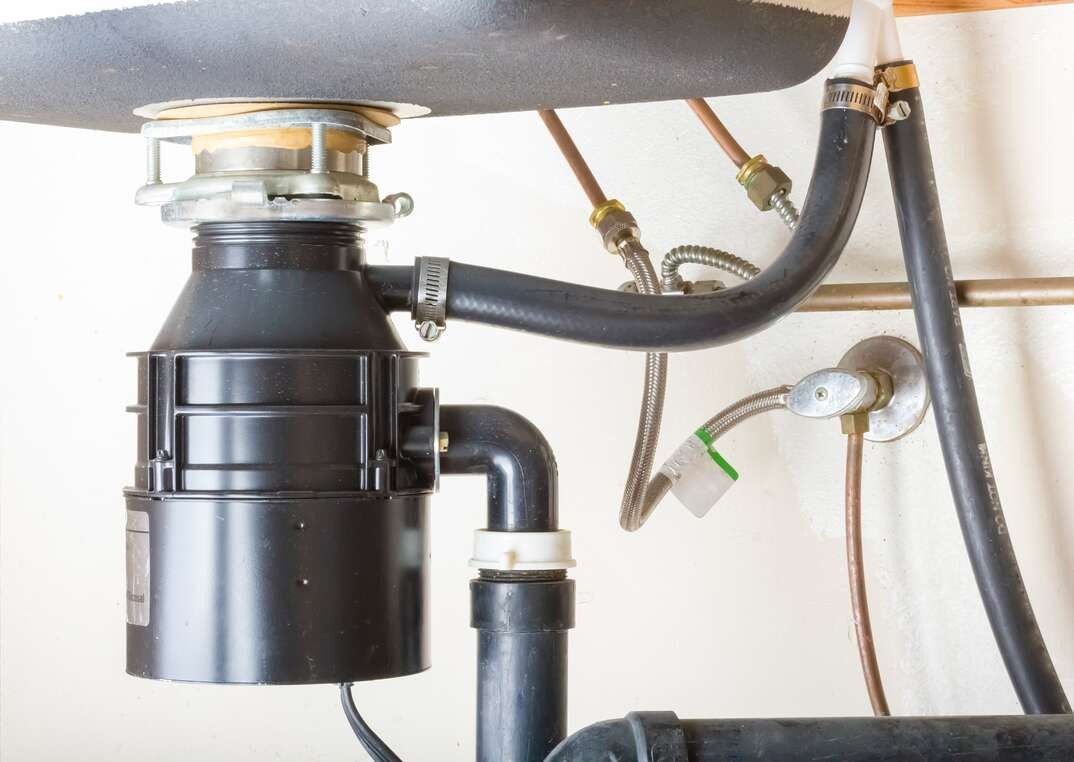
This garbage disposal cost guide for homeowners covers what you will pay in 2026. A garbage disposal costs between \$150 and \$600 for the unit itself and \$250 to \$900 installed by a plumber, with the national average around \$450 total for a mid-range unit with professional installation, insights just as relevant to managing tenant-related matters. A budget disposal costs \$150 to \$250 installed.
The cost difference between a $100 disposal and a $300 disposal is not about whether it grinds food. It is about how much noise it makes while grinding, how likely it is to jam, and whether it will still be running in ten years. A garbage disposal is a motor attached to a spinning plate with impellers. The motor quality, the grinding chamber size, and the sound insulation determine the price. The installation labor is roughly the same regardless of the unit cost — the plumber connects the disposal to the sink drain and the dishwasher drain line, mounts it to the sink flange, and tests it. The labor is the constant. The unit is the variable.
Garbage Disposal Costs by Type and Horsepower
Garbage disposals range from a $50 budget 1/3 HP unit to a $500 premium 1 HP model, with installed costs running $150 to $900 depending on the unit and whether the installation is a replacement or a first-time install. Here is how the five main types compare.
| Disposal Type / Power | Unit Cost | Installed Cost | Best For |
| 1/3 HP (basic) | $50 – $100 | $150 – $300 | Single person, light use, rental |
| 1/2 HP (standard) | $100 – $200 | $250 – $450 | 2-3 person household, daily use |
| 3/4 HP (upgraded) | $200 – $350 | $400 – $650 | Family of 4, frequent cooking, quieter |
| 1 HP (premium) | $300 – $500 | $500 – $800 | Large family, heavy use, quietest |
| Batch-feed (safety) | $200 – $400 | $400 – $700 | Homes with children, cover-activated |
Continuous-Feed vs. Batch-Feed — the Safety Distinction
A continuous-feed disposal runs whenever the wall switch is on. You feed food waste into it while it is running, pushing it down with a stopper or a scraper. This is the standard configuration in most kitchens. The disposal is activated by a switch, and food is added while the blades are spinning. The risk — small but real — is that a hand, a utensil, or something that is not food finds its way into the spinning chamber while the switch is on.
A batch-feed disposal only runs when a magnetic stopper cover is placed over the drain opening and turned to activate the unit. You load the disposal with food waste, place the cover, and turn it to start the grinding cycle. The cover is the switch. A batch-feed disposal cannot run without the cover in place, which makes it impossible to put a hand into a running disposal. The safety advantage is real. The inconvenience is also real — you cannot rinse food waste down the drain while the disposal is running because the cover blocks the drain. The choice is safety versus convenience. For homes with children, batch-feed is worth the trade-off. For everyone else, continuous-feed is the standard for a reason.
Installation Costs, What the Plumber Charges
Garbage disposal installation costs $100 to $300 in labor when replacing an existing disposal, a straightforward swap. The plumber removes the old disposal, installs the new mounting flange if the new unit uses a different mounting system, connects the disposal to the sink drain and the dishwasher drain line, plugs it into the under-sink outlet, and tests it. The job takes one to two hours.
Installing a garbage disposal where one did not previously exist costs $250 to $500 in labor because the plumber must install a new electrical outlet under the sink, run a new switch leg to a wall switch above the counter, and possibly add a new circuit if the existing kitchen circuits are at capacity. The electrical work is the expensive part. The plumbing connection is straightforward. Running a new switch and outlet adds $200 to $400 to the total.
An air switch, a button mounted on the countertop that activates the disposal with a puff of air pressure, eliminating the need for a wall switch, costs $50 to $100 for the switch and adds $50 to $100 to the installation. An air switch is safer than a wall switch, no electrical connection near the sink, and is the preferred activation method for island sinks where a wall switch is impractical.
The Environmental Protection Agency (EPA) notes that garbage disposals, when used in conjunction with a properly functioning wastewater treatment system, can be an environmentally responsible way to manage food waste compared to sending it to a landfill where it produces methane. However, disposals should not be used with septic systems unless the system is specifically designed to handle the additional organic load. A standard septic system is not designed for the volume of ground food waste a disposal produces.
When these systems handle extra waste from kitchen appliances, the accumulation of solid materials accelerates, making regular professional inspections necessary. Homeowners using local solutions like septic tank pumping in Loganville can manage this organic load effectively, ensuring the bacterial balance inside the tank remains stable. Keeping up with a consistent maintenance plan prevents system backups and extends the lifespan of the property’s drainfield.
What Not to Put in a Garbage Disposal
The garbage disposal is a grinder, not a trash can. The things that will damage it, clog it, or shorten its life are predictable and avoidable. Grease, oil, and fat congeal in the drain line and are the most common cause of disposal-related clogs. Fibrous vegetables, celery, asparagus, corn husks, artichokes, wrap around the impellers and jam the motor. Starchy foods, pasta, rice, potato peels, expand in water and form a paste that clogs the drain. Coffee grounds settle in the trap and accumulate into a sludge that is difficult to clear. Bones, fruit pits, and seafood shells are too hard for standard disposals to grind effectively and will damage the impellers or jam the motor.
The most common disposal service call, “my disposal is humming but not spinning”, is caused by a jammed impeller. The disposal motor is running, but something is wedged between the impeller and the grinding ring. Most disposals have a hex key socket on the bottom of the unit. Insert the hex key, usually provided with the disposal, and work it back and forth to free the jam. Turn off the power at the breaker before reaching into the disposal. The hex key is under the sink. The breaker is in the panel. Turn off the breaker first. The hex key second. The hospital bill for reaching into a disposal that is still connected to power is not covered by the manufacturer’s warranty.
Frequently Asked Questions
How much does a garbage disposal cost installed?
A garbage disposal costs $250 to $900 installed. A 1/2 HP standard disposal costs $250 to $450. A 3/4 HP upgraded disposal costs $400 to $650. A 1 HP premium disposal costs $500 to $800. The unit itself costs $100 to $500. Installation labor costs $100 to $300 for a replacement. Installing a disposal where none existed costs $250 to $500 due to the electrical work required.
How long does a garbage disposal last?
A garbage disposal lasts 8 to 15 years depending on the quality of the unit and how it is used. A 1/3 HP budget disposal lasts 5 to 8 years. A 1/2 HP standard disposal lasts 8 to 12 years. A 1 HP premium disposal lasts 12 to 15 years. The motor is the limiting component. Once the motor bearings wear out, the disposal is not repairable, it must be replaced.
Can I install a garbage disposal myself?
Replacing an existing disposal with a similar model is a moderately DIY-friendly plumbing project. The disposal mounts to the sink flange with a twist-lock ring. The plumbing connections, sink drain and dishwasher drain line, are hand-tightened or require basic tools. The electrical connection is a standard plug-in cord under the sink. If you are comfortable with basic plumbing and electrical safety, turn off the breaker before touching any wires, replacing a disposal is a 1- to 2-hour DIY project. Installing a disposal where none existed requires running new electrical wiring and should be done by a licensed electrician.
Why does my garbage disposal smell and how do I clean it?
Disposal odors are caused by food particles trapped under the splash guard, on the underside of the grinding chamber, or in the drain line. Clean the disposal by grinding ice cubes and rock salt, the ice sharpens the impellers and the salt scrubs the grinding chamber. Follow with half a lemon or a quarter-cup of baking soda followed by vinegar. Run cold water for 30 seconds after each use to flush food particles through the drain line. Do not use chemical drain cleaners in a disposal, they can damage the seals and the plastic components.
Should I use a garbage disposal with a septic system?
Generally, no. A standard septic system is not designed to handle the volume of ground food waste a disposal produces. The additional organic load can overwhelm the bacteria in the septic tank and accelerate the buildup of solids, requiring more frequent pumping. If you have a septic system and want a disposal, look for a septic-assist disposal, these units inject enzymes into the grinding chamber to pre-treat the food waste before it enters the septic system. Septic-assist disposals cost $300 to $500 for the unit.
What horsepower garbage disposal do I need?
A 1/2 HP disposal is adequate for a 2- to 3-person household that cooks regularly and uses the disposal daily. A 3/4 HP disposal is better for a family of 4 that cooks frequently and wants quieter operation. A 1 HP disposal is for large families, frequent entertaining, and homeowners who want the quietest possible operation. The difference between 1/2 HP and 3/4 HP is about $100 to $150. The difference in noise is noticeable. The difference in jamming frequency is noticeable. The upgrade is worth the cost for most households.
What a Working Disposal Costs
A 1/2 HP continuous-feed garbage disposal from a reputable manufacturer, InSinkErator or Waste King, costs $250 to $450 installed and handles the daily food waste of a typical household for 8 to 12 years. It is not quiet. It is not the most powerful. It is the disposal that balances cost, performance, and lifespan for the 80% of households that cook at home, scrape plates into the disposal, and want to empty the sink without emptying the drain strainer.
A 3/4 HP disposal costs $400 to $650 installed and is noticeably quieter, noticeably less prone to jamming, and worth the upgrade for anyone who has ever stood over a humming disposal with a hex key in one hand and a flashlight in the other, wondering what is stuck in there this time. The $100 to $150 difference between 1/2 and 3/4 HP is the cheapest jam prevention you can buy. Ever stood over a sink with a plunger at 10 p.m., wondering whether the disposal or the drain is clogged, and realized the answer does not matter because either way you are the one fixing it? That moment is what a 3/4 HP disposal prevents. The $150 upgrade buys quieter operation and fewer emergencies. The emergencies you still have will happen during business hours. That alone is worth the money.