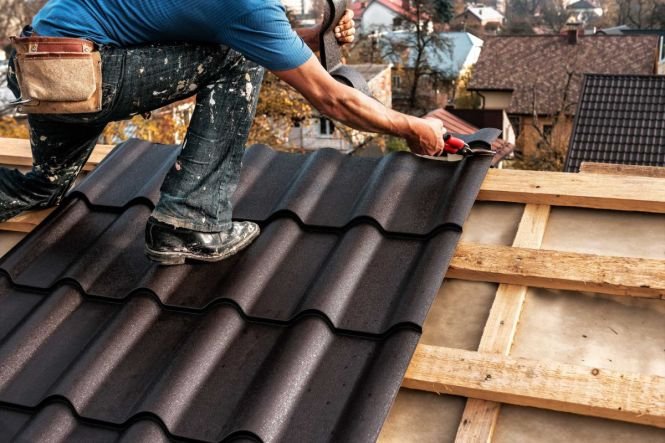
Avoiding common roof replacement mistakes starts with understanding that a replacement is not a bigger version of a repair. These seven common roof replacement mistakes to avoid cover everything from material choice to contractor vetting to warranty traps — each one avoidable with a single question or document check, notes Keyrenter Property Management in Lakewood Ranch. It is a structural project with its own failure modes — and the mistakes cost five figures instead of three.
Every mistake on this list is something a real homeowner has done, and every one can be avoided with a single conversation, a single document check, or a single question asked before the contract is signed.
Mistake 1: Choosing the Wrong Material for Your House
The most expensive roof replacement mistake is not choosing a bad material. It is choosing a good material that is wrong for your specific house, climate, or ownership timeline. Metal roofing on a house you will sell in five years means you paid a $10,000 premium the next buyer will not pay you back for. Tile roofing on a house whose framing was engineered for asphalt means you added 800 pounds per square to a structure not designed to hold it.
Match the material to three things in this order: your planned ownership horizon, your local climate, and your roof structure’s load capacity. Architectural asphalt shingles are the right choice for most homeowners — $9,000 to $15,000 installed, 25 to 30 years of service, no structural reinforcement needed. Metal makes sense if you plan to stay for 15-plus years. Tile and slate make sense if your house is architecturally designed for them and your framing can support the weight. Deviate from these guidelines and the mistake is baked into the roof from day one.
The National Roofing Contractors Association (NRCA) recommends that homeowners verify their contractor’s familiarity with the specific material being installed — not just roofing in general. A contractor who installs asphalt roofs 50 times a year is not necessarily qualified to install a standing-seam metal roof, which requires different tools, different fasteners, and different flashing techniques.
Mistake 2: Layering New Shingles Over Old Ones
A roof-over — installing new shingles on top of the old layer without tearing off — saves $1,500 to $3,000 on tear-off and disposal costs. It also doubles the weight on the roof deck, hides any rot or water damage underneath, voids the manufacturer’s warranty on the new shingles, and reduces the new roof’s lifespan by trapping heat between the two layers. Most building codes allow one layer of shingle-over on an existing single-layer roof. Two total layers. Three is a structural hazard. Two is still a mistake in most situations.
The problem is not the shingles. It is what you cannot see underneath them. A roof deck with water damage, delaminated plywood, or softened OSB will continue to deteriorate beneath two layers of shingles, and no one will know until the decking fails, at which point the repair requires tearing off both layers instead of one. The $2,000 saved on tear-off becomes a $5,000 emergency repair.
Ensuring the underlying structure is sound before placing new materials is vital for the long-term durability of your home. If you want to protect your investment and avoid these common structural pitfalls, partnering with a dependable roofing contractor can provide the comprehensive technical evaluation needed to secure your roof decking against future seasonal damage.
The math works exactly once: when nothing is wrong with the decking. The problem is you cannot confirm that without tearing off the old shingles first.
Mistake 3: Hiring the Cheapest Bid Without Verification
The lowest bid on a roof replacement is not a bargain. It is a bid that either excludes something the other contractors included, or comes from a contractor who does not carry the insurance that protects you when something goes wrong.
Before you compare prices, compare these three things across every bid: the specific shingle manufacturer and product line by name, the underlayment type, and whether the quote includes permit fees and disposal costs. A bid that says “architectural shingles” without naming the product, GAF Timberline HDZ, Owens Corning Duration, CertainTeed Landmark, is a bid that reserves the right to substitute a lower-grade shingle. A bid that does not list the underlayment type is a bid that will use whatever is cheapest at the supply house that morning.
Verify insurance before you verify anything else. Ask for certificates of both liability insurance and workers’ compensation, current and in the contractor’s name. If the contractor hesitates for even a fraction of a second, end the conversation. A roofer who carries liability but not workers’ comp is cheaper by design, and if one of their crew falls off your roof, your homeowners insurance is the next payer in line. That $2,000 you saved on the bid disappears against a $20,000 injury claim.
Mistake 4: Replacing the Roof Without Fixing the Ventilation
A new roof installed over an attic with inadequate ventilation will fail years before its rated lifespan. Poor ventilation traps heat and moisture in the attic. Heat bakes the shingles from underneath, accelerating granule loss and causing the asphalt to become brittle. Moisture condenses on the underside of the decking and rots the plywood from above. The homeowner sees curling shingles and blames the manufacturer. The actual cause is the attic conditions that were not addressed when the roof was replaced.
The fix, adding ridge vents, soffit vents, or both so cool air enters at the eaves and hot air exits at the ridge, costs $300 to $800 during a roof replacement. Adding ventilation to a finished roof later costs $1,500 to $3,000 because the crew has to cut into a completed roof system. The question to ask your contractor before the job starts: “Is my attic ventilation adequate, and if not, what are we doing about it during this replacement?” If they cannot answer that question in detail, find a different contractor.
Mistake 5: Replacing the Roof at the Wrong Time
Roofing contractors are busiest from late spring through early fall. Scheduling a replacement during peak season, May through September in most of the country, means paying peak-season labor rates and competing for the contractor’s attention with every other homeowner who waited for good weather. Scheduling in late fall or early winter, when crews have open calendars, can reduce the total cost by 5% to 10%, $500 to $1,500 on a typical job.
The weather window matters too. Asphalt shingles need temperatures above 40 degrees for the sealant strips to activate properly. Installing shingles in cold weather without hand-sealing each tab, a time-consuming process most crews skip, results in shingles that never bond to the course below them. The first strong wind lifts them like pages in a book. If you must replace a roof in winter, confirm that the contractor uses cold-weather installation procedures and that the shingle manufacturer’s cold-weather warranty applies.
Mistake 6: Not Understanding What the Warranty Actually Covers
Roof replacement warranties come in two categories that most homeowners confuse: manufacturer warranties on materials, and contractor warranties on workmanship. The manufacturer’s “lifetime warranty”, which usually means 50 years or the length of time you own the home, whichever is shorter, covers defective shingles. It does not cover labor to remove and replace them. It does not cover damage caused by improper installation. It does not cover anything if the contractor installed the shingles in a way that violates the manufacturer’s published installation instructions.
The contractor’s workmanship warranty, typically one to five years, covers installation errors. Leaks caused by badly nailed shingles, improperly lapped flashing, or incorrectly applied underlayment are the contractor’s responsibility during the warranty period. After the workmanship warranty expires, any installation-related failure is your problem, not the manufacturer’s and not the contractor’s.
Ask the contractor to specify the workmanship warranty period in writing on the contract. Ask the manufacturer’s rep, not the contractor, what voids the material warranty. The answers to these two questions will tell you more about the roof’s long-term protection than the warranty document itself.
Mistake 7: Signing the First Quote That Lands in Your Inbox
Roof replacement quotes on the same house, with the same material specifications, routinely vary by 30% to 50% between contractors. The difference is not always about quality. Sometimes it is about overhead, one contractor runs a larger office, carries more insurance, pays higher wages. Sometimes it is about workload, a busy contractor prices high because they do not need the work. Sometimes it is about something the low bidder missed that the other two saw.
Get at least three quotes. Do not share the numbers across bidders. If all three fall within 10% to 15% of each other, the market rate for your roof in your area is established and you can choose based on reputation, not price. If one bid is 40% lower than the other two, the low bidder is either desperate, underinsured, or planning to discover additional work once the old roof is off and you have no bargaining power and a torn-off roof that cannot wait for a second opinion.
Ask every bidder the same set of questions: What shingle product and grade? What underlayment? What is included in the price for decking replacement, and what is the per-sheet rate for additional decking found during tear-off? What is the permit fee, and is it included or separate? A quote that answers these questions in writing is a competitive bid. A quote that does not is a placeholder with a dollar sign attached.
Frequently Asked Questions
What is the biggest roof replacement mistake homeowners make?
Choosing the wrong material for their ownership timeline and home structure is the most expensive mistake. Installing a $28,000 metal roof on a house you sell in five years wastes the premium. Installing heavy tile on a roof not engineered for the weight can cause structural sagging. Architectural asphalt shingles are the safest choice for most homeowners because they balance cost, lifespan, and structural compatibility.
Should I replace the roof decking during a replacement?
Replace only the sections of decking that are damaged, soft, or delaminated. Most homes older than 20 years have some decking that needs replacement, typically 10% to 30% of the total area. Budget $500 to $2,000 for decking surprises even if the contractor’s initial estimate assumes none. Replacing perfectly sound decking adds unnecessary cost with no benefit.
Can I stay in my house during a roof replacement?
Yes. Roof replacement is noisy and disruptive but does not make the house uninhabitable. The crew works from the outside. The interior is unaffected except for attic access. Expect noise from hammering and nail guns for one to three days, and vibrations that may cause pictures on upper-floor walls to shift slightly. Pets are usually more disturbed by the noise than people are.
How do I know if my contractor is qualified for roof replacement?
Verify their state license status online, ask for certificates of liability insurance and workers’ compensation, request three references from jobs completed within the last twelve months, and confirm they are certified by the shingle manufacturer you have chosen. Manufacturer certification, GAF Master Elite, Owens Corning Preferred, CertainTeed Select ShingleMaster, is not a guarantee of quality, but it is evidence that the manufacturer has vetted the contractor’s work.
What time of year is best for roof replacement?
Late spring through early fall is the ideal window for installation quality because warm temperatures activate shingle sealant strips. Late fall and early winter can save 5% to 10% on labor costs due to lower demand, but cold-weather installation requires additional steps, hand-sealing shingle tabs, using cold-weather adhesives, that not all crews perform correctly. Avoid roof replacement in freezing temperatures unless the contractor follows the manufacturer’s cold-weather installation procedures in writing.
What questions should I ask before signing a roof replacement contract?
Ask for the shingle product name and grade in writing, the underlayment type, the per-sheet rate for additional decking found during tear-off, whether the permit fee is included, the workmanship warranty period in years, and whether the crew are employees or subcontractors. A contractor who answers all six questions clearly in the contract is not necessarily the best contractor. A contractor who dodges any of them is definitely not.
The Mistake That Connects All the Others
Every roof replacement mistake traces back to the same root cause: treating a structural project like a commodity purchase. A roof is not a dishwasher. You cannot return it if the color is wrong. You cannot call customer service when it leaks at 2 a.m. The decisions you make before the first nail goes in determine whether the roof performs for 30 years or fails in 10.
Get three quotes. Verify insurance. Ask about ventilation. Read the warranty. Do not let the lowest bid make a decision the roof will live with for longer than you will live in the house. The roof does not care what you paid. It only cares whether it was installed correctly. Notice how none of the expensive mistakes on this list come from the roof itself? Every single one starts with a decision made at the kitchen table, not on the ladder.