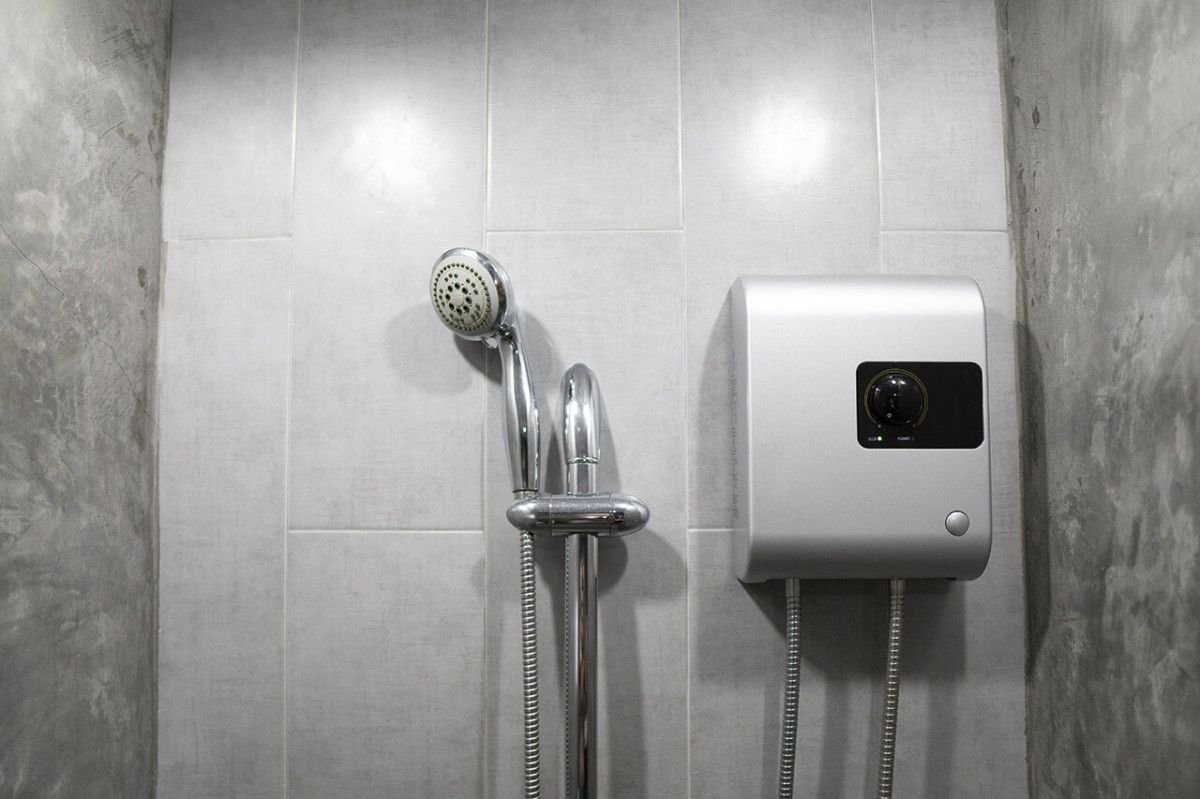
A tankless water heater costs between \$1,500 and \$4,500 installed in 2026, with the national average around \$3,000 for a gas tankless unit and \$2,200 for an electric tankless unit. The unit itself costs \$500 to \$1,500. The installation — which often requires upgrading the gas line, installing new venting, or upgrading the electrical panel — costs \$1,000 to \$3,000 and is frequently more expensive than the water heater itself, notes Oakmont Property Management experts.
The cost difference between a $1,200 tank water heater replacement and a $3,000 tankless installation is not about the hot water. Both produce hot water. The difference is in energy efficiency, lifespan — roughly 20 years for tankless versus 10 to 15 for a tank — and the endless hot water that a tankless unit provides. Whether that difference is worth $1,800 depends on how many cold showers you have taken in your life and how many more you plan to avoid.
Tankless Water Heater Costs by Type
Tankless water heaters range from a $500 point-of-use electric unit to a $4,500 whole-house gas condensing unit, with the installed price driven by the installation modifications as much as the unit cost. Here is how the four main types compare.
| Type | Unit Cost | Installed Cost | Lifespan | Flow Rate (GPM) |
| Electric tankless (small, point-of-use) | $200 – $500 | $500 – $1,200 | 20+ yrs | 1.5 – 3.0 |
| Electric tankless (whole-house) | $500 – $1,000 | $1,500 – $3,000 | 20+ yrs | 3.0 – 8.0 |
| Gas tankless (non-condensing) | $600 – $1,200 | $2,500 – $4,000 | 20+ yrs | 5.0 – 9.0 |
| Gas tankless (condensing) | $1,000 – $1,500 | $3,000 – $4,500 | 20+ yrs | 8.0 – 11.0 |
Installation Costs — the Part Most Estimates Ignore
A tankless water heater rarely replaces a tank water heater as a simple swap. The installation typically requires modifications that the unit’s price tag does not include, and that the big-box store’s “starting at” price conveniently omits.
Gas line upgrade: A gas tankless unit requires a larger gas supply line than a standard tank water heater, typically 3/4 inch instead of 1/2 inch. If the existing gas line is undersized, running a new line from the gas meter to the water heater location costs $500 to $1,500 depending on the distance and accessibility. This is the most common surprise cost in a tankless installation. The sales brochure mentions the unit price. It does not mention that the gas line running through your finished basement ceiling needs to be replaced.
Venting: Tankless gas units require stainless steel venting, Category III or IV, that can handle the higher exhaust temperatures and the acidic condensate produced by high-efficiency models. The existing tank’s Type B vent cannot be reused. New venting costs $500 to $1,000 and must be routed to an exterior wall or roof. A condensing tankless unit produces acidic condensate that must be drained or neutralized. A condensate neutralizer costs $100 to $200 and is required to prevent the acidic water from eating through cast-iron drain pipes.
Electrical panel upgrade: A whole-house electric tankless unit can draw 100 to 150 amps, more than an entire 100-amp electrical panel can supply. A panel upgrade to 200 amps costs $1,500 to $3,500. If the panel upgrade is required, it is mandatory, not optional. The electric tankless unit cannot be installed without it.
The U.S. Department of Energy estimates that tankless water heaters can be 24% to 34% more energy-efficient than conventional storage tank water heaters for homes using 41 gallons or less of hot water daily. The efficiency advantage comes from eliminating standby heat loss, the energy a tank water heater uses to keep 50 gallons of water hot around the clock, even when no one is using hot water. A tankless unit heats water only when a tap opens. The burner fires. The water heats. The burner shuts off. There is no standby loss because there is no tank of hot water sitting idle.
Gas vs. Electric Tankless, the Decision That Drives the Cost
Gas tankless units deliver higher flow rates, 5 to 11 gallons per minute, and can serve an entire house with simultaneous showers, dishwasher, and washing machine. A gas unit requires a gas line, venting, and combustion air. The installation is more complex and more expensive.
Electric tankless units are simpler to install, no gas line, no venting, but require massive electrical capacity. A whole-house electric unit drawing 100 to 150 amps may require a panel upgrade that adds $1,500 to $3,500 to the installation cost. Electric units also deliver lower flow rates, 3 to 8 gallons per minute, and may struggle to supply two simultaneous showers in cold climates where the incoming water temperature is 40 to 50 degrees and must be raised by 70 to 80 degrees to reach shower temperature. A gas unit handles cold incoming water more effectively because it can raise the temperature faster at higher flow rates.
The rule of thumb: gas tankless is the better choice for whole-house applications in any climate. Electric tankless is the better choice for point-of-use applications, a single bathroom, a kitchen sink, or for whole-house use in warm climates where the incoming water temperature is relatively high and the required temperature rise is smaller. An electric tankless unit in a Minnesota winter, raising 40-degree incoming water to 120 degrees, will struggle to deliver more than 3 to 4 gallons per minute, enough for one shower, not enough for two.
Sizing a Tankless Water Heater Correctly
A tankless water heater is sized by flow rate, gallons per minute at a specific temperature rise, not by storage capacity. The temperature rise is the difference between the incoming cold water temperature and the desired hot water temperature, typically 120 degrees. In Florida, where groundwater is 70 degrees, the required rise is 50 degrees. In Minnesota, where groundwater is 40 degrees, the required rise is 80 degrees. The same unit that delivers 6 GPM in Florida delivers 4 GPM in Minnesota because it can raise a smaller volume of water by the larger temperature difference.
Undersizing a tankless unit results in lukewarm water when multiple fixtures are running, the unit reduces flow to maintain temperature, and the shower goes cold when someone starts the dishwasher. There is no way to fix an undersized tankless unit except to replace it. Size the unit for the maximum simultaneous demand the household will place on it, not for the average. The extra $200 to $500 for a larger unit is trivial compared to the cost of replacing an undersized one.
Frequently Asked Questions
How much does a tankless water heater cost installed?
A tankless water heater costs $1,500 to $4,500 installed. A gas tankless unit costs $2,500 to $4,500. An electric tankless whole-house unit costs $1,500 to $3,000. The unit itself costs $500 to $1,500. Installation modifications, gas line, venting, electrical panel, frequently add $1,000 to $3,000.
Is a tankless water heater worth the extra cost over a tank?
Yes, if you value endless hot water, a 20-year lifespan, and energy savings of $100 to $300 per year. The payback period, the time it takes for energy savings to offset the higher installation cost, is typically 8 to 15 years. Tankless also saves space: the unit mounts on the wall and frees up the floor space a tank water heater occupies. If the tank water heater is in a finished area or a garage where floor space is valuable, the space savings alone can justify the tankless premium.
How long does a tankless water heater last?
A tankless water heater lasts 20 years or more with proper maintenance, roughly twice as long as a tank water heater. Annual descaling to remove mineral buildup, especially in areas with hard water, is the most important maintenance task. A tankless unit that is never descaled will fail in 10 to 12 years, still longer than a neglected tank, but far short of its potential lifespan.
Can a tankless water heater run out of hot water?
No, that is the defining feature. A tankless unit heats water on demand as long as a tap is open. It never runs out of hot water. It can, however, be overwhelmed if the demand exceeds its flow rate. Two showers, a dishwasher, and a washing machine running simultaneously may exceed the unit’s capacity, causing the water temperature to drop, not because the unit runs out, but because it cannot heat that volume of water fast enough. A properly sized unit for the household’s peak demand eliminates this problem.
Does a tankless water heater require maintenance?
Yes. Annual descaling, flushing the heat exchanger with a vinegar solution to remove mineral scale, is recommended, especially in areas with hard water. The descaling takes about an hour and costs $150 to $300 if performed by a plumber, or $20 to $50 in materials if done by the homeowner. The inlet water filter should be cleaned every six months. A tankless unit that is properly maintained will last 20 years or more.
What size tankless water heater do I need?
The size depends on your climate and peak hot water demand. In a warm climate, a unit rated for 6 to 8 GPM handles two simultaneous showers. In a cold climate, the same unit may handle only one shower plus a sink. A household of four in a cold climate should size for 8 to 10 GPM to handle two showers plus an appliance. A point-of-use electric unit for a single sink or shower needs 1.5 to 3 GPM.
What Endless Hot Water Costs
A gas tankless water heater costs $3,000 to $4,500 installed and delivers endless hot water for 20-plus years. The installation modifications, gas line, venting, possibly a condensate drain, are the cost most homeowners do not anticipate. Budget for them. The sales brochure will not.
If your existing tank water heater is in a finished basement, a closet, or a corner of the garage you would rather use for something else, the tankless unit’s wall-mounted, space-saving design is the feature that sells the upgrade. If you have taken one too many cold showers because someone used the hot water before you, the endless hot water is the feature that sells it. If neither of those applies, a like-for-like tank replacement costs $1,200 to $2,500 and produces hot water that is indistinguishable from tankless hot water. The water does not know how it was heated. Only the person paying the gas bill and waiting for the shower knows. Ever stood in a shower that went cold, shouting through the bathroom door to ask who flushed the toilet? A tankless water heater eliminates that conversation from your marriage. The cost of the unit is debatable. The value of never having that conversation again is not.