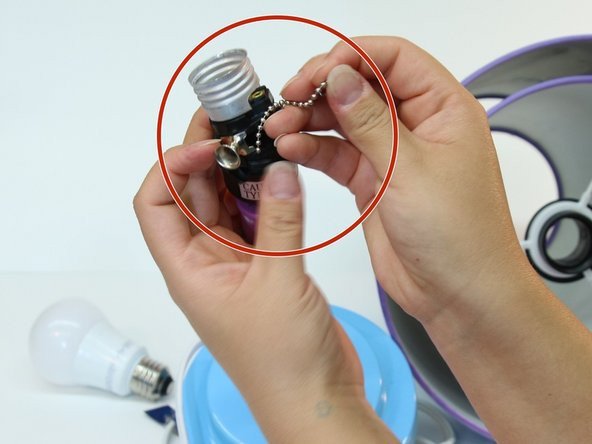
The chain pulls out of the socket with a click that does not turn on the light, or it pulls out and stays out, or it pulls out and the metal bead at the end comes off in your hand because the chain snapped inside the fixture. A broken pull chain on a light fixture is a ten-minute repair that costs about six dollars for a replacement switch. The alternative is replacing the entire fixture, which costs thirty to fifty dollars and takes an hour. For a basic porcelain pull-chain socket in a closet or a utility room, replacing the switch inside the socket is almost always faster and cheaper than replacing the fixture, explains RealtyWerx Property Management team, provided the socket itself is not cracked or burned.
The pull chain is not a separate part from the switch. The chain is connected to a spring-loaded switch mechanism inside the socket housing. When you pull the chain, you cycle the switch through its positions, which on a standard pull-chain socket are off, on, and sometimes off again. Replacing the chain requires replacing the entire switch assembly inside the socket, which is a pre-wired unit that costs about six dollars at any hardware store. The replacement switch comes with a new chain already attached and color-coded wire leads that connect to the fixture wiring with wire nuts.
Turn Off the Power and Remove the Fixture
Turn off the breaker that controls the light fixture. A pull-chain fixture may be controlled by a wall switch, and turning off the wall switch does not de-energize the wiring inside the fixture if the switch is on the load side. The only way to guarantee the fixture is dead is to turn off the breaker. Test the wires inside the fixture with a non-contact voltage tester before touching anything. If the tester beeps, the wrong breaker is off.
Remove the light bulb. Remove the fixture from the ceiling or the wall by unscrewing the mounting screws that hold the fixture base to the electrical box. Most pull-chain fixtures are held in place by two screws that thread into the ears of the electrical box. Support the fixture with one hand while you remove the screws with the other. Lower the fixture and let it hang by the wires, or disconnect the wires and remove the fixture entirely if that makes access easier. Take a photo of the wiring before disconnecting anything.
Replacing the Pull Chain Switch
The pull chain switch is the cylindrical component inside the socket housing with the chain hanging out of it. It is typically held in place by a threaded collar that passes through a hole in the socket housing, with a nut on the outside that secures it. The chain passes through the center of the threaded collar. Unscrew the nut and pull the switch out of the socket housing. If the chain is broken inside the switch, the switch will still need to be removed even though the chain is gone. Use needle-nose pliers to grip the remaining stub of the chain or the threaded collar and unscrew it.
Note how the old switch is wired. A standard pull-chain switch has two wire leads, both black, that connect to the black hot wire from the house wiring and the black wire that goes to the light socket. The switch is wired in series on the hot side of the circuit. The white neutral wires connect directly to the light socket and are not interrupted by the switch. A three-speed pull-chain switch for a ceiling fan has four or more wire leads and is labeled with the wire colors and the speed settings. Match the new switch to the old switch. A single-pole push-pull switch replaces a standard on-off pull chain. A three-way pull chain switch has three wire leads and replaces a switch that controls a light from two locations. The replacement must be the same type as the original.
Connect the new switch. The two black wire leads from the switch connect to the two wires that the old switch was connected to. Which lead goes to which wire does not matter for a standard single-pole switch because the switch simply opens and closes the circuit. For a three-speed switch or a multi-position switch, the wire leads are labeled and must be connected to the corresponding wires from the fixture. Twist the wire ends together with a wire nut, tug on each wire to confirm the connection is secure, and push the wires into the socket housing.
Insert the threaded collar of the new switch through the hole in the socket housing. Thread the nut onto the collar from the outside and tighten it by hand, then an additional quarter turn with pliers. Do not overtighten. The nut secures the switch to the housing, and overtightening cracks the plastic housing or the threaded collar. Pull the chain to confirm the switch cycles through its positions smoothly without binding.
Reinstall the Fixture and Test
Reconnect the fixture wiring to the house wiring if you disconnected it. Black to black, white to white, bare copper or green to the grounding screw on the fixture base or the electrical box. Push the wires into the electrical box, mount the fixture base to the box with the mounting screws, and install the light bulb. Turn the breaker back on and pull the chain. The light should cycle on and off with each pull. If the light does not turn on, check the bulb, check the wire connections, and confirm the breaker is on. If the chain pulls through its cycle with no resistance, the switch mechanism is defective or the internal spring has broken, which is rare in a new switch but not impossible.
If the chain hangs down too far and is in the way, cut it to the desired length with wire cutters. The chain is made of metal beads connected by small links. Cut the chain one bead past the desired length, not at the link between beads. Slip the metal connector at the end of the chain, called the pull chain connector or the chain end, over the last bead and crimp it closed with pliers. The connector prevents the chain from fraying and gives you something to grip. A chain without a connector will eventually unravel and pull apart, leaving you with the same problem you started with.
FAQ — Replacing a Pull Chain
The chain is continuous, with no on-off click. What kind of switch is that?
A continuous pull chain that pulls freely in both directions without clicking is not a switch. It is a mechanical actuator that moves a separate switch mechanism located elsewhere in the fixture, or it is a broken switch where the internal spring has failed. If the chain is connected to a switch housing that is remote from the socket, follow the chain to its housing and replace the switch unit inside that housing. If the chain is part of the socket itself and pulls freely with no click, the switch mechanism inside the socket has failed and must be replaced.
The new pull chain switch buzzes when the light is on. Is it defective?
A buzzing pull chain switch is usually caused by a loose internal connection or a switch that is not rated for the wattage of the light bulb. Check the switch rating printed on the packaging or stamped on the switch body. A standard pull-chain switch is rated for six hundred and sixty watts for an incandescent load. An LED bulb draws far less than that and should not cause buzzing. If the switch is properly rated and still buzzes, it is defective. Replace it. A buzzing switch is not dangerous in the short term, but it indicates an internal problem that will eventually cause the switch to fail.
When is it better to replace the entire fixture instead of the pull chain switch?
Replace the entire fixture if the socket housing is cracked, the socket itself is burned or discolored from overheating, the wiring insulation inside the fixture is brittle and cracking, or the fixture is so old that the mounting hardware is rusted and will not survive being removed and reinstalled. A porcelain pull-chain socket that has turned brown from heat is a fire hazard, and replacing the switch inside it does not fix the underlying problem. A new porcelain pull-chain fixture costs between five and ten dollars and installs in the same amount of time as replacing the switch. If the old fixture is in poor condition, replace it.