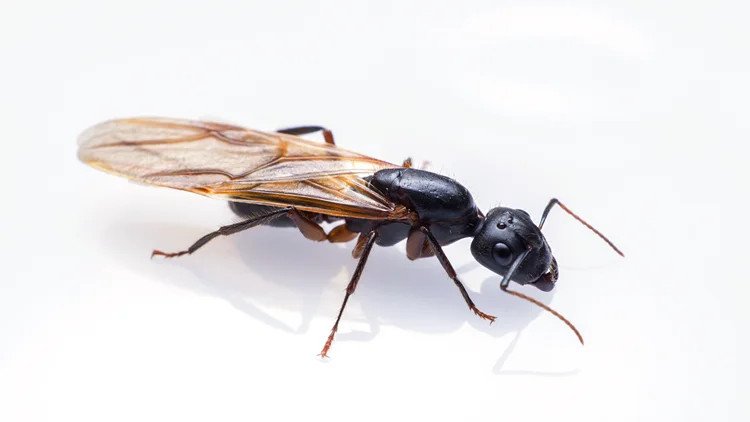
You found a pile of sawdust under the baseboard with ant body parts mixed in. That is frass, the waste material carpenter ants eject from their nest, highlights Campus Realtors Baylor. Somewhere inside your wall, a colony is excavating wood to build galleries. You want them gone but you do not want synthetic insecticides sprayed into your walls.
Here is the honest constraint you are working with. Carpenter ants nest inside wood. The nest is physically protected by the structure. Natural contact killers like diatomaceous earth and essential oils only work if they reach the nest. Bait is the only natural method that can reach a nest you cannot physically access. Everything else is a barrier or a repellent that keeps ants out but does not eliminate the colony already inside. Here is what works, ranked from most to least effective.
Step One: Find the Nest, or Accept That Bait Is Your Only Option
Carpenter ants have two types of nests. The parent nest contains the queen and is almost always outside in a rotting tree stump, a woodpile, or a dead tree branch. The satellite nests contain workers, larvae, and pupae and are the ones inside your walls. You may have multiple satellite nests in different parts of the house.
If you can find and physically access the nest, natural treatment is straightforward. Drill a small hole into the nest cavity and inject diatomaceous earth or boric acid powder. The powder coats the ants as they move through the nest and kills them through desiccation or stomach poisoning. This is the same mechanical approach used for any insect that contacts the powder.
Finding the nest takes observation. Carpenter ants are nocturnal. Go into the room where you found frass at night with a flashlight. Look for ants traveling along baseboards, window frames, and door frames. Follow them. They will lead you to the nest. Carpenter ants also make a faint rustling sound inside walls, like crinkling cellophane, which you can hear by pressing your ear against the wall in a quiet house at night. The sound is the ants chewing wood and moving through their galleries.
If you cannot find or access the nest, bait is your only natural option. The bait must be carried by foraging workers back to the colony, where it is fed to the queen, larvae, and other workers through trophallaxis. Without bait reaching the queen, the colony produces new workers indefinitely. You can kill every ant you see for a year and the colony survives.
Boric Acid Bait: The Most Effective Natural Method
Boric acid is a naturally occurring mineral. It is not a synthetic insecticide. It works as a stomach poison when ingested. An ant that eats boric acid dies slowly over 24 to 72 hours, which gives it time to return to the nest and feed the poison to the colony.
Carpenter ants switch between sugar and protein feeding. In spring and early summer, they prefer protein to feed growing larvae. In late summer and fall, they prefer sugar to build fat reserves for winter. Put out both bait types and let the ants tell you what they want.
Sugar bait. Mix one cup of warm water, two tablespoons of sugar, and half a teaspoon of boric acid. Stir until fully dissolved. Soak cotton balls in the solution and place them along ant trails and near suspected nest locations. Replace every two days.
Protein bait. Mix a quarter teaspoon of boric acid into a tablespoon of peanut butter or canned cat food. Place small dabs on wax paper near ant trails. Protein bait spoils faster than sugar bait. Replace daily.
Place bait stations where you see ant activity but in locations that pets and children cannot access. Inside cabinets, behind appliances, in the back of closets, and in the basement or crawl space near where ants are entering. Do not place bait on countertops or floors where pets or children could access it.
Boric acid bait for carpenter ants takes two to four weeks to collapse a satellite colony because the colony is larger and the nest is physically protected. Do not expect results in days. Expect gradual reduction over weeks. If you see zero reduction in ant activity after three weeks, the bait is not reaching the colony. Either the ants are ignoring the food base, the bait placement is not on their foraging route, or the nest is too far from the bait for workers to carry it back before the boric acid kills them. Increase the sugar or protein content and move the bait closer to where ants are entering the wall.
Diatomaceous Earth: Direct Nest Treatment Only
Food-grade diatomaceous earth is effective against carpenter ants only when applied directly into the nest. Sprinkling it along baseboards kills foraging ants that walk through it but does not reach the colony. For a nest you have located inside a wall, drill a quarter-inch hole near the nest location and use a bulb duster to puff diatomaceous earth into the wall cavity. The dust spreads inside the void and coats the ants as they move through their galleries.
Wear a dust mask. One or two puffs from the bulb duster is enough. The goal is a fine dust cloud inside the cavity, not a pile of powder. After treatment, leave the hole open for a few days to allow the dust to continue working, then seal it with wood filler or caulk. If the colony is still active after two weeks, the dust missed the nest. Reassess the nest location and try again or switch to bait.
Diatomaceous Earth as a Barrier: Prevention, Not Elimination
A thin layer of diatomaceous earth around the foundation perimeter, along baseboards, and across door thresholds creates a barrier that foraging ants learn to avoid. It does not eliminate the colony inside. It prevents new ants from entering and forces existing foragers to cross treated surfaces repeatedly. Over time, the repeated exposure kills some workers, slowly weakening the colony. This is a supplement to baiting, not a replacement.
Eliminate the Moisture That Attracted Them
Carpenter ants prefer wood that is softened by moisture. They do not eat dry, sound wood. The presence of carpenter ants inside your walls almost always indicates a moisture problem that softened the wood enough for them to excavate it. This is the root cause.
Inspect for leaks in the roof, around windows, in the plumbing, and in the foundation. While addressing moisture issues is the first step toward long-term prevention, an existing infestation often requires more direct intervention to protect your home’s structural integrity. In humid coastal environments where wood rot can occur more quickly, property owners often find that a thorough inspection helps identify subtle entry points that foraging workers use to expand their galleries. For those dealing with persistent activity or inaccessible nesting sites, professional pest control in Tampa can provide the necessary tools to target a colony effectively. Taking swift action helps ensure that your natural deterrents work as part of a comprehensive strategy to keep your living spaces wood-borer free. Common carpenter ant moisture sources include a roof leak that has saturated the soffit or fascia board, a window frame with failed caulking that lets rain behind the siding, a plumbing leak inside a bathroom wall, a dishwasher or washing machine with a slow drip, condensation from an uninsulated cold water pipe inside a wall, and poor ventilation in a bathroom that has saturated the wall behind the shower.
Fix the moisture source. If you kill the ants but leave the wet wood, a new colony takes over the same gallery within a season. Replace wood that is soft, spongy, or crumbles when probed with a screwdriver. Ants can be baited and killed. Rot spreads until the wood is replaced.
Essential Oil Repellents: Temporary, Not a Solution
Peppermint oil, tea tree oil, citrus oil, and cedar oil repel carpenter ants from treated surfaces. They do not kill the colony. Spraying essential oils where ants are trailing temporarily redirects the trail but the ants find a new route within hours or days. Essential oils are useful as a temporary deterrent around food preparation areas while bait is working. They are not a standalone treatment for a carpenter ant infestation.
To use as a repellent, mix 10 to 15 drops of essential oil with one cup of water in a spray bottle. Spray along baseboards, window sills, and door frames where ants are entering. Reapply daily. The scent fades quickly. Do not spray essential oils directly on surfaces where pets walk or sleep. Cats are particularly sensitive to concentrated essential oils due to a lack of the liver enzyme needed to metabolize them.
Outdoor Prevention: Where the Queen Lives
The parent colony with the queen is outdoors. Eliminating the outdoor nest stops new satellite colonies from forming inside.
Inspect trees, stumps, woodpiles, and landscape timbers within 100 feet of the house. Look for ant activity, frass, and the rustling sound at night. Remove rotting stumps and dead trees. Move firewood at least 20 feet from the house and elevate it off the ground. Replace rotting landscape timbers with stone or concrete borders.
Trim tree branches that touch the house. Carpenter ants travel from tree branches directly onto the roof and into soffits and fascia boards. Keep branches at least six feet from the roofline. This single measure prevents more carpenter ant infestations than any indoor treatment.
Treat the outdoor nest with boric acid bait if you can locate it. The outdoor nest is usually easier to access than the indoor satellite nest. If you can place bait directly at the outdoor nest entrance, you can kill the queen and eliminate the entire colony, including all indoor satellites. This is the most efficient and thorough natural solution for carpenter ants. One outdoor bait placement at the parent nest can solve an indoor problem that weeks of indoor baiting cannot reach.
When Natural Methods Are Not Enough
Natural carpenter ant treatment has a hard limit. If the nest is in a location you cannot find, and bait placed on foraging trails is not reaching the colony, the nest will continue producing ants. Natural methods cannot kill what they cannot reach.
Call a professional if you have baited consistently for four weeks with no reduction in ant activity, if the nest is in a finished wall and you are not willing to drill into it, or if you have multiple satellite nests in different parts of the house indicating a large and established colony. Professional treatment for carpenter ants costs $250 to $500 for a localized nest and uses non-repellent insecticides and dusts that are not available to consumers. If synthetic insecticides are a hard constraint for you, ask the company specifically if they offer boric acid dust injection. Some companies will accommodate this request, though it may cost slightly more due to the additional application time required for boric acid compared to synthetic dusts.
Frequently Asked Questions
How do I know if I have carpenter ants or termites?
Carpenter ant frass looks like coarse sawdust mixed with dead ant body parts, antennae, and other insect fragments. Termite frass is finer, more uniform, looks like sand or coffee grounds, and contains no body parts. Carpenter ant galleries are smooth and clean inside. Termite galleries are packed with mud and debris. Carpenter ants have three distinct body segments with a narrow waist. Termites have two body segments with a thick waist. If you see winged ants near windows, they have elbowed antennae and front wings longer than back wings. Winged termites have straight antennae and all four wings equal length.
Is boric acid bait safe for pets?
Boric acid is low in acute toxicity to mammals, but it is not harmless. A pet that eats a bait station containing boric acid can experience gastrointestinal upset. The bait recipes above use small quantities of boric acid, but the sugar and peanut butter attract pets as well as ants. Place bait only in locations pets cannot access. Inside closed cabinets, behind heavy appliances, in locked crawl spaces. If you cannot guarantee pet exclusion from the bait location, use enclosed commercial bait stations rather than open cotton balls or wax paper.
I only see one or two large black ants. Is that still carpenter ants?
Yes. Carpenter ants are large, solitary foragers. Unlike sugar ants that form visible trails of dozens of ants, carpenter ants often forage alone or in small numbers at night. Seeing a single large black ant in the kitchen at night is a stronger indicator of a carpenter ant infestation than seeing a trail of twenty small ants. The solitary foraging behavior is why carpenter ant infestations often go unnoticed for months or years until the frass becomes visible or the structural damage is discovered during renovation.