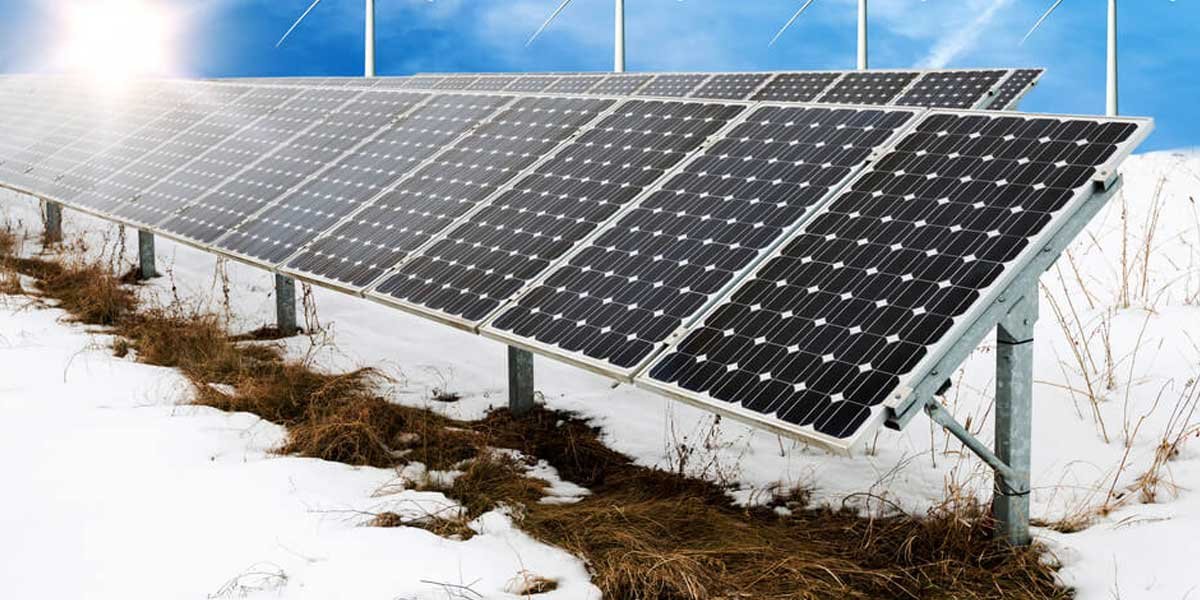
The Short Answer: Yes, Solar Panels Work in Winter — With a Catch
According to Davenport property management, to understand why solar panels work in the winter, you have to understand a fundamental fact about photovoltaic technology: solar panels use light, not heat, to generate electricity.
As long as photons from the sun are hitting the silicon cells inside the panel, electricity is being produced. This process happens regardless of the ambient air temperature. A bright, sunny day in January at 10°F will generate electricity just as effectively as a sunny day in July at 90°F. In fact, as we will explore in the next section, the January day is actually better for the internal electronics.
The catch is simply the geometry of the Earth. During the winter in the Northern Hemisphere, the days are shorter, which means fewer total hours of sunlight. The sun also sits lower on the horizon. This lower angle means the sunlight has to travel through more of the Earth’s atmosphere, which scatters the light and reduces its intensity before it hits your roof. That lower angle also means trees or neighboring houses that never cast a shadow in June might suddenly block your panels in December.
How Much Less Power Will You Actually Generate in Winter?
Every solar sales pitch will tell you that “winter production drops,” but very few will give you the actual numbers. The drop is not uniform across the country; it depends entirely on your latitude and local weather patterns.
If you live in a sunny, southern climate, the winter drop is noticeable but entirely manageable. If you live in the Pacific Northwest, the drop is severe. Here is what real-world production data looks like for different regions during the darkest months (December through February) compared to peak summer production.
| Region | Latitude | Winter Production vs. Summer Peak | Primary Winter Challenge |
|---|---|---|---|
| Southern California | ~33° N | 50% – 60% | Shorter days |
| Colorado / Utah | ~40° N | 40% – 50% | Occasional snow, lower sun angle |
| New England (Maine) | ~44° N | 30% – 40% | Heavy snow, frequent overcast days |
| Pacific Northwest | ~47° N | 20% – 30% | Persistent dense cloud cover |
| Alaska (Anchorage) | ~61° N | < 5% | Extreme lack of daylight |
Real homeowners experience these drops every year, and they plan for them.
“40% is not that bad given the shorter days and snow. I’m in San Diego with a South facing array and get 50-60% in Dec. to Feb. In those months, a cloudy or rainy day will get me 15% whereas a sunny day will get me 80-90% production.”
– r/solar, January 2022
If you live in a northern climate, you should not expect your solar panels to eliminate your electric bill in December. The financial model of solar relies on “net metering,” where the massive surplus of energy you generate in July offsets the deficit you experience in January.
The Cold Weather Advantage: Why Winter Actually Boosts Panel Efficiency
While the shorter days hurt your total daily output, the cold air actually provides a significant boost to the efficiency of the panels themselves.
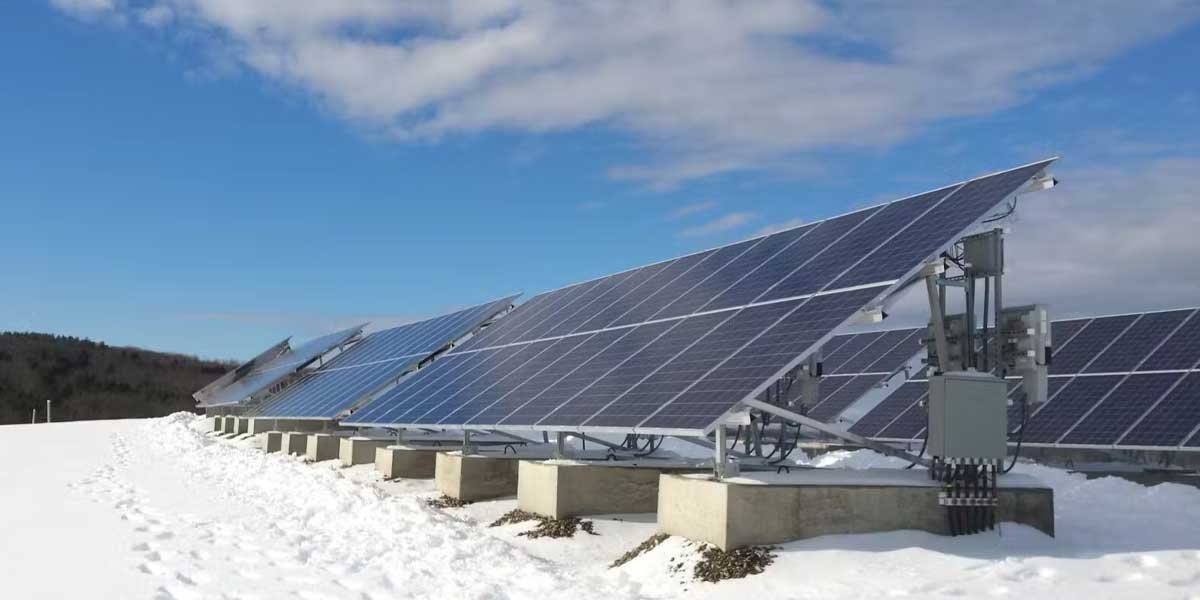
Solar panels are tested and rated by manufacturers at a standard temperature of 25°C (77°F). For every degree Celsius the panel heats up above that benchmark, it loses a specific percentage of its efficiency. This is called the “temperature coefficient,” and for most modern panels, it sits around -0.35% per degree Celsius.
In the middle of summer, a dark solar panel baking in direct sunlight can easily reach an internal temperature of 65°C (149°F). That is 40 degrees above the benchmark, which means the panel is losing roughly 14% of its rated efficiency simply because it is hot. In the winter, the opposite happens. When the panel is cold, the electrons inside the silicon are at a lower resting energy state. When sunlight hits them, the difference in voltage is greater, which translates to more power. A cold, crystal-clear February morning is the absolute best operating environment a solar panel can ask for.
You may also experience the “cloud edge effect” during winter storms. When the sun peeks out from behind a thick winter cloud, the bright white edges of the cloud act like a magnifying glass, reflecting additional intense sunlight directly onto your panels. For brief moments, your system might actually produce more power than its maximum rating. This is why even overcast winter days are not a total loss for solar production.
Snow on Solar Panels: The Real Story
The biggest fear homeowners have about winter solar is snow accumulation. If a solar panel is covered by a thick blanket of snow, it cannot produce electricity. The photons cannot reach the silicon. However, the way snow interacts with solar panels is very different from how it interacts with the rest of your roof.
Solar panels are covered in smooth, tempered glass, and they are usually installed at an angle. Because they are dark, they also absorb ambient heat. As soon as the sun comes out after a storm, the panels warm up slightly. The bottom layer of snow melts, creating a slick surface of water, and the entire sheet of snow simply slides off the glass.
The recovery time depends entirely on the depth of the snow and the temperature the next day. A light dusting of less than one inch usually melts and slides off within one to two hours of direct sunlight. Moderate snow accumulation of one to four inches typically clears itself within 24 hours, provided the sun comes out. A heavy snowfall of more than four inches may take two to three days to clear naturally, especially if temperatures remain bitterly cold.
“I’m not sure how it is where OP is located, but up here in Maine this December absolutely sucked for solar. Usually we will have bright sunny days immediately following storms, allowing the panels to melt off fairly quickly. This December it was cloudy almost every day. I still had snow on my panels from a December 6 storm last week.”
– r/solar, January 2022
Should you brush the snow off yourself? Most installers strongly advise against it. Using a standard roof rake can scratch the tempered glass, which will permanently reduce the panel’s efficiency and immediately void your manufacturer’s warranty. The few dollars of electricity you might gain by clearing the snow a day early is never worth the risk of destroying a $300 panel or injuring yourself on an icy roof. Let gravity and the sun do the work.
How to Maximize Your Solar Output in Winter
While you cannot control the weather, you can make specific decisions to optimize your system for winter performance.
First, pay close attention to shading during the design phase. Because the sun is much lower in the sky during winter, a tree that casts a shadow on your lawn in July might cast a shadow directly across your roof in December. A good installer will use 3D modeling software to predict these winter shadows and position your array accordingly.
Second, if you are installing a ground-mounted system, you have a significant advantage. Ground mounts can often be manually adjusted. By tilting the panels to a steeper angle (often 45 to 60 degrees) in the late fall, you accomplish two things: you catch the low winter sun more directly, and you create a steep slope that sheds snow almost instantly.
Beyond the physical setup, understand how your local net metering policy works. The entire financial logic of residential solar in snowy climates relies on overproducing in the summer. You bank those excess credits with your utility company, and then you spend those credits in January and February when your panels are covered in snow. If your utility offers 1-to-1 net metering, the winter production drop is financially irrelevant to your annual savings.
Is Solar Worth It in Winter Where You Live?
To determine if solar is a smart investment in your specific location, you need to look at a metric called “Peak Sun Hours.” This is not the total hours of daylight; it is a measurement of how much intense, direct solar radiation your location receives.
If your area averages more than 4 Peak Sun Hours per day annually, solar is almost certainly a great investment, even if you have harsh winters. The summer production will easily carry you through the dark months. If your area averages between 3 and 4 Peak Sun Hours, solar is still viable, but you will likely need a larger array to meet your annual energy needs. If your area averages less than 3 Peak Sun Hours, the financial math becomes very difficult.
“I’m in Alaska. On the winter solstice I get 3.5 hours of daylight. The sun is so low to the horizon solar doesn’t work. Today my array was outputting 0.50% of theoretical maximum for a few hours… Solar is very dependent on your location. Not everyone lives in southern california or the desert southwest.”
– r/OffGrid, January 2024
You can find the exact solar potential for your specific roof by using the free PVWatts Calculator provided by the National Renewable Energy Laboratory (NREL). Enter your address, your roof angle, and your system size, and it will show you a month-by-month production estimate based on decades of historical weather data for your exact location.
What About Cloudy Days? Rain and Overcast Skies in Winter
Snow gets all the attention, but the more persistent challenge for many homeowners is not snow at all. It is the relentless grey overcast skies that dominate winter in regions like the Pacific Northwest, the Great Lakes, and New England.
Solar panels do generate electricity on cloudy days. The sun’s photons scatter through the cloud cover and still reach the panels, just at a reduced intensity. On a heavily overcast day, you might see 10 to 25% of your normal sunny-day output. On a lightly overcast day, you might see 50 to 70%. Rain is actually beneficial for your panels, as it washes away accumulated dust, pollen, and bird droppings that reduce efficiency over time.
“Our 19 panel, 8.36 kWh system is producing more than it’s consuming, even in low light conditions. Our 1st full month’s electric bill was ZERO, plus the $36 or hookup fee.”
– r/SolarDIY, January 2026
Even in challenging climates, a well-sized system can still deliver meaningful savings. The key is to size the system based on your annual energy consumption, not just your summer peak. A good solar installer will use historical weather data for your specific zip code to model exactly how much energy your system will produce in every month of the year.
The Bottom Line on Winter Solar
Solar panels absolutely work in the winter, and the cold air actually makes them run more efficiently. You must set realistic expectations, though. Shorter days and snow cover guarantee that your system will produce significantly less power in December than it does in June.
Do not let winter production drops scare you away from a solar investment. The system is designed to be evaluated on an annual basis. The massive surplus of clean, cheap energy you generate during the long summer days is more than enough to offset the sluggish, snowy weeks of winter. As long as you have a solid net metering agreement with your utility company, your solar panels will continue to save you money all year long.