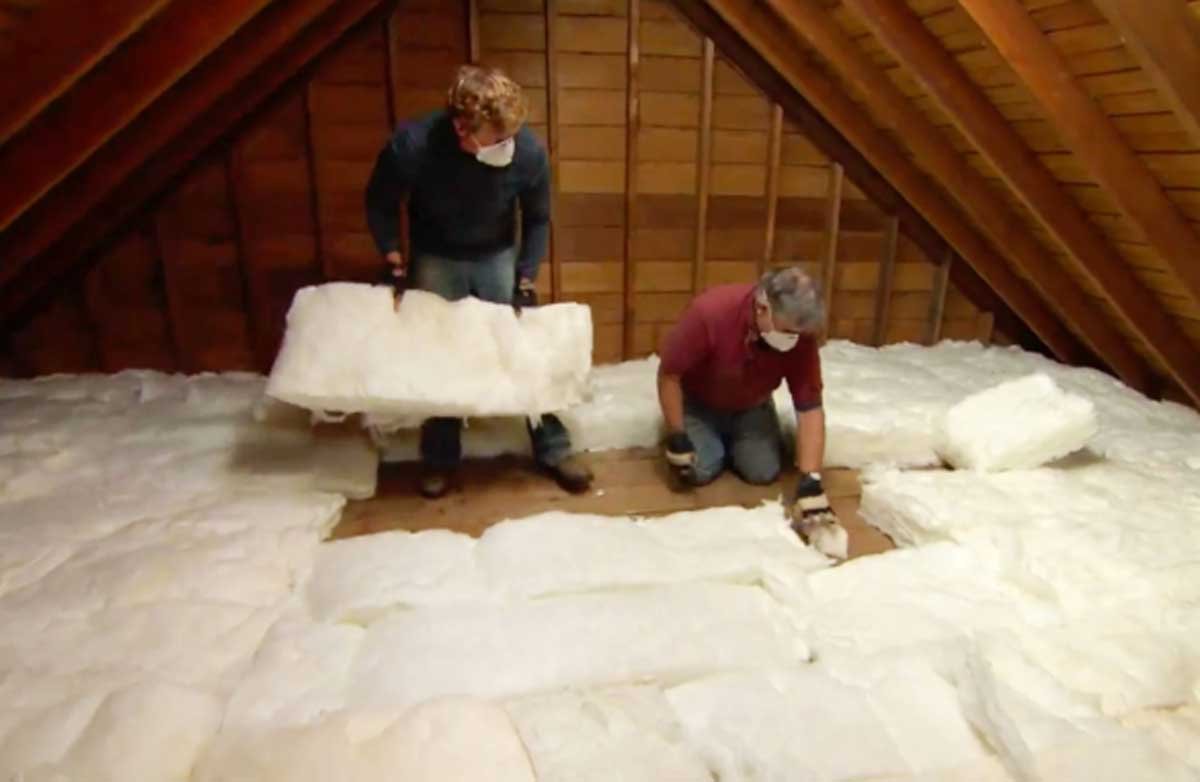
Attic insulation is one of the highest-ROI home improvements you can make. It cuts energy bills, stabilizes indoor temperatures, and pays for itself faster than most renovations. But the first question every homeowner asks is the same: how much does it actually cost, asks Keyrenter West Seattle professionals.
The short answer: most homeowners spend between $1,500 and $3,500 to insulate an attic, with per-square-foot costs ranging from $0.90 to $5.50 depending on the material. But that number shifts dramatically based on your attic size, insulation type, whether you are topping up or starting from scratch, and where you live.
This guide breaks down every cost factor, compares insulation types side by side, and includes real quotes from homeowners who have been through the process. By the end, you will know exactly what to budget and how to avoid overpaying.
In this guide:
- Average attic insulation costs at a glance
- Cost by insulation type (fiberglass, spray foam, cellulose, and more)
- Cost by attic size — 800 to 1,500+ square feet
- New installation vs. replacing old insulation
- How much insulation you actually need (R-value by climate zone)
- DIY vs. professional installation cost comparison
- Red flags when getting quotes (and what a fair quote looks like)
- Rebates, tax credits, and incentives to reduce your cost
- Frequently asked questions
Average Attic Insulation Costs at a Glance
Across the United States and Canada, the typical attic insulation project lands between $1,500 and $3,500 for a standard 1,000-square-foot attic using fiberglass or blown-in cellulose. At the low end, a small attic with basic batt insulation can run as little as $800. At the high end, a large attic with closed-cell spray foam can exceed $8,000.
Material costs have risen noticeably since 2020. According to industry data, the average cost per square foot climbed from roughly $1.50 in 2019 to about $1.85 in 2025, driven by supply chain disruption and increased demand for energy-efficient retrofits.
Here is what you can expect to pay at a high level, before any rebates or incentives:
| Project Type | Typical Cost Range | Average |
|---|---|---|
| Basic batt installation (small attic) | $800 – $1,800 | $1,300 |
| Standard blown-in fiberglass (1,000 sq ft) | $1,500 – $3,000 | $2,100 |
| Spray foam (1,000 sq ft) | $3,000 – $6,000 | $4,200 |
| Full removal + replacement | $2,500 – $5,500 | $3,800 |
| Attic encapsulation (spray foam roof deck) | $4,000 – $8,000 | $5,500 |
These ranges reflect national averages. Your actual cost will depend on the five factors covered in the sections below.
Cost by Insulation Type — Fiberglass, Spray Foam, Cellulose & More
The type of insulation you choose is the single largest cost driver. Each material has a different price point, R-value per inch, and installation complexity. Here is how they compare:
| Insulation Type | Cost per Sq Ft | R-Value per Inch | Best For |
|---|---|---|---|
| Fiberglass batt | $0.90 – $1.80 | R-2.9 to R-3.8 | DIY-friendly, accessible attics, budget projects |
| Blown-in fiberglass | $1.00 – $2.00 | R-2.5 to R-3.0 | Uneven joist spacing, topping up existing insulation |
| Blown-in cellulose | $1.20 – $2.50 | R-3.2 to R-3.8 | Eco-conscious homeowners, retrofitting older attics |
| Spray foam (open-cell) | $1.50 – $3.50 | R-3.5 to R-4.0 | Air sealing + insulation in one step, irregular spaces |
| Spray foam (closed-cell) | $3.00 – $5.50 | R-6.0 to R-7.0 | Maximum R-value per inch, moisture barrier, attic encapsulation |
| Rigid foam board | $3.00 – $5.50 | R-4.0 to R-6.5 | Attic hatches, knee walls, cathedral ceilings |
| Reflective / radiant barrier | $0.80 – $1.50 | N/A (reflects heat) | Hot climates, supplement to other insulation |
Fiberglass batts are the most common choice for accessible attics with standard joist spacing. They are affordable and straightforward enough for a DIY install, though professional installation ensures proper air sealing around penetrations and edges.
Blown-in fiberglass and cellulose work well for attics with irregular joist spacing, low clearance, or existing insulation that needs topping up. Cellulose has the added benefit of being made from recycled paper products, which appeals to homeowners prioritizing sustainability.
Spray foam is the premium option. Closed-cell spray foam delivers the highest R-value per inch and acts as its own vapor barrier, making it ideal for attic encapsulation projects where the roof deck itself is insulated. The trade-off is cost: spray foam runs two to three times the price of fiberglass.
“I was just quoted $5,400 for blow-in R39 attic insulation without removal of old insulation. The price is steep, but it includes free annual inspections and refill as needed at no cost for 50 years. Does that sound worth it? Attic is 1,000 sq ft in Southern California.”
This quote highlights an important point: a higher upfront price sometimes includes long-term value like annual inspections and free top-ups. Always ask what is bundled into the quote beyond just the insulation itself.
Cost by Attic Size — What to Expect for Your Square Footage
Attic size directly determines material volume and labor hours. Larger attics naturally cost more in total, but the cost per square foot often decreases slightly at higher square footages due to bulk material pricing and labor efficiency.
| Attic Size | Fiberglass (Batt or Blown) | Spray Foam | Cellulose |
|---|---|---|---|
| 600 sq ft | $600 – $1,200 | $1,800 – $3,300 | $720 – $1,500 |
| 800 sq ft | $800 – $1,600 | $2,400 – $4,400 | $960 – $2,000 |
| 1,000 sq ft | $1,000 – $2,000 | $3,000 – $5,500 | $1,200 – $2,500 |
| 1,200 sq ft | $1,200 – $2,400 | $3,600 – $6,600 | $1,440 – $3,000 |
| 1,500 sq ft | $1,500 – $3,000 | $4,500 – $8,250 | $1,800 – $3,750 |
| 2,000 sq ft | $2,000 – $4,000 | $6,000 – $11,000 | $2,400 – $5,000 |
Most single-family homes in the U.S. have attics between 800 and 1,500 square feet, which puts the typical project in the $800 to $4,500 range for fiberglass or cellulose. If your attic has unusual dimensions, low clearance, or multiple obstructions like ductwork and trusses, labor costs will run higher regardless of square footage.
New Installation vs. Replacing Old Insulation — Cost Differences
If your attic has never been insulated, you are looking at a straightforward new installation. But if old insulation is present and needs to come out first, expect to pay more.
Removal adds $1 to $2 per square foot to the total bill. For a 1,000-square-foot attic, that is an extra $1,000 to $2,000 you would not pay on a new-install project. Removal is necessary when the existing insulation is wet, moldy, pest-infested, or compressed beyond usefulness.
| Aspect | New Installation | Replacement (Removal + New) |
|---|---|---|
| Total cost (1,000 sq ft) | $1,500 – $3,500 | $2,500 – $5,500 |
| Material cost | $0.90 – $5.50 / sq ft | $1.20 – $5.50 / sq ft |
| Labor | Lower (install only) | Higher (removal, disposal, sealing, install) |
| Timeline | 1 day typical | 1–2 days |
One common scenario is topping up existing insulation rather than removing it. If your current insulation is dry, clean, and simply insufficient in depth, contractors can blow new insulation directly over the old layer. This approach avoids removal costs entirely while still achieving the target R-value.
How Much Insulation Do You Actually Need?, R-Value by Climate Zone
Cost is only half the equation. The other half is knowing how much insulation is enough. The Department of Energy divides the U.S. into climate zones that determine recommended attic R-values. Installing less than the recommendation means leaving energy savings on the table. Installing more rarely hurts, but the marginal benefit decreases past R-60.
| Climate Zone | Regions | Recommended Attic R-Value |
|---|---|---|
| Zone 1–2 (Hot) | South Florida, Hawaii, Puerto Rico, far South Texas | R-30 to R-49 |
| Zone 3 (Warm) | Gulf Coast, Georgia, South Carolina, most of Texas | R-30 to R-60 |
| Zone 4 (Mixed) | Mid-Atlantic, Pacific Northwest, Tennessee, Kentucky | R-38 to R-60 |
| Zone 5 (Cool) | Northeast, Midwest, Great Lakes, Colorado, Eastern Washington | R-49 to R-60 |
| Zone 6–7 (Cold) | Northern Midwest, Maine, northern New England, Alaska | R-49 to R-60 |
If you are in Zones 5 through 7, aim for R-49 to R-60. In practical terms, that means about 16 to 20 inches of blown-in fiberglass or 14 to 18 inches of cellulose. For Zones 3 and 4, R-38 to R-49 is usually sufficient, which translates to roughly 12 to 16 inches of fiberglass.
You can estimate your current R-value by measuring the depth of existing insulation. For fiberglass batts, multiply the depth in inches by 3.2. For loose-fill fiberglass, multiply by 2.5. For cellulose, multiply by 3.7. If the result is below your zone’s recommendation, you are under-insulated, and according to one industry study, 89% of U.S. single-family homes are.
DIY vs. Professional Installation, Cost Comparison & When It Makes Sense
Installing attic insulation yourself can cut your total cost by 40% to 60%, since labor accounts for roughly half of a professional quote. But DIY is not always the right call, and choosing wrong can cost more in the long run.
Batt insulation is the most DIY-friendly option. Rolls of fiberglass batts are available at any home improvement store, and the installation process is straightforward: unroll, cut to fit between joists, and wear proper protective gear. A DIY batt job for a 1,000-square-foot attic costs roughly $500 to $900 in materials.
Blown-in insulation is doable as a DIY project if you rent a blowing machine, which many home improvement stores offer free with a minimum insulation purchase. It requires two people: one feeding the hopper and one in the attic directing the hose. Expect to spend $600 to $1,200 on materials for a 1,000-square-foot attic.
Spray foam is firmly in professional territory. The two-part chemical mixture requires specialized equipment, precise temperature control, and training to apply correctly. A bad spray foam job can off-gas, fail to cure properly, or create moisture problems inside wall cavities. Do not attempt DIY spray foam for anything beyond small gaps around fixtures.
“We live in a 1960’s split-level house. AC unit and furnace are relatively new and are constantly pumping in the winter and summer, so new attic insulation is needed. High of 102 degrees today and can’t get house cooler than 75 degrees. I’m losing so much cash because the AC is constantly pumping. This house isn’t likely our forever house, but still I want it to be comfortable and efficient. Quoted $8K for attic insulation. Wondering if DIY is a legitimate option.”
This homeowner’s situation is common: an older house bleeding energy through the attic, a quote that feels high, and a genuine question about whether DIY can deliver the same result for less. For a standard accessible attic with batt or blown-in insulation, the answer is often yes, but only if you are physically capable of working in a hot, cramped space and willing to invest a full weekend.
Red Flags When Getting Attic Insulation Quotes
Not all insulation quotes are created equal. Some contractors price fairly, others inflate costs with fear-based sales tactics. Knowing the difference can save you thousands. Here are the red flags to watch for, drawn from real homeowner experiences.
Red Flag #1: Pest control companies selling insulation. Several homeowners report receiving quotes from pest control companies that bundle insulation with pest-deterrent treatments at dramatically inflated prices. Insulation is not a pest control product, and you should buy it from insulation contractors, not exterminators.
“I just got a quote from a pest control company to put in insulation that would deter pests from making nests in our attic. Our home is ~2,400 square feet and we live in Austin, TX. They quoted us for $18,600 to put in the insulation. This includes removing the old insulation (there’s barely any, the home is almost 50 years old) and putting in the new insulation. Is there any way this is worth it for added pest control?”
This quote is roughly three times what a standard removal-and-replacement should cost for that square footage. The pest-deterrent angle is a sales tactic. Get quotes from at least three dedicated insulation contractors before making any decision.
Red Flag #2: No air sealing included. A quality insulation job includes air sealing, using caulk or spray foam to seal gaps around wiring penetrations, plumbing vents, and top plates before insulation goes in. Insulation slows heat transfer; air sealing stops air movement. You need both. If a contractor does not mention air sealing, ask why.
Red Flag #3: Pressure to sign same-day. Reputable contractors provide written quotes valid for at least a week. High-pressure same-day discounts are designed to prevent you from getting competing bids. Walk away from anyone who insists you sign immediately.
Red Flag #4: No mention of ventilation. Adding insulation changes how your attic breathes. A proper install ensures soffit vents remain unblocked (via baffles) and that ridge or gable vents continue to function. Contractors who ignore ventilation are setting you up for moisture problems down the line.
So what does a reasonable quote look like? Here is one real example:
“$3,800. Includes air sealing entire attic using spray foam, repair drywall ceiling hole, installing baffles for every soffit vent, blowing R-49 fiberglass insulation over existing 3 inches of old insulation, installing attic hatch insulation door, replacing 2 bathroom exhaust fan duct work with insulated duct work. This company has 450 reviews on Google with 5 stars. In Chicago area. Is this a fair estimate?”
Yes, this is a fair estimate. It includes air sealing, baffles, R-49 insulation, hatch insulation, and ductwork replacement, all line items that a thorough job requires. The contractor’s 450 five-star reviews are a stronger signal than a low price. When comparing quotes, look for this level of detail.
Selecting a contractor who understands the specific needs of your property is just as important as the material selection itself. While some homeowners focus primarily on the lowest bid, experienced teams often provide more value through comprehensive site assessments and precision during the installation process. Dedicated specialists, such as Insulation Commandos, can help homeowners navigate the complexities of local climate requirements and building codes to ensure a long-lasting result. By prioritizing thorough air sealing and proper ventilation management, these experts support better indoor air quality and more consistent temperature regulation throughout the home for many years to come.
Rebates, Tax Credits & Incentives to Lower Your Cost
Attic insulation qualifies for a range of financial incentives that can meaningfully reduce your out-of-pocket cost. The two main sources are federal tax credits and local utility rebates, and you can often stack them.
Federal Tax Credit (U.S.), Important Update for 2026. The Energy Efficient Home Improvement Credit (IRC Section 25C), which covered 30% of qualifying insulation material costs up to $1,200 per year, was terminated for installations after December 31, 2025 under the One Big Beautiful Bill Act (OBBBA). If you installed insulation during 2025, you can still claim the credit on your 2025 tax return using IRS Form 5695. For 2026 projects, this federal credit is no longer available. Check with a tax professional about your specific situation, as state-level programs may still offer savings.
Utility Rebates. Many electric and gas utilities offer rebates of $0.15 to $0.50 per square foot for attic insulation upgrades, sometimes capped at $500 to $1,500 per project. These programs typically require a pre-installation energy audit and a post-installation verification. Check your utility company’s website or the DSIRE database for programs in your zip code.
Weatherization Assistance Program (WAP). Low-income households may qualify for free attic insulation through the Department of Energy’s WAP, administered by state agencies. Income eligibility varies by state but typically covers households at or below 200% of the federal poverty level.
“Anyone have this done recently who can share info on the cost? I’m wondering if the quote I got was reasonable, $5,800 after rebates ($8,000 before) for weather sealing and blown-in fiberglass insulation for the attic of a 2,400 sq ft house. Seem high, or reasonable?”
This Seattle homeowner’s quote shows how rebates change the math. The pre-rebate price of $8,000 dropped by $2,200 through available programs. Always ask your contractor which rebates they participate in and whether they handle the paperwork on your behalf.
Frequently Asked Questions
How much does it cost to insulate a 1,000 sq ft attic?
For a standard 1,000-square-foot attic, expect to pay $1,000 to $2,000 for fiberglass batts or blown-in fiberglass, $1,200 to $2,500 for blown-in cellulose, or $3,000 to $5,500 for spray foam. These are installed prices including labor.
What is the cheapest way to insulate an attic?
Fiberglass batt insulation is the least expensive option, with material costs as low as $0.50 per square foot if you install it yourself. Renting a blowing machine and installing blown-in fiberglass yourself is a close second and works better for attics with irregular joist spacing.
Can I just add more insulation on top of old insulation?
Yes, as long as the existing insulation is dry, clean, and free of mold or pest damage. Blown-in insulation can be added directly over old batts or loose-fill. Do not install batts with a vapor barrier over existing insulation, as this can trap moisture.
How long does it take to insulate an attic?
A professional crew can insulate a standard attic in one day for batt or blown-in installations. Removal of old insulation adds a few hours. Spray foam takes longer due to application and curing time. DIY projects typically take a full weekend.
Will attic insulation really lower my energy bills?
Yes. The EPA estimates that homeowners can save an average of 15% on heating and cooling costs by sealing and insulating their attics. In cold climates, the savings can reach 20% to 30%. Many homeowners report the project paying for itself within 3 to 5 years through reduced energy bills.
Should I remove old insulation before adding new?
Remove old insulation if it is wet, moldy, compressed, or infested with pests. If it is dry and in decent condition, topping up is usually fine and far cheaper. The exception is vermiculite insulation, which should be tested for asbestos before anyone disturbs it, removal requires certified abatement professionals.
What R-value do I need for my attic?
Most U.S. climate zones (4 through 7) recommend R-49 to R-60 for attic insulation. Warmer zones (1 through 3) can use R-30 to R-49. Check the DOE climate zone map for your specific location, and aim for the higher end of the range if your budget allows.
Does attic insulation qualify for a tax credit?
The federal Energy Efficient Home Improvement Credit (Section 25C), which covered 30% of insulation material costs up to $1,200 per year, expired for installations after December 31, 2025. If you completed your project in 2025 or earlier, you can still claim it on your tax return using Form 5695. For 2026 projects, the credit is no longer available at the federal level, though state rebates and utility incentives remain active. Check the DSIRE database for programs in your area.
Conclusion
Insulating your attic is one of the smartest home improvement investments you can make. For most homeowners, the project costs between $1,500 and $3,500, with potential energy savings of 15% to 30% that recover the investment within a few years.
The key decisions that shape your final cost are insulation type, whether to DIY or hire a pro, and whether existing insulation needs removal. Fiberglass and cellulose offer the best value for most homes. Spray foam delivers premium performance at a premium price.
Get at least three quotes from dedicated insulation contractors, not pest control companies or general handymen. Look for quotes that include air sealing, baffles for ventilation, and a clear specification of the R-value they will achieve.
Ask about rebates and tax credits before you sign anything. The difference between a fair quote and an inflated one can be thousands of dollars, and now you know how to tell them apart.