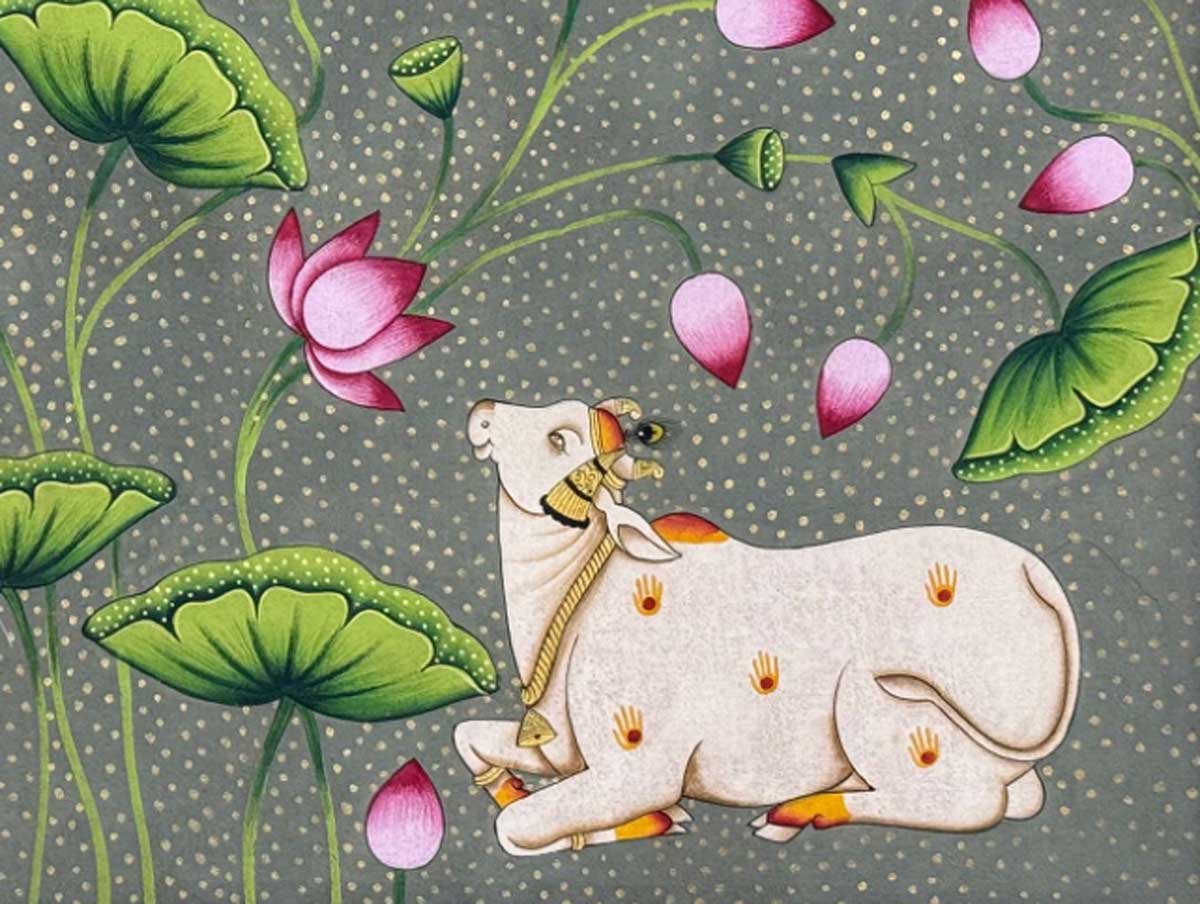
Pichwai paintings are known for their detailed compositions, rich colours and repeated use of natural elements. Among the many figures seen in this traditional art form, cows, lotuses and peacocks appear with remarkable consistency. These motifs are not merely decorative. Each adds meaning and strengthens the scene’s connection with Lord Krishna, particularly his form as Shrinathji.
To understand their importance, it helps to consider the original purpose of Pichwai art. These paintings developed as devotional backdrops placed behind the image of Shrinathji in temples, especially in Nathdwara, Rajasthan. The scenes changed with festivals, seasons and forms of worship, so every animal, flower and colour was selected with intention.
The Cow: A Reminder of Krishna’s Pastoral Life
The cow is one of the most familiar subjects in Pichwai paintings because of its close association with Krishna. Stories of his childhood describe him growing up in the pastoral landscape of Vraj, caring for cattle and spending time among cowherds. His identity as Gopala, the protector of cows, makes the animal central to visual narratives based on his life.
In many compositions, cows stand calmly around Shrinathji or appear in organised rows. They may be painted in different colours and decorated with ornaments. Their gentle posture creates a peaceful mood while guiding attention towards the central figure.
Cows also represent nourishment, generosity and abundance in Indian culture. They are seen as nurturing beings, allowing artists to use them as symbols of selfless care. White cows are frequently associated with purity and serenity. When several appear together, the scene can suggest harmony between nature, humanity and the divine.
The motif therefore works on several levels. It recalls Krishna’s childhood, expresses devotion and introduces qualities such as gentleness, prosperity and protection. This layered meaning explains why the cow remains central to Pichwai art.
The Lotus: Purity and Spiritual Growth
Lotuses bring rhythm and softness to Pichwai compositions, but their importance goes beyond visual beauty. The flower grows in muddy water and rises above the surface in a clean, radiant form. This makes it a natural symbol of purity, spiritual growth and the ability to remain unaffected by difficult surroundings.
In Pichwai paintings, lotuses may appear as individual blossoms, repeated borders, floral fields or ponds filled with leaves and buds. Artists sometimes show them at different stages of blooming. Closed buds, partly opened flowers and fully developed lotuses can suggest the gradual awakening of devotion.
The lotus is also linked with water and seasonal beauty. In summer or Jal Vihar scenes, lotus-filled ponds create a refreshing atmosphere and help express the mood of the celebration.
From a design perspective, repeated lotus forms provide balance. Their rounded petals soften stronger architectural lines and create a meditative pattern around Shrinathji. For viewers, the lotus carries a clear message: spiritual clarity can develop even within an imperfect world.
The Peacock: Beauty, Joy and Renewal
Peacocks add movement, colour and celebration to Pichwai paintings. Their connection with Krishna is immediately recognisable because the peacock feather is one of his defining ornaments. By placing the bird in the surrounding landscape, artists extend this association across the entire composition.
The peacock represents grace, beauty and splendour. Its feathers allow artists to display fine brushwork, intricate patterns and rich blues, greens and gold without taking attention away from Shrinathji.
Peacocks are also closely linked with the monsoon. Their calls and courtship displays are traditionally associated with the arrival of rain, a season connected with renewal, longing and joy in Indian poetry and devotional traditions. In seasonal Pichwai artworks, peacocks help establish this mood through green landscapes, rain-filled clouds and lively poses.
While cows contribute serenity and lotuses encourage reflection, peacocks introduce energy and delight. Their presence prevents the sacred setting from appearing still or distant; instead, it feels alive with nature and celebration.
How These Motifs Work Together
Cows, lotuses and peacocks rarely function as isolated decorative elements. Together, they create an idealised sacred environment connected with Krishna’s presence. Cows represent compassion and pastoral simplicity. Lotuses express purity and spiritual development. Peacocks bring beauty, joy and seasonal life.
They also provide different textures and shapes. Soft cattle forms, repeated petals and detailed feathers create variety while symmetry prevents the painting from feeling crowded.
A skilled artist carefully plans the position, scale and colour of each motif. In a handmade Pichwai painting, small variations in brushwork reveal the human effort behind the composition. Elements that seem identical from a distance often show individual expressions, outlines and patterns when viewed closely.
From Temple Backdrops to Contemporary Homes
Although Pichwai paintings began as temple backdrops, they are now displayed in living rooms, entrances and prayer spaces. Their imagery adds cultural depth, but their devotional origins should remain respected.
A large artwork may become the focal point of a room, while a smaller composition can suit a home mandir or quiet corner. Neutral walls allow rich colours and gold accents to stand out, while traditional wooden or antique-finish frames can complement the artwork without overpowering it.
Homeowners creating a devotional setting may combine Krishna-inspired art with other sacred images. A Ganpati painting for pooja room, for example, can be placed in a separate and balanced position so that each artwork retains its own visual and spiritual identity.
Artociti brings traditional themes into contemporary spaces through artworks suited to different wall sizes and décor styles. The important step is to choose a piece not only for its colour palette but also for the meaning and atmosphere it brings into the room.
Conclusion
Cows, lotuses and peacocks appear repeatedly in Pichwai paintings because they help communicate a deeper devotional story. The cow recalls Krishna’s role as protector and represents care, abundance and peace. The lotus stands for purity, spiritual awakening and calm reflection. The peacock expresses beauty, celebration, renewal and Krishna’s distinctive charm.
Together, these motifs transform a painted surface into a sacred landscape. Understanding them helps viewers appreciate Pichwai art not simply as wall décor, but as a visual tradition shaped by worship, storytelling, nature and craftsmanship.