The shower walls are bare cement board. The waterproofing membrane has cured to a bright waterproof red. The tile boxes are stacked in the bathroom, and the first row of wall tile has been dry-fitted against the shower pan three times because you are afraid to mix the thinset and commit. Laying shower tile is the point of no return in a bathroom renovation. The waterproofing is hidden. The layout decisions are permanent. A mistake in the first row compounds across every row above it. The work is not difficult. It is methodical. The difference between a shower that looks professional and one that looks like a first attempt is in the layout math and the willingness to pull a misaligned tile off the wall while the thinset is still wet, explains Idaho Falls Property Management solutions.
This guide covers tiling a shower surround from cement board to grout. It assumes the waterproofing is complete, the shower pan or tub is installed, and the tile has been selected. The sequence is: layout planning, first row installation, wall tiling, niche and edge work, grouting, and sealing.
Layout Planning: The First Row Decides Everything
Shower tile layout begins with the first row above the shower pan or tub. The goal is to avoid sliver cuts, which are tiles cut to less than one-third of their full width, at the top of the wall or at the corners. A sliver of tile at the ceiling draws the eye to the one place you do not want attention.
Measure the height of the wall from the shower pan to the ceiling. Divide by the tile height plus the grout line width. If the result leaves a remainder that is less than one-third of a tile height, shift the first row up by cutting the bottom tiles. The cut edge of the bottom row is hidden by the shower pan or caulked at the tub deck. A cut at the bottom is invisible. A sliver at the top is not.
Mark a level horizontal line around the shower at the height of the first full row of tile. This line is your reference for the entire installation. Use a 4-foot level. Do not trust the shower pan or tub deck to be level. They rarely are. Starting from a level line ensures every row above it is level regardless of what the pan is doing.
For the horizontal layout on each wall, center the tile pattern so the cut tiles at the left and right corners are equal widths. Measure the wall width, subtract the tile width, and divide the remainder by two. That is the width of the cut tile at each corner. If the corner cuts are less than one-third of a full tile, shift the layout by half a tile so one corner gets a larger cut.
Mixing and Applying Thinset
Use a polymer-modified thinset mortar rated for wet areas. Mix it according to the bag instructions to the consistency of peanut butter. Too wet, and the tile sags on the wall. Too dry, and the mortar does not bond. Let the mixed thinset slake for 10 minutes, then remix briefly. This step allows the chemical reaction to begin and improves bond strength. Skip it for a small batch. Do not skip it for a shower.
Apply thinset to the wall with the flat side of a notched trowel, pressing it into the cement board to fill the pores. Then comb the thinset with the notched side, holding the trowel at a 45-degree angle. The notch size depends on the tile size. A 1/4-inch by 1/4-inch square-notch trowel works for tiles up to 6 inches. A 1/4-inch by 3/8-inch notch for tiles up to 12 inches. Larger tiles need a larger notch. The ridges should be uniform in height and direction. Comb in straight horizontal lines. This allows air to escape when the tile is pressed into place.
Back-butter large tiles, those 12 inches and larger, by applying a thin skim coat of thinset to the back of the tile before setting it. This fills any recesses in the tile back and ensures full coverage. For shower walls, aim for 95 percent mortar coverage on each tile. Lift the first tile you set to check. The thinset lines should be fully collapsed with no bare spots.
Setting the Wall Tile
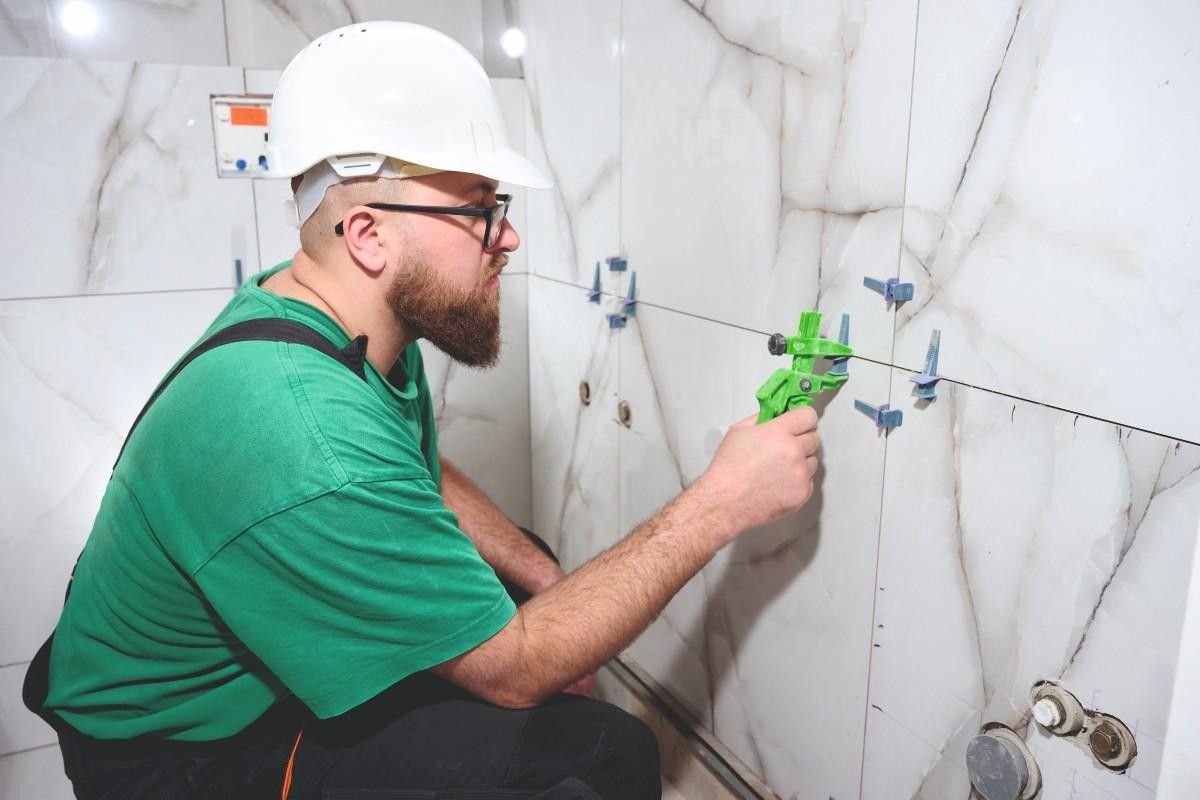
Start at the level reference line and work upward. Set the first tile at the center of the wall and work outward toward the corners. Press each tile firmly into the thinset with a slight twisting motion. The twist collapses the ridges and embeds the tile. Insert tile spacers at each corner as you go. Spacers keep the grout lines consistent. A 1/8-inch grout line is standard for wall tile. A 1/16-inch line is used for large-format or rectified tile. Do not eyeball the spacing. Use spacers.
Check level every third row. Place the level across the top edges of the tiles. A row that drifts even 1/16 inch out of level becomes a 1/4-inch gap by the ceiling. Adjust the spacers slightly to correct drift before the thinset sets. Thinset is workable for about 30 minutes after mixing. After that, it begins to skin over and tiles will not bond properly. Mix small batches. A half-bucket mixed fresh bonds better than a full bucket mixed two hours ago.
Cut tiles to fit at corners, around the shower valve, and at the showerhead pipe. A wet saw produces the cleanest cuts on ceramic and porcelain. An angle grinder with a diamond blade cuts curves for the valve opening. Nip small notches with tile nippers. Measure each cut individually. The distance between the last full tile and the corner will vary slightly from row to row because walls are never perfectly plumb.
Tiling Around Niches and Edges
A shower niche for shampoo and soap requires planning before the field tile reaches it. The niche should align with a grout line on all four sides if possible. If the niche does not align, cut the tiles around it. The niche edge can be trimmed with bullnose tile, metal edge trim, or a prefabricated niche flange. Install the trim before tiling the inside of the niche. The niche back wall is tiled first, then the sides, then the top and bottom. Slope the bottom niche tile slightly toward the shower so water drains out instead of pooling. A 1/8-inch slope over a 4-inch deep niche is sufficient.
Tile edges where the shower surround ends are finished with bullnose tile or metal edge trim. Install the edge trim before the field tile reaches it. The trim flange is embedded in thinset behind the adjacent tile. This locks the trim in place. Trim installed after the tile is set will not stay.
Grouting the Shower Tile
Let the thinset cure for 24 hours before grouting. Remove all spacers. Mix the grout to the consistency of creamy peanut butter. Use sanded grout for joints 1/8 inch and wider. Use unsanded grout for joints 1/16 inch or narrower. Sanded grout is stronger. Unsanded grout is smoother for narrow joints and polished tile that would be scratched by sand.
Apply grout with a rubber grout float, pressing it into the joints at a 45-degree angle. Work in small sections. After each section, hold the float at a 90-degree angle and scrape excess grout off the tile surface. Wait 15 to 20 minutes for the grout to firm up, then wipe the tile with a damp sponge in a circular motion. Rinse the sponge frequently. A sponge that is too wet pulls grout out of the joints. Wring it until it is just damp.
After the grout has cured for 24 hours, buff the haze off the tile with a dry microfiber cloth. If the haze is stubborn, a grout haze remover product dissolves it. Do not use vinegar on fresh grout. Vinegar is acidic and weakens the grout before it has fully cured.
Sealing the Grout
Grout is porous. It absorbs water. In a shower, unsealed grout eventually wicks moisture through to the cement board and the framing behind it. Apply a penetrating grout sealer 48 to 72 hours after grouting, once the grout is fully cured. The sealer is applied with a small foam brush along each grout line or sprayed on and wiped off the tile surface. One coat is usually sufficient. The sealer does not change the grout color or sheen. It fills the microscopic pores in the grout and prevents water absorption. Reapply every 2 to 3 years.
Frequently Asked Questions
Can I tile over existing shower tile instead of removing it?
No. Tile-over-tile in a shower traps moisture between two impermeable layers. The wall has no drainage plane. The substrate eventually rots. Remove the old tile, inspect the substrate, repair any water damage, waterproof, and tile fresh. Shortcutting this step guarantees a shower that fails from the inside out.
Can I use mastic instead of thinset in a shower?
No. Mastic is a premixed organic adhesive. It re-emulsifies when exposed to water. Mastic is acceptable for kitchen backsplashes and dry bathroom walls that do not get direct water contact. It is never acceptable in a shower. Use polymer-modified thinset mortar for all shower tile.
Why is my shower grout cracking after only a few months?
Cracking grout in a shower is usually caused by movement. The most common source is grout in the corners where two walls meet. The walls expand and contract at different rates with temperature and humidity changes. Grout in the corners cracks because it is rigid and the walls are not. The fix is to remove the cracked grout and fill the corners with 100 percent silicone caulk, color-matched to the grout. Caulk flexes. Grout does not. All shower corners and the joint between the tile and the shower pan should be caulked, not grouted.
The Shower That Does Not Leak
A tiled shower is a waterproof assembly disguised as a decorative surface. The tile and grout are the first line of defense against water, not the only line. The waterproofing membrane behind the tile is what keeps the wall cavity dry. The layout math, the thinset coverage, and the sealant in the corners keep the tile intact and the grout from cracking over years of thermal cycling.
The first row sets the entire wall. If it is level and centered, every row above it falls into place. If it is not, the error accumulates and announces itself at the ceiling. Spend the time on the layout. The actual tiling goes faster than the planning. A wet saw cuts a tile in 10 seconds. The decision of where to put the cut takes longer than the cut itself.