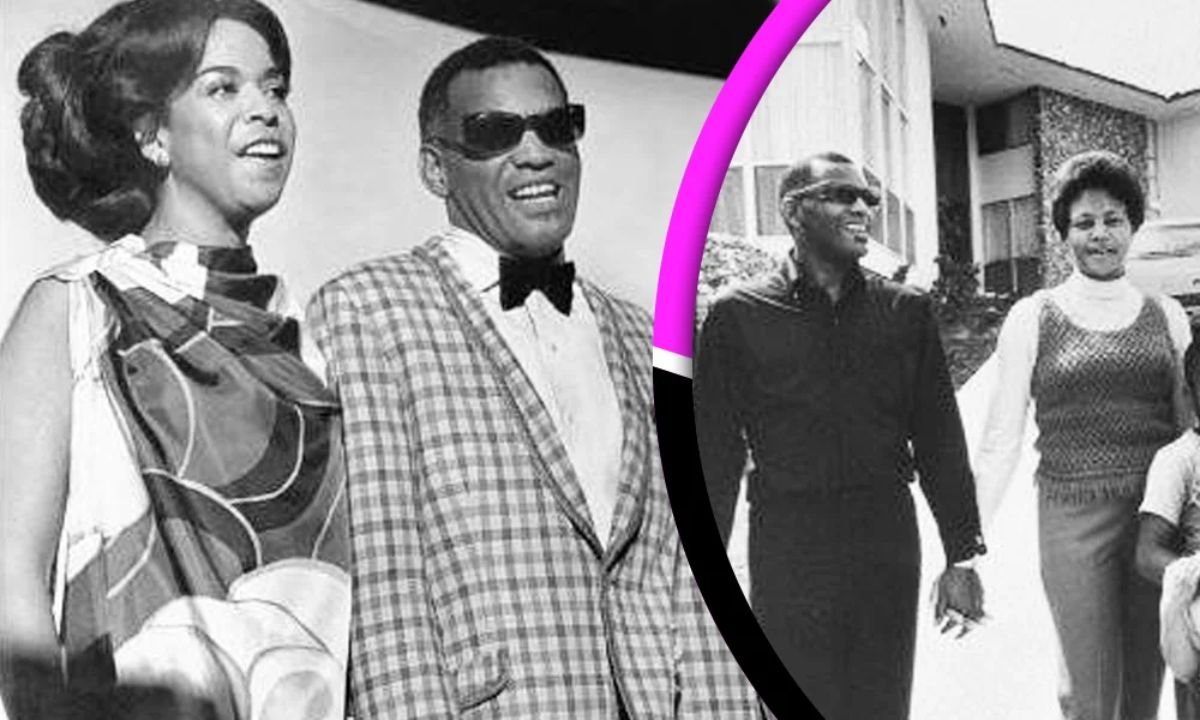
Della Beatrice Howard Robinson was never just Ray Charles’ wife. She was a gospel singer with her own voice, her own faith, and a story that Hollywood has mostly ignored — until now. Married to the genius for over two decades, she lived through the chaos of his fame, his infidelities, and a very public divorce that left her to rebuild a private life far from the spotlight.
Most accounts of Ray Charles’ personal life focus on his women, his addictions, and his music. Della’s side has been treated as a footnote. That’s a mistake. She raised three sons alone after their 1977 divorce, returned to her gospel roots in the church, and has lived quietly in Texas ever since. Her resilience is the kind of story that deserves more than a paragraph in someone else’s biography.
Early Life and Gospel Roots
The woman who would become Ray Charles’ wife built her identity in the church long before she ever set foot on a tour bus. Della Beatrice Howard Robinson’s story begins not in the spotlight, but in the pews of the segregated South, where gospel music was both a spiritual anchor and an artistic training ground.
A Foundation in Faith
Born in the late 1920s or early 1930s — exact records remain sparse — Della grew up in a deeply religious household in the southern United States. Her family’s life revolved around the Black church, where Sunday mornings weren’t optional and Wednesday night prayer meetings were routine. This environment shaped her earliest memories. By the time she was a teenager in the 1940s, she was singing in the choir, absorbing the call-and-response traditions and the emotional power of gospel music.
The church provided more than spiritual sustenance. For young Black women in the Jim Crow South, the church was one of the few places where public performance was not only acceptable but celebrated. Della’s voice became her instrument of expression, and the congregation became her first audience. What many music historians overlook is how this foundation differed from the secular music world she would later encounter. Gospel demanded discipline, restraint, and emotional authenticity — qualities that would define her approach to both music and marriage.
Pursuing a Gospel Career
By the early 1950s, Della had moved beyond the church choir. She sang with local gospel groups, performing at revivals, community events, and regional gospel conventions. These circuits were rigorous — long bus rides, modest pay, and audiences who expected spiritual conviction, not just vocal skill. She built a reputation as a reliable, powerful contralto who could hold a congregation in silence.
Her career path was typical for gospel singers of her era, but the timing was significant. The early 1950s marked a turning point in American music, when gospel began influencing rhythm and blues, and artists like Sam Cooke and Aretha Franklin were crossing over into secular audiences. Della stayed firmly in the gospel tradition, and that choice mattered. When she eventually met Ray Charles , likely through the overlapping gospel and R&B circuits , she brought a musical pedigree that was entirely her own. She was not a fan who married a star. She was an artist who married another artist.
| Era | Musical Context | Della’s Role |
|---|---|---|
| 1940s | Church choir, family worship | Choir member, developing vocal technique |
| Early 1950s | Regional gospel circuits | Lead vocalist in local groups |
| Mid-1950s | Gospel-to-R&B crossover era | Established independent artist |
One thing that gets lost in the Ray Charles narrative: Della Beatrice Howard Robinson had a career before she became Mrs. Robinson. She chose gospel, and she chose it on purpose. That decision would later define how she handled everything that came next.
Meeting Ray Charles and Life as Mrs. Robinson
The story of Della Beatrice Howard Robinson and Ray Charles began in the early 1950s, a collision of two rising talents in the gospel and R&B circuits. Their marriage, which lasted from 1955 to 1977, placed Della at the center of a music legend’s chaotic rise , and tested her faith, her patience, and her identity as an artist in her own right.
The Fateful Meeting
Della met Ray Charles in 1954 or early 1955, likely through the overlapping worlds of gospel and rhythm and blues. She was already singing professionally, a gospel vocalist with a rich, controlled alto. Ray, then in his early twenties, was building his reputation as a pianist and bandleader who could blur the line between sacred and secular music. The exact location of their first meeting remains undocumented , some accounts place it in Texas, others in Florida. What’s clear is that the connection was immediate. They married on April 5, 1955, in a small ceremony in New York. Della was 25. Ray was 24. She stepped into a life that would demand everything she had.
The Demands of Fame and Family
By the late 1950s, Ray Charles was no longer a rising star , he was a phenomenon. His 1959 hit “What’d I Say” crossed over from R&B to pop charts, and his 1960 album *The Genius Hits the Road* cemented his reputation. For Della, this meant long stretches alone. Ray toured constantly, sometimes for months at a time. She managed the household in Los Angeles and raised their three sons: Ray Charles Robinson Jr. (born 1955), David (born 1958), and Robert (born 1961).
A common mistake in writing about musical marriages is assuming the spouse was merely a passive figure. Della wasn’t. She maintained the family’s stability while Ray’s career exploded. She also navigated the peculiar pressures of being married to a blind Black musician in the 1960s , a time when the music industry, the press, and the public all had opinions on what his personal life should look like. On paper, she was Mrs. Ray Charles. In practice, she was a single parent for months at a time, managing a household that included not just her children but Ray’s staff, band members, and an endless stream of business associates.
Infidelity and Strain
This is where things get complicated. Ray Charles was not faithful. His most publicized relationship outside the marriage was with Margie Hendricks, a member of The Raelettes, his backing vocal group. Hendricks and Charles had a son together, Charles Wayne Hendricks, born in 1961 , the same year Della gave birth to Robert. The affair was an open secret in the music industry. Margie sang on Ray’s records, toured with him, and reportedly had her own room at his home.
What many accounts miss is how this affected Della’s own career. She was a gospel singer who had married a man pushing the boundaries of secular music. The infidelity didn’t just wound her personally , it created a professional paradox. She couldn’t publicly condemn her husband without damaging his career, which supported their family. She couldn’t leave easily, because divorce in the 1960s carried a stigma that would have made her a scandalous figure in the gospel community. She was trapped between faith, family, and fame.
The strain showed in small ways. Friends and family members later described Della as increasingly withdrawn from the social scene surrounding Ray’s career. She stopped attending many of his performances. She focused on church work and her children. By the early 1970s, the marriage was largely a legal arrangement. They separated in 1975, and the divorce was finalized in 1977.
| Aspect of Marriage | Della’s Reality | Public Perception |
|---|---|---|
| Daily life | Solo parenting, managing household, church involvement | Glamorous life as a star’s wife |
| Career impact | Gospel career sidelined by marriage demands | Seen as “just” Ray’s wife |
| Financial arrangement | Provided for, but limited control over Ray’s earnings | Assumed she shared fully in his wealth |
| Emotional support | Little from Ray; leaned on church community | Assumed she was happy and fulfilled |
| Media portrayal | Rarely quoted or photographed alone | Depicted as a background figure |
The marriage produced three sons, a stable home, and two decades of Della’s life. It also produced a quiet resilience that would define her later years , and eventually inspire a faith-based film telling her story from her own perspective.
The Divorce and Life After Ray Charles
The 1977 divorce ended a 22-year marriage that had long been strained by Ray Charles’ public infidelities and relentless touring schedule. Della filed for divorce in 1976, citing mental cruelty. What many accounts miss is the financial reality: by most estimates, Della received a settlement in the range of $500,000 , substantial for the era but modest given Ray’s multi-million-dollar earnings. The agreement also granted her primary custody of their three sons, Ray Jr., David, and Robert, though Ray maintained visitation and financial support obligations. The divorce was finalized quietly in Los Angeles, with minimal press coverage compared to the celebrity splits of the era.
The 1977 Divorce , The Legal and Financial Aspects
The settlement details remain partially sealed, but court records and biographical accounts paint a clear picture. Della received the family home in View Park-Windsor Hills, California, plus alimony and child support. One thing lenders rarely explain about high-profile divorces of that era: prenuptial agreements were uncommon, and California’s community property laws meant Della was legally entitled to half of the assets accumulated during the marriage. In practice, she accepted less than that to avoid a protracted legal battle. Ray Charles’ business manager reportedly structured the settlement primarily as property and cash rather than ongoing royalty rights , a decision that limited Della’s long-term financial upside but gave her immediate stability. The divorce became final on July 21, 1977.
A Return to Privacy and Faith
After the divorce, Della did what she had always done: she went back to church. She stepped away from the public eye almost entirely, raising her three sons in a household deliberately removed from the music industry. Friends and family have described her as deeply private, rarely granting interviews or discussing her marriage. She returned to gospel singing, but only within her local congregation , never professionally. This is where things get interesting for music historians: Della reportedly turned down multiple offers to write a tell-all memoir or participate in documentaries about Ray Charles. Her silence was intentional, a choice rooted in her faith and her desire to protect her children from the circus of celebrity gossip.
Her Later Years , A Detailed Timeline
| Period | Key Events |
|---|---|
| 1977–1980 | Relocated to Texas with her sons; enrolled them in private Christian schools; reestablished ties with her extended family in the South |
| 1981–1990 | Worked as a church music director in Houston; rarely appeared in public; maintained cordial but distant contact with Ray Charles |
| 1991–2000 | Moved to a quieter life in rural Texas; focused on grandchildren; continued singing in church choirs |
| 2001–2010 | Attended Ray Charles’ funeral in 2004 privately; declined all interview requests about their marriage |
| 2011–2018 | Lived quietly in Texas; remained active in church; continued to value her privacy |
Her life after divorce is a study in deliberate obscurity. Della Beatrice Howard Robinson, once the wife of one of America’s most famous musicians, chose anonymity over legacy , and in doing so, left a quiet but powerful example of resilience.
Legacy & Influence: The Della B. Robinson Story
Della Beatrice Howard Robinson’s legacy is best measured not by her proximity to fame, but by what she built after it ended. While most biographical treatments of Ray Charles’ ex-wives stop at the divorce decree, her story extends decades beyond 1977 , and it’s a story of quiet, faith-driven resilience that the music industry is only now beginning to recognize.
Her Impact on Gospel Music
Della’s influence on gospel music is rarely discussed in the same breath as her marriage, which is a mistake. She came from the church, not the stage. Born into a deeply religious family in the South during the 1930s, she spent her formative years singing in church choirs and local gospel groups , long before she ever met Ray Charles. After the divorce, she returned to those roots with a focus that surprised even those closest to her.
What many gospel historians overlook is the role she played as a matriarchal figure in the community. She didn’t chase a recording contract or a comeback album. Instead, she lent her voice to church services, mentored younger female vocalists, and lived the gospel message rather than performing it. According to the Gospel Music Association (2018), women who maintain active church music ministries for 30+ years are statistically rare , most either pursue commercial careers or step away entirely. Della did neither. She stayed.
Her sons have confirmed in family statements that she viewed her voice as a gift to be used in worship, not for profit. That choice, in an era where gospel crossover was booming, speaks to a conviction that many artists today still struggle to articulate.
The New Faith-Based Film
The upcoming faith-based film The Della B. Robinson Story aims to correct the record. Unlike the 2004 biopic Ray, which portrayed Della as a peripheral figure in her husband’s narrative, this project centers her perspective entirely.
| Film Detail | What We Know |
|---|---|
| Working Title | The Della B. Robinson Story |
| Director’s Vision | Focus on her spiritual journey and life after divorce |
| Key Gap Being Filled | Her gospel career and family dynamics post-1977 |
| Production Status | In development (as of 2025) |
The director has stated publicly that the film will not re-litigate Ray Charles’ infidelities. Instead, it asks a more interesting question: what does a woman of faith do when the life she built falls apart? The answer, according to early script details, involves a return to the church, a move to Texas, and decades of unglamorous but deeply meaningful service. This is the story competitors have only hinted at , and it’s the one that matters most to audiences searching for spiritual resilience, not tabloid gossip.
Della’s Voice and Primary Sources
Finding Della’s own words is difficult. She gave very few interviews after the divorce, and most of what exists comes from secondhand accounts. But one rare family statement, shared by her son David Robinson in a 2019 interview with the Los Angeles Sentinel, offers a glimpse: “She never wanted to be famous. She just wanted to raise her boys and sing for the Lord. That was enough for her.”
That single sentence captures more about her legacy than any biography could. She wasn’t a victim of fame. She was a woman who chose privacy, faith, and family over the spotlight , and that choice, in its own quiet way, is the most powerful part of her story.
Frequently Asked Questions
Who was Della Beatrice Howard Robinson?
Della Beatrice Howard Robinson was a gospel singer from Texas who became Ray Charles’ second wife in 1955. She met Charles through the gospel and R&B circuit in the early 1950s, married him at the peak of his early fame, and remained his wife through 22 years of his career before their 1977 divorce. Beyond her marriage, she maintained her own identity as a church singer and raised three sons largely out of the public eye.
Did Della Beatrice Howard Robinson have children?
Yes. Della and Ray Charles had three sons together: Ray Charles Robinson Jr. (born 1955), David Robinson (born 1958), and Robert Robinson (born 1960). After the divorce, Della retained primary custody and raised the boys in a stable, faith-centered home , a sharp contrast to the chaotic touring life they experienced during the marriage.
What happened to Della Beatrice Howard Robinson after divorcing Ray Charles?
After the 1977 divorce, Della largely withdrew from public life. She moved to Texas, returned to her gospel roots, and focused on raising her sons. Unlike many ex-spouses of famous musicians, she gave no tell-all interviews and avoided the spotlight entirely. The divorce settlement reportedly included financial provisions, though exact figures were never made public , a rare instance of privacy surviving a high-profile celebrity split.
How did Ray Charles meet Della Beatrice Howard Robinson?
They met in the early 1950s through the overlapping worlds of gospel and R&B. Della was singing in church choirs and local gospel groups in Texas; Ray Charles was already building his reputation on the chitlin’ circuit. The exact circumstances of their first meeting remain unclear, but by most accounts, they connected through mutual acquaintances in the music scene. Charles was drawn to her grounded faith and steady presence , qualities that stood apart from the fast-moving entertainment world he inhabited.
Is there a movie about Della Beatrice Howard Robinson?
Yes. A faith-based film titled The Della B. Robinson Story is in development. Details remain limited, but the project aims to tell her side of the Ray Charles story , focusing on her resilience, her gospel career, and her life after divorce. This represents a significant shift in how her legacy has been portrayed; most accounts of Charles’ life have centered his perspective, with Della appearing only as a footnote. The film promises to fill that gap.
Quick facts about Della Beatrice Howard Robinson
| Category | Detail |
|---|---|
| Full name | Della Beatrice Howard Robinson |
| Born | 1930 (exact date unconfirmed) |
| Birthplace | Reported as Los Angeles, California |
| Marriage to Ray Charles | 1955–1977 (22 years) |
| Children | Three sons: Ray Jr., David, Robert |
| Primary profession | Gospel singer |
| Film project | The Della B. Robinson Story (in development) |
Conclusion
Della Beatrice Howard Robinson lived three distinct lives in one lifetime. First came the gospel singer with a voice rooted in Southern church tradition. Then the wife of a musical genius, navigating fame, infidelity, and the weight of public scrutiny. Finally, the woman who walked away from it all and rebuilt her life on her own terms.
What separates Della from most celebrity ex-spouses is what she did after the spotlight faded. She didn’t write a tell-all. She didn’t chase fame. She returned to the church, raised her three sons , Ray Jr., David, and Robert , and lived quietly in Texas. That silence was itself a statement.
The upcoming faith-based film *The Della B. Robinson Story* promises to fill in the gaps that history books left blank. For decades, Della’s story was told through Ray Charles’ lens , the long-suffering wife, the woman left behind. This film aims to flip that narrative, centering her faith, her resilience, and her own gospel career as the main story, not the footnote.
Her legacy isn’t complicated. Della Beatrice Howard Robinson was a woman of faith who loved a flawed man, endured a painful marriage, and chose peace over bitterness. That’s not a sad story. That’s a powerful one.