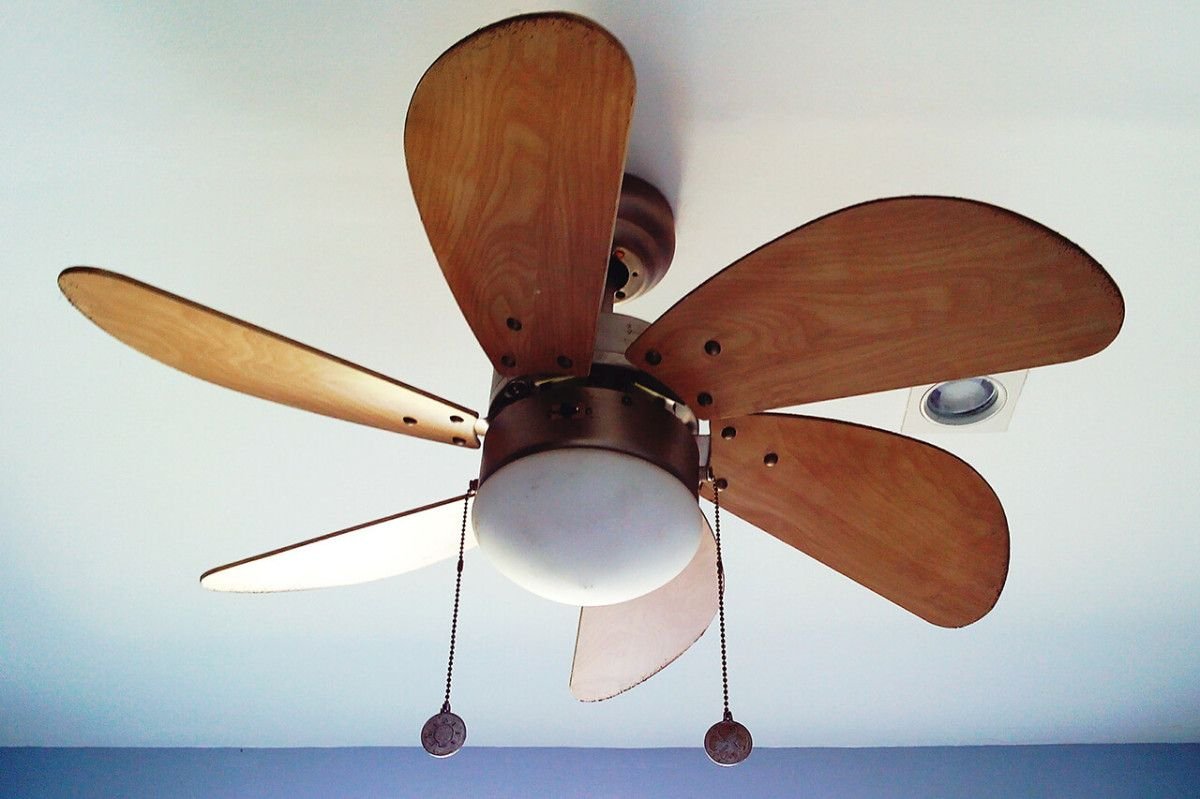
This ceiling fan installation cost guide for homeowners covers what you will pay in 2026. Ceiling fan installation costs between \$150 and \$800 per fan, depending on whether the fan is replacing an existing light fixture in a ceiling box rated for a fan, replacing a non-rated box that must be upgraded, or being installed where no electrical box exists at all, notes property management in Oro Valley. The fan itself costs \$50 to \$500.
A ceiling fan is the most cost-effective cooling upgrade in the house. It costs pennies per hour to operate — a typical ceiling fan draws 30 to 75 watts, roughly the same as a single incandescent light bulb — and makes a room feel 4 to 6 degrees cooler by moving air across the skin. The wind-chill effect allows the thermostat to be set 4 degrees higher in summer with no loss of comfort, saving $50 to $150 per year on air conditioning. The fan pays for itself in energy savings within two to four years. The comfort is immediate.
Ceiling Fan Installation Costs by Scenario
Ceiling fan installation costs range from $150 for a simple replacement on an existing fan-rated box to $1,300 for a new installation through a finished ceiling with no attic access. Here is how the five most common scenarios compare.
| Installation Scenario | Fan Cost | Labor Cost | Total Cost |
| Replace existing light fixture, fan-rated box present | $50 – $500 | $100 – $200 | $150 – $700 |
| Replace light fixture, non-rated box must be upgraded | $50 – $500 | $150 – $300 | $200 – $800 |
| New installation, no ceiling box, accessible attic above | $50 – $500 | $200 – $500 | $250 – $1,000 |
| New installation, finished ceiling, no attic access | $50 – $500 | $400 – $800 | $450 – $1,300 |
| Fan with light kit and dual-switch wiring | $100 – $500 | $200 – $400 | $300 – $900 |
The Fan-Rated Box — the Most Important Part of the Installation
A ceiling fan weighs 15 to 40 pounds and vibrates continuously while running. A standard plastic ceiling box designed for a light fixture — which weighs 3 to 5 pounds and does not move — is not rated for the weight or the dynamic load of a ceiling fan. Installing a ceiling fan on a non-rated box is the most common DIY ceiling fan mistake. The box will eventually pull out of the ceiling. The fan will fall. The question is not whether. It is when, and whether anyone is standing under it.
A fan-rated electrical box is marked with its weight rating, typically 35 to 70 pounds, and is secured to a ceiling joist or a support brace that spans between two joists. The box itself costs $10 to $20. The labor to replace a non-rated box with a fan-rated box costs $50 to $150 and takes an electrician 30 to 60 minutes, provided the existing wiring is adequate and accessible from above. If the ceiling is finished and there is no attic access above, common on first floors of two-story homes, replacing the box requires cutting an access hole in the ceiling and patching it afterward. The labor cost increases to $150 to $300, and the homeowner is responsible for drywall repair and painting, which adds $150 to $400.
The U.S. Department of Energy recommends ceiling fans as an energy-efficient cooling strategy, noting that the wind-chill effect of a fan allows a thermostat to be set approximately 4 degrees higher in summer with no reduction in comfort. A ceiling fan cools people, not rooms. Turn it off when the room is empty. The fan does not lower the room temperature. It moves air across skin, accelerating evaporation and making the occupant feel cooler. Running a ceiling fan in an empty room wastes electricity with no cooling benefit.
Fan Features That Affect the Cost
Size: Ceiling fans range from 29-inch blades for small rooms and closets to 72-inch blades for large great rooms and outdoor patios. A 52-inch fan is the standard for a bedroom or living room up to 225 square feet. A 60-inch fan is for rooms 225 to 400 square feet. Two fans or a single 72-inch fan are for rooms larger than 400 square feet. The fan size does not significantly affect the installation cost, the electrical work and the mounting requirements are the same. The fan price increases with size: $50 to $150 for a 42- to 52-inch basic fan, $150 to $300 for a 60-inch fan, $250 to $500 for a 72-inch fan.
DC motor vs. AC motor: A fan with a DC motor costs $150 to $400 compared to $50 to $200 for an AC motor fan. The DC motor uses 50% to 70% less electricity, runs quieter, has more speed settings, typically six versus three, and is compatible with remote controls standard on the fan. The energy savings are $10 to $20 per year. The quieter operation and finer speed control are the primary benefits. The energy savings eventually pay for the premium, but it takes 5 to 10 years. The quietness is immediate.
Light kit: A fan with an integrated LED light kit costs $20 to $100 more than the same fan without a light. The light kit adds complexity to the wiring, an additional switched hot wire if the fan and light are controlled separately, and may require a double-gang switch box at the wall. Installing separate switches for the fan and the light, where only a single switch existed before, adds $50 to $100 in labor and requires running a 3-wire cable instead of a 2-wire between the switch and the ceiling box. If the existing wiring is 2-wire, upgrading to 3-wire for separate fan and light control costs $200 to $400 in labor because a new cable must be fished through the wall and ceiling. Most homeowners accept a single switch controlling both fan and light, using the pull chains or a remote control to operate them independently.
Outdoor and Specialty Fans
An outdoor ceiling fan costs $100 to $500 for the fan, $50 to $150 more than an equivalent indoor fan, due to the weather-resistant motor housing, stainless steel hardware, and UV-resistant blades. Outdoor fans are rated for damp locations, covered porches, screened patios, gazebos, or wet locations, exposed decks, pergolas, any location where the fan is directly exposed to rain. A wet-rated fan costs $30 to $80 more than a damp-rated fan of the same size. Installing a damp-rated fan in a wet location voids the warranty and will cause the motor to fail within one to two seasons. The rating is on the box. Match the rating to the location.
Frequently Asked Questions
How much does it cost to install a ceiling fan?
Ceiling fan installation costs $150 to $800 per fan. Replacing an existing light fixture with a fan-rated box already in place costs $150 to $700 including the fan. Upgrading a non-rated box adds $50 to $150. Installing a fan where no electrical box exists costs $250 to $1,300 depending on ceiling accessibility and wiring requirements.
Can I install a ceiling fan myself?
Replacing a light fixture with a ceiling fan where a fan-rated box is already present is a moderately DIY-friendly electrical project. The fan mounts to the existing box. The wiring, typically black, white, and ground, plus a blue wire for the light kit, connects with wire nuts. The fan blades attach with screws. The entire installation takes a DIYer two to three hours. The fan is heavy and awkward. Having a helper to hold the fan while you connect the wires is strongly recommended. Installing a fan where no box exists or upgrading a non-rated box requires electrical work in the ceiling and should be done by a licensed electrician.
How do I know if my ceiling box is rated for a ceiling fan?
A fan-rated box is marked with its weight rating, typically “Acceptable for Fan Support” or a specific weight rating like “35 lbs” or “70 lbs”, stamped or labeled on the box interior. Remove the existing light fixture and look inside the box with a flashlight. If the box is not marked, assume it is not fan-rated. The box may also be visibly secured to a joist or a metal support brace spanning between joists. A standard plastic box attached only to the drywall is never fan-rated. Do not install a ceiling fan on a box you cannot confirm is fan-rated.
Should my ceiling fan have a light kit?
In a bedroom, living room, or kitchen, yes, the fan replaces the existing light fixture and should provide lighting. In a room with ample recessed or natural lighting where the fan is purely for air circulation, a fan without a light kit is acceptable and costs $20 to $100 less. The light kit adds complexity to the wiring but provides overhead lighting where the original fixture was removed. Most homeowners choose a fan with an integrated LED light.
Which direction should a ceiling fan spin in summer and winter?
In summer, the fan should spin counterclockwise, pushing air downward, creating a wind-chill effect. In winter, the fan should spin clockwise at low speed, pulling cool air upward and circulating warm air that has risen to the ceiling back down the walls. Most fans have a reverse switch on the motor housing. The switch is small, usually black, and located on the side of the motor above the blades. Change it twice a year: counterclockwise in spring, clockwise in fall.
Does a ceiling fan increase home value?
A ceiling fan does not directly increase appraised value. It does improve buyer perception, a home with ceiling fans in the bedrooms and living areas feels more comfortable and more complete than a home with bare ceiling boxes or basic light fixtures. In warm climates, ceiling fans are expected and their absence is noted. The cost of adding fans, $150 to $800 per room, is modest compared to the improvement in comfort and the reduction in air conditioning costs while you live in the home.
What a Ceiling Fan Costs
A 52-inch ceiling fan with an integrated LED light, replacing an existing light fixture on a fan-rated box, costs $200 to $400 installed and makes the room feel 4 to 6 degrees cooler every summer for the next 15 to 20 years. The energy savings from raising the thermostat 4 degrees pay for the fan within two to four years. The comfort, the feeling of moving air on a still summer night, is free from the moment the fan is installed.
If the ceiling box is not fan-rated, upgrade it. The $50 to $150 is not optional. The box holds the fan. The fan holds itself above your bed, your dining table, your living room sofa. The fan vibrates. The box must hold. The fan-rated box costs $10. The knowledge that the fan will not fall costs whatever the electrician charges to install it. That knowledge is worth the price. Ever heard a ceiling fan start to wobble in the middle of the night — a slight thumping sound that was not there when you went to bed? The fan is not loose. The box is. And the box is the only thing between the fan and the floor. The fan-rated box costs $10. The electrician costs $150. The alternative costs whatever is underneath the fan when it falls. Price the box accordingly.