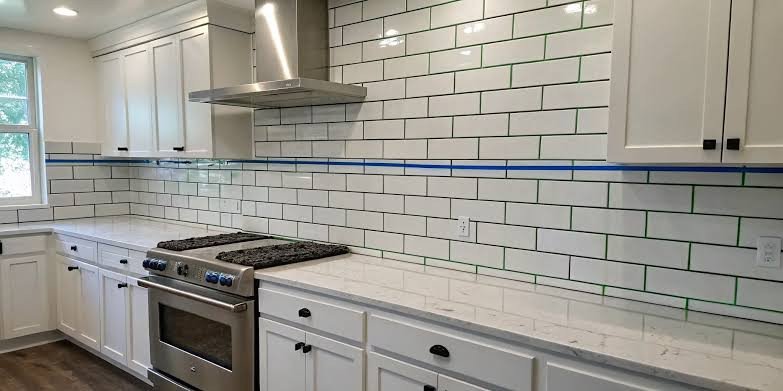
This backsplash cost guide covers what you will pay in 2026 for materials and installation. A kitchen backsplash costs between \$600 and \$3,000 installed for a typical 30-square-foot area in 2026, with the national average around \$1,200, says Property Management Connection. The cost depends almost entirely on the tile material and whether the installation is a straightforward rectangle with standard subway tile or a complex pattern with mosaic sheets, accent strips, and specialty trim pieces.
A backsplash is the most visible upgrade in a kitchen relative to its cost. It occupies the wall space between the countertop and the upper cabinets — roughly 25 to 35 square feet in a typical kitchen. It is the first thing you see when you walk into the room and the last thing you touch when you wipe down the counter after dinner. Spending $1,200 on a backsplash changes the look of the kitchen more than spending $1,200 on any other surface.
Backsplash Costs by Material
Backsplash materials range from $3 per square foot for ceramic subway tile to $50 per square foot for premium large-format porcelain, with installed costs running $11 to $70 per square foot depending on material and complexity. Here is how six popular materials compare.
| Material | Cost Per Sq Ft (Material) | Cost Per Sq Ft (Installed) | 30 Sq Ft Total |
| Ceramic subway tile | $3 – $8 | $11 – $23 | $330 – $690 |
| Porcelain tile | $5 – $15 | $13 – $30 | $390 – $900 |
| Glass tile (mosaic sheets) | $8 – $30 | $18 – $50 | $540 – $1,500 |
| Natural stone (marble, travertine) | $10 – $40 | $20 – $60 | $600 – $1,800 |
| Large-format porcelain slab | $15 – $50 | $25 – $70 | $750 – $2,100 |
| Peel-and-stick (DIY) | $5 – $15 | $5 – $15 (DIY) | $150 – $450 |
Tile Materials — What the Price Buys
Ceramic subway tile — 3-by-6-inch white rectangles — is the most common backsplash material for a reason. It costs $3 to $8 per square foot for the tile, installs quickly because the pattern is simple and repetitive, and looks clean and timeless in any kitchen. A 30-square-foot subway tile backsplash costs $600 to $900 installed and can be done in a single day by a professional tile installer. Subway tile is not exciting. It is not trendy. It looks exactly the same today as it did in 1920, and it will look exactly the same in 2050. That is the point.
Porcelain tile costs $5 to $15 per square foot and offers a wider range of colors, patterns, and finishes than ceramic. Porcelain is denser and more durable than ceramic — less porous, more stain-resistant, and rated for higher traffic. For a backsplash that never sees foot traffic, the durability difference between ceramic and porcelain is negligible. The choice is aesthetic, not functional.
Glass tile costs $8 to $30 per square foot and produces a depth and luminosity that ceramic and porcelain cannot match. Glass reflects light, which makes a small kitchen feel larger. It is also more difficult to install, glass requires a special blade to cut without chipping, the thinset must be white to avoid showing through the translucent tile, and the installer must be meticulous about cleaning thinset from the grout joints before it dries. Glass tile installation labor costs $15 to $30 per square foot, 50% to 100% more than ceramic, because the material demands more skill and more time.
Natural stone, marble, travertine, slate, limestone, costs $10 to $40 per square foot and brings an organic, one-of-a-kind surface that no manufactured tile can replicate. Stone must be sealed on installation and resealed every one to two years to prevent staining from cooking oils, tomato sauce, and red wine, the three things most likely to splash onto a kitchen backsplash. A stone backsplash is a commitment, not just a purchase. The tile costs more. The installation costs more. The maintenance continues for the life of the backsplash. The result is beautiful. The trade-off is real.
The National Association of Home Builders (NAHB) identifies kitchen backsplashes as one of the highest-return cosmetic upgrades in a kitchen remodel, a relatively small investment that produces a disproportionate visual impact. A $1,200 tile backsplash changes the perception of the entire kitchen. A buyer who sees a dated backsplash assumes the rest of the kitchen is dated too. A buyer who sees a clean, modern backsplash assumes the kitchen has been updated. The assumption may be wrong in both cases, but the backsplash is what the buyer sees first.
Labor Costs, What the Installer Charges
Tile installation labor costs $8 to $20 per square foot for standard ceramic or porcelain tile in a straightforward layout. The cost covers surface preparation, cleaning, possibly applying a primer or bonding agent to the drywall, applying thinset mortar, setting the tile, cutting edge pieces to fit, waiting for the thinset to cure, applying grout, cleaning the grout haze, and applying sealant to the grout lines if needed. A standard subway tile backsplash takes a professional installer 4 to 6 hours. A complex mosaic or glass tile backsplash takes 8 to 12 hours.
Labor costs increase for: tiles smaller than 2 inches, more pieces to set, more grout lines to fill; tiles larger than 12 inches, heavier, harder to cut, require larger trowels for proper thinset coverage; patterns that require matching across sheets, herringbone, chevron, basketweave; accent strips, listellos, or pencil trim that require precise cuts; and outlets that interrupt the tile field and require cutting around. Each outlet in a backsplash adds $10 to $20 in labor because the tile must be measured, marked, and cut to fit around the outlet box with a small, consistent gap.
DIY vs. Professional Installation
Installing a backsplash is one of the most DIY-friendly tile projects in the house. The area is small, 25 to 35 square feet. The surface is vertical, which means gravity is working with the installer, not against them. The substrate is drywall, which accepts thinset without the waterproofing and crack-isolation requirements of a shower or floor. A homeowner with patience, a tile saw, a $50 to $100 wet saw rental from a home improvement store, and a weekend can install a subway tile backsplash for $150 to $300 in materials and zero in labor cost.
The DIY line between subway tile and glass or natural stone is roughly where the skill requirement jumps. Subway tile is forgiving, the rectified edges align easily, the grout joints are uniform by design, and cutting around outlets involves simple straight cuts. Glass tile is unforgiving, the cuts must be precise, the thinset color shows through, and chipped edges are visible because glass catches light at every imperfection. Natural stone requires sealing and is heavy enough that tiles can slide down the wall before the thinset sets if the installer does not use spacers and ledger boards correctly.
If you have never tiled before, start with ceramic subway tile. The materials cost $3 to $8 per square foot. The learning curve is gentle. The stakes are low, the worst outcome is a backsplash that looks slightly uneven, and even an uneven subway tile backsplash looks better than the painted drywall it replaced. If you want glass, stone, or a complex pattern, hire a professional. The $8 to $20 per square foot in labor is less than the cost of removing and replacing a DIY installation that did not turn out the way the Pinterest photo promised.
Frequently Asked Questions
How much does a kitchen backsplash cost?
A kitchen backsplash costs $600 to $3,000 installed for a typical 30-square-foot area. Ceramic subway tile costs $600 to $900. Glass mosaic costs $800 to $1,500. Natural stone costs $900 to $1,800. The national average is around $1,200. Labor accounts for roughly half the total cost.
What is the cheapest backsplash material?
Peel-and-stick backsplash tiles are the cheapest at $150 to $450 for a DIY 30-square-foot installation. Ceramic subway tile is the cheapest professionally installed option at $600 to $900. The material costs $3 to $8 per square foot. Labor costs $8 to $15 per square foot.
Can I install a backsplash myself?
Yes. A ceramic subway tile backsplash is one of the most DIY-friendly tile projects in the house. The area is small, the substrate is drywall, and gravity works with you. A homeowner with a weekend, a wet saw rental, and patience can install a subway tile backsplash for $150 to $300 in materials. Glass, stone, and complex patterns are harder and best left to a professional.
How long does it take to install a backsplash?
A professional installer completes a standard subway tile backsplash in 4 to 6 hours, one day. A complex glass or mosaic backsplash takes 8 to 12 hours, one to two days. Grout must cure for 24 hours before sealing. A DIY installation takes longer: expect a full weekend for subway tile, two weekends for glass or stone.
Does a backsplash add value to a home?
A clean, modern backsplash improves the perceived value of the kitchen by signaling that the space has been updated. It does not add appraised value the way new cabinets or countertops do, but it removes the “dated kitchen” objection that can cost far more in negotiation than the backsplash costs to install. A $1,200 backsplash that prevents a buyer from mentally budgeting $15,000 for a kitchen remodel has an excellent return.
What is the best backsplash material for a rental property?
Ceramic subway tile is the best backsplash for a rental. It costs $3 to $8 per square foot, is easy to clean, resists stains, and looks neutral enough to appeal to any tenant. Avoid glass, it shows every fingerprint and water spot. Avoid natural stone, it requires sealing and stains easily. Subway tile installed with a light gray or beige grout hides dirt and wear better than white grout.
What a Backsplash Is Worth
Ceramic subway tile installed by a professional costs $600 to $900 and transforms a kitchen for less than the cost of a single new appliance. It is the highest-impact, lowest-cost cosmetic upgrade in the room. It installs in a day. It lasts until you decide to remove it. It wipes clean with a sponge.
Glass and stone are beautiful upgrades that cost two to three times as much and require more skill to install and more care to maintain. They are worth the premium if the budget allows and the kitchen is a space you want to linger in, not just cook in. For everyone else, which is most people, subway tile is the answer. It was the answer in 1920. It is the answer today. The tile is the same. The kitchens around it have changed beyond recognition. The tile has not needed to. Ever walked into a kitchen and immediately noticed the backsplash — in a good way? That is what $900 worth of subway tile does. Ever walked into a kitchen and immediately noticed the backsplash in a bad way? That is what happens when someone picks a trendy glass mosaic that was dated three years after it was installed. Subway tile has survived a century of kitchen trends. The glass mosaic from 2015 did not survive the decade.