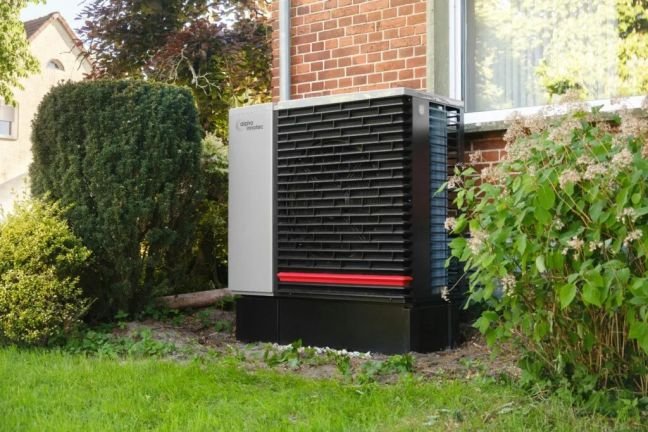
According to RENOSY Milwaukee professionals, a whole-house standby generator costs between \$5,000 and \$15,000 installed in 2026, with the national average around \$9,000 for a 20- to 22-kilowatt air-cooled unit that powers most of a typical home. The generator itself costs \$3,000 to \$7,000.
A portable generator costs $500 to $2,500 for the unit and $500 to $1,500 for a manual transfer switch and inlet box installation — $1,000 to $4,000 total. A portable generator must be set up, connected, and started manually during an outage. A standby generator starts automatically within 10 to 30 seconds of a power failure and runs until utility power is restored. The cost difference is the price of automation, whole-house coverage, and the ability to keep the lights on while you are not home.
Generator Installation Costs by Type
Generator costs span from $1,000 for a small portable setup to $25,000 for a liquid-cooled whole-house system, with the installed price driven by the generator size, the fuel type, and the installation complexity. Here is how the five main types compare.
| Generator Type | Unit Cost | Installed Cost | What It Powers |
| Portable (gasoline, 5-8 kW) | $500 – $1,500 | $1,000 – $3,000 | Refrigerator, lights, furnace fan, sump pump, a few outlets |
| Portable (dual-fuel, 8-12 kW) | $1,000 – $2,500 | $1,500 – $4,000 | Above plus well pump, microwave, TV, more circuits |
| Standby (air-cooled, 14-18 kW) | $2,500 – $4,500 | $5,000 – $9,000 | Most circuits including one AC unit |
| Standby (air-cooled, 20-26 kW) | $4,000 – $7,000 | $7,000 – $13,000 | Entire home including central AC |
| Standby (liquid-cooled, 30-48 kW) | $8,000 – $15,000 | $12,000 – $25,000 | Large homes, multiple AC units, luxury loads |
Installation Costs — What the Generator Price Does Not Include
Automatic transfer switch: The ATS is the brain of a standby generator system. It monitors utility power and, when it detects an outage, signals the generator to start and switches the house’s electrical load from the utility to the generator. When utility power returns, it switches back and shuts down the generator. An ATS costs $500 to $1,500 for the switch and $500 to $1,000 for installation. It is included in the installed costs above and is not optional — a standby generator without an ATS is a very expensive portable generator.
Concrete pad: A standby generator sits on a concrete pad or a prefabricated composite pad outside the house. The pad must be level, stable, and located at least 5 feet from doors, windows, and fresh-air intakes to prevent carbon monoxide from entering the house. A concrete pad costs $300 to $800 installed. A composite pad costs $200 to $500. The pad installation is included in most turnkey generator quotes but is a separate line item in some, ask before you sign.
Gas line connection: A standby generator running on natural gas needs a dedicated gas line from the meter. The generator draws 150,000 to 350,000 BTU per hour at full load, more than most residential gas meters can supply without an upgrade. A gas meter upgrade costs $500 to $1,500 and is coordinated with the utility company, not the generator installer. The gas line itself costs $500 to $1,500 for the pipe and installation, depending on the distance from the meter to the generator location. A generator running on propane needs a propane tank, a 250- or 500-gallon above-ground tank costs $500 to $1,500 plus $500 to $1,000 for installation. The tank is filled by a propane delivery service on a schedule or on demand.
Electrical wiring: The generator connects to the ATS through a dedicated electrical conduit carrying the power cables and the control wiring. The distance from the generator to the ATS, typically mounted next to the main electrical panel, determines the wiring cost. A generator located near the meter and panel costs $500 to $1,000 for wiring. A generator located on the opposite side of the house costs $1,200 to $2,500 because the conduit must be run around or through the house.
The U.S. Department of Energy notes that standby generators, while providing critical backup power during outages, are significantly less efficient than utility-scale power generation and should be used as emergency systems rather than as primary power sources. A standby generator is an insurance policy. The premium is the installed cost. The payout is a house that still has lights, heat, refrigeration, and sump pump operation when the grid is down.
Portable vs. Standby, the Decision Tree
A portable generator is the right choice when the goal is to keep a few critical circuits running during occasional outages. The generator costs $500 to $2,500. The manual transfer switch and inlet box installation costs $500 to $1,500. The generator runs on gasoline, which must be stored safely, rotated to prevent degradation, and refilled every 8 to 12 hours during an extended outage, or on propane from a portable tank. A portable generator must be set up outdoors, connected to the inlet box with a heavy-gauge extension cord, started, and monitored. It cannot run unattended because it needs refueling. It cannot power the whole house. It can power the refrigerator, the furnace fan, the sump pump, and a few lights and outlets. For most outages lasting less than 24 hours, that is enough.
A standby generator is the right choice when outages are frequent, prolonged, or life-safety-critical, someone in the home relies on electrically powered medical equipment, the home is in a rural area where outages last for days, or the homeowner simply does not want to set up, start, and monitor a portable generator in the middle of a storm. A standby generator starts automatically. It runs on natural gas or a large propane tank, no refueling. It powers the entire house or a subpanel of critical circuits depending on its size. It exercises itself weekly, a 10- to 15-minute test run that keeps the engine lubricated and the battery charged. It is monitored remotely through a smartphone app. The cost is $5,000 to $15,000 installed. The benefit is that a power outage becomes an inconvenience rather than an emergency.
Frequently Asked Questions
How much does a whole-house generator cost installed?
A whole-house standby generator costs $5,000 to $15,000 installed. A 20- to 22-kilowatt air-cooled unit, the most common residential size, costs $7,000 to $13,000 installed. The generator costs $4,000 to $7,000. Installation, transfer switch, concrete pad, gas line, electrical, costs $3,000 to $8,000. A portable generator with a transfer switch costs $1,000 to $4,000 total.
What size generator do I need for my house?
A 20- to 22-kilowatt standby generator powers a typical 2,000-square-foot home including the central air conditioner. A 14- to 18-kilowatt unit powers most circuits but may not start a large central AC. A 30-kilowatt or larger liquid-cooled unit powers large homes with multiple AC units. A portable generator of 5 to 8 kilowatts powers a refrigerator, furnace fan, sump pump, and a few lights and outlets. An electrician or generator dealer can perform a load calculation to determine the exact size needed.
Can I install a standby generator myself?
No. Standby generator installation requires a licensed electrician for the transfer switch and wiring, a licensed plumber or gas fitter for the gas line connection, and a building permit. The installation involves connecting the generator to the home’s electrical system at the main panel level, which carries a lethal shock hazard and a fire risk if done incorrectly. The permit and inspection ensure the installation meets the National Electrical Code.
Navigating regional compliance and physical setup challenges requires proper technical oversight. Seeking guidance from local specialists like the team at Genstar Generator Service helps property owners verify that their backup systems adhere to necessary regional requirements. Dedicated support ensures the mechanical configurations match standard home performance goals safely.
An improperly installed generator can backfeed the utility lines and electrocute a line worker attempting to restore power.
How long does a standby generator last?
An air-cooled standby generator lasts 15 to 25 years or 3,000 to 5,000 hours of runtime with proper maintenance. A liquid-cooled generator lasts 25 to 40 years or 10,000 to 30,000 hours. The engine is the limiting component, it is a small internal combustion engine similar to a lawnmower engine in an air-cooled unit or a car engine in a liquid-cooled unit. Annual maintenance, oil change, filter replacement, spark plug inspection, costs $200 to $400 and is required to maintain the warranty.
Does a standby generator increase home value?
A standby generator recovers roughly 50% to 60% of its installed cost in increased home value, per remodeling industry data. In areas with frequent or prolonged outages, hurricane zones, rural areas with overhead power lines, regions with ice storms, the recovery rate is higher because buyers specifically look for backup power. In areas with reliable underground power, the value recovery is lower. The primary return is not financial. It is the avoided cost of spoiled food, frozen pipes, flooded basements, and hotel stays during extended outages.
Does a standby generator installation require a permit?
Yes. Standby generator installation requires an electrical permit and, in most jurisdictions, a building permit for the concrete pad and generator placement. The permit costs $100 to $500 and includes an inspection to verify the generator is correctly grounded, the transfer switch is properly rated, and the generator is located at the required distance from doors, windows, and property lines. The permit is not optional. An unpermitted generator installation can void homeowners insurance coverage for a fire or electrical claim originating from the generator or its wiring.
Local regulations and electrical safety requirements make the choice of hardware and installation partner critical to the process. Homeowners looking to protect their properties during severe seasonal weather can work with a qualified Wells Electric Service generac dealer troy to make sure that the backup framework is sized accurately and integrated smoothly with the existing electrical service panel.
What Backup Power Costs
A 20-kilowatt air-cooled standby generator costs $7,000 to $13,000 installed and keeps the lights on, the refrigerator cold, the furnace running, and the sump pump working during an outage that could last hours or days. It starts automatically. It runs on natural gas. It exercises itself once a week. It turns a power outage from an emergency into a minor inconvenience, the air conditioning stops for 15 seconds before the generator takes over, and then everything works again until the grid comes back.
A portable generator costs $1,000 to $4,000 with a transfer switch and keeps a few critical circuits running as long as someone is home to set it up, start it, and refuel it. It is half the cost of a standby system and one-tenth the convenience. For occasional short outages, it is enough. For frequent or prolonged outages, the standby generator is the upgrade that pays for itself in avoided disruption. The cost of a standby generator is one spoiled refrigerator full of food, one flooded basement, one winter week without heat, and one hotel stay for a family of four. Add those up over 20 years of outages and the generator does not look expensive. It looks like the solution to a problem that keeps happening. Ever sat in a dark house listening to the refrigerator slowly warming up, wondering whether the food will survive the night, and calculating how much a hotel room costs on zero notice? That calculation — frozen food, hotel room, spoiled Thanksgiving turkey, basement sump that stops pumping — is the price of a standby generator. The generator costs $9,000 once. The outage costs repeat every time the power goes out. The math is not complicated. The generator just looks expensive because you pay for it all at once. The outages bill you in installments.