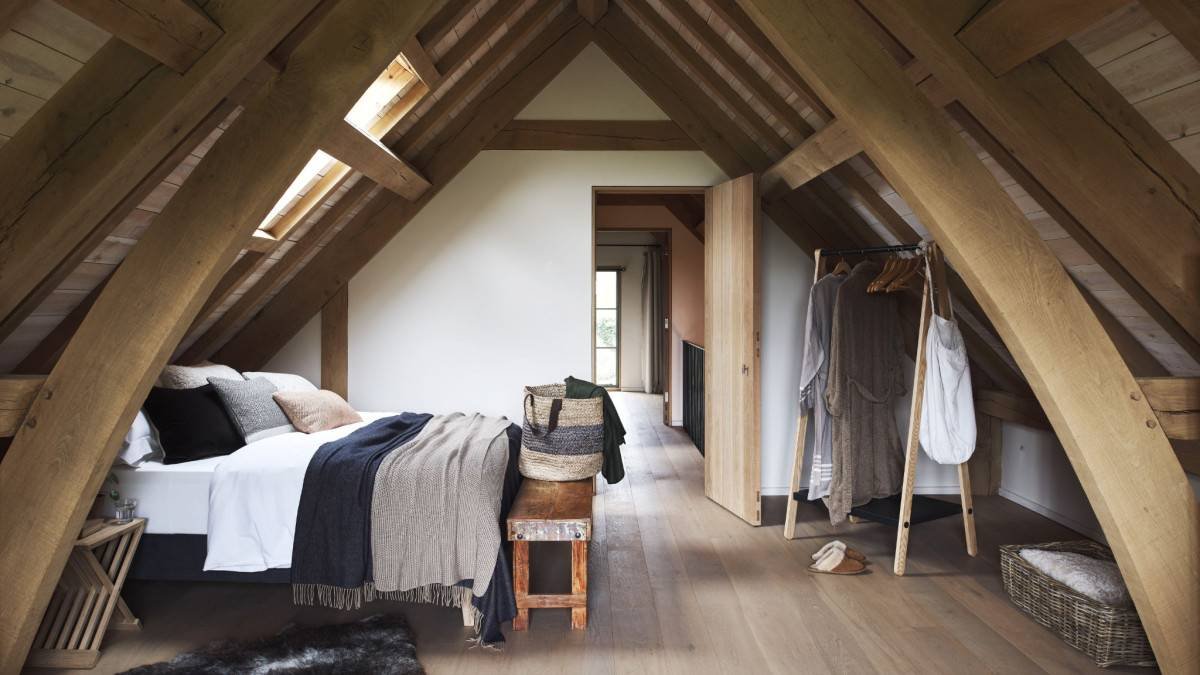
The attic is the only room in the house that was built with a roof and a floor but no walls, reports Jackson Property Management company. It is a space waiting for a purpose. Converting it into a finished room is not a renovation project that begins with a hammer. It begins with a tape measure, a building code check, and an honest assessment of whether the existing structure can support the intended use. Many attics can be converted. Some cannot. The difference between the two is not the size of the attic or the budget of the homeowner. It is the ceiling height, the floor structure, and the staircase access. If any of those three fails the code requirements, the attic is storage, not a future bedroom, regardless of how much money is spent on drywall and flooring.
Feasibility: The Three Tests Every Attic Must Pass
Test 1: Ceiling Height
Building code requires at least 7 feet of ceiling height over a minimum of 50 percent of the finished floor area for a habitable room. Measure from the top of the floor joists to the bottom of the rafters at the peak. If the peak is less than 7 feet, the attic cannot be legally converted to a bedroom or living room. If the peak is 7 feet or higher, measure the width of the attic at the 5-foot height line. The floor area where the ceiling is below 5 feet does not count toward the habitable area. The usable floor area is the portion of the attic where the ceiling height is at least 7 feet, plus the area between 5 and 7 feet where furniture can be placed but full standing height is not available.
A 25-foot-wide attic with an 8/12 roof pitch has roughly 10 feet of width at the 7-foot height line. That is enough for a 10-foot-wide room, which is tight for a bedroom but workable. The same attic with a 6/12 pitch has roughly 6 feet of width at the 7-foot line. That is a hallway, not a room. The roof pitch determines the usable width. Steeper roofs produce wider usable attics. Low-slope roofs produce attics that look large from the access hatch but have very little standing room.
Test 2: Floor Structure
Per wikiHow’s guide, attic floors are typically built as ceiling joists, not floor joists. Ceiling joists are sized to support the weight of drywall and insulation below, roughly 10 to 15 pounds per square foot of dead load. Floor joists for living spaces must support 40 pounds per square foot of live load, which is the weight of furniture, people, and movement. The difference between a ceiling joist and a floor joist is a 2×6 versus a 2×10 or 2×12, depending on the span.
A structural engineer can evaluate the existing joists and specify reinforcement if needed. The engineer’s report costs $300 to $500. The reinforcement, typically sistering larger joists alongside the existing ones, costs $3,000 to $6,000 for a 500-square-foot attic. This cost is the most common reason an attic conversion goes over budget. It is not optional. The first time someone jumps in the finished attic and the ceiling below cracks, the cost of fixing it exceeds the cost of the reinforcement that was skipped.
Test 3: Staircase Access
A pull-down ladder or scuttle hole does not meet code for primary access to a habitable room. The attic must have a permanent staircase with minimum 6-foot-8-inch headroom, minimum 36-inch width, maximum 7-3/4-inch riser height, and minimum 10-inch tread depth. A spiral staircase may be accepted in some jurisdictions if it meets the tread and riser requirements along the walk line. Check local code before planning a spiral stair.
The staircase is often the most expensive single element of an attic conversion because the existing stairs may need to be rebuilt to meet code, or a new staircase must be framed into the floor below. Moving a staircase costs $4,000 to $10,000. The staircase is what makes the attic a legal room. Without a compliant staircase, the finished attic is bonus space at resale, not square footage added to the home’s living area.
Three Conversion Types: What the Attic Can Become
| Conversion Type | Requirements | Cost (500 sq ft, Pro) |
| Basic bonus room (no bedroom) | Insulation, flooring, drywall, electrical, HVAC. No egress window required. Staircase compliance may be relaxed in some jurisdictions. | $25,000-45,000 |
| Bedroom + closet | All of the above plus egress window or skylight, code-compliant staircase, AFCI electrical circuit, smoke detector interconnected with house system. | $35,000-60,000 |
| Primary suite (bedroom + bath + walk-in closet) | All of the above plus plumbing rough-in for bathroom, bathroom exhaust fan vented to exterior, additional electrical circuits. | $55,000-90,000 |
Permits and Inspections: What the Building Department Requires
An attic conversion requires a building permit. The permit application includes architectural drawings showing the floor plan, ceiling heights, staircase details, and egress window locations. The building department reviews the plans and issues the permit. Inspections occur at multiple stages: structural reinforcement, framing, electrical rough-in, insulation, and final occupancy. Each inspection must pass before the next phase of work begins. An attic conversion completed without permits is devalued at resale. The finished square footage is excluded from the home’s listed living area. The home inspector flags the unpermitted work. The buyer demands a price reduction or the conversion must be permitted retroactively, which is difficult with finished walls.
Common Attic Conversion Mistakes
- Converting an attic that does not meet the height requirement. If the peak is less than 7 feet or the usable floor area is less than 70 square feet, the space cannot legally be a habitable room. Finishing it anyway produces a room that is uncomfortable, unsellable, and potentially unsafe for lack of egress.
- Skipping the structural assessment. The engineer’s report is $500. The cracked ceiling below is $2,000 to fix and involves removing the attic flooring to access the joists. The report is the cheapest line item in the entire conversion.
- Not planning for HVAC. The attic is the hottest space in summer and the coldest in winter. A space heater and a window air conditioner are not climate control. A mini-split costs $2,000 to $5,000 and makes the room usable year-round.
- Covering the soffit vents. The existing attic ventilation must be maintained or replaced with a continuous ridge-to-soffit airflow path. Closing the soffits without an alternative traps moisture and destroys the roof deck.
- Converting the attic before replacing an old roof. A roof leak that was a minor drip in an unfinished attic destroys drywall, insulation, and flooring in a finished attic. Replace an aging roof before the conversion begins.
Frequently Asked Questions
What roof pitch is needed for an attic conversion?
An 8/12 pitch or steeper is ideal. It provides roughly 10 to 12 feet of usable width at the 7-foot height line in a 25-foot-wide house. A 6/12 pitch is marginal and produces 5 to 7 feet of usable width. A 4/12 pitch is generally insufficient for a habitable room unless the attic is unusually wide or a dormer is added to increase the usable floor area. The roof pitch cannot be changed without rebuilding the roof, which costs more than the attic conversion itself. The pitch is what it is. The feasibility test determines whether it is enough.
Should I add a dormer during an attic conversion?
A dormer adds vertical wall space, additional floor area, and a location for a window that provides natural light and egress. It costs $8,000 to $15,000 per dormer. A dormer is worth the cost if the attic is narrow at the 7-foot height line and needs additional width to function as a room. A dormer is not necessary if the attic already has sufficient usable width and natural light from existing gable-end windows or skylights. The dormer is a structural addition that requires cutting the roof, framing the opening, and tying the new roof into the existing one. It is not a DIY project.
The Space That Becomes a Room
An attic conversion is the most transformative project a house can undergo without changing its footprint. The space is already there. The roof already covers it. The question is whether the ceiling height, the floor structure, and the staircase access meet the requirements for a legal habitable room. If they do, the conversion is a matter of insulation, drywall, HVAC, and finishes. If they do not, the attic remains what it has always been: the best storage in the house, and not a bedroom. Either outcome is fine. The only mistake is spending $50,000 to finish an attic that will never be anything more than storage because the ceiling is 6 feet high and the access is a ladder.