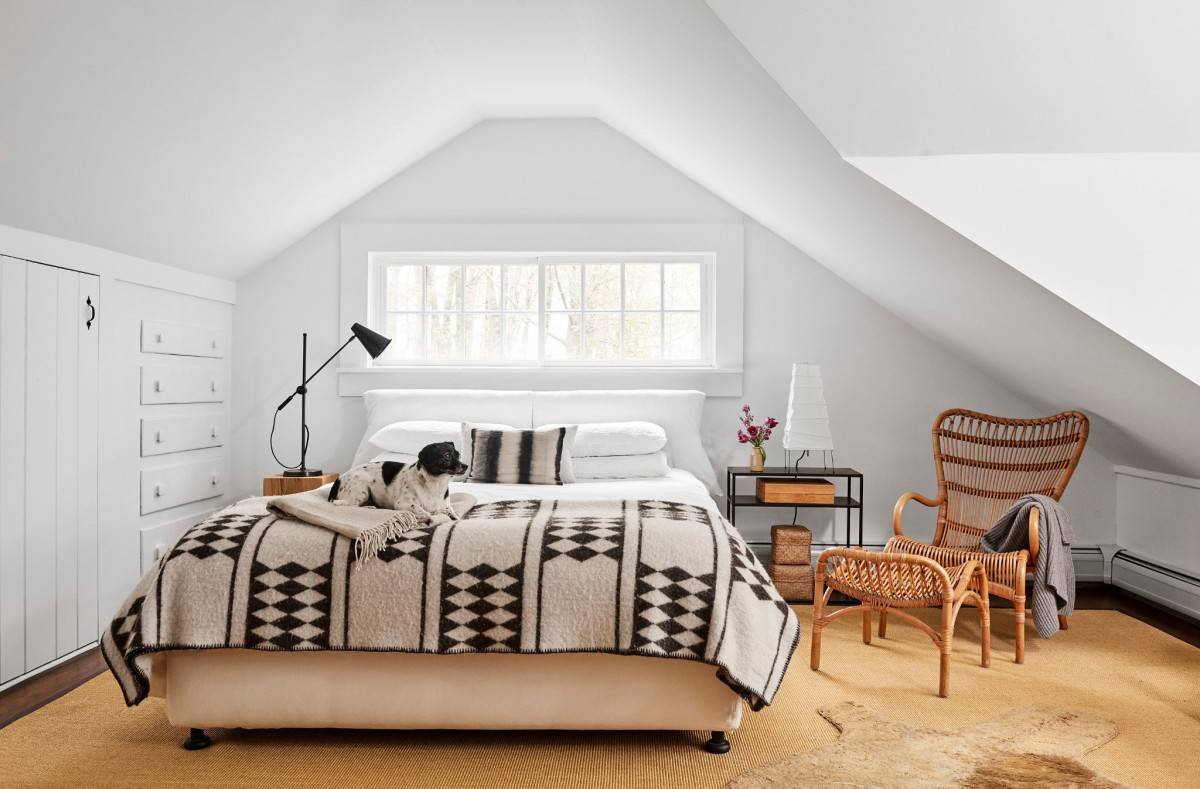
An attic bedroom has something no other bedroom in the house has: sloping ceilings that create a sense of enclosure, odd angles that force creative solutions, and the quiet that comes from being separated from the rest of the house by a flight of stairs, explains Keyrenter DFW Midcities Management team. It also has challenges that a rectangular bedroom with 8-foot flat ceilings does not. The sloped walls dictate where furniture can go. The limited natural light, often from a single window or skylight, dictates the color palette. The knee walls, the triangular spaces where the roofline meets the floor, are either wasted space or the most charming storage in the house, depending on what you do with them.
Color: The Single Most Important Decision
The color palette of an attic bedroom does more work than in any other room. Light colors expand the space. Dark colors close it in. An attic bedroom with dark walls feels like a cave, and not in the cozy, intentional way. In the oppressive, low-ceiling-pressing-down-on-you way.
Paint the walls and the ceiling the same light color. White, off-white, pale gray, or light cream. When the walls and ceiling are the same color, the transition between the vertical wall and the angled ceiling disappears visually. The ceiling feels higher. The room feels larger. A contrasting ceiling color, particularly a dark one, draws a hard line where the wall stops and the ceiling begins, emphasizing exactly the angle you want the eye to ignore.
If the attic has exposed wooden beams or brick walls, leave them natural. The contrast between the light painted surfaces and the dark wood or brick adds character without making the room feel small. The natural texture does the work that art on the wall would do in a standard bedroom. Painting beams white is an option if the goal is maximum brightness. Leaving them natural is the choice if the goal is warmth and character. Both work. Painting them dark brown or black in an already-small attic is a mistake. The dark lines across the ceiling create a visual cage effect that makes the room feel smaller than it is.
Lighting: Natural and Artificial Together
Attic bedrooms rarely have enough natural light. A single dormer window or a skylight is common. Two windows on opposite walls is rare. The lighting plan must compensate for this with layered artificial light. Per Karen Parziale, an upward-facing lamp that reflects light off the ceiling brightens the entire space more effectively than a single overhead fixture pointing down.
Use three types of lighting: ambient, task, and accent. Ambient lighting is the overhead or central fixture that illuminates the whole room. Task lighting is a reading lamp by the bed or a desk lamp in a workspace. Accent lighting is a small lamp on a dresser or a wall sconce that adds depth and eliminates dark corners. The sloped ceilings create shadows that flat ceilings do not. The accent lights in the corners are what make the room feel fully lit rather than partially lit.
A skylight, if the budget allows, is the single most transformative addition to an attic bedroom. It provides natural light where walls have no space for windows. Place it over the bed for stargazing at night and natural waking light in the morning. Choose a skylight that opens for ventilation. Attic bedrooms get warm. A venting skylight creates a natural convection current that pulls hot air out of the room.
Furniture Placement: The Sloped Ceiling Dictates Everything
In a standard bedroom, furniture goes against the walls. In an attic bedroom, the walls are not vertical. Furniture cannot be placed against a sloped ceiling because there is no headroom. The usable floor space is the area where the ceiling height is at least 5 feet. This is less than the total floor area. The furniture must fit within the usable footprint.
Place the bed against the highest wall, the one with the tallest vertical section before the ceiling slopes away. Do not place the headboard against a sloped wall. Sitting up in bed and hitting your head on the ceiling is an experience that happens exactly once before the bed gets moved. The bed should face into the room, not into a corner. A bed wedged into a dormer nook with sloped ceilings on three sides is visually cozy and functionally frustrating for the person sleeping on the inside.
Low-profile furniture works best. A platform bed with no footboard keeps the sightline open. Low dressers and nightstands, 30 inches or shorter, sit below the slope line and do not compete with the ceiling. Tall furniture belongs on the vertical walls only. A wardrobe or tall bookshelf on a sloped wall is impossible, and attempting it is how drywall gets gouged.
Storage: The Knee Wall Is Not Wasted Space
The knee wall is the short vertical wall where the sloped ceiling meets the floor, typically 3 to 4 feet high. Behind it is the triangular cavity between the finished wall and the roof framing. This cavity is one of the largest storage opportunities in the house, and in most unfinished attics it is filled with insulation and inaccessible.
Build access doors into the knee wall at regular intervals. The space behind becomes storage for out-of-season clothing, luggage, holiday decorations, and anything else that does not need daily access. Built-in drawers in the knee wall serve the same purpose while looking like intentional millwork. The knee wall storage costs a few hundred dollars in materials and a weekend of carpentry. It is the single highest-return storage investment in an attic bedroom because it converts unusable triangular space into functional storage.
In the main room, use furniture that doubles as storage. A bed frame with drawers underneath. A window bench with a hinged lid. A bedside table with shelves or a drawer. The attic bedroom does not have a closet the size of a downstairs bedroom closet, and the storage must be built into the furniture because there is no room for a freestanding wardrobe on a sloped wall.
Textiles and Accessories: The Soft Layer
Per wikiHow’s guide, the textiles in an attic bedroom serve both functional and aesthetic purposes. Light-colored curtains in thin cotton or linen keep the room bright while providing privacy. Blackout curtains are worth the upgrade if the skylight or east-facing window makes sleeping past sunrise impossible. Hang curtains close to the ceiling, not at the top of the window frame. The extended height draws the eye upward and makes the room feel taller.
Mirrors are the most useful accessory in an attic bedroom. A mirror placed opposite a window or skylight reflects natural light into the darker half of the room. A full-length mirror on a vertical wall section adds the illusion of depth. Do not hang art on sloped ceilings. It cannot be viewed straight on and looks like it slid down the wall. Hang art on the vertical wall sections only, where it can be seen at eye level.
A single large rug defines the sleeping area and adds warmth underfoot. Attic floors are typically the ceiling of the room below, and footfall noise transfers through. The rug absorbs sound and makes the room quieter for the person below and cozier for the person above.
Common Mistakes That Ruin an Attic Bedroom
- Dark paint on sloped ceilings. This is the single most common mistake. The ceiling already feels low. Dark paint pulls it lower. The ceiling should be the same light color as the walls, or lighter.
- Blocking the only window with furniture. The natural light in an attic bedroom is precious. The bed should not be the only thing that gets sunlight. If the window is the only light source, the area in front of it should be open space or low furniture that does not block the light from reaching the rest of the room.
- Ignoring the knee wall. Leaving the knee wall as a blank drywall surface wastes 30 to 50 square feet of storage behind it. Access panels or built-in drawers convert wasted space into functional storage.
- Too much furniture. An attic bedroom has less usable floor space than a same-footprint standard bedroom because the sloped edges are not usable. A bed, two nightstands, a dresser, and a chair is enough. Adding a desk, a bookshelf, and a second dresser turns the room into a furniture warehouse with a bed in it.
- One overhead light and nothing else. A single ceiling fixture leaves the sloped corners in shadow. Three layers of light, ambient, task, and accent, are the minimum for an attic bedroom to feel fully illuminated.
Frequently Asked Questions
How do I make a very small attic bedroom feel larger?
Paint everything one light color, including the ceiling. Use a mirror opposite the window to double the natural light. Choose a low-profile bed with no footboard. Keep furniture to the minimum: bed, one nightstand, one small dresser. Use wall-mounted lights instead of table lamps to save surface space. The room will feel larger because there is less in it and what is in it reflects light.
How do I keep an attic bedroom from getting too hot in summer?
Insulation is the first defense. The attic floor and roof should be insulated to code. A venting skylight allows hot air to escape. A ceiling fan circulates air and creates a cooling breeze. Light-colored curtains reflect heat. If the attic is still too hot, a ductless mini-split air conditioner provides cooling without requiring ductwork through the roof.
The Room Under the Roof
An attic bedroom is the most distinctive bedroom in the house. The sloped ceilings that make it difficult to furnish are the same sloped ceilings that make it feel like a refuge. The light through a skylight is different from light through a vertical window. The knee wall storage is storage that no other room has. The attic bedroom is not a compromise because the house did not have enough bedrooms. It is the bedroom people want because no other room in the house feels like it.