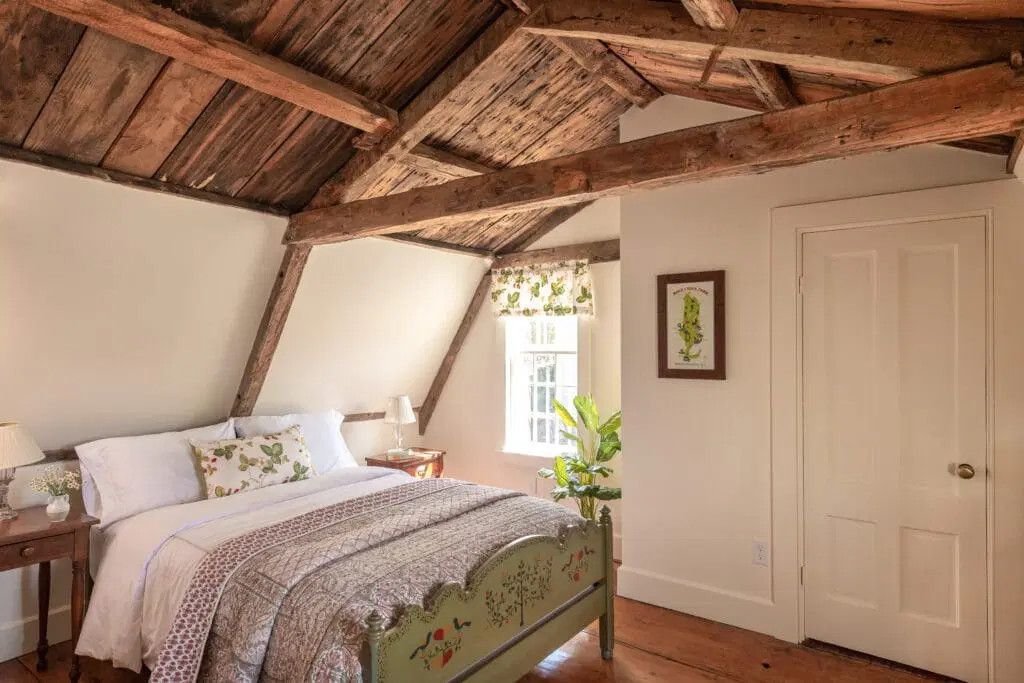
The attic bedroom is framed, drywalled, insulated, and painted. The hard work is finished. The room is a blank light-colored box with sloped ceilings and knee walls. It looks clean and bright and entirely impersonal. The decorating phase is what makes it feel like a bedroom instead of a finished storage space — the kind of value-adding finish that matters as much to homeowners as to anyone considering real estate investing in Highlands Ranch. This is the soft layer: textiles, lighting, art, mirrors, rugs, and accessories. These are the elements that give the room personality without requiring a hammer or a drill.
Curtains: Hang High, Choose Light
Curtains in an attic bedroom do two jobs. They provide privacy and light control at the window, and they change the perceived height of the room. Hang the curtain rod as close to the ceiling as possible, not at the top of the window frame. On a vertical wall, the rod goes near the ceiling line. On a sloped wall with a dormer window, the rod mounts on the vertical side walls of the dormer, as close to the sloped ceiling as possible. The extended height draws the eye upward and makes the wall feel taller than it is.
Choose light-colored curtains in thin, breathable fabric. Cotton, linen, and muslin in white, cream, or pale gray. Heavy dark curtains in an attic absorb the limited natural light and make the room feel smaller. If the room needs darkness for sleeping, use curtains with a blackout coating on the back. The blackout layer blocks light while the light-colored front layer keeps the room bright during the day. This is the best of both functions without the penalty of dark curtains darkening the room during waking hours.
Per wikiHow’s guide, thin light-colored curtains make the attic feel fresh and breezy. Floor-length curtains on a vertical wall add elegance. Curtains on a dormer window should end at the windowsill or just below it, because floor-length curtains in a dormer puddle on the floor and collect dust in a space that is already a challenge to vacuum.
Rugs: Define the Zones
An attic bedroom, particularly a low-ceiling one, benefits from a large area rug that defines the sleeping area. The rug anchors the bed and creates a visual boundary between the sleeping zone and the rest of the room. In an open attic without interior walls, rugs are the only way to define separate areas. A rug under the bed that extends 2 to 3 feet beyond the bed on all sides creates a cohesive sleeping zone. A smaller rug in a corner with a chair and a floor lamp creates a reading nook.
The rug also serves a functional purpose that is more important in an attic than in any other bedroom. The attic floor is the ceiling of the room below. Footfall noise transfers directly through the floor structure. A thick rug with a dense pad underneath absorbs impact noise and makes the attic quieter for the room below and cozier for the person above. The rug pad is not optional. A rug without a pad on a hard attic floor slides, wears out faster, and does almost nothing for sound insulation.
Lighting as Decoration
The overhead light, if one exists, is the least flattering light source in an attic. It casts shadows from the sloped ceilings downward, creating dark corners. The decorative lighting plan replaces the overhead light with layered sources that make the room feel warm and intentional. A table lamp on each nightstand provides task lighting for reading. A floor lamp in a corner creates a pool of ambient light. String lights or LED strip lights along the peak of the ceiling, if the ceiling is painted a light color, reflect off the surface and create a soft glow that makes the ceiling feel higher. Wall sconces on the knee walls free up surface space on the nightstands.
Karen Parziale recommends an upward-facing lamp that beams light onto the ceiling to make the attic feel brighter. This technique is especially effective in an attic because the sloped ceiling reflects the light back down into the room from multiple angles. A single upward-facing floor lamp in a corner does more to brighten a dark attic than three downward-facing overhead fixtures.
Art: Vertical Walls Only
Art goes on vertical walls. This sounds obvious until you stand in an attic bedroom and realize that most of the wall surface is sloped. The vertical wall sections are limited to the knee walls, the end walls, and any dormer walls. Art hung on a sloped ceiling cannot be viewed straight on. It looks like it is sliding down the wall. The same piece hung on a vertical wall at eye level looks intentional.
A single large piece on the tallest vertical wall creates a focal point that draws the eye away from the sloped surfaces. A gallery wall of smaller pieces on a knee wall adds personality at a height where the art is the main visual element. Do not hang art above eye level on a sloped ceiling. Do not hang art in a position where the viewer must tilt their head back to see it. Art that requires physical effort to view is art that never gets looked at.
Mirrors: Reflect the Light
A mirror is the most useful decorative object in an attic bedroom. Placed opposite the window or skylight, it reflects natural light into the darker half of the room. A full-length mirror on a vertical wall or knee wall adds the illusion of depth and gives the room a functional full-body reflection point. A mirror on a sloped ceiling is disorienting and should be avoided. The reflection angle on a slope is wrong, and the mirror itself looks like it is falling.
Bedding, Pillows, and Throws
The bed is the largest object in the attic bedroom. The bedding is the largest visual element in the room. It sets the color tone for the entire space. In a light-colored attic, the bedding can introduce color without overwhelming the room. Pale blue, sage green, warm terracotta, or dusty pink add warmth without darkening the space. White bedding with colored pillows and a throw blanket at the foot of the bed provides a neutral base with accents that can be changed seasonally. A single bold color in the pillows and throw is enough to give the room personality. Too many colors in a small sloped room feels chaotic. One accent color, used in the pillows, the throw, and perhaps a small rug, is enough.
Common Decorating Mistakes in Attic Bedrooms
- Too many small objects. A sloped attic bedroom has less usable surface area than a standard bedroom. Every horizontal surface is precious. A nightstand covered in small decorative objects leaves no room for a water glass and a phone. Edit ruthlessly. The room looks more spacious with fewer things in it.
- Dark, heavy curtains on small windows. The limited natural light in an attic is precious. Dark curtains absorb it. Heavy curtains overwhelm small dormer windows visually. Light, airy curtains in natural fabrics keep the room bright.
- Ignoring the knee wall as display space. The knee wall is a long horizontal surface at a height that is perfect for display. A row of framed photographs, small plants, or a collection of books turns a blank drywall surface into a gallery. The knee wall is too low for standing furniture but perfect for sitting-height display.
- One overhead light and nothing else. A single ceiling fixture in an attic casts shadows into the sloped corners and makes the room feel smaller at night. Layered lighting, table lamps, floor lamps, and wall sconces, makes the room feel larger and warmer.
- Seasonal neglect. An attic bedroom is the most thermally sensitive room in the house. In summer, swap the heavy duvet for a lightweight cotton quilt. In winter, add a thick throw and flannel sheets. The bedding that works in a climate-controlled downstairs bedroom may be wrong for an attic that swings 10 degrees warmer or colder than the rest of the house.
Frequently Asked Questions
What plants work well in an attic bedroom?
Low-light plants that tolerate temperature swings. Snake plants, pothos, ZZ plants, and spider plants survive in the lower light and variable temperatures of an attic. Place them on a knee wall where they receive whatever natural light is available. Avoid plants that need direct sunlight or consistent humidity, such as fiddle leaf figs and ferns. An attic with a skylight can support a broader range of plants. An attic with only a small dormer window is a low-light environment.
How do I make an attic bedroom feel personal without making it feel cluttered?
Choose three personal objects and display them prominently. A framed photograph, a piece of art you love, and a book collection on the knee wall. Three objects feel personal. Thirty objects feel cluttered. The sloped ceilings already create visual complexity. The decorating should simplify, not complicate. Every object in the room should have a specific place. If it does not have a place, it does not belong in the attic.
The Room That Feels Like Yours
Decorating an attic bedroom is the reward for the construction work that came before it. The framing is done. The drywall is painted. Now the room gets curtains that make the window feel taller, a rug that makes the floor feel warmer, a lamp that makes the ceiling feel higher, and bedding that makes the bed feel like the destination it is. The attic bedroom is the most personal bedroom in the house because no other room has its shape. The decorating should reflect the person who sleeps there. The sloped ceilings do the architecture. The textiles, the light, and the color do the personality.