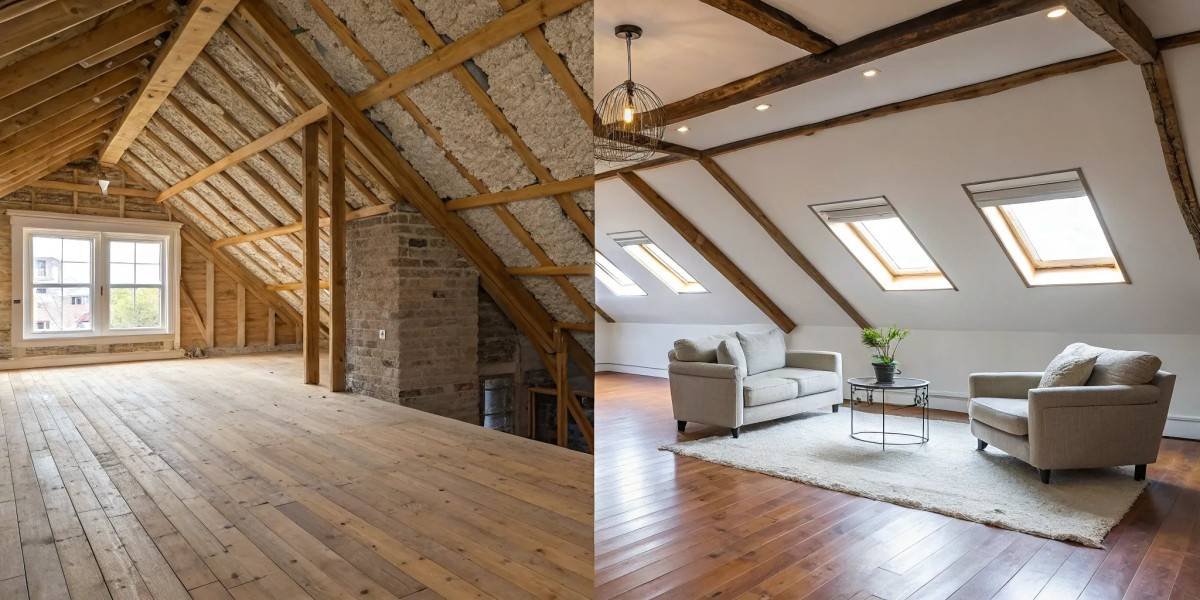
According to pet security deposit, the attic is the last unfinished space in the house. The furnace is up there. The Christmas decorations are up there. The box of cables from electronics you no longer own is up there. But the square footage is real, and the ceiling height in the center of the attic, where the roof peaks, is taller than any ceiling in the house. Finishing the attic converts storage into living space without adding a foundation, without adding a roof, and without moving any exterior walls. The structure is already there. It just needs floors, walls, climate control, and a purpose.
Co-authored by home staging specialist Karen Parziale who has staged over 5,000 homes, the key to a successful attic conversion is working with the architecture rather than fighting it. The sloped ceilings, knee walls, and limited natural light are not flaws to be hidden. They are features that make the space feel different from every other room in the house. This guide covers finished attic ideas for multiple room types, practical tips for each phase of the project, and the mistakes that turn an attic into a room nobody wants to be in.
Idea 1: The Primary or Guest Bedroom
An attic bedroom is the most common finished attic use. The separation from the rest of the house by a full flight of stairs provides privacy that no other bedroom has. The sloped ceilings create a sense of enclosure that a rectangular box of a bedroom cannot replicate. A bed placed under the peak, with sloped ceilings descending on either side, is the image that sells attic bedrooms in every home design magazine.
Practical considerations: the bedroom must have an egress window or skylight for emergency escape. Building code requires it. A window that opens to the outside is not optional for a legal bedroom. The bed should be positioned against the tallest wall, not against a sloped ceiling where sitting up means hitting your head. Low-profile furniture preserves sightlines. A platform bed with no footboard keeps the room feeling open. Storage built into the knee walls converts the unusable triangular spaces behind the short vertical walls into drawers and cabinets that hold clothing, linens, and everything else that would normally go in a closet.
Idea 2: The Home Office
An attic home office is a logical use for a space that is naturally separated from the noise of the main living areas. The stairs act as a physical and psychological barrier between work and home life. When you come down the stairs at the end of the workday, you leave the office behind. The commute is 12 steps.
A desk placed under a skylight provides natural light on the work surface without the glare that comes from a window directly in front of a computer screen. The knee wall space becomes filing cabinets, supply storage, and a printer station that does not take up floor space. Built-in bookshelves along the knee wall turn a dead zone into a library wall. The electrical requirements for a home office are higher than for a bedroom. Plan for at least four outlets at the desk location, plus data cable runs for a wired internet connection. Wi-Fi signal in an attic can be weak, and a wired connection eliminates the problem entirely.
Idea 3: The Kids’ Playroom or Teen Hangout
An attic playroom keeps toys, noise, and chaos contained in a space that is not visible from the front door. The sloped ceilings, which are a challenge for adult-height furniture, are not a problem for children. A 4-foot knee wall is low enough for an adult to bump their head. For a child, it is a fort wall. The knee wall cavities become storage for toys, art supplies, and games. The floor should be carpet or cork for sound absorption. The room below the attic will hear foot traffic regardless of the flooring, but carpet reduces impact noise more than any other surface.
For a teen space, a sectional sofa that fits under the sloped ceiling, a television or projector on the tallest wall, and beanbag chairs that can be moved anywhere regardless of ceiling height create a room that teenagers will actually use. The separation from the main living area is the selling point. Parents get their living room back.
Idea 4: The Media Room or Home Theater
An attic media room takes advantage of the lack of windows. A room with few or no windows has controlled light, which is the first requirement of a good home theater. The sloped ceiling shape, with a central peak and angled sides, can create unexpected acoustic problems. Sound reflects off the angled surfaces and focuses at odd points in the room. Acoustic panels on the sloped walls absorb reflections. Carpet on the floor absorbs footfall noise. Heavy curtains over any windows block light and absorb sound. The projector screen goes on the tallest vertical wall. The projector mounts to the ceiling at the peak.
Practical Tips for Any Attic Finish
- Insulate to code before finishing. The attic floor is already insulated. The sloped ceiling and knee walls need insulation added before drywall goes up. Spray foam between the rafters provides the highest R-value per inch and acts as an air barrier. Rigid foam with sealed seams is the alternative. The attic will be the hottest room in the house in summer and the coldest in winter without adequate insulation.
- Address climate control early. The existing HVAC system may not have capacity for an additional finished space. A ductless mini-split provides heating and cooling without extending ductwork through the attic. It costs $2,000 to $5,000 installed and is the most practical climate solution for a finished attic.
- Maximize natural light. Dormer windows project outward from the sloped roof and create vertical wall space and additional floor area where the dormer meets the floor. Skylights bring light into the center of the attic where walls do not exist. Both are structural modifications that require cutting the roof and framing openings. The cost is $2,000 to $5,000 per window or skylight. The value they add to the finished space is proportional to how dark the attic was before.
- Use the knee walls. Per wikiHow’s guide, hidden storage solutions are especially valuable in attic spaces where every inch of usable space counts. The triangular cavity behind a knee wall is 3 to 4 feet deep at the floor and tapers to zero at the top. Access doors or drawers in the knee wall face convert this cavity into storage. The cost is a sheet of plywood and an afternoon of carpentry. The return is 30 to 50 square feet of storage that did not exist before.
- Paint everything one light color, including the ceiling. Light walls and a light ceiling blur the transition between vertical and sloped surfaces, making the room feel larger. Dark paint on the sloped ceiling pulls the ceiling down visually. A contrasting ceiling color draws a hard line at exactly the angle you want the eye to ignore.
Common Mistakes in Attic Finishing
- Finishing the attic before fixing the roof. A roof leak that was a minor problem in an unfinished attic becomes a disaster that destroys drywall, insulation, and flooring. Replace the roof or repair known leaks before any finishing work begins.
- Blocking access to mechanical systems. The furnace, water heater, or air handler may be in the attic. The finished space must leave service access to these units. A mechanical closet with a full-size door is the correct approach. Framing the furnace into a corner with a 2-foot access panel is not.
- Not pulling permits. Finishing an attic requires a building permit in every jurisdiction. The permit triggers inspections of the framing, electrical, insulation, and egress. An unpermitted attic finish is devalued at resale and may be flagged by the home inspector as a safety hazard if the egress requirements are not met.
- Using standard drywall on the ceiling. The attic ceiling is directly under the roof. In summer, the roof deck temperature can exceed 130 degrees. Standard drywall expands and contracts with temperature changes and will develop cracks at the seams. Use 5/8-inch Type X drywall for the ceiling. It is more resistant to cracking and provides a fire rating between the attic and the living space.
- Forgetting about airflow. The attic previously had ventilation from the soffit vents to the ridge vent. Finishing the attic closes off that airflow path. Baffles must be installed between the rafters from the soffit vent up to the ridge vent before insulation and drywall go in. Without baffles, the roof deck overheats, the shingles fail prematurely, and ice dams form in winter. The baffles maintain the ventilation channel behind the finished ceiling.
Frequently Asked Questions
Is finishing an attic worth the cost compared to adding an addition?
Attic finishing costs $50 to $100 per square foot for a mid-range professional finish, or roughly half the cost of a ground-floor addition at $100 to $200 per square foot. The attic structure already exists. The foundation, roof, and exterior walls are already paid for. The finishing cost is for insulation, framing, drywall, electrical, HVAC, flooring, and finishes. The cost savings compared to an addition are the cost of the foundation and the exterior shell. An attic finish is the most cost-effective way to add living space to a house.
What is the minimum ceiling height for a finished attic?
Building codes typically require at least 7 feet of ceiling height over a minimum of 50 percent of the floor area for a habitable room. The sloped portions of the ceiling are not included in the floor area calculation if the ceiling height is below 5 feet. Measure the usable floor area before planning the layout. An attic that meets the code minimum for a bedroom may still feel cramped if the usable area is too small for the intended furniture. A bedroom needs roughly 70 square feet of usable floor area for a bed and a nightstand.
The Space Under the Roof
A finished attic is the most space-efficient renovation a house can undergo. The square footage already exists. The roof already covers it. The stairs already lead to it. Finishing it turns storage into living space. The sloped ceilings, the knee walls, and the limited light are constraints that produce rooms more interesting than any rectangular box on the floor below. The attic bedroom with a skylight over the bed. The office at the top of the stairs with a view of the trees. The media room where the angled walls absorb sound and the darkness is a feature, not a flaw. The attic was always there. Now it is finished, and it is the best room in the house.