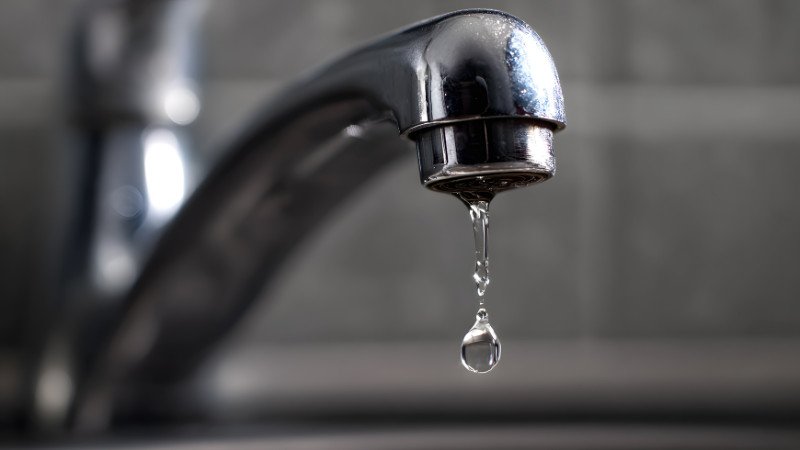
An outdoor hose faucet leaks in one of three places: from the spout when the handle is closed, from around the handle stem when the water is running, or from the vacuum breaker cap on top of the spout, notes E & S Property Management. Each leak has a different cause and a different fix. All three fixes cost $2 to $10 in parts and take 15 to 30 minutes.
The most common leak is water dripping from the spout when the faucet is off. The rubber washer at the end of the stem has hardened or worn out. The second most common is water spraying from the handle area when the faucet is on. The packing around the stem has dried out. The third is water leaking from the vacuum breaker, which is the brass cap threaded onto the spout. The internal seal has failed. Here is how to fix all three.
First: Identify Your Faucet Type
A standard hose faucet, also called a sillcock or hose bib, is a compression faucet. Turning the handle screws a threaded brass stem inward, pressing a rubber washer against a brass seat to stop the water flow. This is the classic outdoor faucet design found on houses built before the 2000s and still common today. The repair is replacing the washer and the packing.
A frost-free hose faucet has a long body that extends through the wall into the heated interior of the house. The actual valve seat is 12 to 18 inches inside the wall where it stays above freezing. The handle on the outside controls the valve on the inside through a long stem. Frost-free faucets also use a washer at the end of the stem. The repair is similar but requires removing the entire stem assembly, which is longer and more expensive to replace if it is damaged.
A ball-valve hose faucet has a quarter-turn handle instead of a round handle that turns multiple times. Quarter-turn faucets do not have a replaceable washer. They have a sealed ball cartridge. If a quarter-turn faucet leaks from the spout, the cartridge must be replaced or the entire faucet must be replaced. There is no $2 washer inside. The cartridge costs $10 to $20. If the cartridge is not available for your faucet model, replace the entire faucet.
Leak From the Spout: Replace the Washer
Shut off the water to the hose faucet. The shutoff valve is typically in the basement or crawl space on the pipe that leads to the outdoor faucet. If there is no dedicated shutoff, shut off the main water supply to the house.
Open the faucet fully to relieve pressure and drain water from the pipe. Loosen the packing nut. The packing nut is the hex nut directly behind the handle. Turn it counterclockwise with an adjustable wrench. Once the packing nut is loose, unscrew the entire stem assembly from the faucet body by turning the handle counterclockwise. The stem threads out of the faucet body.
On the end of the stem is a rubber washer held by a brass screw. Remove the screw and the washer. Take the stem and the old washer to the hardware store to match the replacement. Washers for hose faucets are typically flat and come in standard sizes. A hose faucet repair kit costs $5 to $10 and includes several sizes of washers, packing material, and the screw. If you are unsure of the size, buy the kit. One of the washers will fit.
Inspect the brass seat inside the faucet body. Shine a flashlight into the opening. The seat is the brass ring that the washer presses against. If it is smooth, the seat is fine. If it is rough, pitted, or grooved, the new washer will not seal against it. The seat can sometimes be removed with a seat wrench, as in an indoor faucet. On an outdoor frost-free faucet, the seat is at the end of the long valve body, 12 to 18 inches inside the wall, and cannot be accessed without removing the entire faucet. If the seat on a frost-free faucet is damaged, replace the entire faucet. The seat is not serviceable.
Install the new washer on the stem with the brass screw. Tighten the screw firmly. A loose screw allows the washer to wobble and leak. Apply a thin coat of plumber’s silicone grease to the washer and the stem threads. Reinstall the stem by threading it into the faucet body clockwise. Tighten the packing nut. Turn the water back on. Close the faucet and check for leaks at the spout.
Leak From the Handle: Replace the Packing
Water that sprays or drips from around the handle when the faucet is open is a packing leak. The packing is the material that seals the stem where it passes through the packing nut. Over time, the packing dries out, shrinks, and allows water to escape along the stem.
Shut off the water. If the leak is only from the handle and not from the spout, you do not need to remove the stem. Simply loosen the packing nut. Wrap one or two turns of graphite packing string around the stem at the base, just above the packing nut. The packing string costs $3 to $5 at any hardware store. If you bought a repair kit, the packing string is included. Tighten the packing nut. The nut compresses the packing string against the stem, creating a watertight seal. Turn the water back on and test. If the handle is difficult to turn after tightening the packing nut, back the nut off slightly. The seal should be watertight without making the handle stiff.
If tightening the packing nut or adding packing string does not stop the leak, the stem itself may be scored or worn at the point where it contacts the packing. Replace the entire stem assembly. Replacement stems for standard hose faucets cost $8 to $15 and thread into the existing faucet body.
Leak From the Vacuum Breaker: Replace the Internal Seal
Most outdoor hose faucets have a vacuum breaker, also called a backflow preventer, threaded onto the spout. It is a brass cylinder with a knurled cap or a set screw on the side. The vacuum breaker prevents contaminated water from being siphoned back into the house plumbing if a hose is left in a bucket of chemicals or a pool.
A vacuum breaker that leaks water when the faucet is turned on has a failed internal seal. The seal is a small rubber disc or O-ring inside the vacuum breaker. The vacuum breaker can be removed and repaired or replaced. Some vacuum breakers unscrew from the spout. Others are held in place by a set screw that must be drilled out because the head is designed to break off during installation to prevent tampering. If the set screw head is broken off, the vacuum breaker is not designed to be removed. Replace the entire faucet or replace the vacuum breaker by drilling out the set screw and retapping the hole.
A simpler fix for a leaking vacuum breaker is to replace the entire vacuum breaker with a new one. If the old vacuum breaker unscrews from the spout, unscrew it, wrap the spout threads with Teflon tape, and screw on a new vacuum breaker. The replacement costs $8 to $15. If the old vacuum breaker is not removable, replacing the entire faucet is the practical solution. The cost of a new frost-free hose faucet is $30 to $60. The labor to replace it is the same as removing the old one to repair it.
When to Replace the Entire Faucet
Replace the faucet if the stem is frozen in place and will not turn, if the seat inside a frost-free faucet is damaged and cannot be serviced, if the vacuum breaker cannot be removed or repaired, if the faucet body is cracked from freezing because a hose was left attached over the winter, or if the faucet is a quarter-turn type and the replacement cartridge is not available.
Replacing a hose faucet requires access to the pipe connection inside the wall. For a standard faucet screwed onto a threaded pipe, the faucet unscrews from the pipe. The replacement screws on. For a frost-free faucet, the faucet is connected to the water supply pipe inside the house with a threaded connection, a solder joint, or a push-to-connect fitting. If you are uncomfortable working inside a wall or crawl space, call a plumber. The faucet replacement costs $150 to $300 for a plumber. The faucet itself costs $30 to $60.
Frequently Asked Questions
The faucet leaked all winter. Is it broken from freezing?
Probably. Water trapped inside the faucet body freezes and expands, cracking the brass. The crack may be inside the wall where it is not visible. Turn the water on and look for water leaking from the wall behind the faucet or from the faucet body itself. If water appears anywhere other than the spout or the handle, the faucet body is cracked. Replace the entire faucet. A cracked faucet cannot be repaired. The most common cause of a cracked hose faucet is leaving a hose attached over the winter. The hose traps water in the faucet body, which freezes and cracks the brass. Always disconnect hoses before the first freeze.
My quarter-turn faucet leaks and I cannot find a replacement cartridge. What now?
Replace the entire faucet. Quarter-turn hose faucets from big-box stores often use proprietary cartridges that are discontinued when the faucet model changes. If the cartridge is not available, the faucet is a disposable product. The replacement is standard plumbing work. A plumber can replace it in under an hour.
My faucet squeals or vibrates when I turn it on. Is that related to the leak?
The squeal is a loose washer. The washer is vibrating against the seat as water flows past it. The fix is the same as for a leaking spout: remove the stem and tighten the washer screw. If the screw is tight and the faucet still squeals, replace the washer. A hardened washer does not flex enough to absorb the water flow and vibrates instead.