Chemical drain cleaners like Drano work by generating heat and dissolving organic material inside the pipe. They also damage pipes over time, are dangerous to handle, and will burn your skin and eyes on contact. If they do not clear the clog, you now have a pipe full of caustic chemicals that you or a plumber must work around. The mechanical and natural methods below are safer, cheaper, and often more effective because they remove the clog physically rather than chemically dissolving part of it, shares Southfield property management.
Here is how to clear a sink, tub, or shower drain without chemicals, in order from the simplest method to the most involved.
Boiling Water: The Simplest Method
Boiling water dissolves soap scum and grease, which are the most common causes of slow bathroom and kitchen drains. Boil a large pot of water. Pour it down the drain in two or three stages, waiting a few seconds between each pour for the heat to work its way through the clog. This method works on clogs that are primarily soap and grease, which soften and melt with heat.
Do not pour boiling water into a toilet bowl, which can crack the porcelain from thermal shock. Do not pour boiling water down a drain connected to PVC pipes, which can soften at boiling temperature. The boiling water method is for metal pipes under sinks and tubs. PVC pipes can handle hot tap water, but boiling water is too hot and can warp the pipe or soften the glued joints.
Baking Soda and Vinegar: The Fizzing Method
The combination of baking soda and vinegar produces carbon dioxide gas, which fizzes and can dislodge a loose clog. It is not as powerful as a plunger or a snake, but it is nontoxic, costs pennies, and works on mild clogs from soap and hair that have not fully blocked the drain.
Pour half a cup of baking soda down the drain. Follow with half a cup of white vinegar. The mixture will fizz immediately. Cover the drain opening with a stopper or a wet cloth to contain the fizzing action inside the pipe, where it does the most good. Wait 15 to 30 minutes. Flush with a pot of hot tap water, not boiling water. The hot water carries away the loosened debris.
This method is preventive as much as it is corrective. A monthly baking soda and vinegar flush keeps drains clear and reduces the likelihood of a full clog. It is the gentlest method and the least likely to work on a drain that is already completely blocked.
The Plunger: The Most Underrated Tool
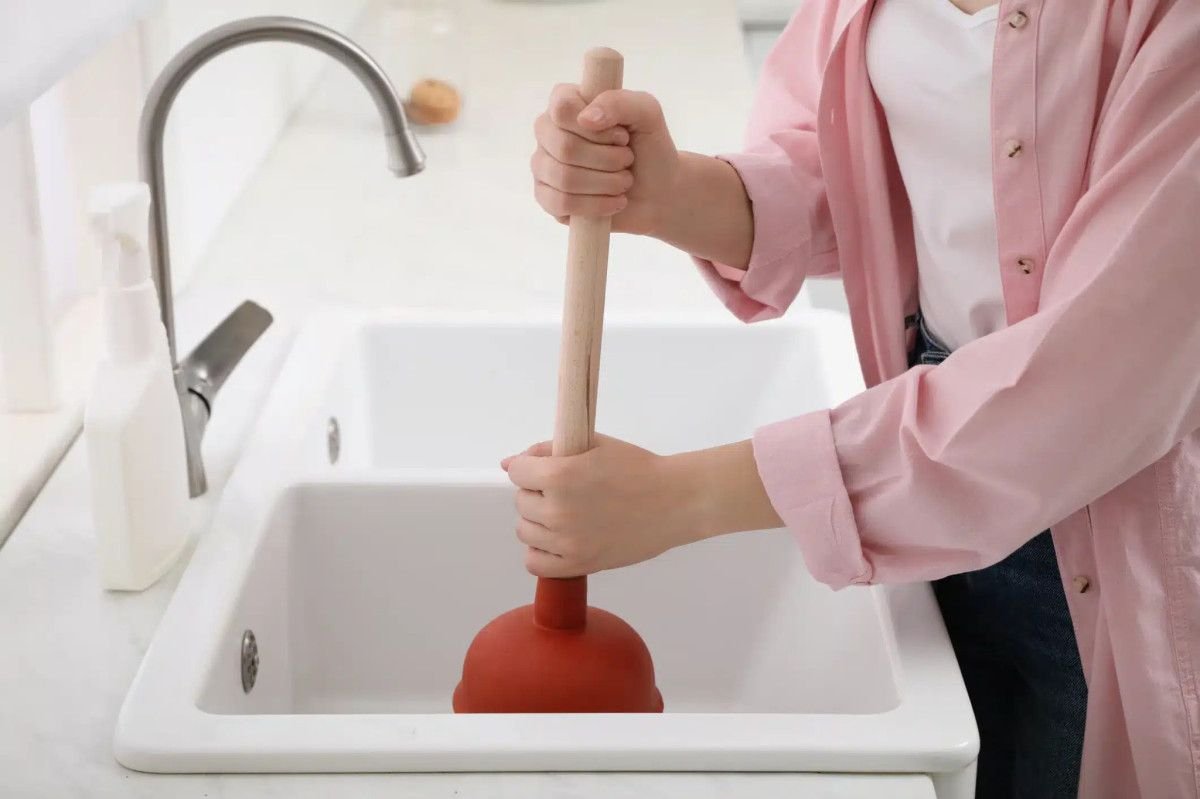
A plunger works by pushing and pulling water through the clog, breaking it apart through hydraulic pressure. The key to plunging a sink or tub drain, as opposed to a toilet, is sealing the overflow opening. Sinks have an overflow hole near the top of the basin. Tubs have an overflow plate below the spout. The plunger pushes water into the drain, but if the overflow is open, the water and pressure escape through the overflow instead of going through the clog. Cover the overflow with a wet rag and hold it in place with your hand while plunging.
Fill the sink or tub with enough water to cover the plunger cup. The water provides the hydraulic medium that transmits the plunger’s force to the clog. Place the plunger over the drain and pump vigorously 10 to 15 times. The plunger should make a seal against the bottom of the sink or tub. On the last pump, pull the plunger sharply upward to pull water and debris back toward you. Test the drain. If the water drains, flush with hot water for 30 seconds. If the drain is still slow, repeat the plunging sequence.
Remove and Clean the P-Trap
The P-trap is the curved section of pipe under the sink. It is called a P-trap because it traps water in the curve, which blocks sewer gas from entering the house. It is also the most common location for clogs because debris settles in the curve and accumulates over time. Removing and cleaning the P-trap takes 10 minutes and requires no special tools.
Place a bucket under the P-trap. Loosen the slip nuts on both ends of the trap by hand or with channel-lock pliers. The slip nuts are the large plastic or metal nuts that connect the trap to the sink tailpiece above and the drain pipe below. Unscrew them and slide them away from the connections. Pull the trap down and off. Water and debris will drain into the bucket. The trap will be full of water because it is designed to hold water. Empty the trap into the bucket. Clean the inside of the trap with a bottle brush or a rag. Hair, soap scum, and sludge will come out. Rinse the trap with hot water. Reinstall the trap by sliding it back into position and tightening the slip nuts by hand. The nuts compress a plastic or rubber washer that creates the seal. Hand-tight is sufficient. Run the water and check for leaks at the slip nuts. Tighten slightly if a nut drips.
Drain Snake or Plumbing Auger
If the P-trap is clean and the drain is still clogged, the clog is further down the drain line. A drain snake, also called a plumbing auger, is a flexible steel cable with a corkscrew tip that is fed into the drain, rotated to break up or retrieve the clog, and pulled back out. A 1/4-inch by 25-foot drain snake costs $15 to $30 at any hardware store and is the tool that plumbers use for most sink and tub clogs.
Remove the P-trap as described above. Insert the snake into the drain pipe in the wall. Push the cable in slowly while rotating the handle clockwise. The rotation helps the snake navigate bends in the pipe and engages the corkscrew tip with the clog. When the snake stops advancing, you have reached the clog. Tighten the thumbscrew on the snake handle to lock the cable. Rotate the snake against the clog. You may feel the snake break through or snag on the obstruction. Rotate several times to break up the clog or to capture it on the corkscrew tip. Loosen the thumbscrew and pull the snake back out. Hair and debris will come back on the tip. Clean the tip and repeat if the drain is still slow. Run hot water for several minutes after the clog is cleared to flush the remaining debris down the drain.
Do not force the snake aggressively. If the snake will not advance, it may be hitting a bend in the pipe, not the clog. Pull back slightly, rotate, and try again. Forcing the snake can puncture a pipe, particularly older thin-wall metal drain pipes.
Wet-Dry Vacuum
A wet-dry shop vacuum can pull a clog out of a drain by suction. This method works best on clogs that are close to the drain opening, such as a clump of hair in the first few inches of the drain or a small object that has fallen in.
Set the vacuum to wet mode. Remove the filter if your vacuum requires it for wet operation, which most do. Create a seal between the vacuum hose and the drain opening. You can use a plunger head with a hole drilled in the center, a rag wrapped around the hose, or simply hold the hose firmly against the drain opening with your hand. Turn the vacuum on and let it run for 30 to 60 seconds. The suction may pull the clog up into the vacuum canister. Check the canister for debris. If the drain is still clogged, the clog is beyond the reach of the vacuum and a snake is the next step.
When to Call a Plumber
Call a plumber if the clog affects multiple fixtures simultaneously, such as a sink and a tub that both drain slowly. This indicates a main drain clog, not a localized clog. If you have snaked the drain with a 25-foot snake and the clog persists. The clog is deeper in the drain line than a homeowner-grade snake can reach. If water is backing up into the tub or shower when you run the washing machine. This is a main drain clog. If you smell sewer gas, the P-trap has been siphoned dry or there is a broken vent pipe. Do not use chemical drain cleaners before calling a plumber. The plumber must work with whatever is in the pipe, and caustic chemicals are a hazard to them.
Frequently Asked Questions
Does salt and boiling water unclog drains?
Salt and boiling water is a mild abrasive flush. The salt scours the inside of the pipe as the water carries it through. It works on light soap scum buildup. It does not dissolve hair or grease. Baking soda and vinegar is a more effective natural method. A plunger or a snake is a more effective mechanical method.
One side of my double kitchen sink is clogged, but the other drains fine. How do I fix it?
The clog is in the branch drain serving the clogged side, not in the main drain. Plunge the clogged side while sealing the drain opening on the working side with a wet rag. The plunger pushes water through the clogged branch. If the working side drain is not sealed, the plunger pressure escapes through the open side and does nothing. If plunging does not clear it, remove the P-trap on the clogged side and snake from the trap connection into the wall.
Are enzyme drain cleaners worth using?
Enzyme drain cleaners use bacteria that digest organic material. They are safe for pipes and the environment. They are slower than chemical cleaners, taking hours to days to work. They are effective as a preventive maintenance treatment applied monthly to keep drains clear. They are not effective on a drain that is already fully clogged, because the standing water in the drain dilutes the enzymes to an ineffective concentration. Use enzyme cleaners for maintenance. Use a plunger or snake for a clog.