How Are Solar Panels Installed on Flat Roofs?
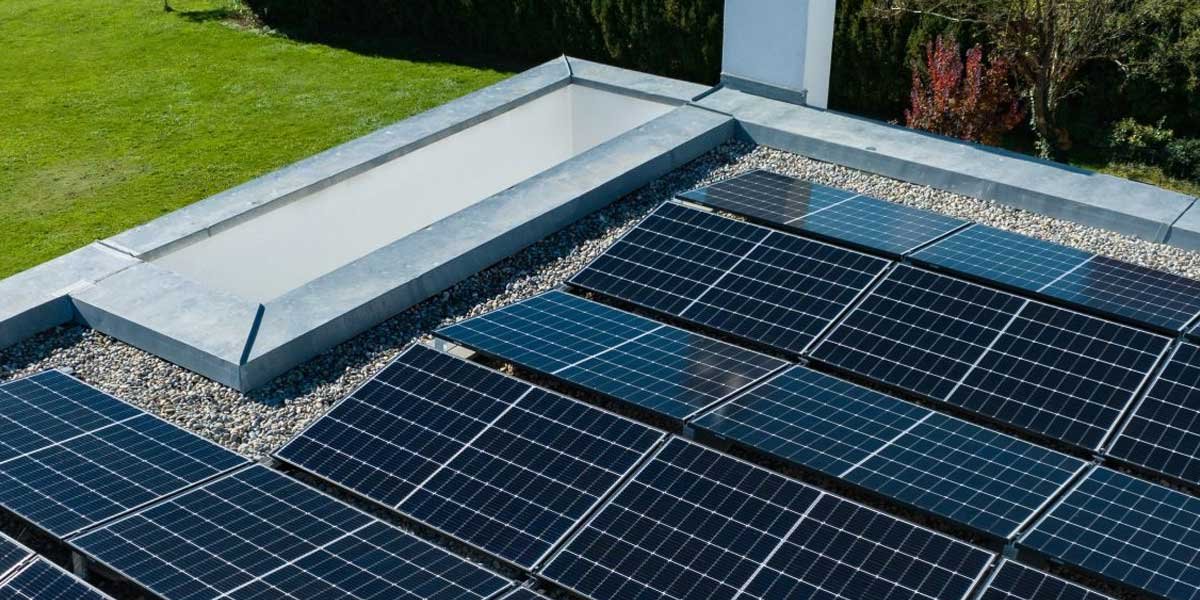
When installing solar panels on a traditional sloped roof, technicians typically drill into the rafters and attach rails flush against the shingles. On a flat roof, this approach is fundamentally altered. Because the roof itself does not provide the necessary angle to capture sunlight efficiently, the mounting system must create that angle. Furthermore, because flat roofs rely on continuous, unbroken waterproof membranes (like EPDM or TPO) to keep water out, installers try to minimize drilling whenever possible. This leads to two primary installation methods, adds Brownsburg Management Company.
Ballasted Solar Mounts (The No-Drill Method)
The most popular method for flat roof solar installations is the ballasted mount system. Instead of penetrating the roof membrane with lag bolts, the solar panels are attached to a racking system that rests on top of the roof. To prevent the entire array from blowing away in high winds, heavy concrete blocks—known as ballast—are placed in the trays of the racking system to weigh it down.
The primary advantage of a ballasted system is that it requires zero (or very few) roof penetrations, which drastically reduces the risk of leaks and protects the integrity of your roof warranty. Furthermore, because the system is simply resting on the roof, the installation process is generally faster and less labor-intensive. However, the significant drawback is weight. The concrete blocks add a tremendous amount of dead load to your roof structure, which must be carefully evaluated by a structural engineer before proceeding.
Mechanically Attached Systems (The Penetration Method)
In situations where a roof cannot support the heavy weight of a ballasted system, or in regions prone to extreme hurricane-force winds, a mechanically attached system becomes necessary. This method involves drilling through the roof membrane and securing the mounting hardware directly into the structural joists or decking below.
Many homeowners are understandably terrified at the prospect of drilling holes into a flat roof, fearing inevitable water damage. However, when executed correctly by professionals, this method is highly secure. Modern solar attachments use specialized flashing, chemical sealants, and butyl pads that integrate seamlessly with the existing roofing material to create a watertight seal. As one certified expert pointed out in a popular solar community discussion:
“There is absolutely nothing wrong with mechanically connecting a solar array through a membrane roof so long as the roof warranty is maintained and the sealing method is to spec with the roof type.”
The Weight Factor: Ballast Systems vs. Snow Loads
One of the most critical, yet frequently overlooked, aspects of flat roof solar installation is the structural weight limit, particularly in northern climates. A standard ballasted solar system typically adds between 4 to 6 pounds per square foot (psf) of dead weight to your roof. In isolation, most modern roofs can handle this without issue. The danger arises when you combine the weight of the solar array with the weight of winter snow.
In areas that experience heavy snowfall, building codes require roofs to support a specific “snow load,” which can easily exceed 40 psf. When a massive snowstorm hits, the snow accumulates not just on the roof, but also around and under the solar panels, creating localized areas of extreme pressure. If your roof was built decades ago, it may not have the structural capacity to support both the concrete ballast blocks and a foot of wet, heavy snow simultaneously. This dual-threat scenario is a major point of concern among experienced installers.
“Can your roof hold the weight of a ballasted system? Because most houses can’t hold that much weight PLUS snow load. I’d push them on that.”
— u/throwingpizza, r/solar
Before signing any contract for a ballasted system, you must insist that the solar company provides a formal structural engineering review. This engineer will calculate the exact bearing capacity of your specific roof joists and determine whether reinforcements are necessary before the heavy concrete blocks are hauled up.
Finding the Perfect Angle: Sunlight vs. Wind Resistance
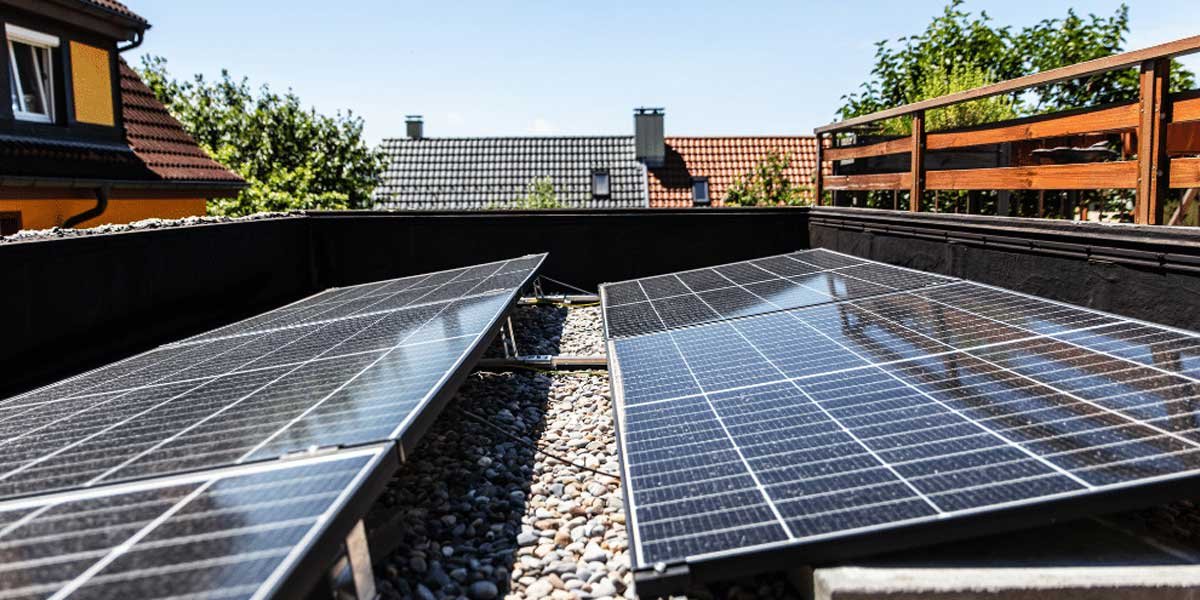
On a pitched roof, you are stuck with whatever angle the house was built with. On a flat roof, you have the unique luxury of choosing the exact tilt angle for your solar panels. In North America, the optimal angle for capturing maximum sunlight throughout the year is typically around 30 degrees. However, setting your panels at a steep 30-degree angle on a flat roof is often a terrible idea.
When panels are tilted steeply, they act like giant sails. The higher the angle, the more wind they catch. To prevent a 30-degree array from being ripped off your roof during a storm, installers must add a massive amount of concrete ballast to weigh it down. This extreme weight brings us right back to the structural dangers mentioned in the previous section.
To solve this physics problem, the solar industry has found a “golden compromise.” Most flat roof solar systems are installed at a much shallower angle, typically between 10 and 15 degrees. While this slight reduction in tilt may cost you a tiny fraction of total energy production (usually less than 5%), it dramatically reduces the wind profile of the array. Less wind resistance means fewer concrete blocks are required, which significantly reduces the structural strain on your home.
Why You Should Never Install Panels Completely Flat
If lowering the angle reduces wind resistance and weight, you might logically wonder: why not just lay the panels completely flat at 0 degrees? While it might seem like an elegant solution to the wind problem, installing solar panels perfectly flat is a recipe for long-term maintenance nightmares.
Solar panels rely on rain to naturally wash away dust, bird droppings, and pollen. When panels are tilted at least 10 degrees, gravity does the work for you. When panels are laid completely flat, water has nowhere to go. After a rainstorm, the water will pool in the center of the glass, creating muddy puddles. When the water evaporates, it leaves behind a thick layer of baked-on grime that severely blocks sunlight and plummets your energy production. Real-world users frequently highlight this exact frustration:
“You’re going to need to clean them frequently. Perfectly flat means rain won’t shed the pollen and dirt and it will just accumulate year after year.”
— u/habbadee, r/solar
Furthermore, perfectly flat installations trap heat against the roof surface, reducing the cooling airflow underneath the panels. Since solar panels lose efficiency as they get hotter, this lack of ventilation will further degrade your system’s performance. Always insist on a minimum 10-degree tilt.
Navigating Roof Obstructions: Skylights, HVAC, and Vents
Unlike sprawling suburban pitched roofs, urban flat roofs are often crowded utility spaces. They frequently house bulky HVAC units, plumbing vents, skylights, and roof access hatches. Navigating this obstacle course requires creative solar design.
Standard ballasted systems require large, contiguous open spaces to distribute weight effectively. If your roof is cluttered, installers may need to use a split-array design, breaking the system into smaller clusters to dodge obstructions. In densely packed urban environments like New York City, some innovative installers have pioneered the use of “Solar Canopies.” These systems use tall, structural steel legs to elevate the entire solar array nine or ten feet above the roof surface. This brilliant workaround not only clears all HVAC equipment and fire paths but also creates a shaded, usable rooftop deck underneath the panels for the homeowner to enjoy.
Flat Roof Materials and Solar Compatibility
Not all flat roofs are created equal. The material covering your roof plays a massive role in determining which mounting system is appropriate and how much the installation will cost. Before calling an installer, you should know what type of membrane you are standing on.
| Roof Material Type | Characteristics | Best Solar Mounting Method |
|---|---|---|
| EPDM (Rubber) | Dark, flexible rubber membrane. Very common in residential flat roofs. Prone to puncture if walked on carelessly. | Ballasted systems are preferred to avoid puncturing the rubber. Protective slip sheets must be placed under concrete blocks. |
| TPO / PVC | White, heat-welded plastic membranes. Highly reflective and durable. | Excellent for both ballasted and mechanically attached systems. The white surface is perfect for “bifacial” solar panels that absorb reflected light from below. |
| Modified Bitumen | Thick, asphalt-based material rolled onto the roof. Often has a gravel-like surface. | Mechanically attached systems work well here, as the thick asphalt can be easily sealed with compatible tar and flashing. |
Beyond the immediate structural requirements for mounting hardware, a comprehensive evaluation of the underlying surface is necessary to ensure long-term durability. Different materials respond uniquely to the added weight and environmental exposure that comes with a solar installation. For instance, asphalt shingles may require specific flashing techniques, while metal systems might utilize specialized clamps to maintain their waterproof seal. Identifying high-quality roofing solutions for homeowners before beginning the project can help prevent future leaks and preserve the existing roof warranty. Taking the time to coordinate with a professional who understands these material-specific needs ensures the installation supports both energy production and property protection.
Will Solar Panels Void My Flat Roof Warranty?
This is the most critical administrative step in your solar journey. Commercial and residential flat roofs often come with strict 15 to 20-year warranties from the manufacturer (like Carlisle or Firestone). If a solar installer drills a hole through that membrane—or even places heavy concrete blocks on it without authorization—the manufacturer will immediately void your warranty, leaving you financially responsible for any future leaks.
To protect yourself, you must coordinate between your solar installer and the original roofing contractor who laid the membrane. The best practice is to have the solar company design the system, but hire the original roofing company to physically execute the penetrations and apply the flashing. This ensures that the people who hold your warranty are the ones sealing the roof, keeping your coverage intact.
Frequently Asked Questions (FAQ)
Are flat roof solar panels more expensive to install?
Generally, yes. While the solar panels and inverters cost the same, the specialized racking equipment (like heavy ballast trays or custom canopies) and the required structural engineering reviews usually add a slight premium to the overall installation cost compared to a standard pitched roof.
Do I need to clean flat roof solar panels more often?
Yes, compared to steeply pitched roofs. Because flat roof panels are installed at a shallower angle (typically 10-15 degrees), they do not shed dust, pollen, and snow as aggressively as panels tilted at 30 or 40 degrees. You may need to hose them off once or twice a year during dry seasons to maintain peak efficiency.
Can my flat roof handle the weight of solar panels?
It depends entirely on your home’s structural framing. While the panels themselves are relatively light, the concrete ballast blocks required to hold them down in the wind add significant dead load. A licensed structural engineer must evaluate your specific roof joists to confirm they can support the combined weight of the system and potential winter snow accumulation.
What is a solar canopy for a flat roof?
A solar canopy is an elevated mounting structure that raises the solar panels several feet above the flat roof surface using steel legs. This is highly popular in dense urban areas because it allows the solar array to clear rooftop obstructions like air conditioning units and skylights, while preserving the roof space below as a usable outdoor deck or patio.