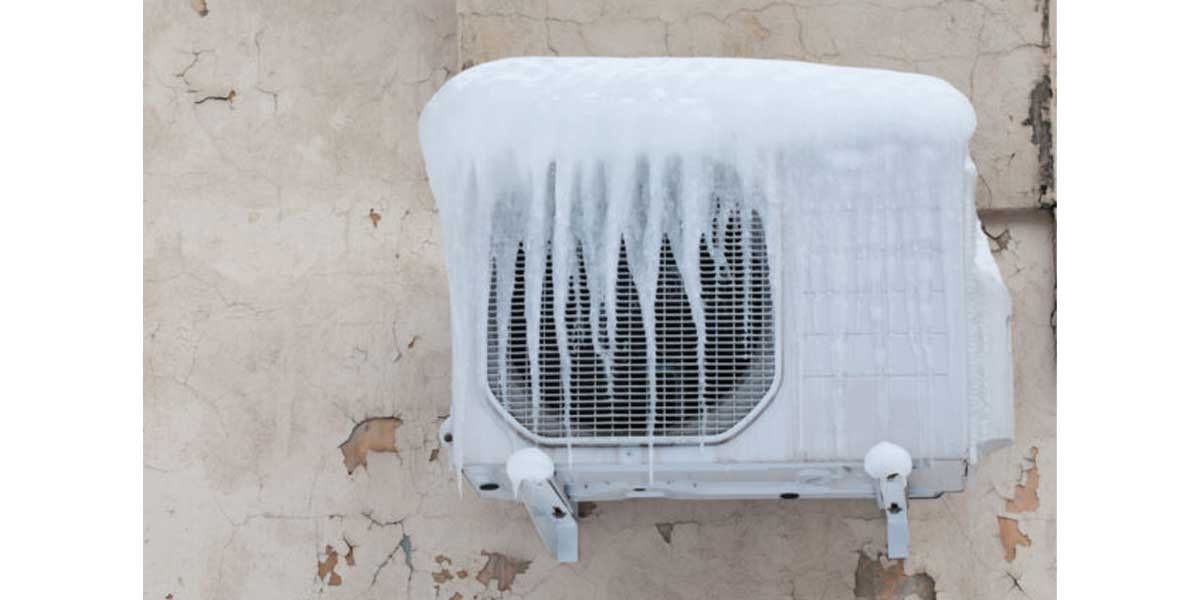
Quick Answer
An AC unit freezes up when the evaporator coil drops below 32°F, caused by either restricted airflow (dirty filter, blocked vents, or a high-MERV filter) or low refrigerant from a leak. The immediate fix: turn the AC off and switch the fan to ON to thaw the coil, advises Carson Property Management. Do not run a frozen AC unit. It can destroy the compressor, a $1,500–$3,000 repair. Once thawed, replace the filter and run the 1-hour test described below to find out whether you need a pro.
There is something deeply confusing about an air conditioner freezing up in the middle of summer. The machine is supposed to cool your home, not turn itself into a block of ice. But when your AC unit freezes up, it is not a sign that it is working too well. It is a sign that something has gone wrong with the basic physics of how refrigerant absorbs heat.
This guide explains exactly why your AC unit keeps freezing up, how to safely thaw it without causing further damage, and, most importantly, the one test that tells you whether this is a $15 filter replacement or a $400 refrigerant recharge call.
STOP: Turn Off Your AC Unit Right Now
Before anything else: if your AC unit is currently frozen, turn it off immediately. Do not just turn the thermostat up a few degrees and hope the ice melts on its own while the system keeps running. Running a frozen AC unit forces the compressor, the most expensive component in your system, to work against a blocked coil. Compressor failure costs between $1,500 and $3,000 to repair, and in older systems, it often means replacing the entire unit.
When a cooling system malfunctions, the resulting ice buildup on the evaporator coil can lead to significant mechanical strain. Beyond the immediate loss of indoor comfort, persistent freezing often signals deeper issues with airflow or pressure regulation that require careful technical diagnosis. Homeowners transitioning to more modern systems may find that a new heat pump installation offers a more reliable and efficient way to manage home temperatures throughout the year. Taking these preventative steps helps avoid the cycle of temporary fixes and recurring frost, ensuring that the HVAC components remain in good working order even during the most demanding seasons of high humidity and extreme heat.
Here is the correct shutdown procedure:
Step 1. Go to your thermostat and switch the mode from COOL to OFF, not just raising the temperature, but fully switching off the cooling function.
Step 2. Switch the fan setting from AUTO to ON. This keeps the blower running without the compressor, which circulates warm air over the frozen coil and speeds up thawing significantly.
Step 3. Leave it running on fan-only for 2 to 8 hours, depending on how much ice has built up. A light frost may thaw in 2 hours; a coil encased in a solid block of ice can take all day.
Step 4. Check the drain pan under your air handler. As the ice melts, it will produce significant water. If the pan is overflowing, use towels or a wet-dry vacuum to remove the water before it damages your ceiling or floor.
Do not chip away at the ice. Using a screwdriver, ice pick, or any sharp object to break the ice off the evaporator coil will puncture the refrigerant lines. A refrigerant leak turns a $15 filter problem into a $400–$1,500 repair. Let it thaw on its own.
Why Your AC Unit Freezes Up: The Physics in Plain English
Your AC works by circulating refrigerant through two coils. The indoor evaporator coil absorbs heat from your home’s air. The outdoor condenser coil releases that heat outside. For the evaporator coil to absorb heat properly, warm air from your home must constantly flow over it. The coil surface temperature needs to stay above 32°F, just barely above freezing.
When that airflow is interrupted, or when the refrigerant pressure drops too low, the coil gets colder and colder. Humidity in the air condenses on the coil surface and freezes. Ice builds up, further blocking airflow, which makes the coil even colder, which creates more ice. It is a self-reinforcing cycle that will not stop until you turn the system off.
There are exactly two root causes that trigger this cycle. Everything else (dirty coils, blocked vents, thermostat problems) is a variation of one of these two:
- Not enough warm air flowing over the coil (airflow problem, usually DIY-fixable)
- Not enough refrigerant to maintain proper pressure (refrigerant problem, which always requires a pro)
Cause #1: Restricted Airflow (The DIY-Fixable One)
Restricted airflow is responsible for the majority of AC freezing problems. The good news is that most airflow problems are things you can fix yourself in under 30 minutes.
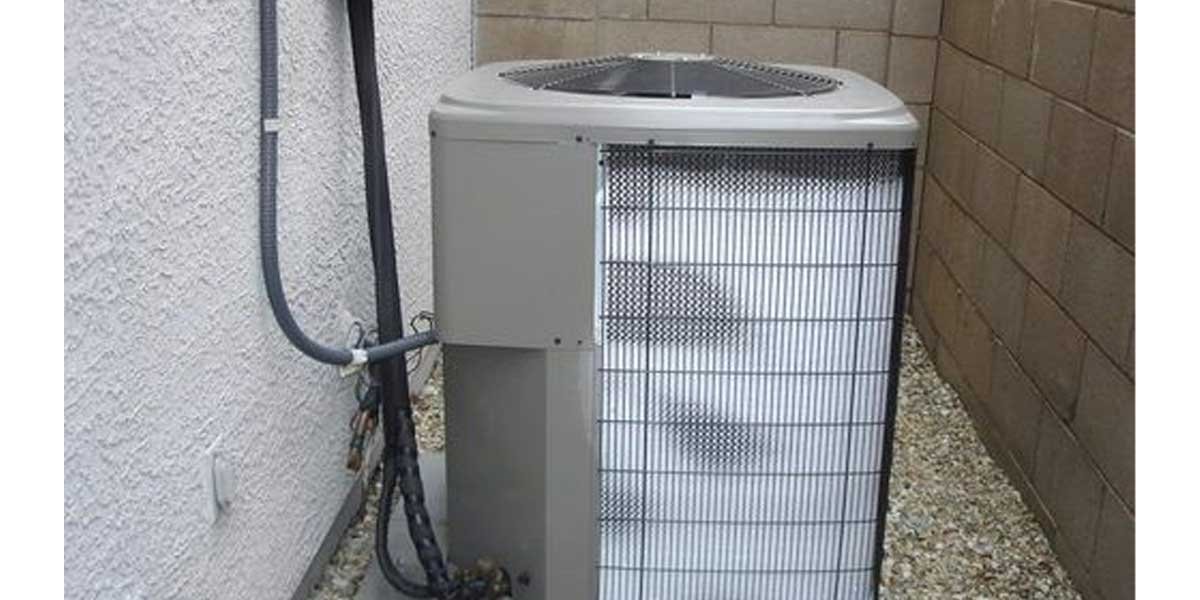
Dirty Air Filter
A clogged air filter is the single most common reason an AC unit freezes up. When the filter is packed with dust and debris, the blower cannot pull enough warm air through the system. The evaporator coil runs out of heat to absorb, drops below 32°F, and starts icing over.
Check your filter right now. Pull it out and hold it up to a light source. If you cannot see light through it, it needs to be replaced. A standard 1-inch filter should be replaced every 30–90 days. If you have pets, allergies, or live in a dusty area, check it monthly.
High-MERV Filters: The Hidden Cause Nobody Talks About
Here is something that surprises most homeowners: a clean filter can still cause your AC unit to freeze up if it has too high a MERV rating.
MERV ratings measure how fine a filter’s mesh is. A MERV 13 filter catches particles as small as 0.3 microns. This is great for air quality, but the dense mesh also restricts airflow significantly. Most residential HVAC systems were designed for MERV 8–11 filters. On a hot summer day when your AC is running at full capacity, a MERV 13 or higher filter can choke the airflow enough to cause freezing.
“I had a similar issue where my filter was clean, but it was too high a MERV rating and wasn’t letting enough air flow through.”
— r/hvacadvice (r/hvacadvice/comments/1mgis12)
If your filter is clean but your AC unit keeps freezing up, check the MERV rating. For most homes, switching from a MERV 13 to a MERV 8 or MERV 11 filter during summer months will solve the problem entirely.
Blocked Return Vents
Walk through your home and check every return vent, the large grilles that pull air back into the system. If a couch, bookcase, or rug is covering even one large return vent, it can reduce airflow enough to cause freezing. This is one of the most overlooked causes because it is completely invisible from the outside of the unit.
Dirty Evaporator Coil
Over time, dust and debris build up directly on the evaporator coil, even with regular filter changes. A dirty coil acts as an insulating layer that prevents warm air from reaching the refrigerant inside. If your AC unit freezes up regularly despite having a clean filter, a dirty coil is the likely culprit. This requires a professional cleaning. Do not attempt to clean the coil yourself with household cleaners, as the wrong product will corrode the aluminum fins.
Cause #2: Low Refrigerant (The Call-a-Pro One)
Refrigerant does not get used up like gasoline. Your AC system is a sealed loop. The same refrigerant circulates indefinitely. If your system is low on refrigerant, it means there is a leak somewhere in the system. Simply “topping off” the refrigerant without finding and fixing the leak is a temporary fix that will fail within months.
When refrigerant levels drop, the pressure inside the evaporator coil falls too low. Low pressure means low temperature, and the refrigerant expands too aggressively, the coil drops well below 32°F, and ice forms rapidly.
Signs that point to a refrigerant leak rather than an airflow problem:
- You can hear a faint hissing or bubbling sound near the indoor unit or the copper refrigerant lines
- You see an oily residue on the copper lines or around the indoor coil
- The AC unit freezes up again within an hour of thawing, even with a brand-new filter
- Your energy bills have been rising steadily without any change in usage
Refrigerant handling requires an EPA 608 certification. This is not a DIY repair. A licensed HVAC technician must locate the leak, repair it, and then recharge the system to the correct pressure.
Cause #3: The Sneaky One — Your Thermostat Schedule
If your AC unit freezes up at night but seems fine during the day, the thermostat is likely the culprit. This is a cause that almost no one writes about.
Air conditioners are designed to operate when outdoor temperatures are above approximately 60°F. On cool summer nights when temperatures drop into the low 60s or upper 50s, the refrigerant pressure naturally drops. If your thermostat is still calling for cooling at 2 a.m. when it is 58°F outside, the system will freeze up almost every time.
The fix is straightforward: set a minimum temperature on your thermostat (most programmable and smart thermostats allow this), or simply set the system to turn off automatically after 10 p.m. on nights when you expect temperatures to drop. If you have a smart thermostat, you can create a schedule that automatically switches to fan-only mode overnight.
The 1-Hour Test: Is This a DIY Fix or a Pro Job?
Once your AC unit has fully thawed. You will know it is thawed when there is no more ice visible on the copper lines or the coil, and the drain pan has stopped dripping. Run this test before calling anyone:
Step 1. Replace the air filter with a brand-new one. Even if the old filter looks okay, replace it. A filter that looks 70% clean can still restrict airflow enough to cause freezing.
Step 2. Check every supply and return vent in the house. Make sure none are blocked by furniture, rugs, or closed dampers.
Step 3. Turn the AC back on and set it to cool. Run it for exactly one hour.
Step 4. After one hour, check the copper refrigerant lines coming out of the indoor unit. If they are cold to the touch but not frosted, the system is working correctly and the airflow fix worked. If ice is already forming again, you have a refrigerant problem and need to call a pro.
“Check your filter and if that’s clean, you’re probably low on refrigerant.”
— r/hvacadvice (r/hvacadvice/comments/1db6up4)
This test works because it eliminates the most common cause (dirty filter) and gives the system a clean run. If the problem returns within an hour, you have ruled out airflow and confirmed a refrigerant issue.
How to Safely Thaw a Frozen AC Unit (Complete Protocol)
If you want to speed up the thawing process beyond the fan-only method, here is the complete protocol:
- Switch to fan-only mode at the thermostat. This is the most effective method and requires no tools.
- Open interior doors throughout the house to improve air circulation around the air handler.
- Use a hair dryer on the lowest heat setting, held at least 6 inches from the coil surface. Move it constantly. Do not hold it in one spot. This can cut thawing time from 4 hours to 90 minutes.
- Place towels around the base of the air handler to catch meltwater before it reaches the drain pan.
- Check the condensate drain line while you wait. A clogged drain line will cause the meltwater to back up and overflow. The drain line is the white PVC pipe that exits the air handler. Pour a cup of water into the drain pan to confirm it drains freely.
AC Freezing Up Repair Costs
| Repair Type | DIY Cost | Pro Cost | DIY Possible? |
|---|---|---|---|
| Replace air filter | $10–$30 | $50–$100 | Yes |
| Clear blocked vents | $0 | N/A | Yes |
| Refrigerant recharge (no leak) | Not legal without EPA cert. | $150–$400 | No |
| Find and repair refrigerant leak | Not possible | $200–$1,500 | No |
| Professional coil cleaning | $30–$80 (DIY kit) | $100–$400 | With caution |
| Evaporator coil replacement | Not recommended | $600–$2,000 | No |
| Compressor replacement (if damaged) | Not possible | $1,500–$3,000 | No |
DIY vs. Call a Pro: The Clear Boundary
You can handle it yourself if:
- The fix is replacing the air filter
- The fix is unblocking return or supply vents
- The fix is switching to a lower-MERV filter
- The fix is adjusting the thermostat schedule
- The fix is clearing the condensate drain line
Call a licensed HVAC technician if:
- The AC unit freezes up again within 1 hour of a fresh filter installation
- You hear hissing or bubbling near the refrigerant lines
- You see oily residue on the copper lines
- The system has been recharged before (which means there is a known leak)
- The evaporator coil is visibly dirty and needs professional cleaning
“Things a homeowner can do: change filter and unclog drain line. Anything else, call a Pro.”
— r/hvacadvice (r/hvacadvice/comments/1mgis12)
How to Prevent Your AC Unit from Freezing Up Again
Most AC freezing problems are preventable with a simple maintenance routine:
- Replace the air filter every 30–60 days during summer when the system runs continuously. Do not wait for the filter to look dirty.
- Use a MERV 8–11 filter in summer rather than a high-MERV filter. You can switch to a higher-MERV filter in spring and fall when the system runs less.
- Schedule an annual AC tune-up in April or May, before the cooling season begins. A technician will check refrigerant pressure, clean the coil, and verify airflow, catching small problems before they cause a freeze-up.
- Set a nighttime temperature limit on your thermostat. If summer nights in your area regularly drop below 65°F, program the system to switch to fan-only after midnight.
- Keep all supply and return vents open, even in unused rooms. Closing vents does not save energy. It increases static pressure in the duct system and reduces airflow across the coil.
Frequently Asked Questions
Why does my AC unit keep freezing up even after I replaced the filter?
If your AC unit freezes up again within an hour of installing a fresh filter, the problem is almost certainly low refrigerant from a leak. A clean filter eliminates the most common airflow cause. If the system still freezes, you have confirmed a refrigerant issue that requires a licensed HVAC technician to diagnose and repair.
How long does it take for a frozen AC unit to thaw?
A lightly frosted coil will thaw in 2–3 hours using the fan-only method. A heavily iced unit can take 6–8 hours or longer. Using a hair dryer on the lowest heat setting, held 6 inches from the coil and kept moving, can cut thawing time roughly in half. Do not try to speed up the process by chipping at the ice.
Can I run my AC with a frozen coil?
No. Running the AC with a frozen evaporator coil forces the compressor to work against a blocked system. This can cause the compressor to overheat and fail, a repair that costs $1,500 to $3,000, and in older systems often means replacing the entire unit. Turn the system off and let it thaw completely before restarting.
Why does my AC unit freeze up only at night?
If the freezing happens at night but the system seems fine during the day, the most likely cause is that outdoor temperatures are dropping below 60°F overnight. Air conditioners are not designed to operate efficiently in cool temperatures. The refrigerant pressure drops too low, and the coil freezes. Set your thermostat to switch to fan-only mode after midnight, or set a minimum temperature limit to prevent the system from running when it is too cold outside.
Is a frozen AC unit dangerous?
A frozen AC unit is not immediately dangerous in the sense of a fire or electrical hazard, but it will cause expensive damage if left running. The primary risk is compressor failure from the increased strain of working against a blocked coil. There is also a risk of water damage if the drain pan overflows as the ice melts. Turn the system off, let it thaw, and address the underlying cause before restarting.