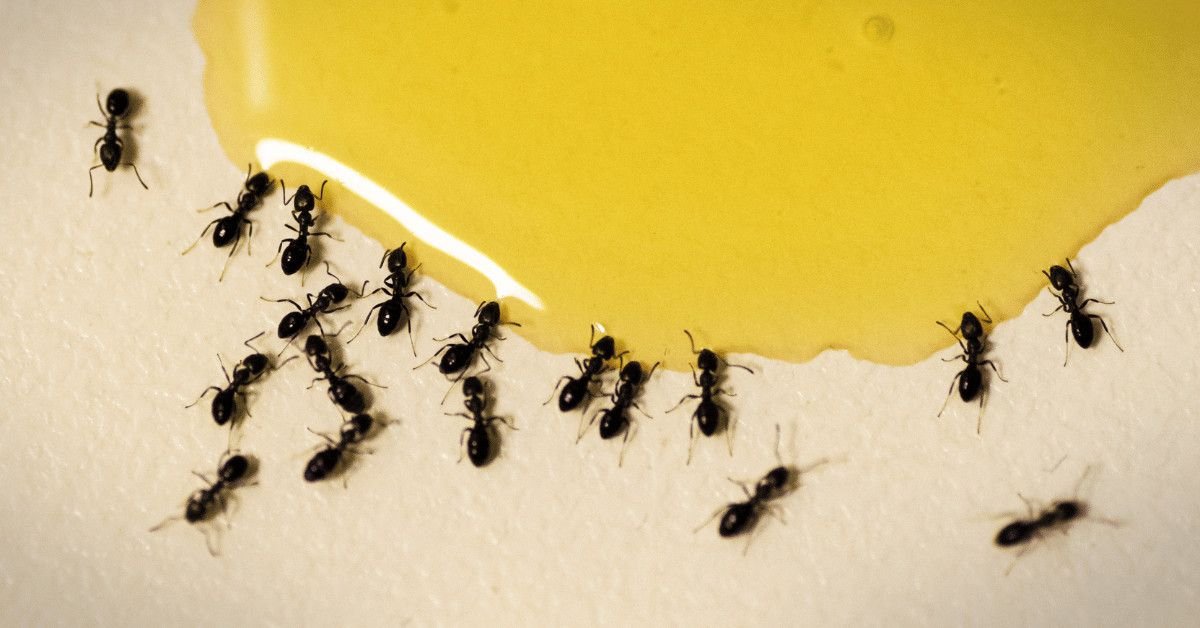
You walked into the kitchen at 6 a.m., still half-asleep, and found a line of ants marching from the windowsill to the sugar bowl. Hundreds of them, single file, as if they had drawn a map on your countertop overnight, says Fall River Property Management, a trusted New Bedford property management.
You wiped them up with a paper towel and sprayed the windowsill with cleaner. By noon they were back, following the same path.
Why Killing the Ants You See Never Solves the Problem
The ants on your counter are foragers. They represent roughly 5 to 10 percent of the colony.
The queen and the rest of the workers are somewhere outside your house, under a concrete slab, inside a wall void, or in the soil next to your foundation.
When a forager finds food, it leaves a pheromone trail on the way back to the nest. That trail is a chemical GPS that other ants follow with millimeter precision. Wiping the counter kills the ants on the surface but leaves the pheromone trail intact. New ants follow it within hours.
Spraying the line of ants with household cleaner is the most common mistake and the most counterproductive. It scatters the foragers instead of killing them, which causes them to lay multiple new pheromone trails in different directions. A single ant trail becomes five trails, and now you have ants appearing in three rooms instead of one.
The only approach that ends the problem is getting poison back to the nest. You need the foragers to carry bait home, feed it to the queen and larvae, and collapse the colony from the inside. A dead forager on your counter solves nothing. A forager that carries borax-laced sugar water back to the queen solves everything.
Identify What Kind of Ant You Are Dealing With
Not all kitchen ants eat the same bait. The most common kitchen invader in the U.S. is the odorous house ant, a small dark brown ant that smells like rotten coconut when crushed. These ants prefer sugar and will swarm a drop of honey within minutes.
If you put out a sugar bait and the ants ignore it, you are likely dealing with a protein or grease-feeding species. Pavement ants, pharaoh ants, and larger carpenter ants often switch between sugar and protein depending on the colony’s current needs.
A colony feeding larvae needs protein. The same colony two weeks later, after the larvae have pupated, may switch back to sugar.
Run a two-minute test before committing to a bait strategy. Place a drop of honey on a small piece of wax paper near the ant trail and a small crumb of peanut butter or lunch meat an inch away.
Watch which one attracts ants within five minutes. If they swarm the honey, use a sugar-based bait. If they go for the peanut butter, use a protein-based bait. If they visit both, use both.
I once spent four days refilling a sugar bait station while the ants walked past it toward a grease spot behind the stove. The bait was fine. The ants wanted protein. The test takes two minutes and saves a week of frustration.
The Bait Strategy That Actually Kills the Colony
Liquid bait stations are more effective than solid bait granules for kitchen ants. Ants feed by drinking liquids and carrying them back to the colony in their social stomach. A liquid bait reaches more ants inside the nest than a granule one forager carries externally.
| Product | Active Ingredient | Best For | How Long |
| Terro Liquid Ant Bait | Borax (5.4% sodium tetraborate) | Sugar-feeding ants (odorous house ants) | 24-48 hours to see colony collapse |
| Advion Ant Gel | Indoxacarb (0.05%) | All species, including protein-feeding ants | 24-72 hours. Works across more species than borax-based baits. |
| DIY borax + sugar water | Borax (1-2% concentration) | Sugar-feeding ants, budget option | Mix 1/2 tsp borax with 1/2 cup sugar and 1.5 cups warm water. Too much borax kills foragers before they reach the nest. |
Place bait stations directly in the path of the ant trail. Do not clean the trail before placing bait. You want the ants to find the bait immediately by following their existing pheromone highway to it.
Expect the ant activity to increase for 12 to 24 hours after placing bait. This is a good sign. The bait is attracting more foragers from the colony, and each one is carrying poison home. Do not kill the increased number of ants you see during this window. They are doing exactly what you need them to do.
Replace the bait every two to three days if it dries out or gets consumed. Continue baiting until you see zero ant activity for 48 consecutive hours. A colony can survive a single bait cycle and rebound. Two full cycles with no activity is the reliable endpoint.
Find and Seal the Entry Point
Follow the ant trail backward to its source. This is tedious but essential. The ants are entering through a gap you have not noticed: a crack in the caulk where the countertop meets the backsplash, a gap around a window frame that shifted with the seasons, or an unsealed penetration where a plumbing pipe passes through the wall.
The entry point is often smaller than you expect. Odorous house ants can fit through a crack the thickness of a business card. Look for the gap where the trail disappears into the wall, the floor, or the window frame. Mark it with a piece of tape so you can find it again after baiting.
Do not seal the entry point before the bait has killed the colony. If you seal the hole while the colony is still alive, the ants will find another exit, often in a different room. Kill the colony first with bait, wait for 48 hours of zero activity, and then seal the entry point with silicone caulk.
Outdoor entry prevention matters long-term. Trim vegetation that touches the house. Ants use plant stems as bridges from soil to siding. Keep mulch at least six inches away from the foundation. Firewood stacked against the house is an ant condominium. Move it at least twenty feet from exterior walls.
Clean the Pheromone Trails After Baiting
Once the colony is dead and the entry point is sealed, clean every surface the ants walked on. A standard household cleaner removes visible dirt but does not break down ant pheromones. Ants can detect pheromone trails at concentrations of less than one part per million, and those trails can persist for weeks.
Use a 50/50 solution of white vinegar and water in a spray bottle. Vinegar contains acetic acid, which denatures the proteins in ant trail pheromones. Spray every inch of the counter, windowsill, baseboard, and floor along the trail path. Wipe dry after five minutes.
If the trail runs inside a cabinet or pantry, empty it completely and wash every shelf and wall surface with the vinegar solution. One missed pheromone residue behind a spice jar is enough for a scout from a different colony to rediscover the trail next month and start the whole process over.
When Ants Come Back: What Went Wrong
You baited for a week, sealed the gap, and cleaned the trails. Four weeks later, ants are back in the same spot.
Check three things. First: did you seal the right hole, or did you seal the one you could see while the real entry point is behind the dishwasher?
Second: did the bait kill the queen, or did the colony split? When a colony senses poison, some species split into multiple smaller colonies with new queens, a process called budding. This is more common with pharaoh ants than odorous house ants.
Third: did a new colony move into the old nest site? An abandoned ant nest in a wall void is prime real estate. The old pheromones signal “good location” to scout ants from neighboring colonies.
If you treated the colony but did not fill the wall void, a new colony may move in within weeks. After baiting eliminates a colony inside a wall, drill a small hole and inject diatomaceous earth or boric acid powder into the void before sealing it.
If you see ants appearing from multiple locations in different rooms simultaneously, particularly in winter, you may have a colony nesting inside the walls rather than outside. This is a more serious situation. A professional can inject insecticidal dust into wall voids through small drill holes, which reaches nest sites that consumer baits cannot.
Frequently Asked Questions
How do I permanently get rid of ants in my kitchen?
Eliminate the colony with bait, seal the entry point, and clean the pheromone trails with vinegar. The bait kills the nest. Sealing prevents new colonies from entering. Vinegar erases the chemical map that scouts use to rediscover the route. All three steps together produce permanent results. Skip any one and the ants return, sometimes within days, sometimes when the seasons change and a new colony sends out scouts.
Does vinegar really get rid of ants?
Vinegar does not kill ants. It destroys their pheromone trails, which prevents other ants from following the same path. Spraying vinegar on a line of ants kills some on contact and disrupts the trail, but it does nothing to the colony. Use vinegar as the final cleanup step after baiting has killed the nest, never as your primary treatment.
Why do ants keep coming back to the same spot in my kitchen?
The pheromone trail from the original infestation is still there. Ant pheromones are durable. They survive light cleaning and can persist for weeks on a surface that looks clean to you. Until the trail is chemically broken down with vinegar or an enzyme cleaner, scout ants from other colonies will keep rediscovering the path and following it to the same entry point. The ants you see today may be from a completely different colony than the ones you saw last month. They are following the same map.
Is borax ant bait safe to use in a kitchen with pets?
Borax is low-toxicity to mammals in the concentrations used for ant bait, but it is not harmless. A dog or cat that consumes a full bait station of liquid Terro could experience vomiting or diarrhea. Place bait stations inside cabinets, behind appliances, or under the sink where pets cannot reach them. If you make DIY borax bait, use a covered container with small entry holes that allow ants in but keep curious noses out. Wash your hands after handling borax and wipe any drips from countertops immediately.
What is the difference between ant spray and ant bait?
Ant spray kills the ants you can see on contact and leaves a residual barrier that kills ants that walk over it for a few days. It does not reach the colony. Ant bait is designed to be slow-acting. Foragers carry it back to the nest and share it with the queen and larvae before they die. A spray solves the symptom for a few hours. A bait solves the source permanently. Use spray only for immediate knockdown of a swarm, then switch to bait the same day.
The Short Version
The ants on your counter are not the problem. They are messengers from a colony you have not found. Killing the messengers changes nothing. Giving them poisoned food to carry home changes everything.
Put the bait where the ants already walk. Let them carry it back for two days without interfering. When the trail goes cold for 48 hours, seal the hole and wipe every surface with vinegar. The kitchen was never the destination. It was a stop on a route you just erased.