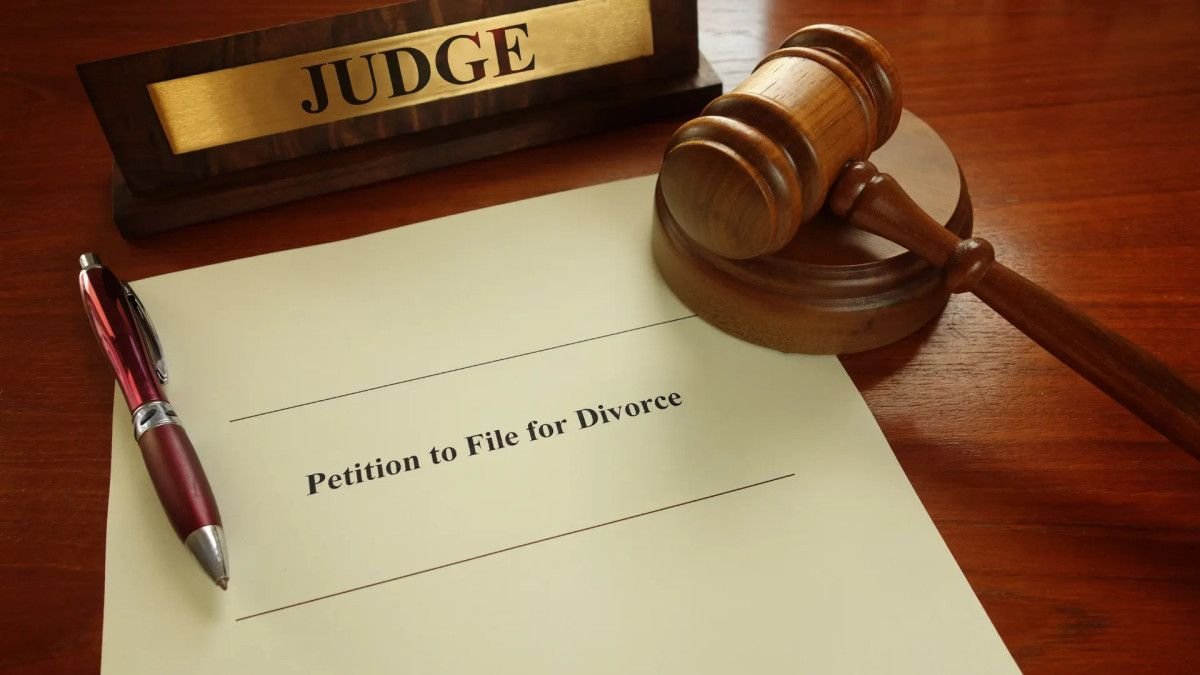
To file for divorce in Texas, you must meet the residency requirement — at least one spouse must have lived in Texas for at least 6 months and in the county where the divorce is filed for at least 90 days — and file an Original Petition for Divorce with the District Clerk in the county where either spouse resides. Texas is both a no-fault and a fault divorce state. The no-fault ground — “insupportability,” meaning the marriage has become insupportable because of discord or conflict — is the ground used in the vast majority of cases. Texas imposes a 60-day waiting period from the date of filing, one of the longer waiting periods in the country, and the divorce cannot be finalized before the 61st day after filing.
Texas is a community property state — one of nine in the United States. All property acquired during the marriage, with the exception of property received by gift or inheritance, is presumed to be community property and is subject to division by the court in a “just and right” manner. All property owned before the marriage, or received during the marriage by gift or inheritance, is separate property. The distinction between community and separate property is the single most important concept in Texas divorce law, and it drives the property division in every case. Texas does not have alimony in the traditional sense. It has “spousal maintenance” — a much more limited remedy available only in narrow circumstances: the marriage lasted 10 years or longer and the spouse seeking maintenance cannot earn enough to meet minimum reasonable needs, the paying spouse was convicted of family violence, or the spouse seeking maintenance has a disability or cares for a disabled child.
Texas is the only state where a jury can decide custody and property division in a divorce. Either party may demand a jury trial in a Texas divorce. The jury determines the characterization and value of disputed property and the custody and visitation arrangement. The judge determines the division of the community estate and the amount of child support and spousal maintenance. A jury trial adds unpredictability, cost, and time to the divorce. It is the single most powerful strategic lever in a Texas divorce — the threat of a jury is often used to force settlement — and it is one of the most unique features of Texas family law.
Step 1: Confirm You Meet the Residency Requirements
Texas Family Code § 6.301 requires that at least one spouse has been a domiciliary of Texas for at least 6 months and a resident of the county where the divorce is filed for at least 90 days. Both requirements must be met. If neither spouse meets the county requirement, the divorce cannot be filed in that county. If neither spouse meets the state requirement, the divorce cannot be filed in Texas at all. The 6-month and 90-day clocks must be complete on the date of filing. A spouse who has lived in Texas for 5 months and 29 days must wait 2 more days to file.
Step 2: Determine Your Grounds for Divorce
| Ground | Type | What Must Be Proved | Effect on Outcome |
| Insupportability | No-fault | Marriage is insupportable due to discord or conflict; no reasonable expectation of reconciliation | No effect on property or maintenance — standard ground |
| Adultery | Fault | Other spouse committed adultery | Court may consider fault in property division; may affect spousal maintenance |
| Living apart — at least 3 years | No-fault | Spouses have lived apart for at least 3 years without cohabitation | No effect on property or maintenance |
| Confinement to mental hospital — at least 3 years | Fault-adjacent | Other spouse confined to mental hospital for at least 3 years with little prospect of recovery | Rarely used |
Step 3: Prepare and File the Original Petition for Divorce
The divorce begins when the petitioner files an Original Petition for Divorce with the District Clerk in the appropriate county. The petition must state the grounds, identify any minor children, describe the community and separate property, and request the relief sought — dissolution, custody, child support, spousal maintenance, and division of the community estate. The filing fee varies by county, typically $300 to $350. A Statement of Inability to Afford Payment of Court Costs — Texas’s fee waiver — is available for low-income filers. The clerk assigns a case number and a court. The 60-day waiting period begins on the date of filing.
At the time of filing, the petitioner may also request a Temporary Restraining Order (TRO) — a court order that prevents either spouse from selling assets, hiding money, canceling insurance, or removing the children from the jurisdiction while the divorce is pending. A TRO is issued the same day it is requested, without a hearing, and remains in effect for 14 days, at which point a temporary orders hearing is held. The TRO is the first line of defense against a spouse who might dissipate assets or flee with the children.
Step 4: Serve the Petition on Your Spouse
The respondent must be formally served with the Original Petition and a Citation — the Texas version of a summons. Service can be accomplished by a constable, sheriff, or private process server. The respondent has 20 days plus the following Monday from the date of service to file an Answer. If the respondent does not answer, the petitioner may seek a default judgment. The respondent may also sign a Waiver of Service — a notarized document that waives formal service — which starts the 60-day clock on the date the waiver is filed, provided the petition has already been on file for 60 days.
Step 5: Wait 60 Days — and Use Them to Resolve Every Issue
| Issue | Texas Law |
| Property division | Community property — all property acquired during marriage is community (except gift/inheritance). Court divides in a “just and right” manner — not necessarily 50/50. |
| Spousal maintenance | Very limited — only for 10+ year marriage with inability to meet minimum needs, family violence conviction, or disability. Maximum amount: lesser of $5,000/month or 20% of payor’s gross income. |
| Child custody (conservatorship) | Joint managing conservatorship is presumed. Standard possession order provides non-custodial parent with 1st, 3rd, 5th weekends, Thursday evenings, and extended summer possession. |
| Child support | Percentage of net resources — 20% for 1 child, 25% for 2, scaling up. Based on obligor’s income up to a statutory cap. |
The 60-Day Waiting Period Is Absolute — No Exceptions for Agreement
Under Texas Family Code § 6.702, no divorce may be granted before the 61st day after the date the petition is filed. The waiting period cannot be waived — not by agreement of the parties, not by the judge, not for hardship, not for anything. The only statutory exception is if the petitioner has an active protective order against the respondent for family violence. In that case, the 60-day waiting period does not apply. For every other divorce, the 60 days are mandatory. A couple who agree on every issue and sign every document on the day the petition is filed must still wait 61 days to finalize the divorce.
Step 6: Finalize the Divorce
After the 60-day waiting period has expired and all issues are resolved — by a signed Final Decree of Divorce — the court schedules a prove-up hearing. In an uncontested divorce, the prove-up hearing is typically 10 to 15 minutes. The petitioner testifies that the marriage is insupportable, the Final Decree is fair, and the court should grant the divorce. The respondent may appear by signing a Waiver of Service and a Respondent’s Waiver of Appearance, which allows the prove-up hearing to proceed without the respondent present. The judge signs the Final Decree. The divorce is final on the date the decree is signed.
FAQ: Common Questions About Filing for Divorce in Texas
Can I file for divorce in Texas without a lawyer?
Yes — self-representation is permitted, and Texas courts provide standard divorce forms through the Texas Law Help website and county law libraries. An uncontested divorce with no children and no real property can be completed pro se. If children, real property, retirement accounts, or a business are involved, an attorney is strongly recommended — Texas community property law is complex, and the characterization of assets as community or separate property can have permanent financial consequences.
What is the difference between an agreed divorce and a default divorce in Texas?
An agreed divorce means both parties have signed every document — the Waiver of Service, the Final Decree, and all associated orders. The prove-up hearing requires only the petitioner’s testimony, and the divorce is granted. A default divorce means the respondent was served but did not file an Answer. The petitioner files a Motion for Default Judgment and presents evidence at a default hearing. The judge reviews the proposed orders and grants the divorce. A default divorce is procedurally more complex than an agreed divorce, but it proceeds without the respondent’s participation — which is the point.
File, Serve, Wait 60 Days, Prove Up, Finalize
Filing for divorce in Texas requires meeting the 6-month state and 90-day county residency requirements, filing an Original Petition for Divorce with the District Clerk, serving the other spouse, waiting through the mandatory 60-day period — which cannot be waived — resolving all issues by agreement or court order, and obtaining the final decree at a prove-up hearing. Texas community property law and its uniquely limited spousal maintenance make property division the dominant issue in most Texas divorces. The 60-day waiting period is the law. What happens during those 60 days — agreement or litigation — determines whether the divorce finalizes shortly after the 61st day or extends months or years beyond it.