Why Your 360-Degree Security Camera Still Needs a Fixed Backup
A 360-degree security camera can cover wide yards and driveways, but a rotating lens cannot watch every direction at once. When it tracks a delivery driver or passing car near the street, the front door or side gate may sit outside the frame during the seconds that matter. The sections below cover when to add fixed backup, where pan-and-tilt blind spots appear, and how the 360 camera vs fixed camera split should work across your layout.
Table of Contents
- Why a 360 Degree Security Camera Still Leaves Gaps
- Where 360 Camera Blind Spots Actually Happen
- Fixed Cameras Protect Entry Points That Need Evidence
- Hybrid Cameras Split Tracking and Fixed Backup
- Plan the Layout From Risk Points
- Conclusion
Why a 360 Degree Security Camera Still Leaves Gaps
The appeal is easy to understand. A single 360 outdoor security camera can pan across the driveway, swing toward the porch, and check the side yard without adding several devices to the roofline. From the app, it can feel like the whole property is covered.
Coverage range is not the same as constant visibility. When a lens turns left, it is no longer watching right. At any moment, the recorded view is limited to the direction the lens is facing. The wider the job assigned to one moving camera, the more carefully you need to decide which zones cannot be left unattended.
Here is how the three types compare.
| Camera type | Best role | What to watch for |
| 360 degree pan and tilt camera | Open yards, driveways, and moving subjects | Looks away from one area when tracking another |
| Fixed camera | Doors, gates, garages, and narrow paths | Needs the right angle because the view does not move |
| Hybrid multi-lens camera | Fixed evidence view plus moving context | Works best when placed around a real risk point |
Some parts of the property need a camera that follows movement. Others need a fixed view that never turns away.
Where 360 Camera Blind Spots Actually Happen
These gaps usually come from two everyday situations: the lens turns away at the wrong second, or tracking cannot keep a useful lock on the person or vehicle that matters.
Time Gaps When the Lens Turns Away
Most pan-and-tilt security camera blind spots are not caused by walls or trees. They appear because the camera is doing its job. A person crosses the driveway, the lens follows, and another area is left unwatched.
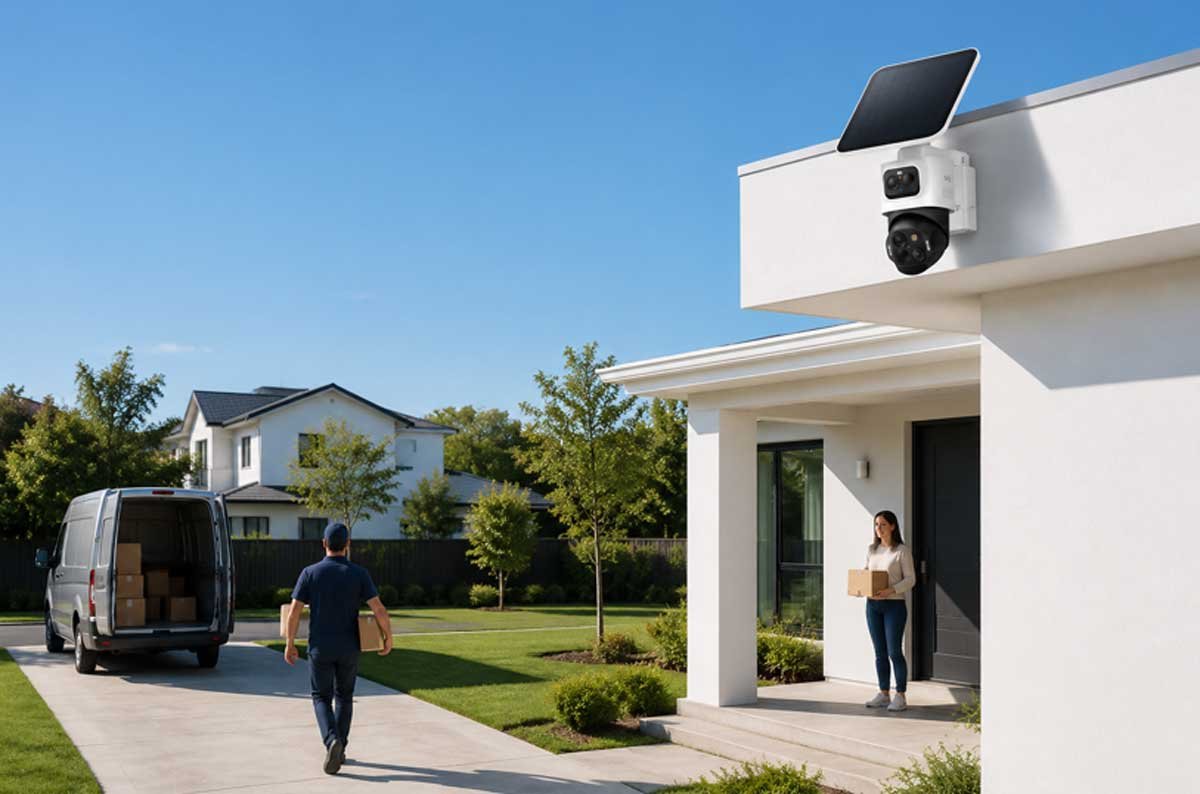
A common example is the front porch. The camera sees a delivery driver and follows the person back toward the truck. While it is turned toward the driveway, someone approaches the package from the other side. The footage may show the delivery clearly and still miss the theft. These time-based blind spots are easy to miss in live view because the camera looks active and responsive. The gap often shows up only when you review the clip and realize the lens was pointed at the wrong event.
A fixed camera does not solve every outdoor security problem, but it removes that specific risk at critical points. If the front door has a steady view, it keeps recording the porch while the rotating unit follows motion near the street. If you are still comparing basic camera styles, the broader eufy security camera range can help you sort fixed, pan-and-tilt, solar, battery, wired, and multi-lens options by job.
Tracking Misses From Fast Blocked or Subtle Movement
Auto tracking works best when the subject is clear, well-lit, and moving in a predictable path. Real homes are messier. People cut across yards, cars block part of the frame, shadows move, and porch columns interrupt the view.
Fast movement can create a short but important delay. At night, a person in dark clothing may cross a driveway before the motor finishes turning. The camera may capture the direction of travel but miss the face. If the subject keeps moving toward a side gate or parked car, that short delay can matter.
Blocked movement can break tracking when the subject passes behind a tree, fence, parked vehicle, or porch column. The camera may pause, return to a home position, or pick up the subject again after the most useful angle has already passed.
Subtle movement is easier to overlook. Someone testing a side gate, leaning into a car window, or staying close to a wall may not give the tracker the same clear target as a person walking through the center of the frame.
Use a fixed backup wherever a tracking miss would leave the clip without usable evidence. A simple test is to replay the alert as if tracking failed. If the clip started late, lost the subject, or caught only the back of someone leaving, the fixed view should still show the face, hand, door, gate, or plate clearly enough to use later
Once you know which zones need that backup, the eufy outdoor security cameras can help you compare outdoor options by mounting area, power option, resolution, and specialty features such as pan-and-tilt or multi-lens designs.
Fixed Cameras Protect Entry Points That Need Evidence
The 360 camera vs fixed camera decision becomes clearer when each camera gets a role. A rotating camera gives you context. It can show where someone came from, how long they stayed, and where they went. A fixed camera gives you evidence. It records the same high-value frame every time.
That division matters because not all footage has the same value. A wide yard view helps show where someone went. A fixed porch view may show the face, package, door handle, or license plate. If only one camera clip is useful after an incident, it is often the fixed view you wish you had.
For a front yard, a balanced layout may look like this.
- One moving camera watches the driveway, sidewalk, and street approach.
- One fixed camera stays on the front door and package area.
- A second fixed view covers a side gate if that route is hidden from the street.
That is usually two or three cameras, not one on every corner. Put the fixed ones at the door, gate, or side path where a rotating camera would look away at the wrong moment.
Hybrid Cameras Split Tracking and Fixed Backup
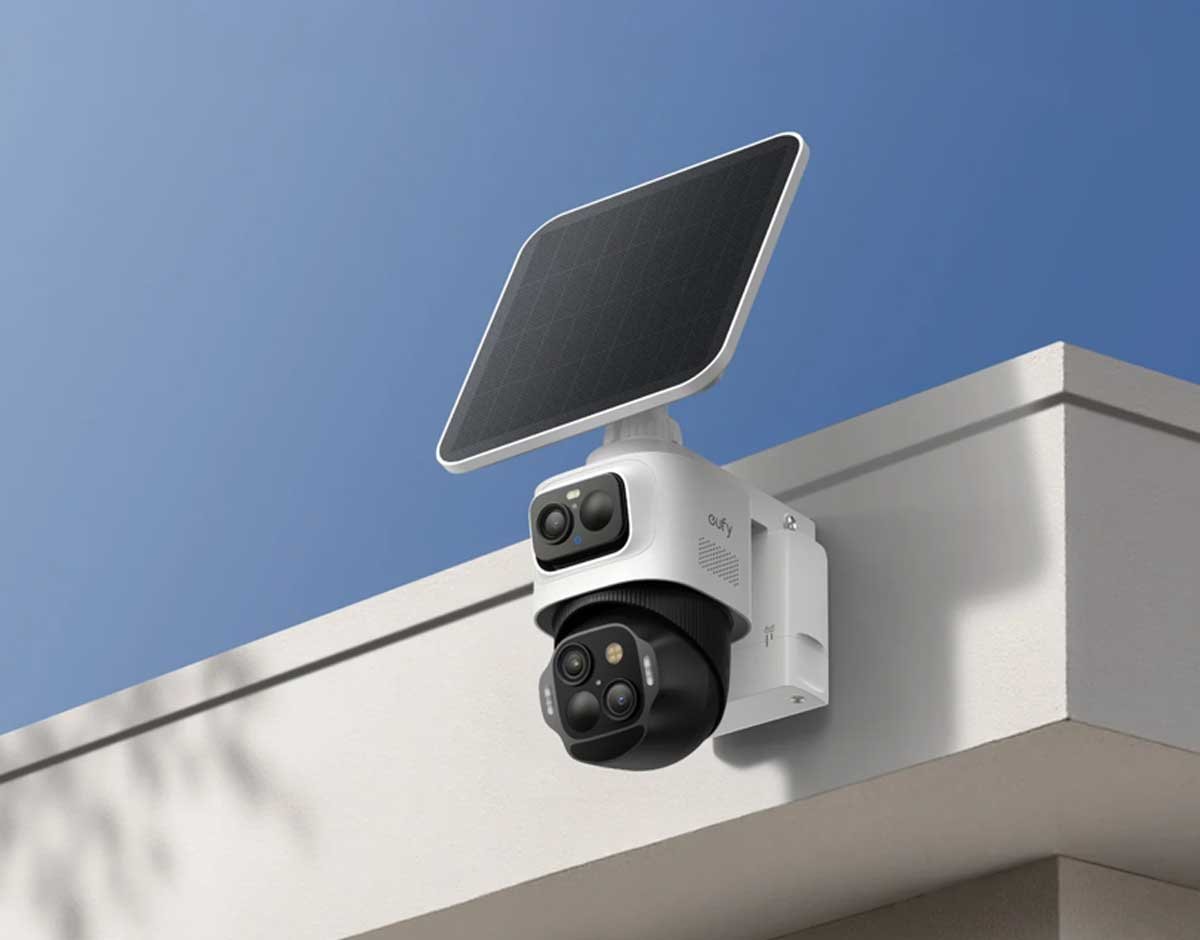
Some newer outdoor cameras combine both ideas in one housing. Instead of forcing one moving lens to handle every job, a hybrid design can keep a fixed view on the main zone while a pan and tilt lens follows movement elsewhere.
That is the idea behind eufyCam S4. It uses an upper 4K bullet lens with a 130-degree fixed wide view and a lower 2K dual-lens PTZ module with 360 coverage, 70-degree tilt, and 8x hybrid zoom. In practical terms, the fixed lens can keep watching an entrance or driveway area while the PTZ lens tracks a moving person across the yard.
If the PTZ follows someone down the driveway, the bullet lens still keeps the main approach in view. When the bullet picks up a subject, the PTZ can lock on, track, and zoom for detail up to 164 ft away. One mount covers both the wide context and the close-up without either lens doing double duty.
For homes where a single corner overlooks both the driveway and the front path, that split can be useful. The fixed view keeps the high-value zone in frame, while the PTZ view follows motion that would otherwise move out of a normal fixed camera angle.
Plan the Layout From Risk Points
Walk the property before you decide how many cameras to buy. Mark the door, gate, driveway, and any side path where a clear clip would matter if something happened. Most homes need fewer spots than people assume when they start counting devices.
Start with places people must pass
The front door, garage, driveway, side gate, and back entrance usually come first. These are not just visible areas. They are decision points where someone enters, stops, turns, reaches, or leaves.
Look for awkward angles
Then check the areas that do not show up cleanly from the street. A walkway hidden by hedges, a dark side yard, a detached garage, or a gate behind a trash enclosure may need more attention than a wide lawn that already has open visibility.
Assign the camera role
Once those zones are clear, match each view to a job.
- Use fixed coverage where a person must pass through a narrow area.
- Use 360 coverage where you need to follow movement across open space.
- Use hybrid coverage where one mounting point needs both jobs.
This approach also prevents overbuying. You may not need more cameras everywhere. You may just need to keep one camera from turning away from the area that matters most.
Conclusion
A 360-degree security camera is good for following movement across the yard, but one rotating lens cannot cover the door, gate, garage, and driveway at the same time. Most homes need a panoramic view where people move around, and fixed cameras on the narrow paths where you need the same steady clip every time.