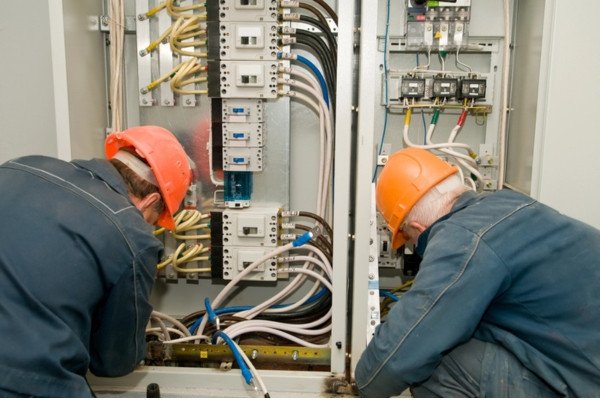
The line between DIY and hiring a licensed electrician for smart lighting is drawn by whether the existing light switch box contains a neutral wire. Smart switches — the kind that replace your existing wall switch and control the light fixture directly — require a neutral wire to power the switch’s internal electronics. Standard mechanical switches do not need a neutral — they simply connect and disconnect the hot wire. A smart switch needs continuous power to maintain its WiFi or Zigbee connection, to listen for voice commands, and to run its internal processor. That power comes from the neutral wire. If the switch box has a neutral wire — a white wire capped with a wire nut, not connected to the switch — the smart switch installation is a DIY project. Turn off the breaker, remove the old switch, connect the black hot wire, the black load wire, the white neutral wire, and the green ground wire to the smart switch, screw it into the box, and turn the breaker back on. The installation takes 15 minutes per switch. The electrician would charge $50 to $100 per switch. The DIY savings are $50 to $100 per switch. A house with 10 smart switches saves $500 to $1,000.
If the switch box does not have a neutral wire, common in homes built before the mid-1980s, the smart switch installation requires running a new cable from the nearest junction box or from the panel to bring a neutral to the switch box. Running new cable through finished walls requires cutting into the drywall, fishing the cable through the stud bays, and patching and painting the holes. The work is not a DIY project. The work requires a licensed electrician. The electrician charges $150 to $400 per switch to run a new cable and patch the drywall. The cost of upgrading 10 smart switches in a home without neutrals is $1,500 to $4,000. The neutral wire is the line between DIY and professional. The neutral is either in the box or it is not. The neutral determines who does the work.
Smart Lighting Tasks You Can Do Yourself
These four smart lighting tasks are DIY-accessible. All require that the switch box has a neutral wire or that the task involves plug-in or screw-in devices that require no wiring.
| Task | DIY Difficulty | DIY Time | Electrician Cost |
| Replace standard switch with smart switch (neutral present) | Easy | 15 min per switch | $50 – $100 per switch |
| Install a smart bulb in an existing fixture | Trivial | 2 min per bulb | N/A, no electrician needed |
| Install a smart plug in an existing outlet | Trivial | 1 min per plug | N/A, no electrician needed |
| Replace a light fixture with a smart fixture (existing box) | Moderate | 30–60 min | $100 – $200 |
Smart Lighting Tasks That Require an Electrician
These five tasks require a licensed electrician. The reasons include missing neutral wires, panel work, new circuit installation, or outdoor code requirements.
| Task | Electrician Cost | Why DIY Is Not Recommended |
| Smart switch installation, no neutral wire in box | $150 – $400 per switch | Requires running a new cable through finished walls; drywall cutting and patching |
| Installing a new switch where none previously existed | $300 – $800 | Requires running a new circuit or tapping into an existing circuit; code compliance |
| Smart panel or smart breaker installation | $500 – $2,000 | Requires working inside the electrical panel; main breaker must be de-energized or the service must be disconnected |
| Whole-home smart lighting system with centralized control | $2,000 – $8,000 | Requires rewiring, control panel installation, and integration with the electrical system |
| Outdoor smart lighting requiring new buried cable | $500 – $2,000 | Requires trenching, conduit, weatherproof connections, and code-compliant burial depth |
The Neutral Wire, the Single Most Important Detail
The neutral wire is the white wire in the electrical box. In a standard switch box, the neutral wires are connected together with a wire nut and tucked into the back of the box. The switch does not use the neutral. The neutral provides the return path for current in the circuit. The smart switch needs the neutral to power its internal electronics, the WiFi radio, the processor, the motion sensor, the LED indicator. Without a neutral, the smart switch cannot function. Some smart switches advertise “no neutral required”, they work by passing a small amount of current through the light bulb even when the switch is off, using the bulb’s filament or LED driver as the return path. These switches work with incandescent bulbs and most LED bulbs, but may cause flickering or dim glow when the switch is off. The no-neutral switches are the workaround for older homes. The workaround is imperfect. The permanent solution is a neutral wire in the switch box. The permanent solution requires an electrician if the neutral is not already there.
How to check for a neutral: turn off the breaker for the switch. Remove the switch cover plate. Unscrew the switch from the box and pull it out gently, the wires are still connected. Look at the wires in the back of the box. If there is a bundle of white wires connected with a wire nut, that is the neutral. If there are only two wires, a black and a white, connected to the switch, and no other white wires in the box, there is no neutral. The switch is at the end of a switch loop, the white wire is being used as a hot wire, not a neutral. The white wire should be marked with black tape to indicate it is hot. If it is not marked, it is still hot. The presence or absence of the white wire bundle determines whether the smart switch installation is a DIY project or an electrician’s job. The check takes 2 minutes. The check is the decision.
The U.S. Consumer Product Safety Commission (CPSC) recommends that all electrical work be performed in accordance with the National Electrical Code and that homeowners who are not experienced with electrical work hire a licensed electrician. Smart switch installation is electrical work. The work is simple. The work is within the reach of a homeowner who can identify the hot, load, neutral, and ground wires and connect them securely. The homeowner who cannot identify those wires should hire an electrician. The identification is the skill. The skill is learned in 10 minutes from a YouTube video. The skill is verified by turning the breaker off and using a voltage tester to confirm the wires are dead. The tester costs $15. The tester is the verification. The verification is the safety. The safety is the difference between a smart switch installation and a trip to the emergency room. The smart switch installation is safe when the power is off. The power is off when the breaker is off and the tester confirms it. The tester confirms it. Confirm it before touching any wire.
Smart Bulbs, the Zero-Electrician Alternative
A smart bulb screws into an existing light fixture or lamp. The bulb contains a WiFi or Zigbee radio, an LED driver, and a processor. The bulb is controlled by a smartphone app or a voice assistant. The bulb requires no wiring changes. The switch that controls the fixture must remain in the ON position at all times, the bulb is controlled by the app, not by the switch. The switch that is turned off cuts power to the bulb. The bulb goes offline. The voice command fails. The frustration ensues. The smart bulb is the simplest smart lighting solution. The smart bulb is also the solution that is defeated by the traditional switch. The switch must remain on. The switch that someone accidentally turns off takes the smart bulb offline. The offline bulb is a dumb bulb. The dumb bulb was not the goal. The goal was smart lighting. The smart bulb achieves the goal when the switch stays on. The switch that stays on is the tape over the switch handle, the Lutron Aurora lock that covers the switch, or the hardwired bypass that removes the switch entirely, which requires an electrician. The smart bulb is the zero-electrician solution. The switch that stays on is the zero-cost habit. The habit is the discipline. The discipline is the switch that no one touches. The discipline is free. The discipline is the cost of the smart bulb solution. The smart bulb costs $10 to $50. The smart switch costs $20 to $60. The smart bulb is easier to install. The smart switch is harder to defeat. The smart switch requires a neutral wire, or an electrician. The choice is: smart bulb + discipline, smart switch in a box with a neutral, or electrician for a box without a neutral. The choice depends on the neutral. The neutral is the decision.
Frequently Asked Questions
Can I install a smart switch myself without an electrician?
Yes, if the switch box has a neutral wire and you are comfortable turning off the breaker, identifying the hot, load, neutral, and ground wires, and connecting them securely to the smart switch. The installation takes 15 minutes per switch. If the switch box does not have a neutral wire, hire an electrician to run a new cable or use a no-neutral smart switch, which may have compatibility issues with some LED bulbs.
How much does smart lighting installation cost with an electrician?
An electrician charges $50 to $100 per switch to replace a standard switch with a smart switch where a neutral is present. The same smart switch where a neutral must be run costs $150 to $400. A whole-home smart lighting system with centralized control costs $2,000 to $8,000. The cost depends on the number of switches, the presence of neutrals, and the system complexity.
Do I need a neutral wire for a smart light switch?
Most smart switches require a neutral wire. Some “no neutral required” smart switches work without a neutral by passing current through the light bulb. These switches are the workaround for older homes built before the mid-1980s. The no-neutral switches may cause flickering or a dim glow in LED bulbs when the switch is off. The permanent solution is running a neutral to the switch box, hire an electrician.
Are smart bulbs or smart switches better for smart lighting?
Smart switches are better in most situations. They control the entire fixture regardless of the bulb type. They continue to work as a physical switch. They do not go offline when someone flips the switch. Smart bulbs are better for lamps, for fixtures where color-changing is desired, and for renters who cannot replace switches. The smart switch is the permanent solution. The smart bulb is the portable solution.
Can smart lighting work without WiFi if the internet is down?
It depends on the protocol. Zigbee and Z-Wave smart switches communicate through a local hub and continue to work without internet, the app controls them through the local network. WiFi smart switches require an internet connection for app control, the switch itself works manually, but voice commands and remote control do not. Choose Zigbee or Z-Wave for internet-independence. Choose WiFi for simplicity.
Are smart switches safe to leave installed permanently?
Yes, smart switches from reputable manufacturers are UL-listed and meet the same safety standards as standard switches. They include overcurrent protection, thermal shutoff, and fire-resistant enclosures. The safety requirement is the same as any electrical device: it must be installed correctly, with tight connections, in a properly sized electrical box. A loose connection generates heat. The heat is the hazard. The hazard is prevented by tightening the terminal screws securely. The security of the screws is the safety.
The Neutral That Decides
Turn off the breaker. Remove the switch cover. Pull out the switch. Look for the bundle of white wires capped with a wire nut. If the white bundle is there, the smart switch installation is a DIY project, 15 minutes, $30 for the switch, $500 saved on 10 switches over the electrician’s rates. If the white bundle is not there, the box has no neutral. Use a no-neutral smart switch with a compatible LED bulb, and accept the possibility of flicker, or hire an electrician to run a neutral to the box at $150 to $400 per switch. The neutral wire is the line between DIY and professional. The neutral is either in the box or it is not. The check takes 2 minutes. The 2 minutes is the decision. The decision is: do it yourself for $30, or hire the electrician for $200. The $170 difference is the cost of the missing white wire. The white wire is the most expensive wire in the box. The white wire determines the budget. The white wire determines who does the work. The white wire is the answer to the question. Check for the white wire. The white wire will tell you. The white wire is neutral. The decision is not. Ever stood in front of a light switch with the cover off, phone in one hand showing a YouTube tutorial, voltage tester in the other hand, staring at two wires — a black and a white — and no bundle of white wires anywhere in the box? The tutorial showed three wires. Your box had two. The missing wire was the neutral. The neutral was the reason the tutorial did not match your box. The neutral was the reason you put the cover back on and called an electrician. The electrician arrived, saw the same two wires, and said “no neutral — I’ll need to run a new cable.” The electrician’s quote was $300. The $300 was the cost of the missing white wire. The missing white wire was installed in 1972 when the house was built. The 1972 electrical code did not require neutrals at switch boxes. The 2024 smart switch requires a neutral. The 1972 house does not have one. The $300 is the bridge between 1972 and now. The bridge is the electrician. The bridge is the neutral wire that was not installed. The bridge is the cost of progress. Progress is the smart switch. The smart switch is the goal. The goal is worth the bridge.