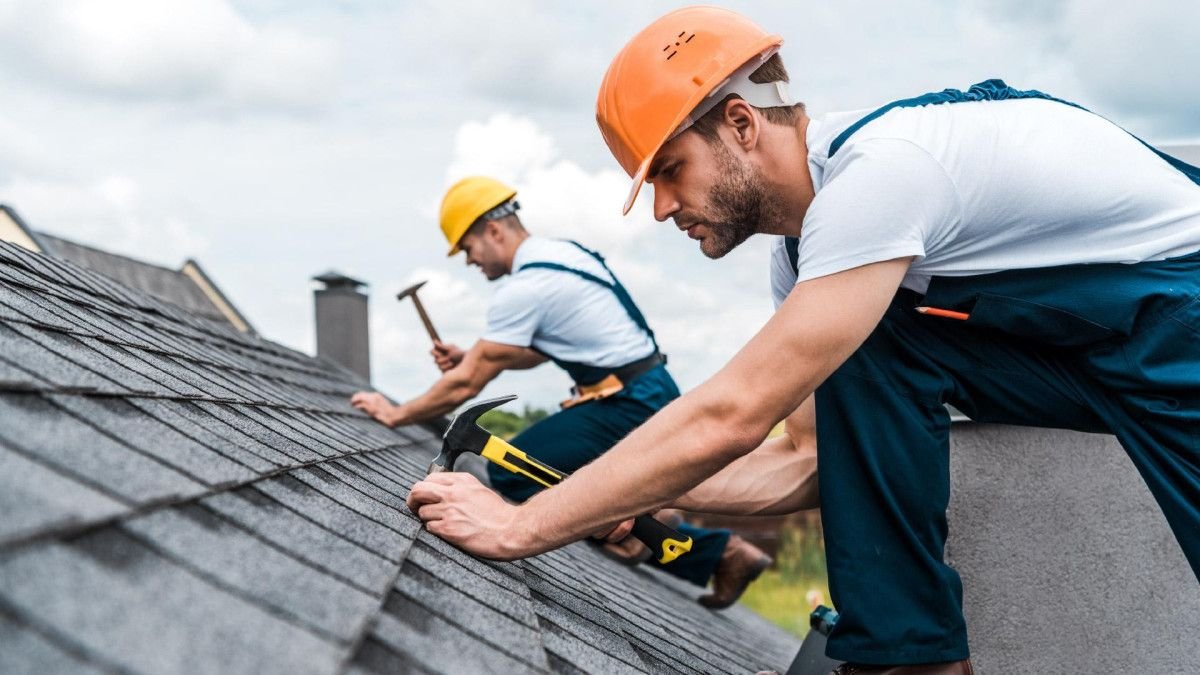
Deciding between roof repair and replacement comes down to three numbers: the percentage of your roof that is damaged, the age of the roof in years, and the per-year cost of each option. If more than 30% of the surface needs work and the roof is past 18 years old, replacement almost always costs less per year than chasing repairs. If the damage is isolated and the roof is under 12 years old, repair wins, says Keyrenter Provo Management.
Navigating the choice between localized fixes and full restorations can feel overwhelming without clear information on structural health. Consulting an experienced roofing contractor in Seattle can help clarify whether a few simple repairs are sustainable or if the overall layout requires updates to support daily durability. Understanding the specific condition of your materials ensures that you make choices aligned with long-term home maintenance goals.
Between those two clear cases sits a gray zone where the right call depends on variables most guides do not mention. Insurance policy language. Local building code triggers. Whether your shingles are still in production. This article walks through each factor in the actual order a contractor uses — not the simplified version that makes a good blog post but a bad financial decision.
The Cost Gap — What You Are Actually Choosing Between
Roof repairs in 2026 cost between $350 and $3,500 for most jobs. A full roof replacement on a typical single-family home runs $8,500 to $18,000 for asphalt shingles, with architectural shingles at the higher end and three-tab at the lower.
Those are the headline numbers. The number that actually matters is cost per year. A $2,000 repair that buys you three more years of service costs $667 per year. A $12,000 replacement amortized over 25 years costs $480 per year. Repair looks cheaper on the invoice. Replacement is cheaper on the calendar.
| Scenario | Upfront Cost | Expected Life | Cost Per Year |
| Minor repair (shingle patch) | $350 – $800 | 2–5 years | $70 – $400 |
| Moderate repair (flashing, leak fix) | $800 – $2,000 | 3–7 years | $114 – $667 |
| Major repair (decking, structural) | $2,000 – $6,000 | 2–4 years | $500 – $3,000 |
| Full replacement (asphalt shingle) | $8,500 – $18,000 | 20–30 years | $283 – $900 |
| Full replacement (metal) | $15,000 – $35,000 | 40–70 years | $214 – $875 |
Notice the pattern: a major structural repair can cost more per year than a full replacement with architectural shingles. The per-year math is what separates an emotional decision from a financial one.
Evaluating these long-term financial metrics can prevent unexpected expenses over the lifespan of a home. Engaging with experienced specialists like Scout Roofing & Construction helps ensure that any necessary roof updates are accurately assessed, saving property owners from the compound costs of deferred maintenance. Professional guidance can provide clarity on whether surface fixes are sustainable or if a complete structural update offers better lasting value.
The 30% Rule — When Damage Crosses the Line
If more than roughly 30% of the roof surface shows visible damage — missing shingles, curling edges, bald spots, or granule loss — replacing the entire roof is usually the better financial move. Patching a roof that is failing across a third of its surface is like replacing one tire on a car with three bald ones. The patch holds. The surrounding roof does not.
This rule is not arbitrary. Roofing contractors use it because the labor cost of accessing scattered damage zones across the roof approaches the labor cost of stripping and replacing the entire surface. Once a crew sets up safety equipment and moves materials to the roof, the marginal cost of doing more square footage is relatively small. The setup cost, ladders, harnesses, permits, dumpster rental, is the same either way.
When managing a major roofing project, keeping the work area clean and organized is vital for maintaining a productive timeline. Safely containing old shingles and discarded materials helps protect the underlying landscape from accidental damage during tear-off. Coordinating a reliable dumpster rental in Wilson, NC ensures that heavy debris is contained quickly, helping local crews finish the job safely.
One exception: if the damage is concentrated on a single slope or section that is structurally independent from the rest of the roof, a dormer, a porch overhang, a single pitch, partial replacement of just that section can make sense even if the damage percentage is high. The key is that the undamaged sections must be truly undamaged. A roofer who checks only the damaged slope and assumes the rest is fine is not doing you a favor.
Age Is the Tiebreaker
A 5-year-old roof with a localized leak from a fallen branch: repair. A 22-year-old roof with the same leak: replace. The age of the roof overrides the appearance of the damage because what you cannot see, the sealant strips between shingle courses, the fasteners backing out of the decking, the underlayment slowly disintegrating, is degrading on a schedule that does not care whether the visible surface looks intact.
Asphalt shingle roofs last 20 to 30 years. Three-tab shingles sit at the low end. Architectural shingles push toward 30. The National Roofing Contractors Association (NRCA) recommends replacing rather than repairing once a roof passes 80% of its expected service life, even if individual repairs are technically possible. At that stage, the roof system as a whole, shingles, underlayment, flashings, fasteners, is near the end, and patching one component does not reset the clock on the others.
Metal and tile roofs complicate this math. A standing-seam metal roof can last 50 years, but the flashings around chimneys, skylights, and vent pipes have much shorter service lives. You can replace the flashings without touching the panels. The roof is not “old” in the same way an asphalt roof is old, but the distinction matters only if you know which specific component is failing.
Insurance and Building Code, Factors That Override Your Preference
Sometimes the decision is made for you. If a storm damages more than a certain percentage of the roof, often 25% to 50%, depending on your policy, the insurance company may require full replacement rather than repair. This is not negotiable. The adjuster’s report and the policy language dictate the outcome, and pushing for repair when replacement is mandated can result in a denied claim.
Building codes introduce another override. If your roof is more than 25 years old and you need to replace more than a certain square footage, many jurisdictions require you to bring the entire roof up to current code. That can mean adding ice and water shield in areas that did not previously require it, upgrading the underlayment, or installing a secondary water barrier. A $3,000 repair suddenly becomes a $15,000 replacement because the building department says so, not because the roofer upsold you.
Ask your contractor to flag any code triggers before you sign anything. A reputable roofer will tell you upfront: “If we open this up and find X, the code says we have to do Y.” A less reputable one will discover the code requirement halfway through the job and present it as a surprise change order. Guess which one you want standing on your roof when the plywood comes up. Sound familiar? It is the same dynamic as a mechanic who finds “additional work” once the engine is already disassembled, except this time the part costs $12,000 and you cannot drive the car home without it.
The Hidden Costs of Delaying Replacement
Most homeowners who replace their roof eventually wish they had done it two years earlier. The pattern is predictable: a $600 repair in year one, a $1,200 fix in year two, a $2,500 decking replacement in year three. By the time the full replacement finally happens in year four, the total cost is $4,300 in repairs plus $14,000 for the new roof, $18,300 for something that could have cost $14,000 total.
There is also a less visible cost: water damage that accumulates between repairs. A roof that leaks intermittently for two years before replacement can cause $3,000 to $8,000 in interior damage, drywall replacement, insulation removal, mold remediation, that would not have occurred if the roof had been replaced at the first sign of widespread failure. Insurance may cover sudden storm damage but rarely covers the slow-rot consequences of deferred maintenance.
Proactive care and timely evaluations can keep minor weak spots from turning into expensive internal issues. When homeowners track the long-term wear of their shingles, they can better plan for updates before water bypasses the outer layers. Property owners who want to understand their current layout can learn more about Peak Quality Roofing to see how professional assessments help maintain structural durability and prevent sudden damage.
The counterpoint: replacing a roof before it is necessary ties up capital that could be earning returns elsewhere. If your roof is 12 years old with one damaged shingle and no underlying moisture issues, replacing it “just to be safe” is a poor use of $14,000. The decision framework exists precisely because both extremes, replacing too early and repairing too long, have real costs.
A Decision Framework You Can Use Today
Answering four questions in sequence, damage percentage, roof age, structural integrity, and insurance policy triggers, will steer you to the right call in roughly 90% of repair-or-replace situations. Run through them in order and stop at the first one that points clearly to replacement.
1. What percentage of the roof is damaged? If more than 30%, stop here and replace. If less, continue.
2. How old is the roof? If past 80% of its expected lifespan (roughly 18 years for asphalt), stop here and replace. If younger, continue.
3. Is the damage structural? If the decking is soft or rotted in more than two areas, replace. If the damage is surface-level, shingles, flashing, minor leaks, repair.
4. What does your insurance policy say? If storm damage exceeds your policy’s repair-vs-replace threshold, follow what the adjuster’s report dictates. The insurance company’s decision overrides the first three questions.
What surprises most homeowners, especially those who have never filed a roof claim before, is how little control they have once an adjuster gets involved. The adjuster works for the insurance company, not for you. Their job is to apply the policy language exactly as written, and if that language mandates full replacement at 30% damage, no amount of arguing will turn it into a repair authorization.
This framework will not fit every edge case, no four-question checklist can, but it will steer you correctly in roughly 90% of situations. For the other 10%, get two independent assessments from licensed contractors who do not work for the same company. Disagreement between inspectors is not a problem to resolve. It is data.
Frequently Asked Questions
Is it cheaper to repair or replace a roof?
Repair is cheaper upfront, $350 to $3,500 versus $8,500 to $18,000 for replacement. But per year of service, a full replacement often costs less. A $2,000 repair that buys three years costs $667 per year. A $12,000 replacement over 25 years costs $480 per year. The per-year math favors replacement whenever the roof is aging and multiple repairs are likely.
How do I know if my roof needs repair or replacement?
Use the 30% damage rule, the age rule, and the structural rule. If more than 30% of shingles show visible damage, replace. If the roof is past 18 years old, replace. If the decking underneath is soft or rotted in more than two areas, replace. If none of these apply and the damage is localized, repair.
Will insurance pay for a roof replacement instead of repair?
Yes, if the damage was sudden and accidental, storm, hail, falling tree, and exceeds your policy’s threshold for repair. Most policies require replacement if damage exceeds a certain percentage, typically 25% to 50% of the roof surface. Gradual wear, age-related deterioration, and neglected maintenance are not covered.
Can you replace only half a roof?
Yes, if the damaged section is structurally independent, a single slope, dormer, or porch overhang, and the rest of the roof is in good condition. However, matching new shingles to old is difficult after the first few years of sun fading. The replacement section will be visibly darker. Full replacement eliminates the color-match problem and the risk that the undamaged half fails two years later.
How long can you delay roof replacement?
You can delay until the next major leak, but the cost of waiting is the accumulated repair expense plus any interior water damage that occurs between now and the replacement date. Most homeowners who delay more than two years end up paying more in total than if they had replaced immediately.
Does a new roof increase home value?
A new roof recovers roughly 60% to 70% of its cost in increased resale value, and more importantly, an old or visibly damaged roof is one of the top deal-breakers flagged by home inspectors. A roof near the end of its life can kill a sale or force a price concession larger than the cost of replacement.
The Short Answer
Repair a young roof with localized damage. Replace an old roof with widespread damage. When the numbers fall in the gray zone between those two poles, let the per-year math and your insurance policy language decide. The roof does not care about your budget. But you should care about what the roof is telling you. Ignore it long enough and it stops whispering — it starts dripping through the ceiling while you are trying to sleep. At that point, the decision is no longer yours.