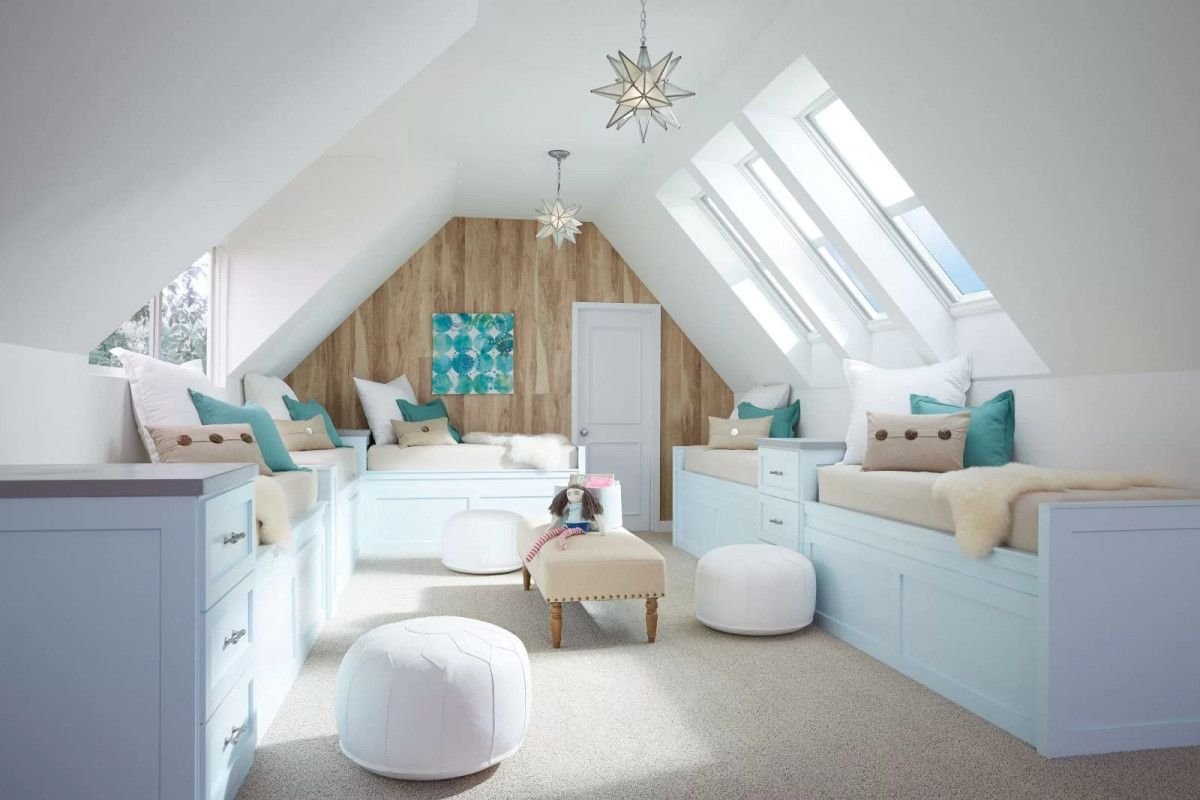
The attic has been unfinished since the house was built. It has exposed rafters, insulation between the floor joists, and a single bare lightbulb operated by a pull chain. Renovating it into a finished living space is the most cost-effective square footage addition a house can undergo. The foundation is already there. The roof is already there. The stairs are already there. The renovation cost is for the interior: structural reinforcement if needed, insulation, electrical, HVAC, drywall, flooring, and finishes. It costs roughly half of what a ground-floor addition costs per square foot because the shell is already built, points out Apache Junction property management.
Phase 1: Structural Assessment
Before any finishing material goes into the attic, the structure must be evaluated. Attic floors are designed as ceiling joists for the room below, not as floor joists for a living space above. Ceiling joists are typically 2×6 or 2×8, which is adequate for supporting a ceiling but may not meet the deflection criteria for a floor. A floor that bounces when walked on is annoying. A floor that deflects enough to crack the drywall ceiling below is a structural failure.
A structural engineer or a qualified contractor should evaluate the existing joists. If reinforcement is needed, the solution is typically sistering larger joists alongside the existing ones or adding a beam at mid-span. This work is intrusive and expensive, $2,000 to $5,000 for a typical attic, but it is not optional if the existing structure is undersized. The alternative is finishing the attic and discovering that the dining room ceiling below has developed a network of cracks that follow the joist lines.
The roof structure must also be evaluated. The rafters that form the sloped ceiling may need to be reinforced if the roof load, combined with the weight of drywall and insulation on the underside, exceeds the original design. This is less common than floor reinforcement but must be checked. An engineer’s report costs $300 to $500 and is the cheapest insurance in the entire renovation.
Phase 2: Stairs and Access
Building code requires a finished attic to have a permanent staircase with minimum headroom of 6 feet 8 inches. A pull-down ladder or a spiral staircase that serves as the primary access does not meet code for a habitable room in most jurisdictions. If the existing staircase does not meet code, the staircase renovation becomes part of the attic project. This can be the most expensive single element because staircases are complex carpentry, and moving a staircase to gain headroom involves cutting floor joists and reframing the opening.
The attic access hatch or existing stairs must be at least 36 inches wide. The stairs must have a handrail on at least one side. The landing at the top of the stairs must be at least as wide as the stairs. These dimensions seem arbitrary until you try to carry a mattress up a 24-inch-wide pull-down ladder. The stairs are the first thing you experience in the finished attic. They set the expectation for the space.
Phase 3: Insulation and Ventilation
The attic floor was previously the thermal boundary of the house. Insulation in the floor joists kept heat in the living space below. The attic above was unconditioned and ventilated. Renovating the attic moves the thermal boundary from the floor to the underside of the roof deck. The sloped ceiling, knee walls, and any vertical end walls must now be insulated. The floor insulation is no longer serving its original purpose and may be removed or left in place for soundproofing.
Per wikiHow’s guide, spray foam insulation between the rafters is the most effective option for an attic ceiling because it provides both insulation and an air barrier in a single application. The alternative is rigid foam board with sealed seams, or batt insulation with a continuous air barrier on the warm side. The insulation R-value required depends on the climate zone. In cold climates, R-38 to R-49 is typical for attics. Achieving this in a 2×6 or 2×8 rafter cavity requires spray foam or a combination of batt insulation and rigid foam over the rafters.
Ventilation baffles must be installed between the rafters from the soffit vents to the ridge vent before insulation goes in. The baffles create a 1-inch to 2-inch air channel between the insulation and the underside of the roof deck. This channel allows outside air to flow from the soffit to the ridge, cooling the roof deck in summer and preventing ice dams in winter. Without baffles, the roof deck overheats and the shingles fail prematurely. The baffles cost $2 each and install in minutes. Skipping them is the most expensive $50 savings in attic renovation.
Phase 4: HVAC and Climate Control
The attic is the most thermally challenging space in the house. In summer, hot air rises and collects at the highest point, which is the attic. In winter, heat escapes through the roof if the insulation is inadequate. The existing HVAC system was sized for the house without the attic. Adding 500 to 1,000 square feet of conditioned space to the existing system may overload it.
A ductless mini-split heat pump is the most practical HVAC solution for a finished attic. It provides both heating and cooling without requiring ductwork. A single outdoor unit connects to one or two indoor wall-mounted units. The system costs $2,000 to $5,000 installed. The alternative is extending the existing ductwork into the attic, which requires space in the knee walls or sloped ceiling cavities for ducts, and may require upgrading the main HVAC unit to handle the additional load. The mini-split is usually the less expensive and less invasive option.
Setting up proper climate control upfront ensures long-term comfort in your newly renovated upper level. If you are uncertain about the appropriate equipment specifications or structural requirements needed for balanced airflow, it is wise to get in touch with local specialists who can evaluate your space. Professional support during the framing stages helps protect your investment and guarantees efficient, reliable operation throughout the year.
Ensuring proper temperature control during a remodel requires careful planning from the start. Homeowners who want to secure optimal airflow and long-term energy efficiency can continue reading to discover how localized zone systems maintain a balanced indoor climate. Factoring these adjustments into your initial budget helps protect the structure from seasonal wear while ensuring complete living comfort.
Properly managing the climate in an upper-level conversion is essential for establishing a functional space. Beyond basic heating and cooling hardware, custom ventilation plans help stabilize humidity levels and maximize energy efficiency throughout the year. Homeowners looking to establish a tailored environmental setup can get in touch with local climate experts to evaluate their layout before insulation is installed.
Ensuring proper temperature regulation in an upper-floor remodel supports daily indoor comfort and long-term utility efficiency. Evaluating these climate demands ahead of time helps keep the environment livable during seasonal shifts. For optimal layout planning and mechanical inspections, scheduling an air conditioning repair phoenix can keep your equipment running smoothly and protect your entire renovation investment from unexpected mechanical disruptions.
Integrating an independent cooling setup ensures that your newly finished upper floor remains comfortable without placing a heavy burden on your primary household equipment. Consulting a skilled local contractor allows you to address specific airflow and insulation requirements before final drywall is installed. Working alongside a dedicated team like Quick Solutions Air Conditioning & Heating helps secure balanced temperature regulation, keeping your investment energy-efficient and pleasant throughout every season.
Managing the unique temperature demands of a newly finished upper floor requires specialized design considerations. Ensuring that your overall heating and cooling strategy supports long-term comfort can make a substantial difference in daily livability. Homeowners who want to find professional guidance on proper equipment sizing and air distribution can learn this here now to coordinate with experienced local contractors before final walls are closed.
Phase 5: Electrical and Lighting
The attic needs dedicated circuits. A bedroom requires an AFCI-protected circuit. A home office needs multiple outlets at desk height. A media room needs outlets at the projector location and at the screen wall. The electrical rough-in happens after framing and before insulation. An electrician must perform this work and a permit is required.
Plan the lighting before the drywall goes up. Recessed lights in the sloped ceiling require angled housings designed for sloped ceilings. Standard recessed housings point straight down, which on a sloped ceiling means pointing at an angle into the room. The sloped-ceiling housings aim the light straight down regardless of the ceiling angle. Wall sconces on the vertical knee walls provide ambient light without taking up floor space. A ceiling fan at the peak improves air circulation and reduces the temperature stratification that makes attics feel 10 degrees hotter at head height than at floor level.
Common Attic Renovation Mistakes
- Not reinforcing the floor joists. Ceiling joists are not floor joists. A bouncy attic floor is the first sign. Cracks in the ceiling below are the confirmation. The reinforcement must happen before any finished materials go down.
- Skipping the baffles. Insulation packed against the roof deck with no ventilation channel destroys shingles and creates ice dams. The baffles cost $50 for the entire attic. The roof replacement costs $8,000 to $15,000.
- Not extending the HVAC. A finished attic without its own heating and cooling source is unusable for months of the year. The mini-split is the solution. Opening a window is not climate control.
- Blocking the soffit vents. The existing soffit vents must remain open or be replaced by a continuous ridge-to-soffit ventilation path. Closing the soffits without providing an alternative ventilation path traps moisture in the roof assembly.
- Using the wrong drywall. The attic ceiling experiences temperature swings that standard drywall cannot tolerate. Use 5/8-inch Type X drywall on the ceiling. The additional cost is $3 per sheet. The cost of re-taping cracked seams is considerably more.
Frequently Asked Questions
Can I renovate an attic myself?
A homeowner can perform framing, insulation, drywall, painting, and flooring without a license. Electrical and HVAC work require licensed trades and permits. The structural assessment should be performed by an engineer or a qualified contractor. The homeowner can do roughly 60 percent of the labor. The licensed trades account for the remaining 40 percent. The DIY savings are the labor for the trades the homeowner can legally perform. A mid-range attic renovation costs $50 to $100 per square foot professionally, or $20 to $40 per square foot for DIY with hired electrical and HVAC.
Do I need a permit to renovate my attic?
Yes. Finishing an attic requires a building permit in every jurisdiction that has a building code. The permit triggers inspections of the structural modifications, framing, electrical, insulation, and final occupancy. An unpermitted attic renovation is flagged during a home sale inspection and is devalued as unpermitted square footage. The permit costs $500 to $1,500 depending on the scope and the jurisdiction.
The Attic That Earns Its Square Footage
An attic renovation converts the least-used space in the house into the most interesting room in the house. The structure was already there. The roof was already keeping the rain out. The renovation adds floors that do not bounce, walls that are insulated, air that is conditioned, and light that makes the sloped ceilings feel intentional rather than accidental. The attic renovation costs half of what an addition costs and adds the same square footage to the house. The only difference is that the space was always there, waiting to be finished.