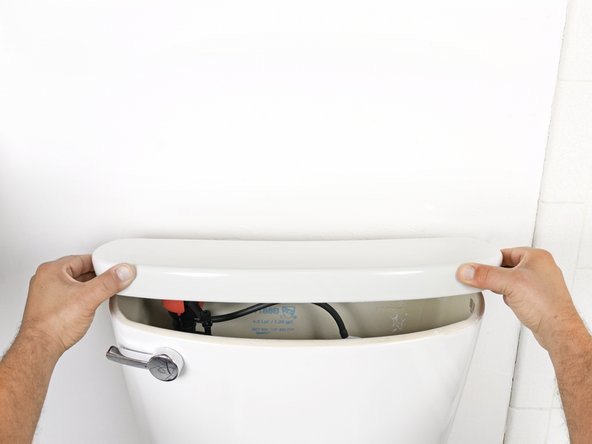
You set the tank lid on the edge of the sink while you replaced the flapper. It slid off and shattered on the bathroom floor. Or you dropped something heavy on it. Or it cracked after years of being removed and replaced during repairs. Whatever happened, you now have a toilet that works perfectly and a tank with no lid. The open tank is not just ugly. It is a hazard. Something will fall into it, and whatever falls in will either break the flush valve or end up in the bowl, notes the Jambi Property Management company.
Replacing a toilet tank lid should be the simplest repair in homeownership. It is not. Lids are not sold separately at most hardware stores. They are not universal. A lid from a different toilet model will not fit. Finding the right lid requires identifying your toilet model and tracking down the specific replacement part, which can be harder than any repair you have done to the toilet itself.
Why Toilet Lids Are Not Universal
Every toilet model has a uniquely shaped tank. The lid must match the exact contours of the tank rim. It must fit over the flush valve, the fill valve, and the overflow tube without touching any of them. It must sit flush on the tank rim so it does not rattle when someone sits on the toilet or walks past. A lid that is slightly too small falls into the tank. A lid that is slightly too large hangs over the edge and slides off. A lid from a different model may technically cover the tank opening but will not seat correctly, creating a gap that allows condensation to drip down the outside of the tank.
Toilet manufacturers change tank designs frequently. A lid from a Kohler Wellworth manufactured in 2015 will not necessarily fit a Kohler Wellworth manufactured in 2020. The model name stayed the same. The tank mold changed. The only way to guarantee a perfect fit is to match the lid to the specific model number and, in some cases, the date code stamped inside the tank.
Step 1: Find Your Toilet Model Number
Look inside the tank. The model number is stamped or printed on the inside wall of the tank, typically on the back wall near the water line. It may be printed in black ink that has faded, or it may be embossed in the porcelain and visible only when the light hits it at an angle. Use a flashlight. The model number is a combination of letters and numbers, such as K-11473 for a Kohler or ST743S for a Toto.
If the model number inside the tank is illegible, check the underside of the tank lid if you still have the broken pieces. Many manufacturers stamp the model number on the underside of the lid itself. If both the tank and the lid are unmarked, look for a brand name on the bowl near the seat hinges or on the front of the bowl just above the floor.
If you cannot find any identifying marks, take clear photographs of the toilet from multiple angles: the full tank, the flush handle, the inside of the tank showing the flush valve and fill valve arrangement, and any markings or logos. You will need these when contacting manufacturers or searching online.
Measure the tank lid opening. Use a tape measure to record the length and width of the tank opening at its widest points. Also measure the distance from the back edge of the tank opening to the center of the flush valve. A replacement lid must clear the internal components as well as fit the rim.
Step 2: Where to Buy a Replacement Lid
Contact the manufacturer first. Kohler, American Standard, Toto, and most major brands sell replacement lids directly through their websites or by phone. Have your model number ready. The manufacturer can confirm whether the lid is still in production. If the toilet model has been discontinued, the manufacturer can tell you whether a lid from a different but compatible model will fit.
Search online using the model number followed by “tank lid” or “replacement lid.” Sites like Amazon, eBay, and specialty plumbing parts retailers often carry discontinued lids. Expect to pay $30 to $80 for a manufacturer replacement lid, plus shipping. A lid is heavy porcelain, and shipping costs $15 to $25. The total cost is typically $50 to $100.
Visit local plumbing supply houses, not big-box hardware stores. Plumbing supply houses that sell to contractors often have access to replacement parts catalogs that the Home Depot plumbing aisle does not. Bring your model number and the photographs you took. A supply house can order the lid if it is not in stock.
Salvage yards and architectural salvage stores sometimes have toilets that were removed during renovations. If your toilet is a common model that was installed in thousands of homes, you may find a matching lid from a salvaged toilet. The lid costs $10 to $30, but finding it requires visiting salvage yards in person or calling around. Ask whether they have your specific toilet model before driving across town.
Step 3: If You Cannot Find an Exact Replacement
Universal replacement lids exist but come with significant compromises. An aftermarket universal lid is a flat piece of plastic or resin that sits on top of the tank rim. It is held in place by gravity or by small adhesive pads. It does not have the curved underside that grips the inside of the tank rim the way an OEM lid does. It can be knocked off if someone bumps into it. It does not match the porcelain finish of the toilet.
A universal lid costs $20 to $40 and is available online. It is a functional temporary solution. It keeps objects from falling into the tank. It does not look like the original lid, and it does not fit as securely. Consider a universal lid a placeholder while you continue searching for an OEM replacement, not a permanent fix.
If your toilet is more than twenty years old and the lid is no longer available anywhere, replacing the entire toilet may be more practical than continuing to search for a lid that may never appear. A new toilet costs $150 to $400 and comes with a matching lid, a new flapper, a new fill valve, and a warranty. If you have been nursing an old toilet along with repeated repairs, the broken lid may be the sign that it is time to replace the whole fixture.
Step 4: Install the New Lid
Clean the tank rim before placing the new lid. Mineral deposits, dust, and debris on the rim prevent the lid from seating flush. Wipe the rim with a damp cloth and dry it completely.
Check that the lid clears the internal components. Place the lid gently on the tank without pressing down. Look inside the tank if possible, or feel around the edges to confirm that the lid is not resting on the fill valve, the flush valve, or the overflow tube. A lid that contacts an internal component transmits vibration and noise every time the toilet is flushed or the tank refills.
If the lid rocks or does not sit flat, check whether the flush valve or fill valve is taller than the tank rim. Some aftermarket replacement fill valves and flush valves are taller than the original parts and interfere with the lid. You may need to adjust the height of the fill valve or replace an oversized flush valve before the lid will fit.
For a porcelain OEM lid, the fit should be exact. The lid will have a slight overhang on all sides and will not move when you press on the edges. A properly fitting lid stays in place without adhesive, clips, or fasteners.
Do not glue the lid to the tank. You will need to remove it again someday to replace the flapper or the fill valve. If you are concerned about the lid sliding off, check that the lid is the correct model for the tank. A correct lid does not slide off.
Preventing Future Lid Breakage
Never set the tank lid on the edge of the sink, the edge of the tub, or the toilet seat. These surfaces are narrow, curved, or both, and lids slide off. Always place the lid flat on a folded towel on the floor. The floor is flat. The towel prevents scratches and absorbs minor bumps. This one habit prevents virtually all lid breakage.
Do not sit on the toilet lid. Tank lids are porcelain and are not designed to support body weight. A lid that cracks under a person’s weight shatters into sharp pieces while the person is falling.
Do not stack items on top of the toilet tank. A bottle of cleaner, a ceramic decoration, or a heavy candle that falls into the tank breaks internal components. The same object that falls onto the tank lid can crack the lid. The top of the toilet tank is not a shelf.
If the lid develops a hairline crack but has not separated, do not try to glue it. Porcelain adhesives exist but produce a visible repair that will eventually fail. Replace a cracked lid even if the crack seems minor. The cost of a replacement lid is less than the cost of an emergency room visit for stitches after handling broken porcelain.
The Short Version
Find the model number inside the tank. Contact the manufacturer or search online using the model number. Expect to pay $30 to $80 for the lid and $15 to $25 for shipping. If the lid is discontinued, try plumbing supply houses, salvage yards, or a universal replacement lid as a temporary fix. If the toilet is old and parts are no longer available, replacing the entire toilet for $150 to $400 may be the better choice.
When you receive the new lid, clean the tank rim, confirm the lid clears the internal components, and place it on the tank. Do not glue it. Do not sit on it. Do not use the top of the tank as a shelf. The lid is the simplest part of the toilet and the hardest to replace. Treat it accordingly.