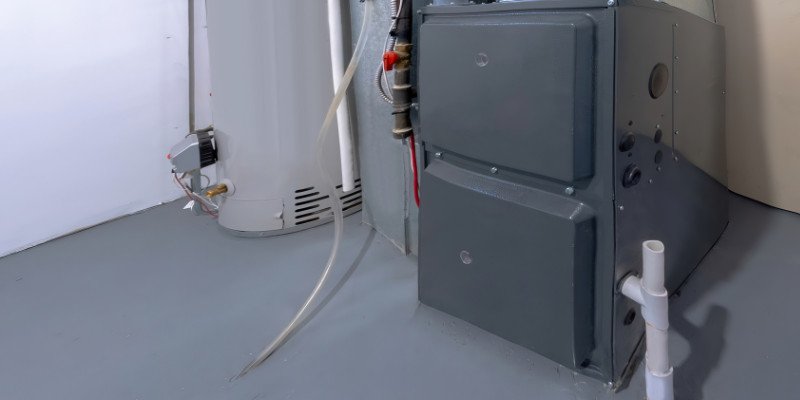
A modulating furnace adjusts its heat output in tiny increments (1% at a time) rather than running at full blast or shutting off completely. Where a standard furnace is an on-off switch, a modulating furnace is a dimmer, explains Alta Management.
The U.S. Department of Energy classifies furnaces with AFUE ratings of 90% to 98.5% as high-efficiency systems, and modulating gas furnaces sit at the top of that range.
Unlike single-stage furnaces that always fire at 100% capacity, or two-stage units that toggle between high and low, a modulating furnace continuously adjusts both its gas valve and blower speed to match exactly what your house needs at any given moment.
That precision is what delivers the energy savings, the even temperatures, and the quiet operation, but it also comes with a higher upfront cost that not every homeowner should pay.
What Exactly Is a Modulating Furnace?
A modulating furnace is a gas-fired heating system that varies its heat output in small, incremental steps (typically from around 25% to 100% of its rated capacity) using an electronically controlled gas valve and a variable-speed blower motor. Most residential modulating furnaces on the market today adjust output in 1% increments, which means the system makes hundreds of tiny corrections per heating cycle instead of lurching between on and off.
The technology is not new in commercial HVAC, but it has become widely available in residential systems only in the last decade. Major manufacturers including Carrier, Trane, Lennox, Rheem, Goodman, and Daikin all offer modulating furnace models as their premium tier. A Carrier Infinity series furnace with a modulating gas valve and variable-speed blower achieves AFUE ratings of 96% to 98.5%, depending on the specific model and installation quality.
The defining characteristic that separates a modulating furnace from every other type is simple: a single-stage furnace runs at 100% or 0%.
A two-stage furnace runs at roughly 70% or 100%.
A modulating furnace runs at any point between roughly 25% and 100%, chosen by the control board in real time based on sensor feedback. That is like driving a car that has only two pedal positions (floored or released) versus one that lets you hold 35 mph on a side street.
How a Modulating Furnace Works: The Gas Valve and Variable-Speed Blower
The two critical components that make modulation possible are the electronically commutated motor (ECM) blower and the stepper-motor gas valve. Neither is unique to modulating furnaces on its own, but the way they work together under a common control algorithm defines the category.
The stepper-motor gas valve opens and closes in extremely small increments controlled by pulse-width modulation from the furnace control board. In a modulating furnace from Carrier or Bryant, the gas valve can adjust flow in roughly 130 discrete steps between minimum and maximum fire rate. Compare that to a two-stage gas valve, which has exactly two positions: a fixed low-fire orifice and a fixed high-fire orifice. The modulating valve never snaps open or shut; it glides between positions as the control board reads the temperature differential between the supply air and return air, the rate of temperature change in the conditioned space, and the outdoor temperature if an outdoor sensor is connected.
The ECM blower responds in parallel. On a Lennox SLP99V, for instance, the variable-speed blower operates at anywhere from 1% to 100% of its rated airflow, automatically adjusting to maintain a target temperature rise across the heat exchanger. When the gas valve drops to 40% fire rate, the blower slows down proportionally so the heat exchanger temperature stays in its design range. This protects the heat exchanger from thermal stress and maintains efficiency.
When investing in advanced climate systems, verifying that your chosen technicians possess specialized training is a vital step during the initial evaluation. Homeowners who want to secure optimal calibration and avoid operational setbacks can learn about their services to ensure the installation team handles configuration requirements correctly. Professional oversight ensures that the complex controls align with your home’s baseline energy expectations over long cycles.
On paper this sounds elegant. In practice, it means the furnace may fire at 55% capacity for twenty minutes, drop to 35% when the kitchen oven turns on and adds heat, then climb back to 60% when someone opens the front door. Each adjustment happens within seconds, and the furnace never fully cycles off during a call for heat unless the load drops below its minimum modulation floor.
Gas valve comparison: Single-stage valve = light switch (on/off). Two-stage valve = three-way switch (high/off/low). Modulating valve = dimmer slider (anywhere between min and max). The modulating valve costs roughly 4x more to manufacture than a single-stage valve, which is a significant part of the price difference.
Modulating vs. Single-Stage vs. Two-Stage Furnaces
The differences between the three furnace types come down to three variables: how precisely they control temperature, how evenly they distribute heat, and how much noise they make while doing it. A single-stage furnace satisfies the basic requirement of not freezing. A modulating furnace changes the character of indoor comfort entirely.
| Feature | Single-Stage | Two-Stage | Modulating
|
| Heat output levels | 1 (100%) | 2 (approx 70% + 100%) | 25-100+ (1% increments) |
| Blower speed | Single speed | 2 speeds | Variable (1-100%) |
| Temperature fluctuation | ±3 to 4°F | ±1.5 to 2°F | ±0.5 to 1°F |
| Typical AFUE | 80% | 80-96% | 95-98.5% |
| Installation cost | $2,500-$3,800 | $3,200-$5,000 | $4,500-$8,500 |
| Annual operating cost (avg climate) | $900-$1,200 | $700-$1,000 | $550-$800 |
| Noise level (typical) | 65-75 dB | 55-65 dB | 40-55 dB |
| Average lifespan | 15-20 years | 18-22 years | 18-22 years |
| Repair complexity | Low | Moderate | High |
| Smart thermostat compatibility | Basic (on/off) | Partial (2 stages) | Full (communicating) |
Going from a single-stage to a modulating furnace is like upgrading from a light switch to a good dimmer. You realize, only after you have the dimmer, how much you were tolerating a binary choice that never quite fit the moment.
The operating cost difference matters most in cold climates. The Department of Energy estimates that upgrading from an 80% AFUE furnace to a 95% AFUE model saves roughly 1.5 tons of CO₂ per year in an average cold-climate home running on natural gas. More to the point, it saves about 15% to 25% on the heating portion of your utility bill. Over 18 years, that difference often exceeds the initial purchase premium.
The Real Benefits of a Modulating Furnace
A contractor once described the most common complaint he heard from homeowners with standard furnaces: “The house is hot, then cold, then hot again. The bedroom is always five degrees off from the living room.” A modulating furnace addresses exactly those problems: not by heating more aggressively, but by heating more evenly and for longer periods.
The most noticeable benefit is temperature stability. Because the furnace runs at low output for extended cycles instead of short, high-output blasts, the heated air has time to circulate through every room before the thermostat registers the setpoint. On a Carrier Infinity system with a zoning board, temperature variation across zones typically stays within 1°F. Users on r/hvacadvice consistently report that their homes stopped having cold spots after switching to a modulating unit, not because the equipment is more powerful, but because it runs long enough for the air to actually reach the far bedrooms.
I set it to 68 and forgot about it. My December bill went down $60 from the previous year with the old single-stage unit, and I stopped waking up to a cold hallway at 3 AM. That alone was worth it.
Source: r/hvacadvice, 2025
The second benefit is air quality.
A variable-speed blower running continuously at low speed provides constant air filtration. Most modulating furnaces pair with electronic air cleaners or UV germicidal lights, and the continuous airflow means every cubic foot of house air passes through the filter multiple times per hour.
A single-stage furnace, which runs in short bursts, filters air only when it is actively heating (which in mild winter weather may be only four or five hours per day).
The third benefit is noise, often underestimated until you experience it.
A modulating furnace at 40% fire rate with the blower on low is quieter than a refrigerator compressor. The burner whoosh, the duct pops, and the sudden blower roar that characterize single-stage operation are simply absent.
Carrier claims their Infinity modulating furnace operates at 40 dB at minimum fire, roughly the level of a library reading room.
What Does a Modulating Furnace Cost?
A modulating furnace costs significantly more upfront than a single-stage or two-stage unit, and the gap has not narrowed much in recent years. The table below reflects typical installed pricing in the U.S. market as of early 2026, including labor, permits, and basic duct modifications.
| Furnace Type | Equipment Cost | Installed Total | Annual Fuel Cost (2,000 sq ft, cold climate)
|
| Single-stage, 80% AFUE | $1,200-$1,800 | $2,500-$3,800 | $1,100-$1,400 |
| Two-stage, 80% AFUE | $1,600-$2,200 | $3,200-$4,500 | $1,000-$1,300 |
| Two-stage, 95% AFUE condensing | $2,500-$3,500 | $4,500-$6,000 | $750-$950 |
| Modulating, 96-98.5% AFUE condensing | $3,200-$5,000 | $5,500-$8,500 | $550-$800 |
The price delta between a premium two-stage condensing furnace and an entry-level modulating furnace is roughly $1,000 to $2,500 installed. Whether that premium pays back depends almost entirely on your climate and how long you plan to stay in the house. Spending $2,000 more upfront only makes sense if you plan to keep the house at least 5 winters. In a mild climate like Atlanta or Seattle, where the furnace runs fewer than 800 hours per year, the payback period can stretch past 10 years.
Federal tax credits are available for furnaces with AFUE ≥ 97% installed in 2025-2026 under the Inflation Reduction Act, up to $600. Some modulating models from Lennox, Carrier, and Trane qualify. State-level rebates vary: Massachusetts offers up to $1,250, Colorado up to $500, and New York up to $750. Check the ENERGY STAR rebate finder for your specific ZIP code.
Top Modulating Furnace Brands and Models for 2026
Not all modulating furnaces are created equal. The gas valve design, control logic, warranty length, and dealer network vary significantly between brands. Below are the major players with their current modulating flagship models.
| Brand | Model Series | AFUE | Warranty | Modulation Range | Price Range (installed)
|
| Carrier | Infinity 59MN7 | 98.5% | Limited lifetime HX, 10 yr parts | 25-100% (130+ steps) | $6,000-$8,500 |
| Trane | XV95 / S9V2 | 96-97% | Limited lifetime HX, 10 yr parts | 40-100% (Comfort-R) | $5,500-$7,500 |
| Lennox | SLP99V | 98.5% | Limited lifetime HX, 10 yr parts | 35-100% (variable capacity) | $5,800-$8,000 |
| Rheem | R95T / R98V | 96-98% | Limited lifetime HX, 10 yr parts | 40-100% (two-stage+variable) | $5,000-$7,000 |
| Goodman | GMVM97 | 97% | Limited lifetime HX, 10 yr parts | 40-100% (variable speed) | $4,500-$6,500 |
| Daikin | DM97MC | 97% | Limited lifetime HX, 12 yr parts | 40-100% (variable capacity) | $5,200-$7,500 |
Carrier and Lennox offer the highest AFUE ratings and widest modulation ranges, but they also command a significant price premium and require certified dealers for warranty-covered service. Goodman provides the most affordable entry into modulating technology, though its modulation range is narrower and the control logic is less refined than the premium-tier competitors. Rheem offers the best middle ground for most homeowners: strong efficiency at a price point that sits below the premium brands.
Modulating Furnace with Heat Pump: The Dual Fuel Setup
One of the least-covered topics in the standard articles about modulating furnaces is how they integrate with heat pumps in a dual-fuel configuration. A dual-fuel system pairs an electric heat pump with a gas furnace and automatically switches between them based on outdoor temperature. When paired with a modulating furnace, the arrangement becomes particularly effective because both the heat pump and the furnace can operate at variable capacity.
In a Carrier Infinity dual-fuel setup with a Greenspeed heat pump and a 59MN7 modulating furnace, the system operates the heat pump down to approximately 25°F outdoor temperature.
Below that threshold, it switches seamlessly to the modulating furnace, which picks up the load at whatever fire rate matches the deficit.
The transition happens at the heat pump’s balance point, meaning the system never wastes electricity trying to extract heat from air that is too cold. The furnace handles the bitter cold below 25°F, and the heat pump covers the rest.
The changeover happens without you noticing anything except that the air coming from the vents shifts from warm (heat pump) to hot (furnace) over a period of about 90 seconds.
The energy economics are compelling. In a climate with 4,000 heating degree days, a dual-fuel modulating system typically cuts annual energy costs by 30% to 45% compared to a gas-only single-stage furnace, depending on local electricity and gas prices. The equipment cost is higher (expect $9,000 to $14,000 installed for the combined system), but the payback period in northern climates with favorable electricity rates can be as short as four to six years.
FAQ: Common Questions About Modulating Furnaces
Is a modulating furnace worth the extra money over a two-stage?
In a cold climate (2,500+ heating degree days) with a well-insulated home, yes: the temperature stability, reduced noise, and 5-10% efficiency gain over a two-stage condensing furnace justify the premium. In a mild climate where the furnace runs fewer than 600 hours per year, the payback is too long for most homeowners.
How long does a modulating furnace last?
18 to 22 years with proper maintenance, comparable to a premium two-stage furnace. The ECM blower motor and control board are the most likely failure points. Routine maintenance can help prevent these advanced components from wearing down prematurely, especially when seasonal shifts put sudden demands on your heating setup. Homeowners who face challenging weather transitions often rely on specialized local upkeep to catch minor electrical and motor adjustments before they escalate. Securing a reliable furnace repair in Spring or your local area ensures that the multi-stage systems remain calibrated and efficient. Regular servicing supports consistent operations, preserves the life of the heat exchanger, and limits the need for expensive hardware replacements during severe cold cycles. The heat exchanger on most modulating models carries a limited lifetime warranty.
Are modulating furnaces expensive to repair?
The control board ($400-$800), variable-speed blower motor ($500-$1,200), and modulating gas valve ($600-$1,200) are all more expensive than their single-stage equivalents. A major repair on a 12-year-old modulating furnace can cost $800 to $1,500. That said, the failure rate on premium modulating furnaces from Carrier, Trane, and Lennox is low within the first 10 years.
Does the federal tax credit cover modulating furnaces in 2026?
Yes. The Inflation Reduction Act provides up to $600 in federal tax credits for furnaces with AFUE ≥ 97% installed through December 31, 2032. Many Carrier Infinity, Lennox SLP99V, and Goodman GMVM97 models qualify. The credit is non-refundable, meaning it reduces your tax bill but cannot result in a refund.
What thermostat works best with a modulating furnace?
Modulating furnaces perform best with a communicating thermostat that matches the manufacturer’s proprietary protocol: Carrier Infinity uses a proprietary thermostat, Lennox uses the iComfort S30, and Trane uses the XL1050. These communicate directly with the furnace control board over a data bus rather than switching 24V signals, enabling the full modulation range. Standard smart thermostats (ecobee, Nest) work but reduce the system to two-stage operation because they lack the proprietary communication protocol.
Can I convert my existing furnace to modulating?
No. Modulation is integrated at the system level: the gas valve, blower motor, control board, and heat exchanger are all designed together. Retrofitting a modulating gas valve onto an existing single-stage furnace is not feasible and would violate safety codes. Replacement of the entire furnace is required.
Does a modulating furnace need special ductwork?
Most existing ductwork works fine with a modulating furnace. The variable-speed blower automatically adjusts static pressure within its operating range. However, undersized return ducts can limit airflow at higher fire rates and reduce efficiency. A Manual D duct analysis is recommended before installation.
My current furnace makes popping noises from the ducts. Will a modulating one fix that?
Yes. Duct popping is caused by rapid temperature changes: the metal expands suddenly when the furnace fires at 100%. A modulating furnace eliminates the thermal shock because the heat exchanger warms up gradually, and the duct metal expands slowly. Most homeowners report a dramatic reduction in duct noise after switching.
Is a modulating furnace suitable for an older home with poor insulation?
Yes, but with a caveat. A modulating furnace in a leaky, poorly insulated home will spend most of its time at or near maximum fire rate, never reaching the low modulation range that delivers the efficiency and comfort benefits. The sensible order of operations is: air-seal and insulate first, then install the modulating furnace. The smaller the heating load, the more the modulation range matters.
Maintaining these sophisticated systems requires a precise touch to ensure the gas valve and variable-speed blower remain in perfect sync. Because the control boards and sensors are more sensitive than those in standard units, keeping up with seasonal maintenance is vital for avoiding unexpected shutdowns during peak winter loads. If you notice a shift in performance or hear unusual sounds from the cabinet, seeking a professional Furnace repair service can help diagnose electrical or mechanical issues before they affect your home’s comfort. Consistent upkeep supports the long-term reliability of these high-efficiency models and preserves the integrity of the heat exchanger over many heating seasons.
Regular professional checks also ensure that secondary components like filtration units and electrical switches function correctly before extreme winter conditions arrive. Homeowners can invest in seasonal furnace maintenance to limit unexpected wear and avoid unnecessary equipment failures during the coldest months of the year. This proactive approach helps protect your investment and maintains stable indoor temperatures all winter long.
Because these multi-stage configurations rely on specialized internal sensors to balance air distribution, documenting previous maintenance records can prove incredibly helpful when calling for local assistance. Homeowners navigating freezing conditions often find that having this technical history handy helps technicians resolve airflow problems more efficiently during a routine furnace repair Toronto, keeping the intricate components calibrated correctly.
Is a Modulating Furnace Worth It?
A modulating furnace eliminates the three things most people dislike about their heating system: the noise, the temperature swings, and the high bills. It achieves that by doing less: running at a lower output for longer, making hundreds of small corrections the way a good thermostat should.
But the decision comes down to a simple question: how much winter do you have? In Minneapolis or Bangor, where the heating season runs seven months and the furnace never gets a break, the premium pays for itself in under five years through fuel savings alone. In Atlanta or San Diego, a well-installed two-stage condensing furnace covers the need at half the upfront cost, and the modulating furnace stays in its high-fire range most of the time anyway.
A modulating furnace is not about heating your house. It is about removing the sensation of the furnace running at all. Whether that is worth $2,000 to $4,000 extra depends on how much discomfort your current system causes you, and how many winters you plan to spend in the house.