The Real Answer: Cycles vs. Years — Which One Actually Matters?
When evaluating solar batteries, you will see two different lifespan metrics: years and cycles, shares 480 Realty & Property Management experts. Understanding the relationship between these two numbers is the only way to accurately predict when you will need a replacement.
A “cycle” occurs when you discharge the battery and then charge it back up. If you use your battery every single night to power your home and recharge it with solar panels the next morning, that is one cycle per day.
For modern Lithium Iron Phosphate (LiFePO4 or LFP) batteries, the physical lifespan is dictated almost entirely by cycle count, not calendar years. Most high-quality LFP batteries are rated for 3,000 to 8,000 cycles before their capacity drops to 70% of the original rating.
To calculate your actual expected lifespan, you must translate those cycles into your personal usage pattern. The table below shows how the same battery performs under three different usage scenarios.
| Cycle Rating | Daily Cycling (1x/day) | Moderate Use (0.5x/day) | Backup Only (10x/year) |
|---|---|---|---|
| 3,000 cycles | 8.2 years | 16.4 years | 300 years* |
| 5,000 cycles | 13.7 years | 27.4 years | 500 years* |
| 8,000 cycles | 21.9 years | 43.8 years | 800 years* |
*For backup-only use, chemical aging (typically 12–15 years) will end the battery’s life long before the cycle limit is reached.
If you are only buying a battery for emergency backup during grid outages, the cycle rating is largely irrelevant to you. The battery will eventually fail due to chemical aging, usually between 12 and 15 years. However, if you are cycling the battery daily to avoid peak utility rates, the cycle rating is the most critical specification on the datasheet.
How Long Do Popular Solar Batteries Actually Last?
Not all lithium batteries are created equal. The specific chemistry and the Battery Management System (BMS) dictate the true longevity of the unit. Here is how the most popular residential batteries on the market compare in terms of expected lifespan and warranty coverage.
| Battery Model | Chemistry | Warranty Years | Guaranteed Cycles | Retained Capacity |
|---|---|---|---|---|
| Tesla Powerwall 3 | Lithium-ion (NMC/LFP) | 10 Years | Unlimited (solar self-consumption) | 70% |
| Enphase IQ Battery 5P | LiFePO4 (LFP) | 15 Years | 4,000 | 60% |
| Franklin aPower | LiFePO4 (LFP) | 12 Years | 6,000 | 70% |
| EG4 LifePower4 | LiFePO4 (LFP) | 10 Years | 8,000 | 80% |
| Lead-Acid (Generic) | Lead-Acid | 2–3 Years | 500–1,500 | 50% |
Real-world data often exceeds these conservative manufacturer warranties. When you look at actual user experiences rather than marketing materials, the longevity of modern LFP systems is impressive.
“I have two Tesla powerwall 2 batteries… When they were new I had a total capacity of 28.5 kWh. Now, exactly 4 years later I have capacity of 28.412 kwh. So, even after 4 years of daily use between 4 and 9:00 p.m. I still have 99.7% of the total battery capacity… I fully expect these batteries to last 20 plus years.”
– r/solar, August 2023
Lead-acid batteries, the older standard for off-grid solar, present a completely different reality. They typically only last 3 to 5 years and are rated for 500 to 1,000 cycles. While they cost significantly less upfront, the constant replacement costs make them far more expensive over a 20-year period than a modern lithium system. According to EnergySage, most solar batteries maintain strong performance for 10 to 15 years before needing to be replaced.
The Hidden Traps in Solar Battery Warranties
A 10-year warranty does not mean the manufacturer will replace your battery if it stops holding a 100% charge in year nine. Solar battery warranties contain specific clauses that protect the manufacturer, and you need to understand them before you buy.
The “Whichever Comes First” Clause
Most warranties include both a year limit and a cycle (or energy throughput) limit. For example, a warranty might cover 10 years or 3,000 cycles, whichever comes first. If you cycle your battery heavily twice a day, you will hit 3,000 cycles in just over four years. At that point, your 10-year warranty is completely void.
The Capacity Retention Percentage
Batteries degrade slowly over time. A warranty does not guarantee that the battery will hold its original capacity; it guarantees a specific percentage of that capacity. The industry standard is 70% at the end of the warranty period. If your 10 kWh battery only holds 7.5 kWh after eight years, the manufacturer will do nothing for you, because it is still operating within the guaranteed parameters.
The “Unlimited Cycles” Caveat
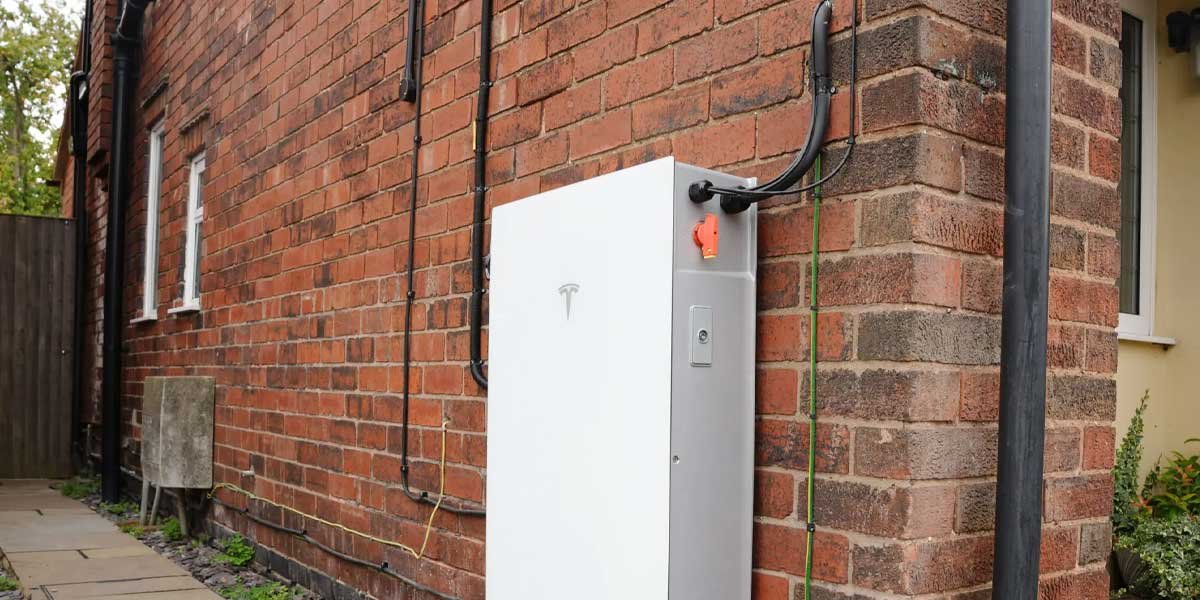
Some premium batteries, like the Tesla Powerwall, offer “unlimited cycles” during their 10-year warranty. However, read the fine print: this usually only applies if the battery is used for solar self-consumption or backup power. If you enroll the battery in a Virtual Power Plant (VPP) program where the utility company drains it daily to support the grid, the manufacturer may revert your warranty to a strict cycle limit.
How to Tell If Your Solar Battery Is Dying
Unlike a lightbulb that simply burns out, a solar battery rarely suffers a sudden, catastrophic failure. Instead, it experiences a slow, steady decline in capacity.
You can track this decline by checking your battery’s State of Health (SOH). The SOH is a percentage representing the battery’s current maximum capacity compared to its original capacity when new.
In most modern systems, you can find the SOH buried in the settings menu of your monitoring app (like the Tesla app or Enphase Enlighten). If your app does not display it, your installer can pull the diagnostic data remotely from the Battery Management System (BMS).
“My eg4 batteries are in year 2 of daily discharge in a full time off-grid setting. The BMS reports 99% SOH but it doesn’t do decimals. It’s not functionally different from brand new. They have been flawless. From what I’ve seen with EG4 (and most reputable battery companies) is it’s either DOA, or lasts indefinitely.”
– r/solar, August 2023
When the SOH drops below 80%, you will start to notice the degradation in your daily life. Your battery will charge faster than it used to, and it will drain faster during an outage. When the SOH hits 60%, the battery has effectively reached the end of its useful life for whole-home backup, though it might still be useful for running a few essential circuits.
What Does It Cost to Replace a Solar Battery?
Because solar panels easily last 25 to 30 years, you are mathematically guaranteed to replace your batteries at least once during the lifespan of your solar array. You need to budget for this reality.
Replacing a battery is not as expensive as the initial installation, because the heavy electrical work (the sub-panel, the inverter, the conduit runs) is already done. However, it is still a major expense.
The physical battery unit will cost between $7,000 and $12,000, depending on the capacity and brand. Labor for the swap typically runs $1,000 to $2,000. You may also face a disposal fee for the old lithium battery, though some manufacturers take them back for recycling at no cost.
Expect a total replacement bill of $8,000 to $14,000. Beyond the equipment and labor costs, while the initial solar installation qualifies for the 30% Federal Solar Tax Credit, a standalone battery replacement years later may not qualify unless specific IRS criteria are met regarding how the battery is charged.
How to Make Your Solar Battery Last Longer
You have significant control over how fast your battery degrades. By adjusting a few settings in your app and controlling the physical environment, you can easily add three to five years to your battery’s lifespan.
Manage the Depth of Discharge (DoD)
Draining a lithium battery to 0% causes severe stress to the internal chemistry. While the BMS will usually prevent a true 100% discharge, you should set your own limits. If you limit your daily discharge to 80% (meaning you never let the battery drop below 20% charge), you can dramatically increase the total cycle life. An LFP battery that lasts 4,000 cycles at 100% DoD might last 6,000 cycles at 80% DoD, adding roughly four to five years to the system’s life.
Control the Temperature
Heat is the absolute worst enemy of a lithium battery. The ideal operating temperature is between 50°F and 77°F (10°C and 25°C). According to the Arrhenius equation for battery degradation, for every 18°F (10°C) increase above optimal temperatures, the lifespan of a lithium battery is cut in half.
Never install a solar battery on the south-facing exterior wall of your home where it will bake in the afternoon sun. If you live in a hot climate like Arizona or Texas, insist that the installer places the battery inside a climate-controlled garage or basement.
Avoid Leaving It at 100% for Extended Periods
Lithium batteries degrade faster when they sit at maximum voltage. If you are only using your battery for emergency backup and the grid is stable, do not leave it sitting at 100% charge for months on end. Set your backup reserve to 80% or 90% in the app. This slightly reduces your available emergency power, but it significantly reduces the chemical stress on the cells during the 360 days a year when the grid is functioning perfectly.
Is a Solar Battery Worth the Investment Over Its Lifetime?
Before you commit to a purchase, it is worth running the honest math on whether a solar battery makes financial sense for your specific situation.
For homeowners who live in areas with frequent grid outages, the value proposition is clear. Losing power for three days means spoiled food, lost work, and potential safety risks. A battery eliminates all of that. The peace of mind has a real dollar value that is different for every household.
For homeowners who want to use a battery for daily Time-of-Use (TOU) arbitrage, the numbers are harder to justify. The math was laid out bluntly by a Reddit user who ran the actual calculation:
“To calculate the payback period of using a battery for rate arbitrage… if you have a 10kWh battery and cycle 8kWh per day you are talking about $0.80/day. If the battery lasts for 15 years… 15y*365d*$0.8 = $4380 of savings in a 15 year period. The cost for the battery is probably at least twice that.”
– r/solar, October 2021
This calculation is sobering but honest. The financial case for solar batteries is strongest when you combine multiple benefits: backup power, TOU arbitrage, and participation in a Virtual Power Plant program that pays you for grid services. When you stack all three, the payback period becomes far more reasonable.
The technology is also improving rapidly. Battery prices have dropped by more than 80% over the past decade, and the trend continues. A battery you buy today at $12,000 might cost $7,000 when you need to replace it in 15 years, which changes the lifetime economics significantly.
The Bottom Line: What to Expect From Your Solar Battery
A modern LFP solar battery, installed by a competent professional and maintained according to the guidelines in this article, will realistically last 12 to 20 years before needing replacement. The 10-year warranty is a floor, not a ceiling.
The most important steps you can take to protect your investment are to install the battery in a temperature-controlled environment, set your discharge limit to 80% of capacity, and check the State of Health reading in your monitoring app once or twice a year. If the SOH drops below 80%, start budgeting for a replacement.
When the time comes to replace the battery, expect to spend $8,000 to $14,000 for a comparable system. Budget for this expense around year 12 to 15 of your solar installation, and you will never be caught off guard.