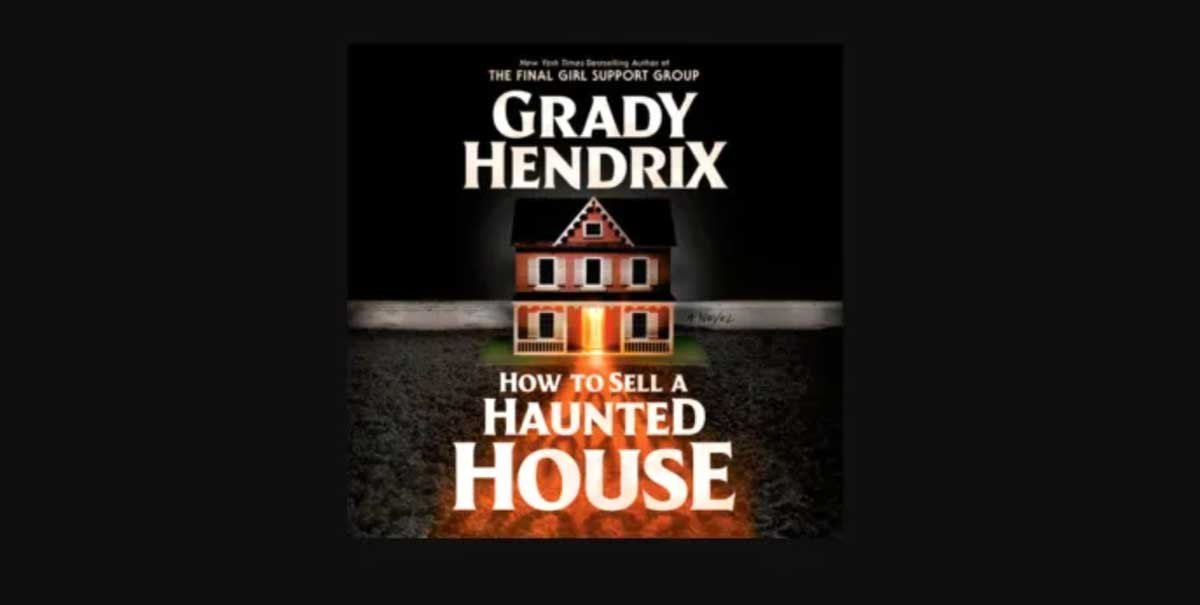
How to Sell a Haunted House follows Louise Joyner and her brother Mark as they return to their parents’ Charleston home after a fatal accident, only to discover that the family house is haunted by grief, secrets, and a puppet named Pupkin. The quick version is simple: this is a sibling-inheritance story that turns into a nasty, funny, emotionally loaded possession novel, adds B&R Property Management specialists.
This how to sell a haunted house summary includes both a short spoiler-light overview and a full spoiler section. Grady Hendrix published the horror novel through Berkley in 2023, and Penguin Random House lists the current paperback at 448 pages. That length matters because the book is not just about whether the house is haunted. It is about why Louise and Mark hate each other, what their mother left behind, and how childhood memory can become its own locked room.
Short Summary Without Major Spoilers
How to Sell a Haunted House begins when Louise Joyner learns that her parents have died suddenly, forcing her to leave San Francisco and return to Charleston. She expects paperwork, a funeral, and an ugly argument with Mark. She gets all of that, plus a house packed with dolls, puppets, taxidermy, and memories that refuse to stay quiet.
Louise and Mark are not a sweet reunited-siblings pair. Mark has stayed near home, failed at several jobs, and resents Louise’s life elsewhere. Louise sees him as childish and unreliable. Their parents, Nancy and Eric, left behind a home that should be sold, but every practical task becomes tangled with family resentment.
The strangest object in the house is Pupkin, one of Nancy’s puppets. At first, Pupkin seems like a grotesque symbol of their mother’s craft obsession. As the story progresses, the puppet becomes more than a prop. The house behaves like it has a will, and the siblings have to decide whether the threat is supernatural, psychological, or both.
That is why the book often divides readers. Anyone expecting a clean real-estate horror premise may be surprised by how much of the novel is about family damage. Reactor’s 2023 review describes the book as a story about possession: by emotions, traumatic memories, family secrets, and the puppet itself. That reading is the cleanest way to understand the novel’s shape.
Full Spoiler Summary
The full plot of How to Sell a Haunted House moves from funeral drama to puppet horror to a buried family history. Louise returns home after Nancy and Eric die in a car accident, and she immediately clashes with Mark over the estate, the funeral, and the house. Their conflict is not a side issue. It is the engine of the book.
Louise wants to handle the estate quickly and go back to her daughter, Poppy. Mark is furious, erratic, and convinced Louise always received more respect from their parents. The house intensifies that tension. Nancy’s puppets and dolls are everywhere, and Pupkin, the puppet most tied to Nancy’s life and performances, becomes the focus of the haunting.
At first, Louise treats the situation like a rational adult trying to survive a disgusting old house. She wants explanations that fit grief, stress, bad wiring, animals, or Mark’s behavior. Hendrix keeps tightening the screws until those explanations stop working. Pupkin is not only creepy; Pupkin acts, manipulates, attacks, and exposes what the family has refused to say.
The most important reveal is that Louise’s memory of childhood is incomplete. Mark’s anger has roots in events Louise does not fully understand, and Pupkin is tied to a traumatic incident between the siblings. The book gradually shifts the reader’s sympathy. Mark may be obnoxious, but the story eventually gives reasons for his bitterness instead of leaving him as a flat villain.
The haunting also reaches beyond one generation. The force attached to Pupkin is connected to Freddie, a dead family member whose pain and presence have lingered inside the family’s objects and stories. The house is haunted because the family is haunted. Hendrix literalizes the phrase: what parents perform, hide, and pass down can take possession of their children.
As the violence escalates, Louise and Mark are forced into a grim partnership. The book’s horror turns physical, including severe injury to Mark. SuperSummary’s plot overview notes one of the novel’s harshest late scenes: Louise cuts off Mark’s hand with a circular saw to save him. That moment is deliberately grotesque, but it also marks a change in their relationship. Louise is no longer trying to win an argument with her brother. She is trying to keep him alive.
Ending Explained
The ending of How to Sell a Haunted House resolves the haunting by forcing Louise and Mark to face the truth behind Pupkin rather than simply escape the property. Louise destroys Pupkin, Freddie’s hold is released, and the siblings survive with losses they cannot neatly undo.
The ending is not a cheerful reset. Mark is physically changed by what happens to him. Louise cannot recover her parents, erase the childhood damage, or pretend the family story was harmless. The victory is smaller and more believable: the siblings finally understand enough of the truth to stop repeating it.
Pupkin matters because the puppet is both monster and family artifact. Nancy’s puppetry is loving, theatrical, and deeply unsettling. The same object can be a mother’s performance tool, a childhood terror, and a vessel for something older and angrier. Hendrix uses that contradiction well. Pupkin is ridiculous until Pupkin is not ridiculous at all.
Readers sometimes argue about whether the ending is too wild, too sentimental, or exactly the right B-movie release valve. The split makes sense. The book starts with a grounded family emergency and ends in full puppet-possession horror. The emotional logic is steadier than the surface logic: Louise and Mark cannot sell the haunted house until they stop treating the family past like clutter to be boxed up.
Main Characters and What They Represent
The main characters in How to Sell a Haunted House work best when read as parts of one family system. Louise wants control, Mark wants recognition, Nancy leaves behind performance and denial, and Pupkin turns buried pain into action.
| Character | Role in the Story | Why They Matter |
|---|---|---|
| Louise Joyner | Protagonist and older sibling | She wants to settle the estate quickly but has to confront how much she has misremembered or avoided. |
| Mark Joyner | Louise’s younger brother | His anger can be exhausting, but the novel slowly explains the pain behind it. |
| Nancy Joyner | Louise and Mark’s mother | Her puppets, art, and family stories become the physical archive of what the family cannot process. |
| Eric Joyner | Louise and Mark’s father | His death brings the siblings home and exposes how fragile the family’s old order was. |
| Pupkin | Nancy’s puppet and the horror centerpiece | Pupkin turns family memory into a literal threat, which is why the puppet is funny, absurd, and frightening at once. |
| Freddie | The ghostly presence behind the haunting | Freddie connects the present-day puppet horror to older family grief. |
Mark is the character many readers struggle with early. That reaction is part of the design. In a Reddit discussion about the book, one reader wrote, “Let’s just say you find out why Mark is so obnoxious.” The line is blunt, but it captures the experience of reading the novel: irritation comes first, context comes later.
“This book nailed the dynamic between me and my younger brother. There was no one in the world that could make me immediately regress into a middle schooler aside from my entitled idiot of a brother. He could make me insufferable even to myself. I think that’s why I love it so much. It made me feel seen.”
– r/horrorlit, January 2026
That sibling reaction is one reason the book lands harder than a normal haunted-object story. The horror is not only that a puppet moves. The horror is that one adult sibling can make another adult sibling feel twelve years old in under ten seconds.
Major Themes
The major themes in How to Sell a Haunted House are grief, inheritance, sibling rivalry, unreliable memory, and the way families turn performance into truth. The supernatural plot works because each scare is attached to something emotionally unresolved.
Grief and Inheritance
Louise and Mark inherit more than a house. They inherit their parents’ objects, habits, stories, and silences. The property sale becomes a pressure cooker because every box in the house carries emotional weight.
Sibling Rivalry
The Louise and Mark conflict feels petty until it does not. Their fights over money, responsibility, and parental favoritism reveal a deeper question: who gets to define what happened in a family?
Memory and Denial
Louise’s memory is not a perfect record. The novel uses horror to show how children survive frightening events by editing them into stories they can bear. When those edits collapse, the past comes back with teeth.
Puppets and Performance
Puppets are perfect horror objects because they are built to imitate life. Nancy’s art makes that imitation domestic and intimate. Pupkin is frightening because the puppet turns a family performance into a command.
Why Readers Are Divided
Readers are divided on How to Sell a Haunted House because it mixes sincere family trauma with outrageous puppet horror. Some readers love the tonal collision, while others feel the second half becomes too broad, bloody, or absurd.
The book is funniest and most disturbing when it lets those modes clash. A puppet can be silly. A sibling fight over an estate can be mundane. A dead parent can make a house feel unbreathable. Hendrix stacks those feelings instead of choosing one.
That choice explains the mixed reader response. One Reddit reader called the book “a parody of old B grade horror movies,” while another said the second half “completely fell apart” for them. Both reactions can be honest because the novel asks for a specific tolerance: you have to accept that emotional realism and pulp excess are sharing the same room.
For readers who like Hendrix’s blend of comedy, gore, and grief, that blend is the point. For readers who wanted a straightforward haunted-house mystery, the puppet mythology may feel like a left turn. The safest recommendation is this: read it for sibling trauma first and haunted real estate second.
Book Club Notes and Discussion Angles
The best book club discussion of How to Sell a Haunted House should focus less on whether Pupkin is scary and more on what Pupkin reveals. The puppet is the loudest symbol in a novel full of quieter family clues.
- Did Louise behave selfishly, or was she protecting herself from a family system that trapped Mark?
- When did Mark become sympathetic, if he did?
- Does the novel earn its extreme violence, or does the gore distract from the grief story?
- How does Nancy’s puppetry change after the reader understands the family’s past?
- Is Pupkin frightening because of what it does, or because of what the family projected onto it?
- Does the ending feel hopeful, tragic, or both?
Those questions work because the novel’s monster is not separate from the family. Pupkin is memorable, but the real unease comes from watching Louise and Mark realize that the old house has been telling the truth in a grotesque way.
FAQ
What is How to Sell a Haunted House about?
How to Sell a Haunted House is about Louise and Mark Joyner trying to settle their parents’ estate while confronting a supernatural force tied to their mother’s puppet collection. The book combines haunted-house horror, sibling conflict, grief, and family secrets.
Is Pupkin really haunted?
Yes, Pupkin is treated as genuinely supernatural by the end of the novel. The puppet is not just a creepy object or a metaphor, although it also works symbolically as a container for family memory and trauma.
Who is the ghost in How to Sell a Haunted House?
The haunting is connected to Freddie, whose presence becomes attached to Pupkin and the Joyner family’s history. Freddie’s story explains why the haunting feels older and more personal than a random cursed-object plot.
What happens to Mark?
Mark survives, but he is seriously injured and permanently changed by the events near the end of the book. His survival matters because the novel is ultimately about Louise and Mark facing the past together, not one sibling defeating the other.
Does the house get sold?
The practical question of selling the house becomes secondary to destroying the haunting and exposing the family truth. By the end, the title reads less like a real-estate problem and more like a grim joke: some haunted inheritances cannot be cleaned, staged, and listed.
Is How to Sell a Haunted House scary?
It is scary in a messy, theatrical way rather than a quiet gothic way. Expect creepy dolls, puppet violence, body horror, family grief, and comedy that sometimes makes the horror feel even stranger.
Final Takeaway
The best how to sell a haunted house summary is this: Louise and Mark return home to sell their dead parents’ house, but the house forces them to confront a puppet-haunting rooted in family trauma. The novel’s secret weapon is not the haunted property. It is the awful intimacy of siblings who know exactly how to hurt each other and slowly learn why.
Grady Hendrix makes the premise sound like a joke, then keeps finding bruises under it. Pupkin may be the image readers remember, but the story lasts because the Joyner family feels trapped by things many families recognize: old roles, half-true memories, inherited objects, and grief that refuses to stay boxed.